
Mold on Window Sills Every Winter — Humidity or a Cold Window?
Send a photo of the sill and the window on a cold morning. We reply within one business day and say whether a new window would stop it.
Reply within one business day. Or call / text 763-250-3621.
Mold on window sills in winter grows where water from condensation sits on the sill for weeks. The water comes from room air meeting glass or frame that is colder than its dew point. Two things set that: how much moisture is in the house, and how cold the window surface gets. Lower the humidity and the water often stops. If it does not, the window is the cold spot, and a new window priced per window fixes it.
- Humidity checked first, window second
- Priced per window
- MN Lic. BC809005
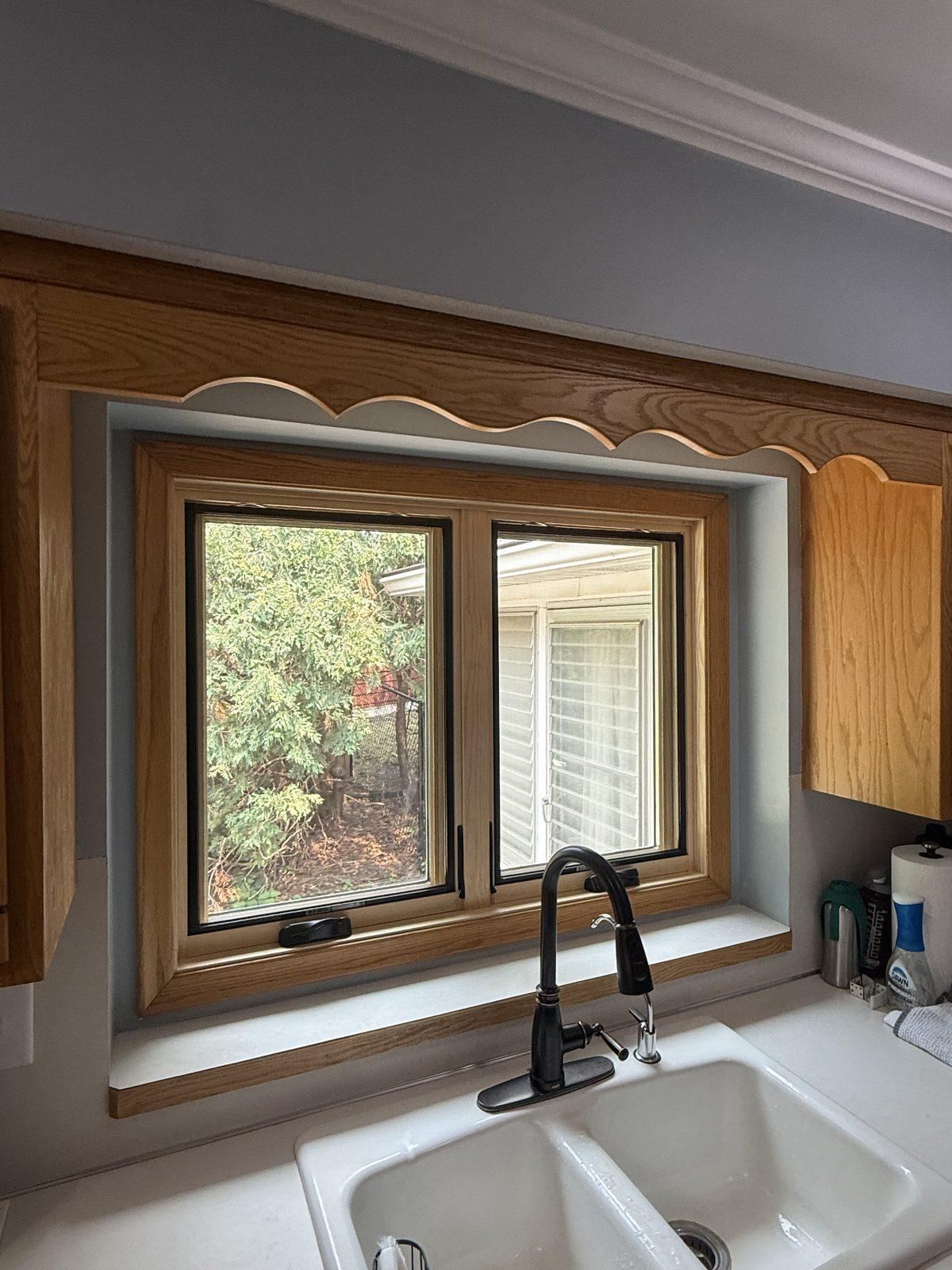
Water on the inside of a window is condensation. Warm room air carries moisture. When it touches a surface colder than its dew point, the moisture turns to water on that surface. In a Minnesota winter the coldest surface in most rooms is the window: the bottom of the glass, the edge where the glass meets the frame, and the frame itself. The water runs down and sits on the sill. A sill that stays wet for weeks grows mold in the corners and along the glazing bead. Wipe it in March and it comes back in December. That is why it happens every winter.
Start with the humidity, because it is free to check and often the whole answer. Showers, cooking, a dishwasher, drying laundry indoors, a lot of houseplants, a humidifier set high, a new house still drying out, or a tight house with no fresh air all raise indoor moisture. A bath fan that does not vent outside, or that runs for one minute, leaves the water in the house. A range hood that recirculates does the same. Buy an inexpensive hygrometer and read it in the rooms with wet sills. If the reading is high, lower it and watch the windows for two cold weeks before you spend anything.
Then look at the window. Single-pane glass, or a single pane with an old storm, runs close to outdoor temperature on the inside face. A double-pane unit with a failed seal fogs between the panes and loses much of its insulating value. Old aluminum frames and metal spacers carry cold straight through to the room side, so the frame sweats even when the glass is dry. Air leaking in around the frame, where the window meets the rough opening, chills one corner of the sill and that corner is always the wettest. If only some windows sweat, and the humidity is normal, the window is the cold spot.
A new window stops it when the window is the cold spot: warm-edge spacers, low-E glass, a sealed frame and air-sealed gaps around it keep the room-side surfaces warmer. It will not stop it when the house is too humid. Even a new triple-pane window sweats at the bottom edge on the coldest mornings if the moisture is high enough. We tell you which one it is before we sell you a window.
Hail or wind damage? Start with the 10-minute window and door check. · How a storm claim works with us
Get a written quote for this job
Three photos and a sentence is enough: a reply within one business day, or ask for a free in-home estimate. Or text the photos to 763-250-3621.
What you supply
- A photo of the wet or moldy sill and the whole window on a cold morning, before you wipe it
- Which rooms have it and which do not, and what side of the house each faces
- A hygrometer reading from those rooms if you have one
- Whether the bath fans vent outside and the range hood vents or recirculates
- Access inside and out to the windows that sweat
What JMB supplies
- A look at the glass, seal, spacer, frame and the gap around the frame on each window that sweats
- A straight answer: humidity, window, or both, window by window
- A check of the sill, stool and lower jamb for soft or stained wood
- Replacement windows with warm-edge spacers and low-E glass, in options such as MI, ProVia, Andersen or Silver Line
- Low-expansion foam or backer rod and sealant around the new frame so cold air cannot chill the sill
- A new stool or interior trim where the old wood is soft, primed and caulked
How it is priced: per window
Quoted in writing from your photos, with a reply within one business day. What moves the number:
- How many windows sweat and need replacing
- Insert into the old frame or full-frame replacement
- Double or triple pane, and the low-E package
- Whether the sill, stool or jamb under the window is soft and needs new wood
- Interior trim kept, or new casing and stool
- Second-story access
Send a photo of the sill and the window on a cold morning. We reply within one business day and say whether a new window would stop it. Or book a free in-home estimate.
How long it takes
Windows are made to order, so the wait is the order. Once here, most replacement windows go in at a few per day, with the sill and trim finished the same visit.
How your project works
- 1
Send photos, get a written quote
Send three photos of the space and a sentence about what you want. You get a clear, itemized reply within one business day. Prefer a look in person? A free in-home estimate is always an option.
- 2
Pick materials, or bring your own
We help you choose profiles and materials that fit the house and the budget, or match your existing millwork exactly — or you buy the door or trim yourself and we install it. Everything is confirmed before the crew is scheduled.
- 3
Clean, precise installation
The crew shows up on time, protects floors and furniture, and installs with tight joints and consistent reveals. Photos of the finished work go in your job folder.
- 4
Walkthrough and invoice
We walk the finished work with you. If anything is not right, we fix it before we call the job done. Then one invoice, paid by check or direct deposit — no card fees, no payment links.
Situations and options
Humidity first
Normal-looking windows, wet on every side of the house, and a high hygrometer reading. Vent the bath fans and range hood outside, run them longer, and turn the humidifier down. No window is sold until the humidity is ruled out.
Single-pane or old storm combo
One pane of glass, or one pane plus a storm, runs close to outdoor temperature. Frost and water on every cold morning. A double- or triple-pane replacement keeps the room-side glass much warmer.
Failed seal
Fog or white streaks between the panes and water on the room side. The unit has lost much of its insulating value. A replacement window with a new sealed unit and warm-edge spacer is the fix.
Cold aluminum frame
The glass is dry but the frame sweats and drips onto the sill. Aluminum carries cold to the room side. A vinyl, fiberglass or clad-wood replacement stops the frame from sweating.
Air leak at the frame
One corner is always wetter, and you feel a draft there. Cold air is getting around the frame. The gap is sealed when the new window goes in, so the sill corner warms up.
Soft sill or stool
Years of water have stained or softened the wood under the window. The new window goes in and the stool or lower trim is replaced, primed and caulked. Painting is quoted as a separate line.
Mold on Window Sills Every Winter — Humidity or a Cold Window?: questions, answered
Why do my window sills get moldy every winter?
Water from condensation runs down the glass and sits on the sill for weeks. Room air carries moisture, and when it touches glass or a frame colder than its dew point, the moisture turns to water. Mold grows where the sill stays wet, often in the corners and along the glazing bead. It comes back every winter because the cold and the moisture come back every winter. Cleaning it does not change either one. Lowering indoor humidity, or warming the window surface with a better window, does.
Will new windows stop condensation?
New windows stop it when the old window is the cold spot: single pane, a failed seal, a cold aluminum frame, or air leaking around the frame. Warm-edge spacers, low-E glass and a sealed frame keep the room-side surfaces warmer, so the moisture stays in the air. New windows will not stop it in a house that is too humid. On the coldest mornings, even a new window can show some water at the bottom edge of the glass if indoor moisture is high. Check the humidity first, then decide.
Is it my humidity or my windows?
Look at the pattern. If every window on every side sweats, and a hygrometer reads high, it is the humidity. If only a few windows sweat while the others stay dry in the same conditions, those windows are the cold spot. Fog between the panes, single-pane glass, a dripping aluminum frame, or one corner always wetter than the rest all point to the window. Often it is both: an old window in a house that runs a little humid. Lower the humidity first, then see which windows still sweat.
Can a sill with mold be saved?
Often, yes. If the mold is on the surface and the wood is still hard when you press it with a screwdriver, the sill can be cleaned, dried and refinished. If the wood is soft, black through, or crumbles, the stool or sill is replaced, usually when the new window goes in. If mold has spread into the wall or covers a large area, an abatement firm removes it first. Whatever you do to the sill, the water has to stop or the mold comes back next winter.
Do triple-pane windows help?
A third pane keeps the room-side glass warmer than double pane on the coldest mornings, so the glass can handle more indoor moisture before it sweats. It helps most on north walls, in rooms with steady moisture such as kitchens and baths, and in houses that cannot get the humidity down much. It does not fix a house that is far too humid, and it does not fix an air leak around the frame. Triple pane is an option on most lines, such as ProVia, MI and Andersen, and is priced per window.
What should I photograph?
Photograph the window on a cold morning before you wipe anything. Take the whole window from inside, a close-up of the bottom of the glass and the sill, and the corners where the mold is. Add a close-up of the glass edge to show any fog between the panes, and the label or etching on the glass if you can find one. A photo of the hygrometer reading in that room helps. Send them, or book a free in-home estimate instead.
Recent JMB work, from our job log
59 installs recorded across 30 Twin Cities communities since Dec 2025. Window and door installs for homeowners and the builders we work with. Counts come straight from our job log; no customer names.
Whole house, several, or just one
Send photos and we reply within one business day, or book a free in-home estimate.
Related jobs we do
Frost on the Inside of Windows — When New Windows Fix It
Every January morning there is a line of frost along the bottom of the glass and a puddle on the stool. New windows fix it, but only if the right parts of the window are specified.
Read moreSigns You Need New Windows — A Room-by-Room Checklist
One window fogged last winter, the bedroom one won't lock, and the kitchen sill is soft. You want to know if it is time.
Read moreWindow U-Factor and SHGC Explained — The Numbers on Your Quote
Two quotes, two brochures, and a sticker on a sample window full of decimals. You want to know which numbers matter and whether the window you get is the one you were quoted.
Read moreTriple Pane Window Replacement — Heavier Units Set Right
You have decided on triple pane for the cold side of the house, or the whole house, and want it installed by someone who plans for the weight and the depth.
Read moreWindow Replacement in Winter — One Opening Open at a Time
The old window failed in December and you do not want to live with plastic over it until May. It does not have to wait; it has to be done in the right order.
Read moreReplace the Windows or Add Storm Windows? Deciding for an Old House
The house has its original wood windows, the old storms are shot, and everyone has an opinion. Here is how we decide it standing at the window with a probe and a tape.
Read morePage reviewed November 22, 2026 · JMB Builders LLC, MN license BC809005 · All windows pages
Where we work
Window Replacement & Installation near you
Based in Zimmerman, scheduling across the Twin Cities metro. A few of the towns we cover: