
Replacement Windows That Stop Condensation and Frost — What to Order
Every January morning there is a line of frost along the bottom of the glass and a puddle on the stool.
Reply within one business day. Or call / text 763-204-2099.
Replacement windows that stop condensation and frost keep the inside glass surface warm enough that room moisture never reaches its dew point. On a Minnesota house that means warm-edge spacers, a heat-retaining low-E package, a third pane on the coldest walls, and a frame that seals so cold air cannot chill the edge. JMB Builders specifies and installs them across the Twin Cities, priced per window. Send a frost photo and we reply within one business day.
- Warm-edge spacers stop frost at the glass edge first
- Triple pane on the walls that frost, double elsewhere
- Indoor humidity is the other half of the fix
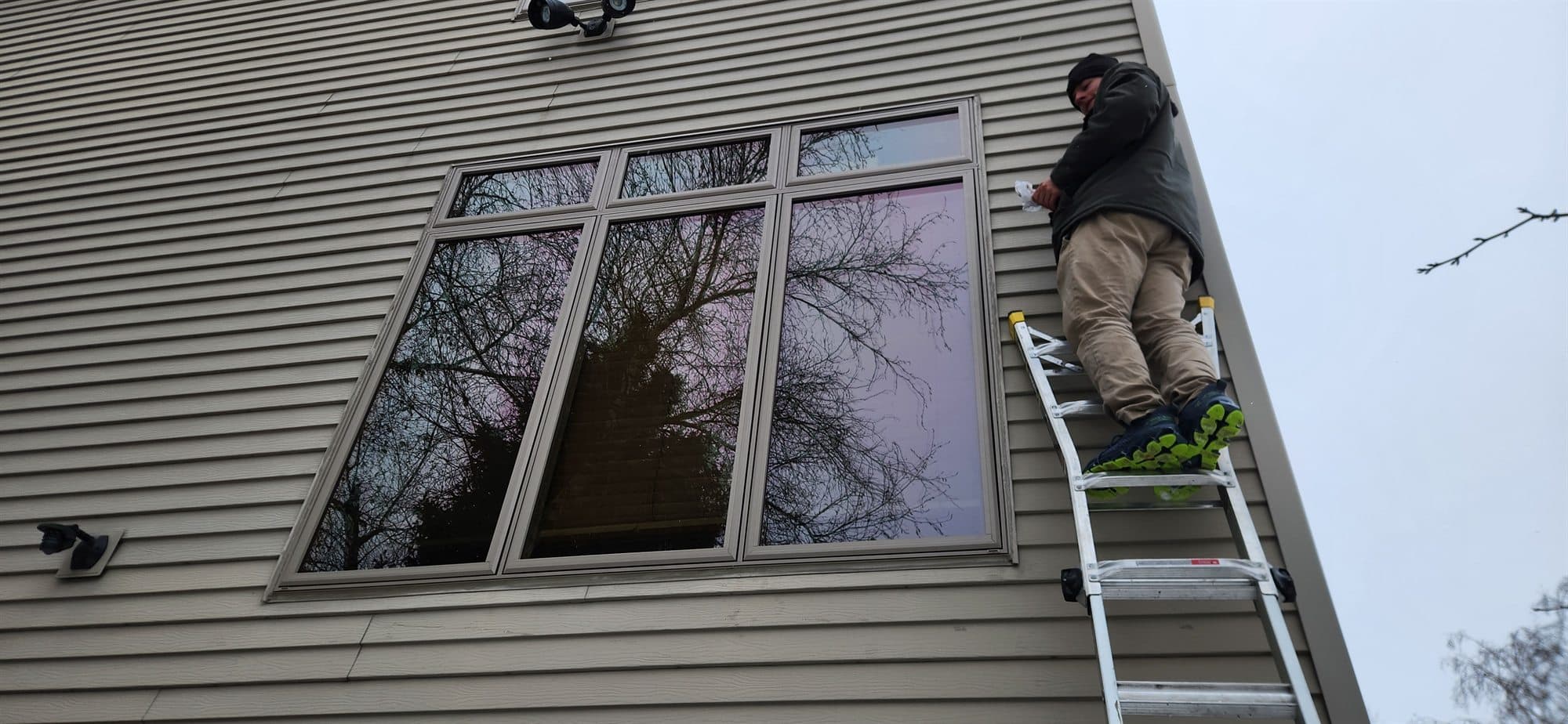
Condensation forms when the inside surface of the glass is colder than the dew point of the room air. Frost is the same thing below freezing. Two things decide whether it happens: how cold the glass surface gets, and how much moisture is in the house. A new window can fix the first one. You manage the second.
On an insulated glass unit the coldest spot is the edge, where the spacer bar between the panes conducts cold from the outside pane to the inside pane. That is why frost shows up as a line along the bottom and sides of the glass. Older units used an aluminum spacer that conducts heat well; a warm-edge spacer made of foam, stainless steel or a composite conducts far less, and the edge of the glass stays warmer. Add a low-E coating chosen for holding heat in, argon fill, and on the north and west walls a third pane, and the whole inside surface stays above the dew point on all but the most humid nights. The frame matters too: a casement that compresses against its weatherstrip keeps cold air from chilling the glass edge from the room side, and a well-foamed opening keeps cold out of the frame itself.
What a window cannot fix is a house running at high humidity in January. A humidifier set high, a crawl space or basement giving off moisture, a bath fan that is never run, cooking without a vented hood, or firewood drying in the living room will frost even a good triple pane on the coldest night. We tell you which it is. If the frost is on every window and the humidity is high, the windows are part of the answer and a hygrometer is the other part. If the frost is on the north windows only, the glass package on that wall is the answer. JMB Builders supplies and installs the windows and writes the spacer, coating and pane count on the quote so you can see what you are buying.
Get a written quote for this job
Three photos and a sentence is enough: a reply within one business day, or ask for a free in-home estimate. Or text the photos to 763-204-2099.
What you supply
- Photos of the frost or condensation, with a note on which windows and which rooms
- Your winter humidity reading if you have one, or where the humidifier is set
- Whether the frost is on the glass, the frame, or the wall around the window
- Interior finish and exterior color choices
What JMB supplies
- A glass package per wall on the quote: spacer type, low-E coating and pane count named for each window
- A plain read of whether the frost is a glass problem, an air leak, or a humidity problem
- In-home measure of each opening before anything is ordered
- The windows, in casement or tight double hung frames as you choose
- Removal and haul-away of the old windows
- Sill pan, shims, low-expansion foam and exterior sealant so cold air cannot reach the frame
- Photos of the finished windows in your job folder
How it is priced: per window
Quoted in writing from your photos, with a reply within one business day. What moves the number:
- Triple pane vs. a high-performance double pane on the walls that frost
- Warm-edge spacer upgrade where the line does not include it standard
- Casement frames vs. double hung or slider
- How many windows frost: a wall, or every window in the house
- Insert vs. full-frame install; frosted stools and sills are often soft underneath
- Second-story access
Send a photo of the frost from last winter if you have one, and a photo of each window inside and out. Tell us where the humidifier runs. The quote names the spacer and glass on every line.
How long it takes
Three to five windows a day as inserts, fewer full-frame. Triple pane units are set with two people. Factory lead time on the glass package comes first.
How your project works
- 1
Send photos, get a written quote
Send three photos of the space and a sentence about what you want. You get a clear, itemized reply within one business day. Prefer a look in person? A free in-home estimate is always an option.
- 2
Pick materials, or bring your own
We help you choose profiles and materials that fit the house and the budget, or match your existing millwork exactly — or you buy the door or trim yourself and we install it. Everything is confirmed before the crew is scheduled.
- 3
Clean, precise installation
The crew shows up on time, protects floors and furniture, and installs with tight joints and consistent reveals. Photos of the finished work go in your job folder.
- 4
Walkthrough and invoice
We walk the finished work with you. If anything is not right, we fix it before we call the job done. Then one invoice, paid by check or direct deposit — no card fees, no payment links.
Situations and options
Warm-edge spacer, heat-retaining low-E, double pane
The baseline that stops frost on most walls in a house at normal winter humidity. Foam or stainless spacer, argon fill, a low-E coating chosen for holding heat in. Order it on every window as the minimum.
Triple pane on the frosting walls
North and west windows that frost every winter get a third pane. The inside glass surface stays several degrees warmer than a double pane, which is the margin that keeps it above the dew point on the coldest nights.
Casement frames where the frost is worst
A compression-sealed casement keeps cold air from washing across the glass edge from the room side. In a bedroom that frosts, swapping a slider or loose double hung for a casement helps as much as the glass.
Full-frame where the stool is already soft
Years of meltwater running onto the stool usually means the sill and lower jambs are damp or rotted. The frame comes out, the rot goes, and the new unit sits on a sill pan. We check with a probe at the estimate.
Replacement Windows That Stop Condensation and Frost — What to Order: questions, answered
Will new windows stop condensation on the inside of the glass?
Yes, when the new window has warm-edge spacers, a heat-retaining low-E coating and, on the coldest walls, a third pane, and when the house humidity is kept in a reasonable winter range. The new glass surface stays warmer than the dew point of the room air, so moisture does not land on it. If the house is very humid, new windows cut the frost but a hygrometer and the humidifier setting finish the job.
Why does frost form at the bottom edge of the window first?
Because the edge is the coldest part of the glass. The spacer bar between the two panes conducts cold from the outside pane to the inside pane, and the bottom edge also collects the coldest air sinking down the glass. A warm-edge spacer made of foam, stainless or composite conducts much less than the old aluminum ones, which is why it is the first thing to specify on a replacement window in Minnesota.
Do I need triple pane to stop frost in Minnesota?
Not on every window. A good double pane with a warm-edge spacer and the right low-E coating stays frost-free on most walls at normal humidity. The north and west walls, and any room you keep humid like a nursery or a room with a lot of plants, are where the third pane makes the difference on the coldest nights. We order triple pane on those and double on the rest, in the same frame and color.
What indoor humidity should I keep in winter so windows do not sweat?
Lower than most people run it. The colder it is outside, the lower the indoor humidity has to be before the glass stays dry, so a setting that works in November frosts in January. A cheap hygrometer on the wall tells you where you are; the humidifier, the bath fans and the range hood are how you move it. New windows with warm glass raise the humidity you can get away with, but they do not remove the limit.
Is frost on the window frame or wall the same problem as frost on the glass?
No. Frost on the glass is a glass temperature and humidity problem, fixed by a better glass package. Frost on the frame, the casing or the drywall around the window means cold air is leaking into the wall around the opening and chilling it from behind. That is an installation problem, fixed by pulling the trim, foaming the gap and sealing the exterior joint, which is part of every window we install.
Does the window frame material affect condensation?
Some. Vinyl, fiberglass and wood frames all insulate reasonably well; aluminum frames without a thermal break are cold and sweat on their own. A casement that compresses tight keeps cold room-side drafts off the glass edge. But on a modern frame the spacer, the low-E coating and the pane count decide whether the glass frosts, and those are glass choices, not frame choices.
Recent JMB work, from our job log
59 installs recorded across 30 Twin Cities communities since Dec 2025. Window and door installs for homeowners and the builders we work with. Counts come straight from our job log; no customer names.
Related jobs we do
Triple Pane Window Replacement — Heavier Units Set Right
You have decided on triple pane for the cold side of the house, or the whole house, and want it installed by someone who plans for the weight and the depth.
Read moreReplacement Windows for a Cold North Wall — Where to Spend on Glass
The north bedrooms are the cold ones, the glass there frosts first, and the couch under the north window is nobody's favorite seat in January. The fix is specific to that wall.
Read moreCasement Window Replacement — Crank-Out Windows Measured and Installed
The crank strips, the sash will not pull tight, frost builds on the glass edge. When the casement itself is done, we replace it and finish the trim.
Read moreReplace Aluminum Windows With Vinyl — Old Sliders and Single-Hungs
The aluminum sliders in your 1960s or 70s house frost over in January, drip on the sill and rattle in the wind.
Read moreWhole House Window Replacement — One Measure, One Order, Room by Room
Every window in the house at once: one measure, one order, one schedule, and the house closed up every night.
Read more1.5 Story Dormer Window Replacement — Upstairs Knee Wall Bedrooms
The upstairs windows in the dormers are drafty and hard to reach, and the bedrooms up there are the coldest rooms in the house.
Read morePage reviewed October 10, 2026 · JMB Builders LLC, MN license BC809005 · All windows pages
Where we work
Window Replacement & Installation near you
Based in Zimmerman, scheduling across the Twin Cities metro. Closest first: