
Insurance Claim Window Replacement — From the Storm to New Windows
Hail or straight-line wind took out windows on one side of the house and you have never filed a claim. Here is the whole path, from the first photos to the last check.
Insurance claim window replacement runs in order: photograph the hail or wind damage, file the claim, meet the adjuster, get a line-item scope approved, order the windows, install them and send the final invoice that releases recoverable depreciation. JMB Builders writes that scope with photos and does the work across the Twin Cities metro as a licensed Minnesota contractor. Priced per window on the approved scope. You file the claim; we reply within one business day.
- Priced per window on the approved scope
- Photos and line-item scope the adjuster can use
- You file the claim; we document and do the work
- Send photos, reply within one business day
- Licensed MN contractor BC809005
Send photos and hear back within one business day — or book a free in-home estimate.
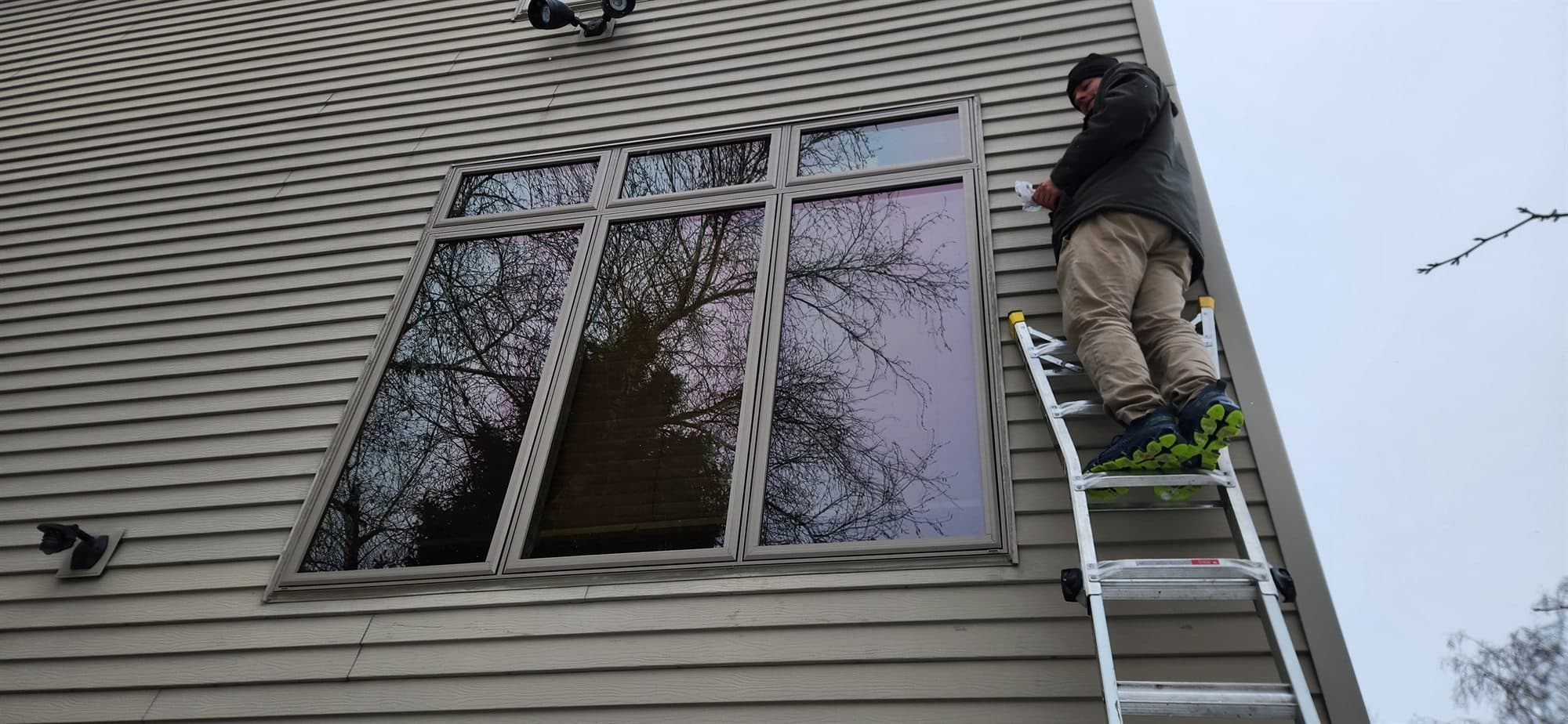
Minnesota hail and straight-line wind damage windows in ways that are easy to miss from the lawn. Hail cracks glass, chips vinyl sills, dents clad sashes and shocks the seal on an insulated glass unit so it fogs weeks later. Wind drives branches and shingles through panes, pulls sashes out of their tracks and racks a frame so the lock no longer catches. Sudden storm damage like that is what a homeowner's policy is written for. Wear, rot and a seal that failed with age are not, and an adjuster can tell the difference, so we do not put them on the list.
The order matters. Photograph every damaged window before anything is cleaned up: a wide shot that shows which window, a close-up with a tape or coin for scale, and the label on the jamb or spacer if you can find one. Make the house safe with a board-up or a temporary pane. File the claim and get a claim number. Meet the adjuster; we come along when you want us there. The adjuster writes an estimate, we write a scope with the same line items, and the two get reconciled before anything is ordered. Windows are ordered off the approved scope, installed and invoiced. On a replacement-cost policy that final invoice is what releases the depreciation the insurer held back.
We price it per window on the approved scope. Each window is its own line: glass only, new sash or whole unit, plus the sill pan, flashing tape, foam, interior stops and casing a full replacement needs. The scope and the final invoice carry the same lines so there is nothing for the insurer to question at the end. You pay your deductible as part of the job; Minnesota does not allow a contractor to waive, rebate or pay it, and we do not. Anything you choose beyond like kind and quality, such as triple pane or a different style, is its own line and you pay the difference.
You own the claim. You file it, you talk to your insurer and you choose the contractor. Our part is the documentation an adjuster can approve and the carpentry that puts the windows back right. Send photos and we reply within one business day, or book a free in-home estimate and we walk the house with you.
What you supply
- The storm date and any photos you took that day, before cleanup
- Your claim number, the adjuster's name and the approved scope once you have it
- Your declarations page or a note from your agent on whether the policy is replacement cost or actual cash value
- Window labels or the original paperwork if you have them
- Access to every window on the storm side, inside and out
- Your paint color if interior casing is replaced — painting is quoted as a separate line, or paint it yourself
What JMB supplies
- Photos of each damaged window, numbered by elevation, with a scale reference in the shot
- A line-item scope: glass, sash, screen or whole unit per window, with install items written in
- A walk of the house with your adjuster when you want us there
- Board-up or a temporary pane where a window is open to the weather
- New glass units, sashes or whole windows as the approved scope lists them, with options such as the maker you had
- Sill pan, flashing tape, low-expansion foam and sealant on every full-unit replacement
- Interior stops, casing and stool reset or replaced where the work disturbs them
- Cleanup, haul-away of old units and glass
- A final invoice matched line by line to the approved scope, with finished photos, for the depreciation release
How it is priced: per window
Quoted in writing from your photos, with a reply within one business day. What moves the number:
- Glass only, new sash or whole unit, decided window by window on the damage
- Frame material and whether the manufacturer still makes sashes and glass for it
- Full-frame replacement in siding, brick or stucco, which changes the flashing and exterior trim work
- Second-story and walk-out windows that need ladders or staging from outside
- Code items a full replacement triggers, such as tempered glass near a tub or egress size in a bedroom
- Upgrades you choose beyond like kind and quality, paid as the difference on their own line
- How many windows ship in one order and install in one visit
Send one photo per damaged window, one close-up of the hit with a coin or tape for scale, and the adjuster's estimate if you already have it. We reply within one business day.
How long it takes
Photos and board-up right away. The adjuster's schedule is the insurer's. Windows are made to order and the wait is usually weeks. Once they land, several install per visit; a full-frame unit is about half a day each.
How your project works
- 1
Photograph and make it safe
Before cleanup, photograph every damaged window wide and close with a scale reference. Board up or cover anything open to the weather so no more water gets in. Keep broken sashes and glass until the adjuster has seen them.
- 2
File the claim
Call your insurer or agent, give the storm date and what is damaged, and get a claim number. Ask whether your policy is replacement cost or actual cash value and whether it has a cosmetic exclusion for windows.
- 3
Adjuster visit and our scope
The adjuster inspects and writes an estimate. We walk the house with them when you want us there, and write a line-item scope with photos in the same units they use so the two can be compared item by item.
- 4
Approval and order
Once the scope is approved you decide on any upgrades, we confirm sizes and options on site and the windows are ordered. Lead time depends on the maker and the time of year after a big storm.
- 5
Install
Old units out, openings checked, new units set with sill pan, flashing tape, foam and sealant, interior trim reset. Glass-only and sash swaps go faster and leave the trim alone.
- 6
Final invoice
You get a final invoice matched to the approved scope with finished photos. Send it to your insurer to release recoverable depreciation if your policy holds it back.
Situations and options
Hail-cracked glass in a sound frame
Star cracks, chips and seal failure on a window whose sash and frame are fine. A new insulated glass unit is made to the old size and coating and set in the existing sash. Trim and wall stay untouched.
Wind and debris impact
A branch, shingle or fence board came through the glass and bent or cracked the sash, or wind racked the frame. These are usually a new sash or a whole unit, and the opening gets checked for a sprung header or nailing fin before the order.
Whole-house claim
All elevations hit, every window on the scope. One measure, one order, matching across the house and an install sequence that keeps the home weather-tight while units are swapped room by room.
Upgrades beyond like kind
The scope pays to put back what you had. Triple pane, a different style, a different color or a different brand are quoted as a separate line and you pay the difference directly. Depreciation on the approved lines still releases.
Code upgrades on the way back in
Replacing a window can trigger tempered glass, egress size or energy code items that the old window did not meet. Some policies carry ordinance or law coverage for that cost; ask your agent. We list those items separately so the adjuster can see them.
Depreciation release
On a replacement-cost policy the first check is actual cash value. The final invoice, matched to the scope with finished photos, is what you send to release the rest. We write it the day the work is done.
Insurance Claim Window Replacement — From the Storm to New Windows: questions, answered
Will insurance pay to replace my windows after a hailstorm?
That is decided by your policy and your adjuster, not by a contractor. Most homeowner policies cover sudden storm damage from hail and wind, and windows that are cracked, broken or no longer seal from a storm are usually part of that. Some policies exclude cosmetic damage such as dents that do not affect function, so read your policy or ask your agent. Our job is to photograph and list the damage clearly so the adjuster can decide on the facts.
How does a window insurance claim work from start to finish?
Photograph the damage, make the house weather-tight, and file the claim to get a claim number. The adjuster inspects and writes an estimate. Your contractor writes a line-item scope with photos, and the two are reconciled. Once the scope is approved the windows are ordered and installed, and the contractor sends a final invoice. On a replacement-cost policy that invoice releases the depreciation the insurer held back from the first check.
Do I need a contractor before I file the window claim?
No. File the claim as soon as you have photos; waiting does not help. A contractor is useful before the adjuster visit, because a line-item scope with photos gives the adjuster something to compare against and makes it less likely a window gets missed. If the adjuster has already been through, send us their estimate and we will check it against the house.
Does insurance replace the whole window or just the glass?
It depends on what the storm hit. A cracked pane in a sound frame is usually scoped as a new insulated glass unit. A cracked or bent sash is a new sash when the maker still supplies one. A split or racked frame, or a window whose parts are no longer made, is a whole unit. We look at all three parts on every window and list each one on its own line so the adjuster sees why.
How long does it take to replace windows through insurance?
Three clocks run. The insurer's: how fast the adjuster comes out and approves the scope. The manufacturer's: windows are made to order and after a big Minnesota storm the lead time stretches. Ours: once the windows land, glass and sash swaps go several to a visit and a full-frame unit takes about half a day. We board up or set temporary glass right away so the wait is not spent with an open hole.
Can I pick my own contractor for an insurance window replacement?
Yes. The policy pays for the repair; who does it is your choice. Some insurers offer a preferred vendor list, and you can use it or not. Check any contractor's Minnesota license before you sign, and be careful of anyone who shows up uninvited after a storm or offers to cover your deductible, which Minnesota does not allow.
What is recoverable depreciation on a window claim?
The adjuster's estimate prices each window at what it costs to replace new. On a replacement-cost policy the insurer first pays that amount minus your deductible and minus depreciation for the age of the old windows. That held-back depreciation is recoverable: once the work is done and you send the final invoice, the insurer releases it. On an actual-cash-value policy it is not recoverable. Your declarations page says which you have.
What do you need from me to write the window claim scope?
The storm date, your photos from that day, the claim number and the adjuster's estimate if you have it, and access to every window on the storm side inside and out. A window label or the original paperwork helps us name the maker and size. From that we photograph each window with a scale reference, number them by elevation and write the line items. You file everything with your insurer; we give you what to file.
Recent JMB work, from our job log
59 installs recorded across 30 Twin Cities communities since Dec 2025. Window and door installs for homeowners, builders and dealers. Counts come straight from our job log; no customer names.
Get a written quote for this job
Three photos and a sentence is enough: a reply within one business day, or ask for a free in-home estimate. Or text the photos to 763-333-4066.
Related jobs we do
Wind Damage Window Replacement Claim — Debris Hits and Racked Frames
Straight-line wind sent a branch through the picture window, blew a casement sash open until the hinges tore, and left a bedroom window that will not latch. Each is a different line on the claim.
Read moreWindow Claim Adjuster Inspection — What They Check and What to Show
The adjuster is coming Thursday morning and you have twenty minutes of their time. What they will look at, what gets missed when nobody points, and what to have on the kitchen table.
Read moreInsurance Window Replacement Timeline — Board-Up to Final Invoice
The storm was Tuesday. Here is what happens Wednesday, what happens in the weeks the windows are being built, what install day looks like and when the last check comes.
Read moreHail Damage Window Replacement — Cracked Glass, Sashes and Frames
Hail left star cracks in the glass, dents in the vinyl sill and a sash that will not close tight. Here is how each one gets fixed, and what goes on the list for your adjuster.
Read moreUpgrading Windows on an Insurance Claim — Pay the Difference
The hail made the decision for you: the windows are coming out. If you were going to replace them in five years anyway, this is the time to get the ones you wanted, and here is how the money splits.
Read moreWindow Claim Denied or Underpaid — Re-Inspection, Supplement, Repair
The estimate came back with two windows on it and you have six with cracked sashes. Or it came back as a denial. Here is what the next letter to your insurer should have in it.
Read morePage reviewed October 2, 2026 · JMB Builders LLC, MN license BC809005 · All insurance repairs pages
Where we work
Insurance repairs near you
Based in Zimmerman, scheduling across the Twin Cities metro. Closest first: