
Working With Your Insurer on a Window Claim — You, the Adjuster, Us
A storm hit the windows and now there are three people in it: you, the adjuster and a contractor.
Reply within one business day. Or call / text 763-250-3621.
Working with your insurance company on a window claim runs in three lanes. You file the claim and talk to your insurer. The adjuster inspects the house and writes the scope. Your contractor documents every opening, writes the line items and can meet the adjuster at the house when you ask. JMB Builders, a licensed Minnesota contractor, works the third lane only, priced per opening, and gives no coverage advice. Here is how each lane works.
- Priced per opening
- You file and talk to your insurer
- MN Lic. BC809005
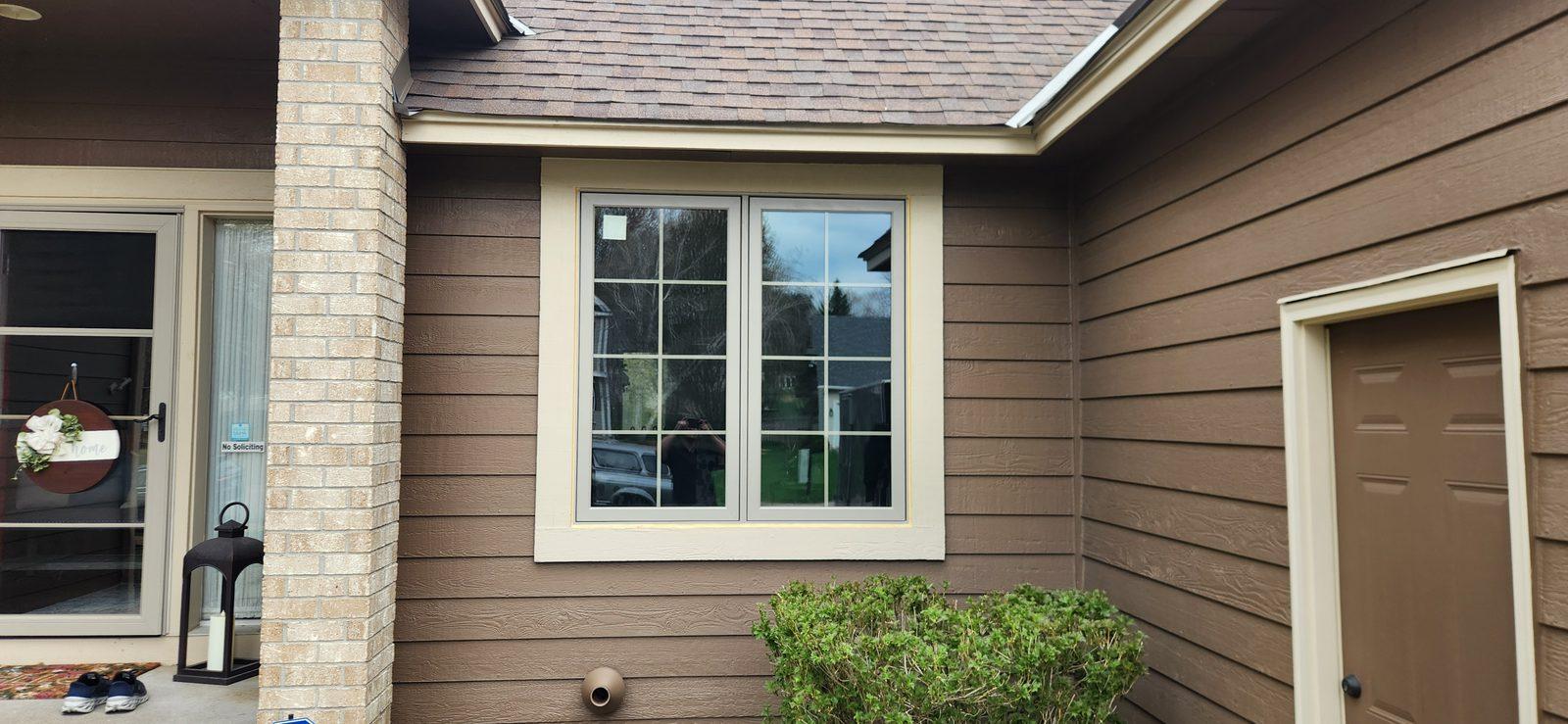
A window or door claim has three lanes, and it goes smoother when each one stays in its own. Lane one is yours. You file the claim and talk to your insurer. You get the claim number, you answer the insurer's questions and you choose the contractor. Lane two is the adjuster's. The adjuster works for the insurer, inspects the house and writes the scope: the list of what the insurer will pay to put back. Lane three is ours. We document every opening and write the line items. Meet the adjuster; we come along when you want us there.
Here is what our lane covers and what it does not. We inspect the windows and doors, photograph and document the damage, write an itemized estimate, and can be there when the adjuster looks at the house. We are a contractor, not a public adjuster. We do not read your policy for you, tell you what it covers, or negotiate your claim. Ask your agent, your adjuster or an attorney.
The money rules are short. Minnesota law does not let a contractor pay, waive or rebate your insurance deductible, or promise to. We will not, and the deductible is yours to pay. Minnesota law also bars a contractor from rewarding you for letting it inspect, for filing a claim, or for referring neighbors on an insurance job. No gift cards, no yard-sign fees, no referral credits. Not legal advice — ask your agent or an attorney.
The first call is easier with a few things in hand. Have the policy number, the storm date, which side of the house took the hit, and photos of each damaged window and door: a wide shot that shows which one, and a close-up with a tape for scale. Write down the claim number, the adjuster's name and the inspection date before you hang up. Send your photos and the claim status. We reply within one business day. Or book a free in-home estimate.
Send what you have: photos, the adjuster's estimate, your storm date
Send your photos and the claim status: a wide shot and a tape-measure close-up of each damaged window or door, plus the adjuster's scope if you have it. We reply within one business day. Or book a free in-home estimate.
We never pay, waive or rebate a deductible — Minnesota law forbids it.
What you supply
- The claim itself: you file it and you talk to your insurer
- Policy number, storm date and the claim number once you have it
- Photos of each damaged opening: a wide shot and a close-up with a tape for scale
- The adjuster's scope or estimate when it arrives
- Access inside and out on the inspection day
- A folder or email thread where every letter, scope and receipt goes
What JMB supplies
- An inspection of every window and door on the house, not only the obvious ones
- Photos numbered by elevation, each opening wide and close up with a scale reference
- An itemized estimate by opening: the unit, the labor, the trim, flashing and sill pan
- Time at the house with the adjuster, when you want us there
- Photos and the itemized estimate sent to you, and to the adjuster when you ask us to
- The install, and a final invoice with the same lines as the scope
How it is priced: per opening
Quoted in writing from your photos, with a reply within one business day. What moves the number:
- How many windows and doors are damaged, opening by opening
- Glass only, new sash or a whole new unit for each opening
- Insert or full-frame replacement where the frame is damaged
- Exterior trim, capping, sill pan and flashing that come off with the unit
- Second-story or walkout access
- Any upgrade you choose beyond like kind, quoted as its own line
Send your photos and the claim status: a wide shot and a tape-measure close-up of each damaged window or door, plus the adjuster's scope if you have it. We reply within one business day. Or book a free in-home estimate.
How long it takes
Inspection and photos: about an hour for most houses. The itemized estimate follows. Units are made to order, so the wait after approval is the order; most installs take a day or two.
How your project works
- 1
Send photos, get a written quote
Send three photos of the space and a sentence about what you want. You get a clear, itemized reply within one business day. Prefer a look in person? A free in-home estimate is always an option.
- 2
Pick materials, or bring your own
We help you choose profiles and materials that fit the house and the budget, or match your existing millwork exactly — or you buy the door or trim yourself and we install it. Everything is confirmed before the crew is scheduled.
- 3
Clean, precise installation
The crew shows up on time, protects floors and furniture, and installs with tight joints and consistent reveals. Photos of the finished work go in your job folder.
- 4
Walkthrough and invoice
We walk the finished work with you. If anything is not right, we fix it before we call the job done. Then one invoice, paid by check or direct deposit — no card fees, no payment links.
Situations and options
Lane one: you and your insurer
You file the claim and talk to your insurer. You give the storm date, the damage you see and your photos. You get a claim number, an adjuster and an inspection date. Keep every letter and email in one place.
Lane two: the adjuster
The adjuster works for the insurer. The adjuster walks the house, looks at each opening, takes photos and writes the scope. That scope is the insurer's list of what it will pay to put back.
Lane three: us
We document every opening and write the line items. Meet the adjuster; we come along when you want us there. We point out damage and leave our photos and itemized estimate. We do not read the policy or negotiate.
When the lanes do not line up
If the scope leaves out openings we photographed, you ask the adjuster in writing to look again or explain each line, and send our photos and itemized estimate with the request. Nothing is ordered until the scope is settled.
When you are not hearing back
Minnesota rules give insurers set timeframes to acknowledge a claim, answer you and accept or deny it. If you are not hearing back, ask your adjuster for dates in writing. Not legal advice — ask your agent or an attorney.
What you do, what we do on a claim
You file the claim and talk to your insurer. We are a contractor, not a public adjuster, and we do not interpret coverage.
Who does what on a claimWe photograph every opening and write a line-item estimate.
How we document each windowWe can be there when the adjuster visits, if you want us there.
What happens at the adjuster visitMinnesota law does not let a contractor pay, waive or rebate your insurance deductible, or promise to. We will not, and the deductible is yours to pay.
The deductible rule in plain wordsLicensed Minnesota residential building contractor BC809005, Zimmerman.
Look up the license
Working With Your Insurer on a Window Claim — You, the Adjuster, Us: questions, answered
What should I say when I call my insurer?
Give the facts and keep it short. Say the date of the storm, what happened, and which windows and doors you see damaged on which side of the house. Say you have photos. Ask for a claim number, the adjuster's name and how to reach them, and when the inspection will be. Write all of it down with the date of the call. Do not guess at what is covered; ask what the next step is. If you are not sure about your policy, ask your agent.
What does the adjuster do at the house?
The adjuster works for your insurer. At the house the adjuster walks each side, looks at the windows, doors, screens and trim, takes photos and measurements, and notes what the storm damaged and what is wear. Some adjusters write the scope on site; others send it later. The scope lists each item the insurer will pay to repair or replace. Ask when you will get it in writing, and ask for a copy of the photos if you want them.
Can my contractor talk to the adjuster?
Yes, when you want us there. We can walk the house with the adjuster, point out damage on each opening, and send the photos and our itemized estimate so both lists can be compared line by line. We are a contractor, not a public adjuster. We do not read your policy for you, tell you what it covers, or negotiate your claim. Ask your agent, your adjuster or an attorney. The claim stays yours.
What paperwork should I keep?
Keep everything in one folder or one email thread. The policy, the claim number, notes from every call with the date, your photos from before any cleanup, the adjuster's scope, our itemized estimate, every letter and email from the insurer, receipts for any board-up, and the final invoice. Many Minnesota property policies set a two-year limit to sue over a claim, counted from the loss. Check your own policy and ask your agent. Not legal advice.
What if the scope looks short?
Compare it to the house, opening by opening. If a damaged window or door is missing, or a line does not cover what the opening needs, ask the adjuster in writing to re-inspect or to explain each line. Send our photos and itemized estimate with the request. Keep a copy of what you sent. There is no promise on how it comes out. You can file an insurance complaint with the Minnesota Department of Commerce online.
When do I sign anything with a contractor?
Before you sign anything that authorizes repairs on an insurance job, you get an itemized estimate: each opening, the unit, the labor, the trim. Read it against the adjuster's scope. If a seller came to your door and you signed at home, Minnesota usually gives you until midnight of the third business day to cancel. Read any contract before you sign it, and if a term is unclear, ask. Not legal advice — ask your agent or an attorney.
Recent JMB work, from our job log
59 installs recorded across 30 Twin Cities communities since Dec 2025. Window and door installs for homeowners and the builders we work with. Counts come straight from our job log; no customer names.
Related jobs we do
Window Claim Adjuster Inspection — What They Check and What to Show
The adjuster is coming Thursday morning and you have twenty minutes of their time. What they will look at, what gets missed when nobody points, and what to have on the kitchen table.
Read morePublic Adjuster or Contractor for Window Claim — Who Does What
You want someone on your side when the adjuster comes. The contractor says he will be there; a public adjuster left a card. Here is what each one is allowed to do and when the second one is worth it.
Read moreContingency Agreement Insurance Claim Contractor in Minnesota
A roofer at the door after the storm has a one-page form: sign now, it only kicks in if insurance pays. On a whole-house claim that signature decides who does every window.
Read moreInsurance Adjuster Missed Window Damage — Asking for a Supplement
The check came and the scope lists three windows, but six screens are torn and a sash on the back is cracked. Here is how the missing items get documented and back in front of your insurer.
Read moreXactimate Window Line Items Explained — Reading the Adjuster's Lines
The adjuster's estimate came back as twelve pages of codes, quantities and three columns of numbers, and you need to know whether it covers all twenty-two windows.
Read moreContractor Estimate for Window Insurance Claim, Line by Line
The adjuster is coming Thursday and you want something on paper that lists every window and door the storm hit. This is what that estimate should look like and what goes in it.
Read morePage reviewed November 22, 2026 · JMB Builders LLC, MN license BC809005 · All insurance repairs pages
Where we work
Insurance & Storm Damage Repairs near you
Based in Zimmerman, scheduling across the Twin Cities metro. A few of the towns we cover: