
Rotted 1980s–90s Clad Wood Windows — Sash Bottoms and Sills
Press a thumbnail into the bottom of the sash; if it goes in, send that photo and one of the whole window.
Reply within one business day. Or call / text 763-250-3621.
When aluminum clad wood windows are rotting, the rot almost always starts at the bottom: the sash bottom rail, the sill and the brickmould, where water sits behind the cladding. If the frame is still solid, a new window is set inside it. If the sill or jambs are soft, the whole window comes out to the rough opening and goes back in flashed. JMB Builders prices it per opening.
- Priced per opening
- Insert or full-frame, decided by the frame
- MN Lic. BC809005
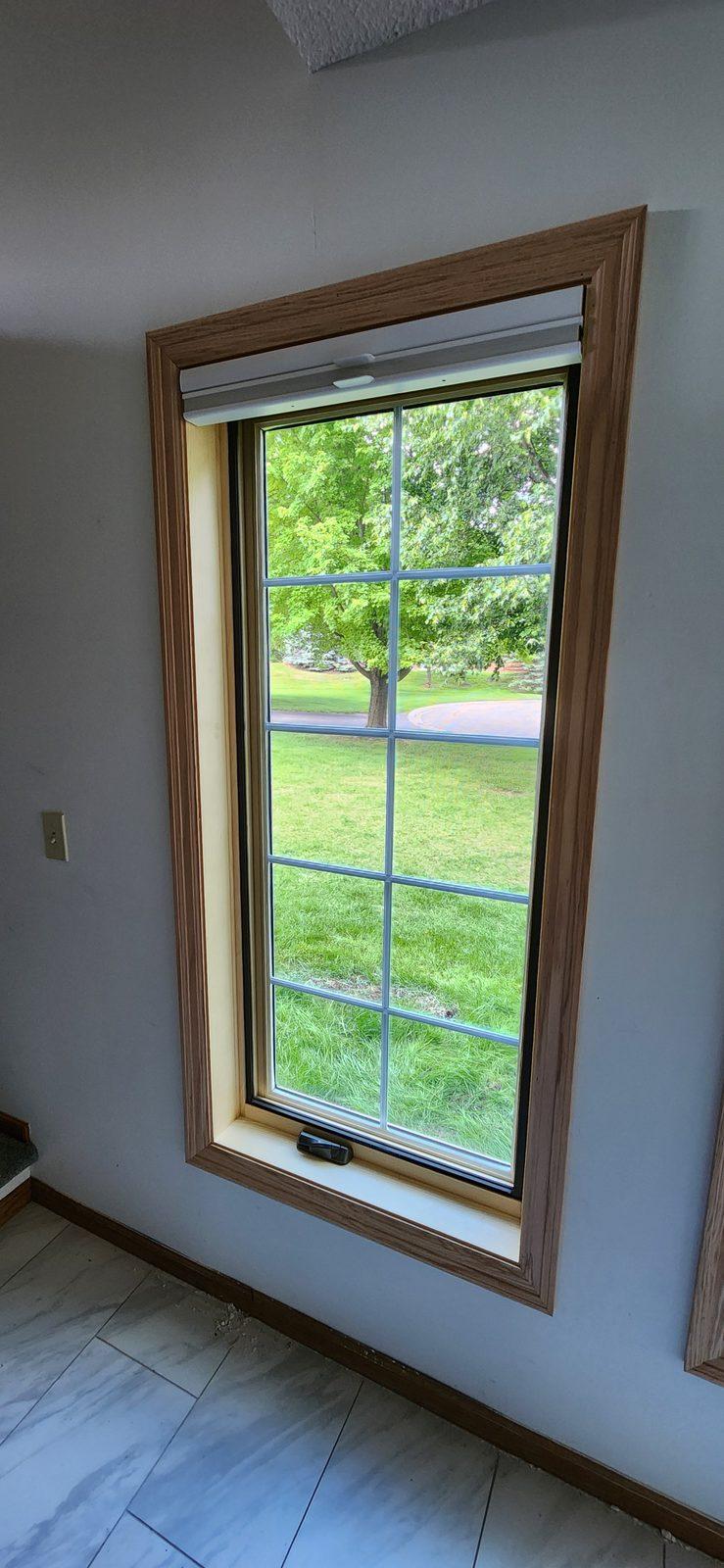
Plenty of houses built in the 1980s and 1990s, in suburbs like Maple Grove, Plymouth and Woodbury, came with clad wood windows: wood inside, a thin aluminum or vinyl skin outside. The skin keeps sun off the wood. It also hides water. Rain runs down the glass, gets past a tired glazing seal or a cladding joint, and sits on the wood under the skin. Thirty-some winters of that and the wood goes soft from the inside out. From the yard the window can still look fine.
Rot on these windows starts in the same three places. The sash bottom rail, where water pools against the glass. The sill, where water from the sash drains and never quite dries. The brickmould and the bottom of the jamb legs, where the outside trim meets the siding. Look for peeling finish or black stains on the inside of the bottom rail, a sash that has sagged or won't seal, cladding that is loose or bulged at the bottom corners, and paint that keeps failing on the sill.
The thumbnail test tells you most of it. Press your thumbnail, or a small screwdriver, into the wood at the bottom corners of the sash and along the sill on the inside. Sound wood dents a little and pushes back. Rotted wood gives, feels spongy, or flakes out in fibers. Try the same spots on the outside where you can reach bare wood past the cladding. One soft corner on a sash is a warning. A soft sill means the frame is part of the problem.
We do not patch rotted sashes or sell sash kits. The fix is a new window. What decides the method is the frame. A solid frame takes an insert window in the old opening. A soft sill, soft jamb legs or rotted brickmould means full-frame: everything out to the rough opening, the framing checked, and the new window flashed into a dry hole.
Hail or wind damage? Start with the 10-minute window and door check. · How a storm claim works with us
Get a written quote for this job
Three photos and a sentence is enough: a reply within one business day, or ask for a free in-home estimate. Or text the photos to 763-250-3621.
What you supply
- Thumbnail-test photos at the bottom corners of each bad sash and along the sill
- A photo of each whole window from inside and outside
- The window brand and any label or glass etching you can find
- Whether you want to keep wood inside or are open to fiberglass or vinyl
- Interior trim plans: keep, repaint or replace
- Clear access inside and out to the windows on the list
What JMB supplies
- A check of each window: sash rails, sill, jamb legs, brickmould and the cladding joints
- A window-by-window call on insert or full-frame, based on the frame
- Measurements and the order for replacement windows in clad wood, fiberglass or vinyl
- Old sashes, or the whole old window, removed and hauled away
- Rough opening checked; soft framing cut back and replaced before the new window goes in
- Sill pan or sloped sill, flashing tape lapped shingle-style, and low-expansion foam
- New exterior trim or aluminum capping over the frame, sealed to the siding
- Interior stops or casing reset or replaced, primed or finished to match, and caulked
How it is priced: per opening
Quoted in writing from your photos, with a reply within one business day. What moves the number:
- Insert in a sound frame, or full-frame when the sill or jambs are rotted
- How far the rot goes: sash only, sill and jamb, or into the framing
- Replacement material: clad wood, fiberglass or vinyl
- Wood interior, stainable or paintable finish, and grilles
- Window type and size: casement, double-hung, slider, picture
- Exterior trim: new brickmould, aluminum capping, or siding work around the opening
- Second-story access
Press a thumbnail into the bottom of the sash; if it goes in, send that photo and one of the whole window. We reply within one business day. Or book a free in-home estimate.
How long it takes
Replacement windows are made to order, so the wait is the order. Once here: most inserts take a few hours each; a full-frame opening with rotted framing can take most of a day.
How your project works
- 1
Send photos, get a written quote
Send three photos of the space and a sentence about what you want. You get a clear, itemized reply within one business day. Prefer a look in person? A free in-home estimate is always an option.
- 2
Pick materials, or bring your own
We help you choose profiles and materials that fit the house and the budget, or match your existing millwork exactly — or you buy the door or trim yourself and we install it. Everything is confirmed before the crew is scheduled.
- 3
Clean, precise installation
The crew shows up on time, protects floors and furniture, and installs with tight joints and consistent reveals. Photos of the finished work go in your job folder.
- 4
Walkthrough and invoice
We walk the finished work with you. If anything is not right, we fix it before we call the job done. Then one invoice, paid by check or direct deposit — no card fees, no payment links.
Situations and options
Insert in a sound frame
The sash is soft but the sill and jambs pass the thumbnail test. The old sashes and balances come out, a new window is set in the old frame, and the outside of the frame is capped in aluminum. Interior trim usually stays.
Full-frame for a rotted sill
The sill, jamb legs or brickmould are soft. The window comes out to the rough opening. We check the framing, replace what is rotted, set a sill pan and flashing, and put in a new window with new trim inside and out.
Clad wood to keep the wood look
Wood inside, cladding outside, the same look the house has now. Options such as Andersen clad wood lines. The new cladding is still a skin over wood, so the flashing under it matters as much as the window.
Fiberglass with a finished interior
A fiberglass frame does not rot. Options such as Andersen and ProVia lines come with interior finishes that can be painted, stained or that look like wood, depending on the line. A good fit where the old windows rotted fast.
Rotted brickmould and exterior trim
Rotted brickmould usually means water got behind the trim, not just the sash. It is replaced along with the window, in a material that does not rot, and sealed to the siding so the next window stays dry.
Rotted 1980s–90s Clad Wood Windows — Sash Bottoms and Sills: questions, answered
Why do clad wood windows rot?
The aluminum or vinyl cladding covers the wood outside, but it is not a seal. Water runs down the glass and gets in at the glazing seal, the corner joints of the cladding or the sill. Once it is under the skin, it sits against the wood and dries slowly, because the cladding blocks the sun and air. Over many Minnesota freeze-thaw winters the wood at the bottom of the sash and along the sill goes soft. It usually starts years before you can see anything from outside, which is why a window that looks fine can be spongy at the bottom.
Can a rotted sash be fixed?
Some carpenters cut out soft wood and fill it with epoxy, and on a small spot that can buy time. We do not repair sashes, and we do not sell sash kits. When the bottom rail of a clad sash is soft, the rot is usually under the cladding too, and the sill below has taken the same water. We replace the window. If only the sash is soft and the frame is solid, an insert window goes into the old frame. If the sill is soft too, it is a full-frame replacement.
Insert or full-frame for rotted windows?
The frame decides. If the sill and jamb legs are solid, the opening is square and the outside trim is sound, an insert window can go into the old frame. It is faster and the interior trim usually stays. If the sill is soft, a jamb leg gives under a thumbnail, the brickmould is rotted or there are water stains on the wall below, it is full-frame. The whole window comes out to the rough opening, so we can see the framing and flash the new window into a dry, solid opening.
Can I keep the wood look inside?
Yes. A clad wood replacement window keeps real wood on the inside and cladding outside, the same as now. Options such as Andersen clad wood lines do that. If you want a frame that will not rot, fiberglass lines, such as some from Andersen and ProVia, come with interior finishes you can paint or stain, or that look like wood, depending on the line. Woodgrain vinyl is another option. Bring a photo of your trim and we match the stain or paint as closely as the line allows.
How do I know if the frame is rotted?
Do the thumbnail test on the frame, not just the sash. Press a thumbnail or small screwdriver into the sill on the inside, the bottom of each jamb leg, and the brickmould outside. Sound wood dents and pushes back; rotted wood gives or flakes. Other signs: a sill that dips in the middle, cladding that is loose at the bottom corners, stained drywall or swollen trim under the window, and paint that keeps peeling on the sill. Any one of those on the frame points to full-frame replacement.
What photos should I send?
For each bad window: a close-up of your thumbnail pressed into the bottom corner of the sash, a close-up of the sill, and a photo of the whole window from inside and from outside. Add a photo of the label or glass etching if you can find it, and one of the side of the house so we can see the siding and trim. Tell us which windows open and which ones stick. We reply within one business day. Or book a free in-home estimate and we test the windows ourselves.
Recent JMB work, from our job log
59 installs recorded across 30 Twin Cities communities since Dec 2025. Window and door installs for homeowners and the builders we work with. Counts come straight from our job log; no customer names.
Whole house, several, or just one
Send photos and we reply within one business day, or book a free in-home estimate.
Related jobs we do
Replace Old Wood Windows With Clad Wood Windows — Wood In, Clad Out
The old wood windows are rotting outside, but you want wood trim and wood sash inside. Clad wood keeps the wood where you see it and covers it where the weather hits.
Read moreClad Wood or Fiberglass Replacement Windows? When Wood Inside Matters
The house has stained woodwork and you do not want white plastic frames in the middle of it. Two ways to get there, one of them with real wood.
Read moreFull Frame Window Replacement — Old Window Out to the Rough Opening
The frame is rotted, the sill is soft, or you want the most glass the opening allows. Full frame takes it all out and starts over at the studs.
Read moreInsert Replacement Windows — Pocket Install in the Old Frame
The frames are sound, the trim is worth keeping, and you want new windows without opening the walls. An insert sets into the old frame.
Read moreReplace 1990s Builder Grade Windows — Fogged Glass, Leaking Mulls
The house was built in the 1990s and still has its original windows. Some are fogged, the double hungs will not stay up, and there is a water stain under the big mulled unit.
Read moreReplace Original Wood Windows — Painted Sash and Storms Out for Good
The house still has its first wood windows: single-pane sash painted many times over, storms hung outside, and a draft you can feel from the couch.
Read morePage reviewed November 22, 2026 · JMB Builders LLC, MN license BC809005 · All windows pages
Where we work
Window Replacement & Installation near you
Based in Zimmerman, scheduling across the Twin Cities metro. A few of the towns we cover: