
Clad Wood or Fiberglass Replacement Windows? When Wood Inside Matters
The house has stained woodwork and you do not want white plastic frames in the middle of it.
Reply within one business day. Or call / text 763-204-2099.
Clad wood vs fiberglass replacement windows is mostly a question about the inside of the house. If your trim is stained oak, pine or fir and you want the window to match it, clad wood gives you real wood to stain; fiberglass gives you a stiffer, lower-upkeep frame with a painted or wood-veneer interior. JMB Builders supplies and installs both across the Twin Cities metro, priced per window. Send photos of your trim and we reply within one business day.
- Clad wood: real wood inside to stain and match trim
- Fiberglass: stiffer frame, no interior upkeep
- Priced per window, windows supplied
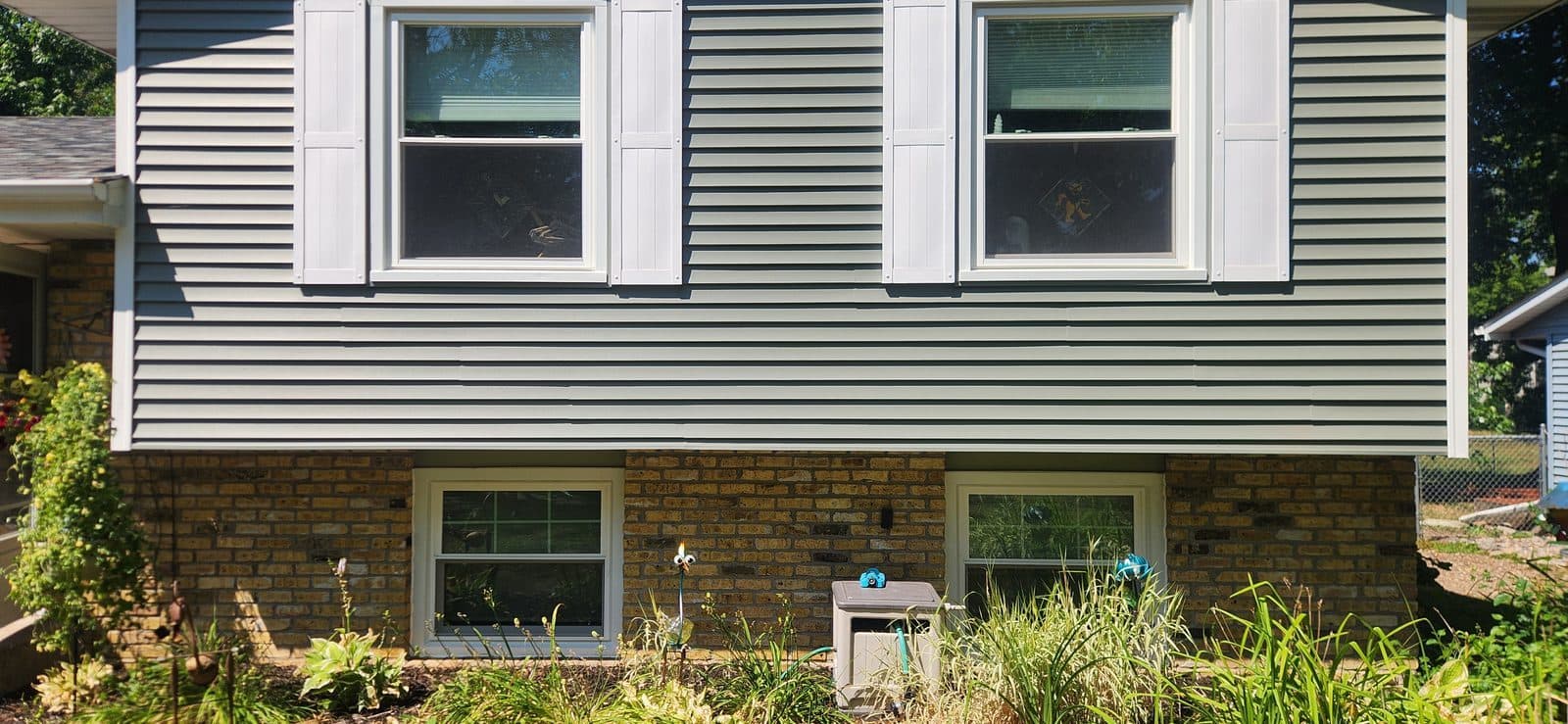
A clad wood window is a wood frame and sash with aluminum or fiberglass cladding on the outside. Inside it is real wood, usually pine, that can be stained to match the casing and the floor, or ordered with oak, fir or other species on some lines. Outside, the cladding takes the weather. A fiberglass window is fiberglass on both faces; inside it is painted, or on some lines faced with a thin real-wood veneer so it looks like wood from the room.
The reason to choose clad wood is the interior. In a house with stained trim throughout, a stained wood sash and jamb disappear into the room, and a painted frame does not. The reason to choose fiberglass is everything else: it does not swell, it does not need refinishing inside, it is stiffer on big openings, and the exterior and interior are one material with no seam between a wood core and a metal skin. The veneer interiors on fiberglass have gotten good, but up close, next to real oak casing, you can tell.
Where clad wood went wrong in the past was water. Older clad units let water behind the cladding at the corners and the wood rotted from inside. Current lines handle that better, but the install matters more on clad wood than on any other frame: a sill pan under the unit, the cladding joints sealed, and the exterior sealant kept up. JMB Builders installs both. We will tell you which rooms justify real wood and which ones nobody will ever look at closely enough to care.
Get a written quote for this job
Three photos and a sentence is enough: a reply within one business day, or ask for a free in-home estimate. Or text the photos to 763-204-2099.
What you supply
- Photos of your interior trim and a note on the species and stain color
- Whether you want the window frames stained to match or painted a contrasting color
- Your exterior color, which both materials offer in a wide range
- Clear access to each window inside
What JMB supplies
- A recommendation per room on the quote: clad wood, fiberglass with veneer, or painted fiberglass
- In-home measure of each opening before anything is ordered
- The windows in the material and interior finish you pick
- Removal and haul-away of the old windows
- Sill pan, shims, low-expansion foam and sealed cladding joints at every opening
- Jamb extensions and casing in a matching species when the trim is being redone
- Staining or painting of new wood jambs and casing, quoted as a separate line, or finish them yourself
- Photos of the finished windows in your job folder
How it is priced: per window
Quoted in writing from your photos, with a reply within one business day. What moves the number:
- Clad wood costs more than fiberglass in most lines, and a hardwood interior costs more than pine
- Factory-finished interior vs. raw wood stained on site
- Veneer interior option on fiberglass lines, where offered
- Insert vs. full-frame install; full-frame lets the jambs and casing be matched too
- Window count, size and second-story access
- Matching jamb extensions and casing in the same species
Send a close-up of your casing and the window from inside. If you know the species and stain, say so; if not, we identify it at the free in-home estimate.
How long it takes
Clad wood and fiberglass install at the same pace, three to five windows a day as inserts. Staining new wood interiors adds a return visit after the install.
How your project works
- 1
Send photos, get a written quote
Send three photos of the space and a sentence about what you want. You get a clear, itemized reply within one business day. Prefer a look in person? A free in-home estimate is always an option.
- 2
Pick materials, or bring your own
We help you choose profiles and materials that fit the house and the budget, or match your existing millwork exactly — or you buy the door or trim yourself and we install it. Everything is confirmed before the crew is scheduled.
- 3
Clean, precise installation
The crew shows up on time, protects floors and furniture, and installs with tight joints and consistent reveals. Photos of the finished work go in your job folder.
- 4
Walkthrough and invoice
We walk the finished work with you. If anything is not right, we fix it before we call the job done. Then one invoice, paid by check or direct deposit — no card fees, no payment links.
Situations and options
Clad wood, stained to match
Real pine, oak or fir inside, stained on site or at the factory to match the existing casing. The choice for a house where the woodwork is the point. Aluminum or fiberglass cladding outside in the color you pick.
Fiberglass with a wood-veneer interior
A fiberglass frame faced inside with a thin real-wood veneer you can stain. Looks like wood from across the room, moves and lasts like fiberglass. Offered on a limited set of lines, options such as Pella Impervia or Marvin Elevate-style products.
Painted fiberglass in rooms with painted trim
Kitchens, bathrooms and basements with white or painted casing do not need wood. A painted fiberglass frame there saves money and keeps the stained wood budget for the living room and bedrooms.
Clad wood on the front, fiberglass elsewhere
The rooms guests see get the real wood; the rest of the house gets fiberglass in a matching exterior color. From the street every window looks the same, because the cladding and the fiberglass exterior come in the same colors.
Clad Wood or Fiberglass Replacement Windows? When Wood Inside Matters: questions, answered
Do clad wood windows still rot?
They can, at the corners and the sill if water gets behind the cladding and sits. Current lines seal those joints better than units from the 1980s and 1990s, and the install decides the rest: a sill pan under the frame, sealed cladding joints and a maintained exterior sealant bead. Fiberglass has nothing to rot, which is the honest reason some people choose it even when they would prefer wood inside.
Can fiberglass windows look like wood inside?
Some lines offer a real-wood veneer bonded to the interior of the fiberglass frame, and it stains like wood. From across the room it reads as a wood window. Up close, next to solid oak casing, the veneer edges and the sash profile give it away. If the woodwork is the point of the room, order clad wood; if you want the look at a lower upkeep, the veneer does the job.
Which holds up better in Minnesota cold, clad wood or fiberglass?
Both are good in the cold. Wood is a natural insulator and does not get brittle; fiberglass moves very little with temperature so the sealant joints stay tight. The difference is upkeep: wood interiors need a finish kept up where sun and condensation hit them, and fiberglass needs nothing inside. A tight glass package matters more to the room than the frame material.
Can new windows match my existing oak trim?
Yes. A clad wood window with an oak interior, or a pine interior stained to match, sits in an oak-trimmed room without looking new. We match the stain to a sample from your casing. On a full-frame job we can also install new oak jamb extensions and casing so the whole opening matches; on an insert job the existing oak casing stays and the new sash is matched to it.
Is clad wood or fiberglass better for resale?
Neither one hurts a sale when it is installed well and matches the house. A buyer walking through a stained-trim house notices white frames in the middle of the woodwork more than they notice the frame material. Match the interior to the house, keep the exterior color consistent on every wall, and either material is a selling point.
Can I stain the inside of the window myself to save money?
Yes. The window arrives with a raw or primed wood interior and you stain and seal it after we install. Staining is quoted as a separate line on our quote, or leave it to us if you would rather not. Either way, finish the wood within the first season so condensation does not raise the grain over the winter.
Recent JMB work, from our job log
59 installs recorded across 30 Twin Cities communities since Dec 2025. Window and door installs for homeowners and the builders we work with. Counts come straight from our job log; no customer names.
Related jobs we do
Replace Old Wood Windows With Clad Wood Windows — Wood In, Clad Out
The old wood windows are rotting outside, but you want wood trim and wood sash inside. Clad wood keeps the wood where you see it and covers it where the weather hits.
Read moreFiberglass Window Replacement — Stiff Frames, Dark Colors, Paintable
You want a black or dark exterior, a slimmer frame, or a window you can paint later. Fiberglass handles all three; we measure, order and install it.
Read moreVinyl or Fiberglass Replacement Windows? Deciding by Opening and Color
Two quotes, one in vinyl and one in fiberglass, and the fiberglass number is higher. Here is where that difference buys something on a Minnesota house and where it does not.
Read more1920s Bungalow Window Replacement — Original Trim Kept, Pockets Filled
A pre-war bungalow with wood double hungs, broken sash cords, storms on the outside and wide craftsman casing inside that you do not want to lose.
Read moreWhite, Black or Bronze Replacement Windows? Picking the Frame Color
Every sample board has white, black and a bronze that looks brown in the showroom and grey on the house. Here is how we help you choose before the order goes in.
Read more1.5 Story Dormer Window Replacement — Upstairs Knee Wall Bedrooms
The upstairs windows in the dormers are drafty and hard to reach, and the bedrooms up there are the coldest rooms in the house.
Read morePage reviewed October 10, 2026 · JMB Builders LLC, MN license BC809005 · All windows pages
Where we work
Window Replacement & Installation near you
Based in Zimmerman, scheduling across the Twin Cities metro. Closest first: