
Match Existing Siding on an Addition — Bump-Outs Tied Into the House
The addition is framed and sheathed, and now it has to look like it was always part of the house instead of a box stuck on the back.
To match existing siding on an addition you match three things: the profile, the exposure and the color, then align the courses so the seam between old and new disappears, and flash the tie-in so the joint never leaks. JMB Builders sides additions and bump-outs across the Twin Cities metro to match the house, or details a deliberate transition when the old siding is faded or discontinued. Licensed MN contractor BC809005, priced per project. Photo quote or free in-home estimate.
- Profile, exposure and color matched from a sample
- Courses aligned across the old-to-new seam
- Tie-in flashed where addition meets house
- Free in-home estimate
- Licensed MN contractor BC809005
Send photos and hear back within one business day — or book a free in-home estimate.
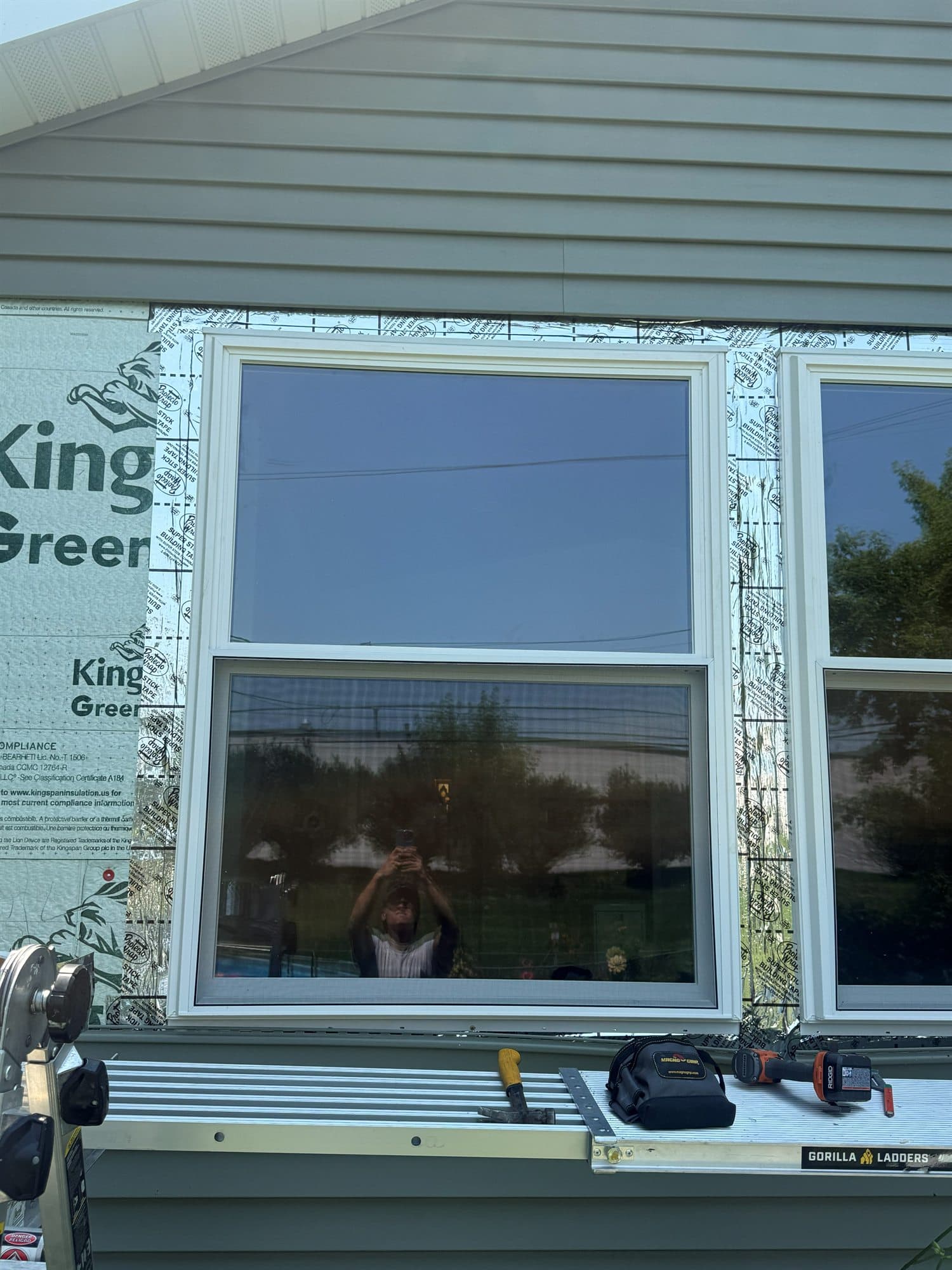
An addition is judged by its seam. If the siding courses line up across the corner where the new wall meets the old, the profile and exposure are the same, and the color is close, nobody sees where the house ends and the addition begins. If any of those is off, the addition looks like an addition for the rest of its life. The siding is the last trade on the job, and it is the one that decides how the whole project reads.
The match starts with a piece of the existing siding in hand. We pull one from a hidden spot or take the measurements off the wall: the profile (double 4, dutch lap, a specific LP or Hardie exposure), the thickness, the butt shape, and the color against a current sample in the shade. Vinyl that has been on the house fifteen years has faded, and a new panel in the same color will be darker; we show you the difference before ordering. Discontinued profiles get the nearest match or a different plan.
Then the carpentry. The starter on the addition is set to the house's course lines so the laps run through. The corner where old meets new gets a corner post or corner board, and the house wrap on the addition laps under the old siding, which we unlock or cut back a course to tuck the flashing. Where a roof on the addition dies into the old wall, kick-out and step flashing go in and the old siding is re-set over them. When the match cannot be made, the honest answer is a transition: a trim board at the seam, a different texture on the addition, or re-siding the one connected wall so the change happens at a corner where it belongs.
What you supply
- Photos of the addition and the wall it meets, and a close-up of the existing siding with a tape measure across one course
- A spare piece of the existing siding if you have one in the garage, or the brand and color if you know it
- The addition sheathed and the windows and doors set, or we do that as part of the job
- A decision on match vs. transition once we show you the sample against the house
What JMB supplies
- Profile, exposure and color identification from a sample or measurements, with a current sample held against the house
- House wrap and flashing on the addition, lapped under the existing siding at the tie-in
- Kick-out and step flashing where an addition roof meets the old wall, with the old siding re-set over it
- Starter set to the house's course lines so the laps align across the seam
- Siding, corner posts or corner boards, J-channel or trim boards at the new windows and doors
- Light blocks, hose bib and vent blocks to match the house
- Re-siding of the connected wall when that is the only way to make the addition disappear
- Photos of the tie-in flashing before it is covered and the finished addition in your job folder
How it is priced: per project
Quoted in writing from your photos, with a reply within one business day. What moves the number:
- Squares on the addition and how many walls meet the house
- Whether the existing product is current and matchable or discontinued
- Re-siding the connected wall or the whole elevation to hide a color difference
- Roof-to-wall tie-ins that need kick-out and step flashing and old siding re-set
- Trim level at the new windows and doors to match the house's trim
- Soffit, fascia and gutters on the addition tied into the existing runs
A photo of the existing siding with a tape measure across one full course, and a photo of the back of a loose piece if you have one, is how we identify it.
How long it takes
A bump-out or small addition: two to three days. A full room addition with a roof tie-in: about a week. Add days if the connected wall is re-sided to blend the color.
How your project works
- 1
Send photos, get a written quote
Send three photos of the space and a sentence about what you want. You get a clear, itemized reply within one business day. Prefer a look in person? A free in-home estimate is always an option.
- 2
Pick materials, or bring your own
We help you choose profiles and materials that fit the house and the budget, or match your existing millwork exactly — or you buy the door or trim yourself and we install it. Everything is confirmed before the crew is scheduled.
- 3
Clean, precise installation
The crew shows up on time, protects floors and furniture, and installs with tight joints and consistent reveals. Photos of the finished work go in your job folder.
- 4
Walkthrough and invoice
We walk the finished work with you. If anything is not right, we fix it before we call the job done. Then one invoice, paid by check or direct deposit — no card fees, no payment links.
Situations and options
Exact match, current product
The house siding is still made in that profile and color. We order it, align the courses and the addition disappears. Fading on the old siding is the only variable, and we show you the sample against the wall first.
Match the profile, accept the color shift
Same profile, same color name, but the old vinyl has faded and the new is darker. Fine on a back or side wall; on a front elevation we suggest re-siding the connected wall so the change happens at a corner.
Deliberate transition
The old product is discontinued or the colors will never agree. A trim board at the seam, a texture change on the addition such as board and batten, or a wainscot of stone or shakes makes the addition read as designed.
Re-side the connected elevation
The addition and the whole wall it meets get new siding, so the only seam is at a corner. Costs more squares, and it is the only way to make a faded wall and a new addition truly match.
Match Existing Siding on an Addition — Bump-Outs Tied Into the House: questions, answered
Can new siding on an addition really match the existing house?
If the product is still made, yes on profile and exposure, and close on color. The gap is fade: vinyl and painted siding on the house have lightened over the years, and the new panel is the original color. We hold a current sample against the wall in the shade and show you. On a back or side wall most people accept it; on a front wall the fix is to re-side that connected wall so the seam is at a corner.
How do you line up the siding courses between the addition and the house?
The starter strip on the addition is set to the house's course lines, measured off the existing laps at the corner, not off the foundation. Then the exposure is held exactly the same so the laps run straight through the corner post. If the addition floor is at a different height than the house, the courses still align because they are referenced to the house, not the addition.
How do you identify the brand and profile of my existing siding?
From a loose piece if you have one; the back usually has the maker and the profile printed on it. Otherwise from measurements: the course height, the butt thickness and the shape of the lap narrow it to a few products, and a current sample held against the wall confirms it. For LP SmartSide or Hardie, the exposure and the texture tell us, and the paint is matched from a chip.
What if my old siding is discontinued and cannot be matched?
Then the addition gets a deliberate transition instead of a near miss. A vertical trim board at the seam, a different texture on the addition such as board and batten or shakes, or a stone or shake wainscot on the addition makes it read as designed. Or the connected wall is re-sided along with the addition so the only seam is at a corner. We show you the options against the house before ordering.
How is the joint between the addition and the house flashed?
The house wrap on the addition laps under the existing siding at the tie-in; we unlock or cut back a course of the old siding to tuck it. Where an addition roof dies into the old wall, step flashing goes under the old siding and a kick-out at the bottom sends water into the gutter. The old siding is re-set over the flashing, and the inside corner gets a corner post or a sealed trim board.
Do you side additions you did not frame?
Yes. A lot of additions are framed and sheathed by one contractor and the owner wants the siding matched by someone who does siding. We take it from the sheathing: wrap, flashing, windows and doors flashed into the wrap, siding aligned to the house, trim to match. If the windows are not in yet, we set those too.
Recent JMB work, from our job log
59 installs recorded across 30 Twin Cities communities since Dec 2025. Window and door installs for homeowners, builders and dealers. Counts come straight from our job log; no customer names.
Get a written quote for this job
Three photos and a sentence is enough: a reply within one business day, or ask for a free in-home estimate. Or text the photos to 763-333-4066.
Related jobs we do
Siding Replacement Contractor — New Siding on the Whole House
The siding is worn out, the paint is failing or the hail got it, and you want one contractor to take it to the sheathing and put the whole exterior back right.
Read moreSiding Patch After Window or Door Removal — Close In the Opening
The old basement window is gone, the side door nobody used is coming out, or the bathroom window is being moved. The hole has to be closed so that from the yard you cannot tell there was one.
Read moreReplace Siding on One Side of the House — Vinyl Matched or Swapped
One wall is faded, cracked, melted by a grill or beaten up by weather, and the rest of the house is fine. You want that wall redone without residing the whole house.
Read moreDetached Garage Siding Replacement — Match the House or Not
The house got new siding years ago and the garage out back is still wearing the old stuff, rotted along the bottom and peeling on the alley side.
Read moreTownhome Siding Replacement — HOA Approval, Colors, Matching Neighbors
Your end unit needs siding, the association has a color list and an approval form, and the unit next door is staying as it is.
Read moreAluminum Siding Replacement — Dented, Chalking Panels Off, New Siding
The aluminum siding has been on since the sixties, the paint rubs off white on your hand, and every panel below shoulder height has a dent in it.
Read morePage reviewed October 2, 2026 · JMB Builders LLC, MN license BC809005 · All siding pages
Where we work
Siding near you
Based in Zimmerman, scheduling across the Twin Cities metro. Closest first: