
Storm Chaser vs Local Contractor — How to Vet One in Minnesota
The morning after the hail there are trucks on every block and a card in your door.
Reply within one business day. Or call / text 763-250-3621.
A storm chaser vs local contractor comes down to four checks you can do in an evening: look the company up on the Minnesota Department of Labor and Industry license search, confirm a Minnesota address you could drive to, walk away from any deductible offer, and read anything you sign for an assignment of benefits or a lock-in before the claim is approved. JMB Builders is licensed Minnesota residential building contractor BC809005, based in Zimmerman.
- Check the license on the MN DLI lookup
- No deductible offers: Minnesota law bars them
- Read before you sign; no assignment of benefits
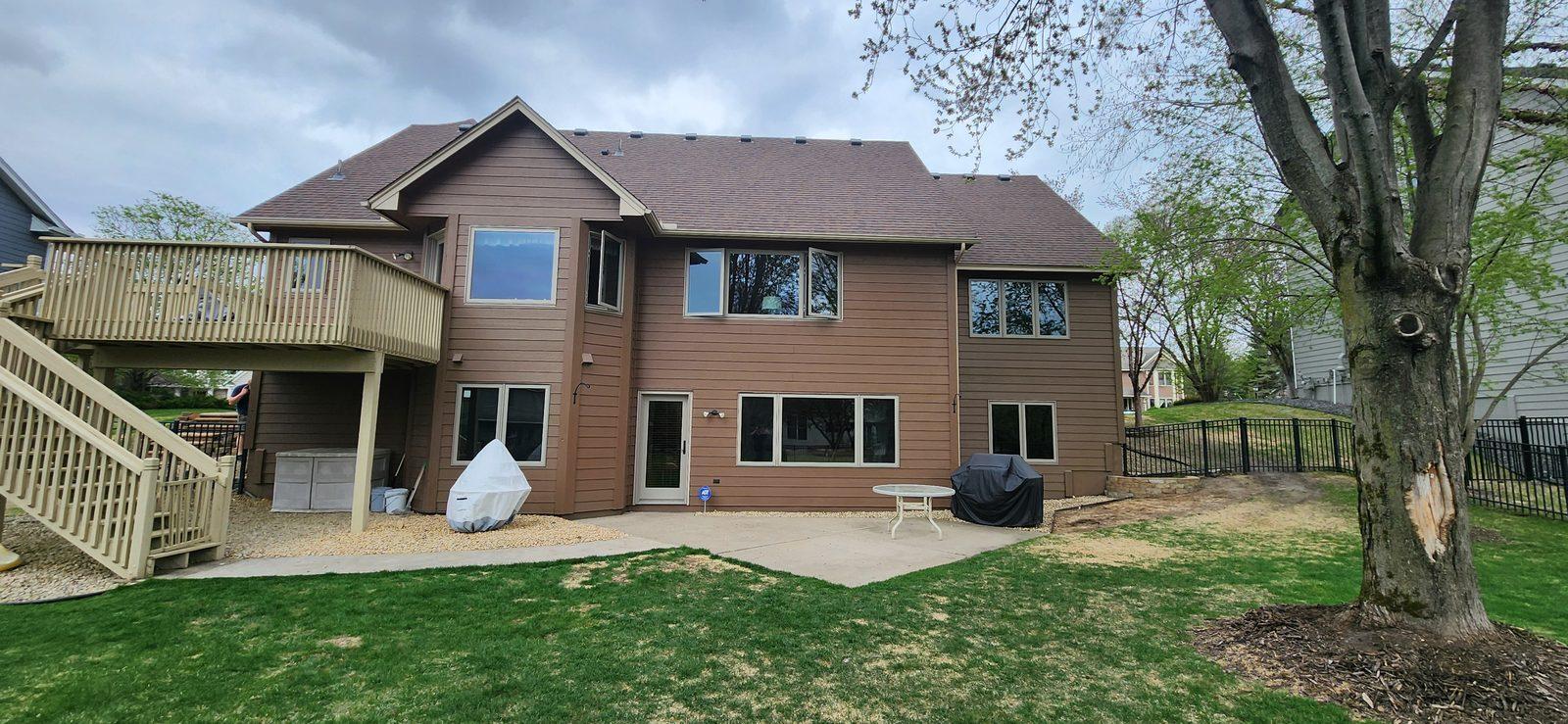
After a big hail or wind event, contractors follow the storm. Some are out-of-state companies that set up for a season, sell a lot of roofs and siding, and leave; some are local companies that are simply busy. The work can be fine either way. The problems show up later: a warranty from a company with no office to call, a contract signed before the adjuster came, a deductible that was quietly absorbed with your name on the claim. The way to sort it is not the truck or the pitch. It is the paperwork.
First, the license. A contractor doing more than one trade on your home needs a state license, not just a registration. Check any number in the Department of Labor and Industry lookup. The lookup shows whether the license is active, who holds it, and any enforcement actions. Match the license to the work. In Minnesota a residential roofer (RR) license covers roofing only. It does not cover windows, doors, siding, gutters, soffit or fascia. JMB Builders holds Minnesota residential building contractor license BC809005.
Second, the deductible. Minnesota law does not let a contractor pay, waive or rebate your insurance deductible, or promise to. Minnesota law also bars a contractor from rewarding you for letting it inspect, for filing a claim, or for referring neighbors on an insurance job. Third, the contract. Read it for an assignment of benefits and for language that commits you before the claim is approved. Minnesota lets a homeowner cancel certain insurance-paid contracts within 72 hours after the insurer denies the claim; the law names contracts for roofing services. If a seller came to your door and you signed at home, Minnesota usually gives you until midnight of the third business day to cancel. This is not legal advice — ask your agent or an attorney.
Fourth, the role. Section 325E.66 keeps a contractor out of adjusting. We are a contractor, not a public adjuster. We do not read your policy for you, tell you what it covers, or negotiate your claim. Ask your agent, your adjuster or an attorney. Anyone who says they will take over your claim is offering something the law does not let a contractor do. Last, the address: a Minnesota street address you could drive to, a phone number that is answered next year, and references from this town, not a brochure.
Send what you have: photos, the adjuster's estimate, your storm date
Send photos of the damage and the name of anyone who has already quoted; we reply within one business day. Or book a free in-home estimate. Either way you get a scope you can compare, whoever you hire.
We never pay, waive or rebate a deductible — Minnesota law forbids it.
What you supply
- The company name and license number from the card, the truck or the contract, so you can look them up before you sign anything
- A copy of any contract or authorization you have been asked to sign, read in full before you sign it
- A call to your agent before you commit, to ask about your deductible, your policy's rules on contractors and assignment of benefits
- Your own photos of the damage, taken before anyone has been on the roof
What JMB supplies
- Our license number, BC809005, on the estimate and the contract, for you to check on the DLI lookup
- A Minnesota address in Zimmerman and the same phone number next year
- An itemized scope with photos that you can take to any contractor, not a contract to sign at the door
- No deductible offers, and no gift, fee or credit for an inspection, a claim or a referral
- No assignment of benefits: you file, you deal with your insurer, and you pay us by check or direct deposit
- Photos of the finished work in your job folder, and a final invoice matched to the scope for depreciation release
How it is priced: per project
Quoted in writing from your photos, with a reply within one business day. What moves the number:
- The approved scope and the trades on it; this page is about vetting, the work is priced on the trade pages
- Whether the repair is to the insurer's scope or to what you choose to have done
- Materials matched to what is on the house vs. upgrades paid directly
- Timing after a widespread storm, when material and crew schedules stretch for everyone
Send photos of the damage and the name of anyone who has already quoted; we reply within one business day. Or book a free in-home estimate. Either way you get a scope you can compare, whoever you hire.
How long it takes
Looking a contractor up on the DLI site takes a few minutes. After a large storm, material lead times stretch for every contractor, and a start date that sounds too fast is worth asking about.
How your project works
- 1
Send photos, get a written quote
Send three photos of the space and a sentence about what you want. You get a clear, itemized reply within one business day. Prefer a look in person? A free in-home estimate is always an option.
- 2
Pick materials, or bring your own
We help you choose profiles and materials that fit the house and the budget, or match your existing millwork exactly — or you buy the door or trim yourself and we install it. Everything is confirmed before the crew is scheduled.
- 3
Clean, precise installation
The crew shows up on time, protects floors and furniture, and installs with tight joints and consistent reveals. Photos of the finished work go in your job folder.
- 4
Walkthrough and invoice
We walk the finished work with you. If anything is not right, we fix it before we call the job done. Then one invoice, paid by check or direct deposit — no card fees, no payment links.
Situations and options
The license lookup
Search the Minnesota DLI license site by the company name on the contract. Match the license type, residential building contractor or residential roofer, to the work. Check it is active and who the qualifying person is. Write the number on your copy of the contract.
The deductible test
Ask directly whether you will be paying your full deductible. Any answer other than yes, including a discount that happens to equal it, a rebate, or an advertising allowance, is a reason to stop. Minnesota law is on your side here and the contractor knows it.
The contract read-through
Look for an assignment of benefits, a clause that commits you before the claim is approved, a cancellation clause with a penalty, and a price that is whatever the insurance pays. Take it to your agent if anything is unclear. A good contractor will wait while you read.
The address and the references
A street address in Minnesota, not a PO box or a hotel. A license that has been active for more than this season. Two or three references from nearby that you can call, and a job you can drive past. Many cities require door-to-door sellers to carry a solicitor permit; ask your city.
What any contractor on a claim should give you
An itemized estimate before you sign anything that authorizes repairs. Written notice of the Minnesota 325E.66 rules with the first estimate. A license number you can look up. No offer on the deductible, and no gift, fee or credit for an inspection, a claim or a referral.
What you do, what we do on a claim
You file the claim and talk to your insurer. We are a contractor, not a public adjuster, and we do not interpret coverage.
Who does what on a claimWe photograph every opening and write a line-item estimate.
How we document each windowWe can be there when the adjuster visits, if you want us there.
What happens at the adjuster visitMinnesota law does not let a contractor pay, waive or rebate your insurance deductible, or promise to. We will not, and the deductible is yours to pay.
The deductible rule in plain wordsLicensed Minnesota residential building contractor BC809005, Zimmerman.
Look up the license
Storm Chaser vs Local Contractor — How to Vet One in Minnesota: questions, answered
How do I check if a contractor is licensed in Minnesota?
Use the license lookup on the Minnesota Department of Labor and Industry website. Search by company name or license number and check that the license is active, that it fits the work, and whether there are enforcement actions. A contractor doing more than one trade on your home needs a state license, not just a registration. A residential roofer (RR) license covers roofing only, not windows, doors or siding. Ours is BC809005.
A roofer offered to waive my deductible. Is that allowed?
No. Minnesota law does not let a contractor pay, waive or rebate your insurance deductible, or promise to. The rule is Minnesota Statutes section 325E.66. A contractor who waives it has to make the money up somewhere, and the usual place is the claim, with your name on it. The deductible is yours to pay, by check or direct deposit, to whoever you hire, and walk away from anyone who says you do not have to. This is not legal advice — ask your agent or an attorney.
What is an assignment of benefits and should I sign one?
It is a document that gives the contractor the right to be paid directly by your insurer and often to deal with the insurer in your place. Some are harmless direct-pay authorizations; some hand over your whole claim. We do not use one: you file, you deal with your insurer, and you pay us. If you are asked to sign one, read it and ask your agent what it does under your policy before you do.
Is a contractor from out of state automatically a storm chaser?
No. Some good companies travel to storm areas and do good work, and some bad companies have always been local. The checks are the same for both: a Minnesota license you can look up, a Minnesota address and phone that will answer in a few years, no deductible games, and a contract you have read. What an out-of-state company usually cannot offer is someone to call when a leak shows up three winters from now.
Should I sign anything before the adjuster comes?
Read it first and ask what it commits you to. Some contractors ask you to sign a contingency agreement that makes them your contractor if the claim is approved, sometimes with a cancellation fee. Minnesota lets a homeowner cancel certain insurance-paid contracts within 72 hours after the insurer denies the claim; the law names contracts for roofing services. Read your contract's cancellation section or ask an attorney. Our estimate is a scope with photos, not a contract, and you can take it to anyone.
Do I have to use the contractor my insurance company recommends?
That is a question for your policy and your agent; we do not read your policy for you or tell you what it covers. Ask your agent whether your policy says anything about the insurer's preferred contractors. Whoever you choose, the same checks apply: license, address, deductible, contract.
What should any contractor on a claim give me?
An itemized estimate before you sign anything that authorizes repairs: each opening, the unit, the labor, the trim. Written notice of the Minnesota 325E.66 rules with the first estimate on an insurance job; the state requires it. A license number you can look up on the DLI site. And no offer on your deductible, and no gift, fee or credit for an inspection, a claim or a referral. If any of those is missing, ask why before you sign.
Recent JMB work, from our job log
59 installs recorded across 30 Twin Cities communities since Dec 2025. Window and door installs for homeowners and the builders we work with. Counts come straight from our job log; no customer names.
Related jobs we do
What to Do After Storm Damage to Your House — Homeowner Checklist
The hail has stopped, the wind is down, and there are strangers with clipboards on the block already. Here is what to do in the next hour, the next day and the next week.
Read moreActual Cash Value vs Replacement Cost — Why the First Check Is Less
The adjuster's estimate says one number, the check that came says a smaller one, and the letter mentions depreciation. Nothing is wrong. Here is what the numbers are and what has to happen for the rest to arrive.
Read moreStorm Damage Repair Under Your Deductible — Paid Direct, No Claim
A cracked window, a torn screen, a bent piece of fascia and a few chipped siding panels. Enough to fix, maybe not enough to file. We quote it so you can see where it lands against your deductible and decide.
Read moreContractor Estimate for Window Insurance Claim, Line by Line
The adjuster is coming Thursday and you want something on paper that lists every window and door the storm hit. This is what that estimate should look like and what goes in it.
Read moreHail Damage Roof Inspection and Insurance Claim Repair
After a hailstorm the question is simple: is there real damage, and is it enough to matter? We look, we document, and we tell you straight before anyone calls your insurance company.
Read moreEmergency Board-Up and Tarping After a Storm — Windows, Doors, Roof
The storm is over. A window is out, a door is hanging open, and rain is coming again. Here is what to do in the first 48 hours, in order, and how the house gets closed up.
Read morePage reviewed November 22, 2026 · JMB Builders LLC, MN license BC809005 · All insurance repairs pages
Where we work
Insurance & Storm Damage Repairs near you
Based in Zimmerman, scheduling across the Twin Cities metro. A few of the towns we cover: