
Asbestos Siding House Window Replacement — Inserts, Siding Untouched
A 1940s or 1950s house with the gray cement shingles that nobody wants to break, and wood windows behind them that are done.
Reply within one business day. Or call / text 763-204-2099.
Window replacement in an asbestos siding house is done as inserts: the new window sets inside the old frame, and the cement-asbestos shingles are never cut, drilled, sanded or pried. JMB Builders does it across the Twin Cities metro. Where a frame is rotted through, the shingles around that opening are removed first by a licensed abatement contractor. Priced per window, quoted from photos or at a free in-home estimate, with a reply within one business day.
- Priced per window, insert installs
- Shingles never cut, drilled or disturbed
- Full-frame only after abatement by a licensed contractor
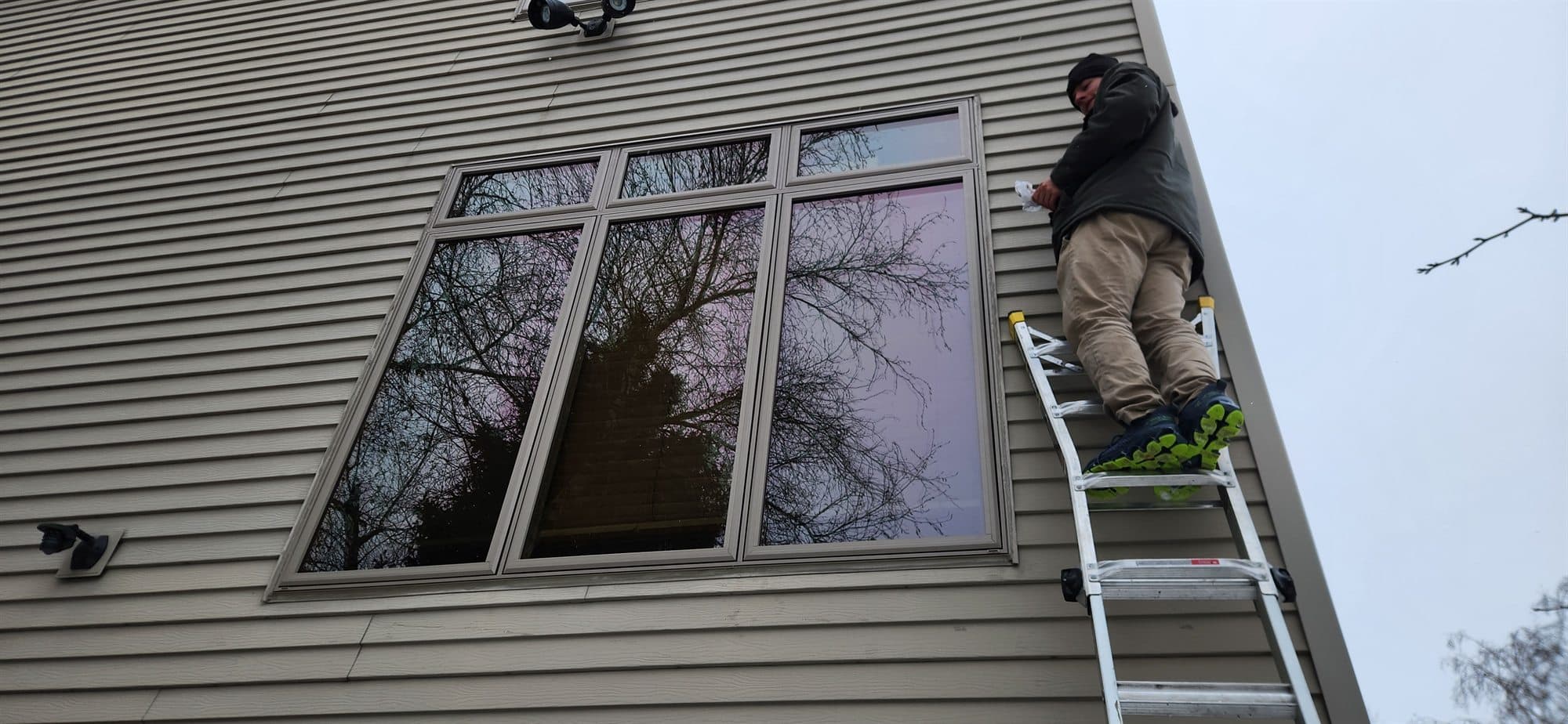
Cement-asbestos siding, the flat gray or painted shingles with the wavy bottom edge, is on thousands of 1940s and 1950s houses around the Twin Cities. Left alone and painted, it lasts forever and is not a hazard. Cut, drilled, broken or sanded, it releases fibers, and the rules on who may do that and how are strict. So the question on every one of these houses is: can the windows be replaced without touching the siding? For most of them, yes.
The windows sit in wood frames with wood brickmould or flat trim nailed to the sheathing, and the shingles butt to that trim. An insert window sets inside the old frame. The sash, stops and parting beads come out from inside, the new unit goes in, and outside the old trim is either kept and repaired or wrapped in capping, both of which stop at the trim and never reach the shingles. No saw touches the wall.
Where the frame or sill is rotted through, an insert has nothing sound to sit in. Full-frame means removing the shingles around that opening, and that is done first by a licensed abatement contractor, with the window work following once the opening is clear. We tell you which windows are which from the photos and the in-home look, so the quote is honest about it. Interior painting is quoted as a separate line — or leave it primed and caulked and paint it yourself.
Get a written quote for this job
Three photos and a sentence is enough: a reply within one business day, or ask for a free in-home estimate. Or text the photos to 763-204-2099.
What you supply
- Your pick of window style, exterior color and glass
- Whether the exterior trim should be kept and repaired, or capped in the window color
- Photos of each window from outside with the trim and shingles in frame, one from inside, and a close-up of the sill
- Your interior paint color if you want us to finish the inside trim
What JMB supplies
- In-home measure of every opening and a frame-by-frame check for rot, from inside and at the sill
- The windows, ordered as inserts to the old frames
- Old sash, stops and hardware out from inside and hauled away
- New unit set and sealed inside the old frame, foamed from inside
- Exterior trim repaired and re-caulked, or capped in the window color, stopping at the trim
- Interior stops, stool and casing finished to the room
- A clear note on any opening that needs full-frame work and abatement before we can do it
- Photos of the finished windows in your job folder
How it is priced: per window
Quoted in writing from your photos, with a reply within one business day. What moves the number:
- Insert into a sound frame vs. an opening that needs abatement and full-frame work first
- Exterior trim kept and repaired vs. capped
- Rot in the sill that can be repaired from inside the frame vs. rot that means the frame comes out
- Old aluminum storms and screens removed and hauled
- Glass package, grilles and exterior color
- Number of windows in the job
Send one photo of each window from outside with the trim and a few shingles in frame, one from inside, and a close-up of the sill. We tell you which openings are insert candidates before you commit.
How long it takes
Insert windows in an asbestos-sided house: four to six a day, all from inside and at the trim. Openings that need abatement are scheduled after that contractor's work is done.
How your project works
- 1
Send photos, get a written quote
Send three photos of the space and a sentence about what you want. You get a clear, itemized reply within one business day. Prefer a look in person? A free in-home estimate is always an option.
- 2
Pick materials, or bring your own
We help you choose profiles and materials that fit the house and the budget, or match your existing millwork exactly — or you buy the door or trim yourself and we install it. Everything is confirmed before the crew is scheduled.
- 3
Clean, precise installation
The crew shows up on time, protects floors and furniture, and installs with tight joints and consistent reveals. Photos of the finished work go in your job folder.
- 4
Walkthrough and invoice
We walk the finished work with you. If anything is not right, we fix it before we call the job done. Then one invoice, paid by check or direct deposit — no card fees, no payment links.
Situations and options
Insert, trim kept
The old wood trim stays and is repaired, primed and re-caulked to the new unit. Nothing on the wall outside the trim is touched. The usual choice when the trim is sound.
Insert, trim capped
The old trim is wrapped in aluminum capping in the window color, bent to stop at the trim's outer edge. The shingles are not touched. Faster, no painting outside.
Rotted frame, abatement first
Where the frame is rotted through, the shingles around that opening are removed by a licensed abatement contractor, then the opening is rebuilt, the new window flashed in full-frame and the wall patched with a fiber cement shingle that looks the part.
Storms removed
Old aluminum storm windows screwed to the trim come off and are hauled away. The screw holes in the trim are filled; no fasteners go into the shingles.
Asbestos Siding House Window Replacement — Inserts, Siding Untouched: questions, answered
Can you replace windows in a house with asbestos siding?
Yes, with insert windows, which never touch the siding. The new unit sets inside the old wood frame; the work is done from inside and at the trim, and the shingles are not cut, drilled, pried or sanded. Where a frame is rotted through and must come out, the shingles around that opening are removed first by a licensed abatement contractor.
Do you cut or remove asbestos siding to install windows?
No. We do not cut, break, drill, sand or remove cement-asbestos shingles. Insert installs stay inside the old frame and at the trim. When an opening needs the shingles removed for a full-frame install, that removal is done by a licensed abatement contractor before our work, and we do the window and the wall patch afterward.
How do I know if my siding is asbestos?
Cement-asbestos shingles are flat, hard, brittle, about a foot by two feet, often with a wavy or straight bottom edge and a wood-grain or smooth face, nailed in courses on houses from the late 1930s through the 1960s. They do not dent, they chalk when scratched and they shatter rather than bend. The only sure answer is a lab test of a small sample taken by someone qualified to take it. Until then, treat it as asbestos.
What if the window frame is rotted in an asbestos sided house?
A rotted sill with a sound frame around it can often be repaired from inside the frame and still take an insert. A frame rotted through at the jambs or sill has to come out, and that means the shingles around the opening must come off first, by a licensed abatement contractor. We identify those openings up front so you know which windows are straightforward and which need the extra step.
Will capping the trim damage the asbestos shingles?
No. Capping is bent to the trim and fastened to the trim, and its outer edge stops at the trim's edge where the shingles begin. Nothing is fastened to or cut from the shingles. The joint between capping and shingle is sealed with a bead of caulk.
Should I replace the asbestos siding when I replace the windows?
Not for the windows' sake. Inserts work fine with the siding in place, and the siding itself, left alone and painted, is not a problem. If you are planning to re-side anyway, the removal is a job for a licensed abatement contractor, and the windows would then go in full-frame with new flashing before the new siding, which is the best outcome for the windows. We can sequence the window work either way.
Recent JMB work, from our job log
59 installs recorded across 30 Twin Cities communities since Dec 2025. Window and door installs for homeowners and the builders we work with. Counts come straight from our job log; no customer names.
Related jobs we do
Insert Replacement Windows — Pocket Install in the Old Frame
The frames are sound, the trim is worth keeping, and you want new windows without tearing into the walls. An insert slides into the old frame.
Read more1940s House Window Replacement — Post-War Wood Sashes and Storms
A small house from the war years with wood sashes behind aluminum storms, odd window sizes, and plaster walls nobody wants opened up.
Read moreWindow Replacement in a Cedar Siding House — Wood Trim, No Capping
A stained or painted cedar house with wood windows that are done, and you do not want aluminum wrapped over the trim to fix it.
Read moreWindow Replacement in a Stucco House — Sealed Without Cracking It
Stucco does not forgive a sloppy window install. We replace the windows without cracking the walls, and flash them so water stays out.
Read moreCape Cod House Window Replacement — Front Pairs, Gable Ends, Shutters
A symmetrical little house with two windows each side of the door, six-over-six sashes that are painted shut, and shutters that have to go back on straight.
Read more1.5 Story Dormer Window Replacement — Upstairs Knee Wall Bedrooms
The upstairs windows in the dormers are drafty and hard to reach, and the bedrooms up there are the coldest rooms in the house.
Read morePage reviewed October 10, 2026 · JMB Builders LLC, MN license BC809005 · All windows pages
Where we work
Window Replacement & Installation near you
Based in Zimmerman, scheduling across the Twin Cities metro. Closest first: