
Cedar Siding Repair — Rotted Lap and Shake Boards Replaced
Cedar that has gone soft at the bottom courses, split at the nails or been drilled by woodpeckers — replaced board by board, flashed right and primed, so the house stays cedar.
JMB Builders does cedar siding repair on homes across the Twin Cities metro: rotted, split or woodpecker-damaged cedar lap boards, bevel siding and shakes cut out and replaced with matching cedar, back-primed, with the flashing behind them fixed so the new board does not rot the same way. Priced per project from your photos within one business day; painting or staining is quoted as its own line.
- Priced per project: boards, flashing, prime
- Matched profile cedar, back-primed before install
- Quote from photos in 1 business day
- Licensed MN contractor BC809005
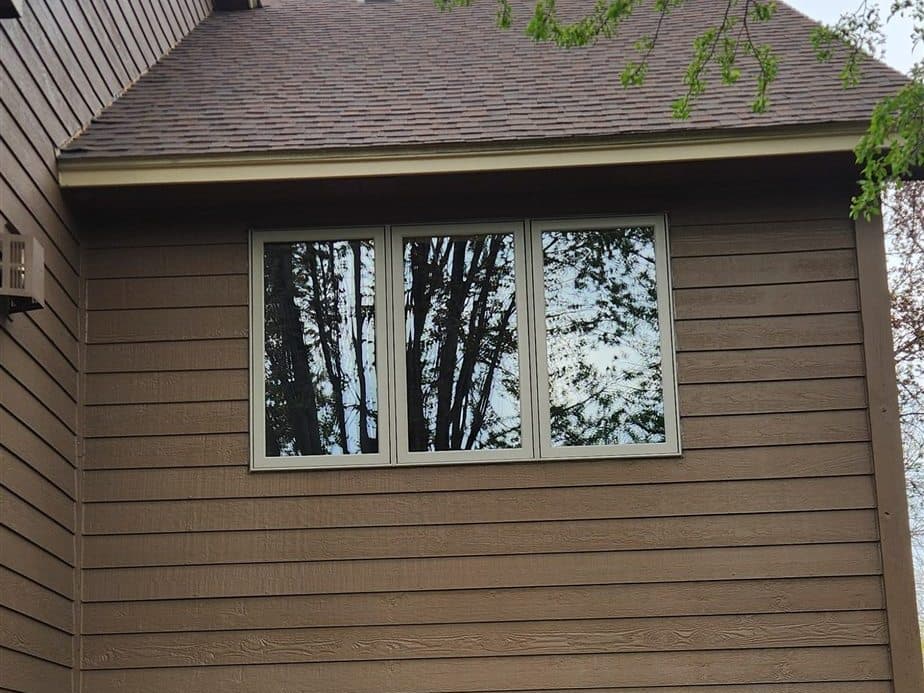
Cedar siding lasts a long time when it can dry. It rots where it cannot: the bottom two or three courses that sit in splashback off a deck or a patio, the boards under a window with no drip cap, the run below a roof-to-wall joint with no kick-out flashing, and anywhere the end grain was left bare against a corner board. The board is the symptom; the water path is the cause. When we replace a cedar board we fix what let the water in behind it, or the new board goes the same way in a few years.
Matching is most of the skill. Cedar lap comes in several exposures and profiles: plain bevel, rabbeted bevel, channel, tongue-and-groove, and shakes and shingles at different exposures. We measure yours and source the same profile in clear or tight-knot cedar to match what is there. New boards are back-primed and end-primed before they go on, blind-nailed or face-nailed with stainless or hot-dipped nails the way the original was, and the courses are woven into the existing siding so the patch is invisible once painted.
Painting or staining the new boards is quoted as a separate line, or leave them primed and finish them yourself. On a stained house, we prime with a stain-compatible primer or leave them raw for the stain, whichever your finish needs.
What you supply
- Photos of the damaged area from a few feet away and from across the yard, plus a close-up of a board end showing the profile
- A photo of any nearby window, deck, roof edge or corner that might be sending water to the spot
- Your paint or stain color if you want us to finish it; painting is quoted as a separate line, or finish it yourself
What JMB supplies
- Rotted or damaged boards cut out cleanly at the studs, with sound boards left in place
- Matching cedar in your profile and exposure, back-primed and end-primed before install
- Housewrap or felt patched behind the repair, with flashing tape at any window or trim it meets
- Drip cap, kick-out flashing or Z-flashing added where the water came from
- Stainless or hot-dipped nails, set the way the original boards were fastened
- Sheathing replacement where the rot went through the board into the wall
- Woodpecker holes plugged or the board replaced, and a note on what attracted them
- Priming of the new boards, with painting or staining quoted as its own line
How it is priced: per project
Quoted in writing from your photos within one business day. What moves the number:
- How many boards and how many separate spots on the house
- Profile: a common bevel is stocked; a rabbeted, channel or unusual exposure is a special order
- Sheathing or framing repair behind the boards where the rot went deeper
- Flashing work at windows, roof-to-wall joints and decks that caused the rot
- Height: second-story and gable repairs need staging
- Removing and resetting a deck ledger, hose bib, light or trim to get the boards out
- Painting or staining the new boards, quoted as a separate line
A close-up of a board end and a tape measure across three or four courses tells us the profile and exposure so the quote covers the right material.
How long it takes
A few boards at one spot: half a day. The bottom courses along a whole wall: one to two days. Painting adds a visit once the primer has cured.
How your project works
- 1
Send photos, get a written quote
Send three photos of the space and a sentence about what you want. You get a clear, itemized quote within one business day. We only come out to measure first when the job needs a tape measure — no pressure, no games.
- 2
Pick materials, or bring your own
We help you choose profiles and materials that fit the house and the budget, or match your existing millwork exactly — or you buy the door or trim yourself and we install it. Everything is confirmed before the crew is scheduled.
- 3
Clean, precise installation
The crew shows up on time, protects floors and furniture, and installs with tight joints and consistent reveals. Photos of the finished work go in your job folder.
- 4
Walkthrough and invoice
We walk the finished work with you. If anything is not right, we fix it before we call the job done. Then one invoice, paid by check or direct deposit — no card fees, no payment links.
Situations and options
Bottom course rot at decks and patios
The most common cedar repair: the lowest courses soaked by splashback off a deck or slab. We replace them, add a kick-out or a drip edge where it is missing, and hold the new bottom edge off the surface so it can dry.
Boards under windows and at trim
Water that gets past a window with no drip cap or an unflashed corner board rots the siding below it. We replace the boards, flash the window or trim properly, and prime the end grain where it meets the trim.
Cedar shakes and shingles
Individual shakes pulled and replaced to match the exposure and the stagger, blind-nailed under the course above. Sidewall shingles that have cupped or split are replaced in the same way, a few or a whole course.
Woodpecker damage
Holes are usually a sign of insects in the board or a bird that likes the sound of a hollow wall. We replace the board, check for carpenter ants or bees, and can add a deterrent at the spot they keep returning to.
Cedar Siding Repair — Rotted Lap and Shake Boards Replaced: questions, answered
Can rotted cedar siding boards be replaced individually?
Yes. Bevel and lap cedar is nailed one course over the next, so a single board can be cut at the studs, the nails above it pulled or cut, and a new board slid in and nailed. The patch is woven into the existing courses rather than making a square hole, so it disappears once it is painted. Shakes and shingles come out one at a time the same way.
How do you match old cedar siding?
We measure the exposure and identify the profile: plain bevel, rabbeted bevel, channel, tongue-and-groove or shake. Most profiles are available from a lumberyard in clear or tight-knot cedar; an unusual one can be milled to match. The new board goes on back-primed and gets painted with the rest of the wall, so the color matches too. A stained house is stained to match after the new board weathers slightly.
Why is my cedar siding rotting at the bottom?
Splashback. Rain hits a deck, a patio or the ground and bounces onto the bottom courses, and the end grain and the underside of the board drink it in. A bottom course tight to a slab with no gap never dries. We replace the courses, prime the end grain, and hold the new bottom edge off the surface so water can get out and air can get in.
Should I repair cedar siding or replace it all?
Repair it when the rot is in the usual spots (bottom courses, under a window, at a roof-to-wall joint) and the rest of the wall is sound. Replace the wall or the house when the boards are cupped and split everywhere, the paint will not hold, or the sheathing behind is going. We tell you which on the quote from your photos, and we can quote both so you can compare.
Do you paint or stain the new cedar boards?
Yes, as a separate line on the quote. New boards go on back-primed and end-primed; the face can be primed for paint or left bare for a penetrating stain. Painting or staining the repair, or the whole wall so the color is even, is quoted on its own. Or leave it primed and finish it yourself.
Can you fix woodpecker holes in cedar siding?
Yes. A few small holes in a sound board can be plugged and filled; a board with a cluster of holes is replaced. Woodpeckers usually drill where there are insects in the wood or a hollow spot that sounds right, so we look for carpenter ants or bees in the wall and tell you if we find them. Replacing the board without dealing with the cause means the bird comes back.
Get a written quote for this job
Three photos and a sentence is enough. You hear back within one business day. Or text the photos to 763-204-2099.
Related jobs we do
Siding Repair — Storm, Hail and Woodpecker Damage
Wind took a run of siding off the gable, hail cracked the west wall, or a woodpecker found the LP — we repair the section, fix what is under it, and match it as close as the product allows.
Read moreCorner Board Replacement — Rotted Exterior Corner Trim
The bottom of the corner board is soft, the paint is lifting in sheets, and the siding ends behind it are starting to go too. We replace the corner, flash it, and tie the siding back in so it stays dry.
Read moreDrip Cap Installation Above Doors and Windows
Water stains at the top corners of the casing, paint peeling off the head trim, rot showing up at the bottom of the door: the house is missing a drip cap. We add one without tearing off the siding.
Read moreExterior House Painting — Siding and Trim Scraped, Primed, Painted
Peeling paint on the south side, chalky siding, trim that has not been touched in a decade — prepped the slow way and painted when the weather lets it cure.
Read moreLP SmartSide Siding Installation — Engineered Wood Lap and Panel
Engineered wood siding that looks like painted cedar and takes a hailstorm, installed with the sealed cuts, joint flashing and clearances that keep it that way through Minnesota winters.
Read moreJames Hardie Fiber Cement Siding Installation
Fiber cement siding does not burn, rot, or feed woodpeckers. It is heavy, it is dusty to cut, and it is unforgiving of a sloppy install — which is exactly why it is worth hiring a crew that hangs it right.
Read morePage reviewed September 24, 2026 · JMB Builders LLC, MN license BC809005 · All siding pages
Where we work
Siding near you
Based in Zimmerman, scheduling across the Twin Cities metro. Closest first: