
Corner Board Replacement — Rotted Exterior Corner Trim
The bottom of the corner board is soft, the paint is lifting in sheets, and the siding ends behind it are starting to go too. We replace the corner, flash it, and tie the siding back in so it stays dry.
Corner board replacement is pulling the two boards that wrap an outside corner of the house, fixing the flashing behind them, and setting new boards the siding can butt into. JMB Builders replaces rotted corner boards across the Twin Cities metro in cellular PVC or cedar: siding ends eased back, a flashing strip or house wrap patch behind the corner, new boards fastened into framing and held off the grade. Priced per project, quoted from photos.
- Priced per project
- PVC or cedar, matched to the existing width
- Flashing behind the corner before new boards go on
- Quote from photos in 1 business day
- Licensed MN contractor BC809005
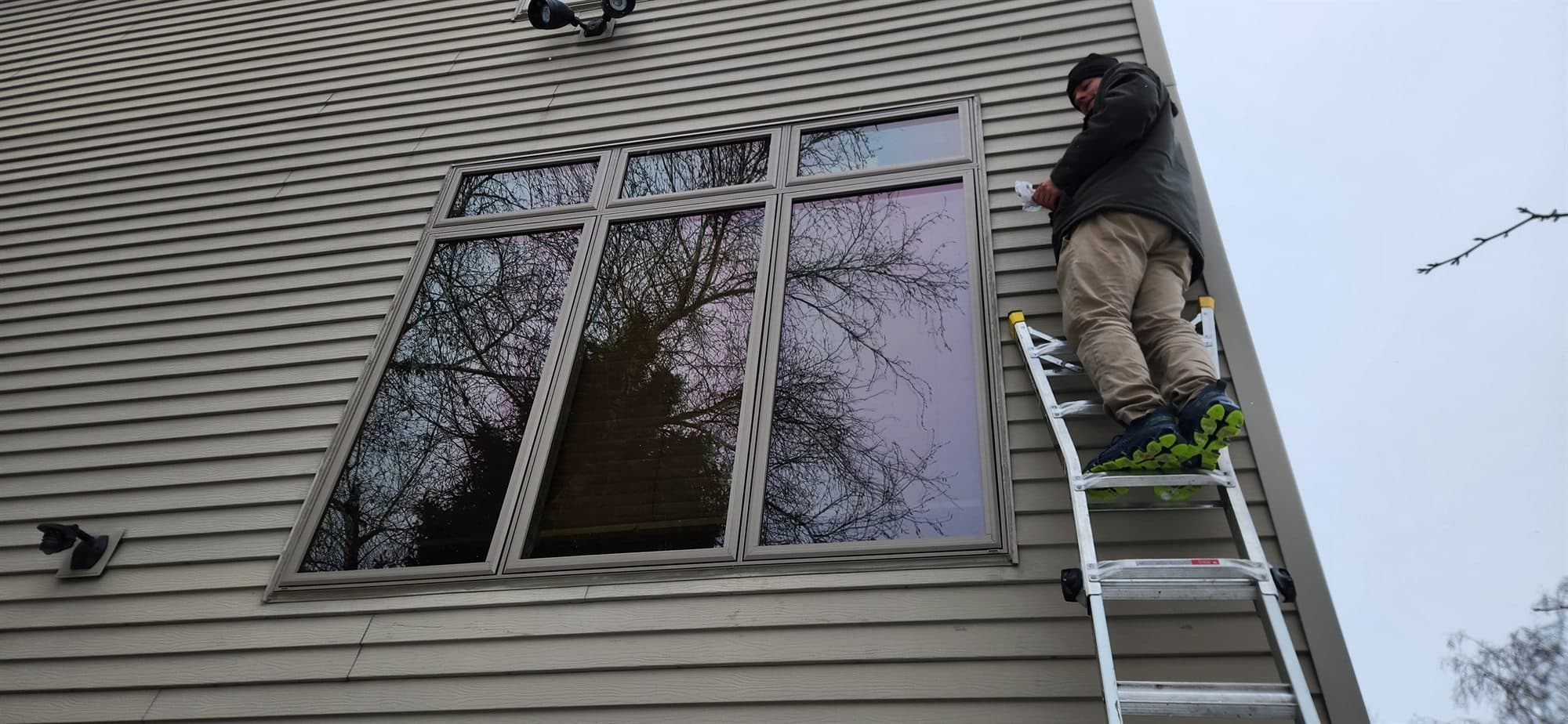
A corner board is two boards nailed together at the outside corner of the house, and every course of siding on both walls ends against them. That makes it the busiest joint on the wall. Water runs down the face, hits the end grain at the bottom, splashes up from the ground or the deck, and gets held in place by the caulk between the siding ends and the board. The bottom foot rots first. Then the siding ends behind it.
Replacing a corner is not just swapping boards. The siding ends have to be eased back so the old corner can come out without splitting them. What is behind the corner, house wrap, felt, or bare sheathing, gets a look, and a strip of flashing or self-adhered membrane goes on so any water that gets past the joint runs down and out instead of into the sheathing. Then the new boards go on, fastened into the corner framing, and the siding ends come back to meet them.
Material is the main choice. Cellular PVC does not rot and is what we use on most corners, especially the ones that sit close to grade, a deck, or a splash zone. Cedar is right when the house is stained, has a wide historic corner, or you want the whole trim package to stay wood. Either way the bottom is cut clean, held off whatever it sits over, and the end grain on cedar is sealed before it goes up.
What you supply
- Photos: the full corner from the ground, a close-up of the rot at the bottom, and a shot of where the siding meets the board
- The width of the corner board if you can measure it, so the new one matches without a site visit
- PVC or cedar, or leave it to us and we match what the house has
- Painting is quoted as a separate line — or leave it primed and caulked and paint it yourself
What JMB supplies
- Removal and haul-away of the old corner boards and any rotted siding ends
- Flashing strip or house wrap patch behind the corner, lapped so water runs out
- New cellular PVC or cedar corner, built to the existing width and thickness
- Stainless or coated ring-shank nails into the corner framing, PVC cement or glue at the joint
- Siding ends eased back, re-fastened and sealed to the new corner
- Sheathing or corner framing repair when the rot went past the trim, quoted from the photos
- Painting or staining the new corner when you want it done, quoted as its own line
- Photos of the finished corner in your job folder
How it is priced: per project
Quoted in writing from your photos within one business day. What moves the number:
- Number of corners and the height of each: a one-story corner is a ladder job, a two-story corner is staging
- Bottom section only vs. the full height of the corner
- PVC vs. cedar, and whether the width is a stock size or has to be built up
- Siding type: vinyl and lap siding ease back, fiber cement and LP take more care at the ends
- Siding ends that are rotted and need to be replaced along with the corner
- Sheathing or corner studs that are soft once the boards come off
- Deck, stoop or grade tight against the bottom of the corner
Push a screwdriver into the board a foot or two up from the bottom and tell us where it stops. That tells us whether this is a bottom splice or a full corner.
How long it takes
One full-height corner on a one-story house: half a day. A two-story corner with staging: most of a day. All four corners of a house: two to three days.
How your project works
- 1
Send photos, get a written quote
Send three photos of the space and a sentence about what you want. You get a clear, itemized quote within one business day. We only come out to measure first when the job needs a tape measure — no pressure, no games.
- 2
Pick materials, or bring your own
We help you choose profiles and materials that fit the house and the budget, or match your existing millwork exactly — or you buy the door or trim yourself and we install it. Everything is confirmed before the crew is scheduled.
- 3
Clean, precise installation
The crew shows up on time, protects floors and furniture, and installs with tight joints and consistent reveals. Photos of the finished work go in your job folder.
- 4
Walkthrough and invoice
We walk the finished work with you. If anything is not right, we fix it before we call the job done. Then one invoice, paid by check or direct deposit — no card fees, no payment links.
Situations and options
Bottom section splice
The rot stops within the first few feet. We cut both boards square above the rot, flash behind, and splice in PVC of the same width. The joint is glued, filled and disappears under paint.
Full corner in PVC
Both boards come off top to bottom, the corner is flashed, and new cellular PVC goes on with glued joints and ring-shank fasteners. The choice for corners near grade or a deck.
Full corner in cedar
For stained houses or wide historic corners. Primed or sealed on all sides before it goes up, end grain sealed, bottom held off the surface below it.
Corner plus siding ends
When the siding ends behind the corner are punky too, we replace those courses back to the next stud and tie the new pieces into the new corner in the same visit.
Corner Board Replacement — Rotted Exterior Corner Trim: questions, answered
Why do corner boards rot at the bottom?
Because the bottom is end grain sitting where the water is. Rain runs down the face of the board, hits the bottom and wicks up. Splash from the ground, a stoop or a deck keeps it wet. The caulk between the siding ends and the board holds water in the joint instead of letting it out. A board that was never primed on the bottom, or was set right on the concrete or the deck, goes first.
Can you replace just the rotted bottom of a corner board?
Yes, if the rot stops within the first few feet. We cut both boards square above the rot, check what is behind them, add flashing, and splice in cellular PVC cut to the same width and thickness. The splice is glued and fastened, then filled. Once it is painted it is hard to find. If more than half the board is soft, the full corner is the cleaner job.
Should corner boards be PVC or cedar?
PVC for corners that get wet: near grade, beside a deck, under a valley with no gutter. It does not rot and does not need paint to survive. Cedar for a stained house, a wide historic corner, or when you want the trim to stay wood. Both go on the same way, with flashing behind and the bottom held off the surface below. Painting is quoted as a separate line — or leave it primed and caulked and paint it yourself.
What goes behind a corner board?
Something that sheds water. On a well-built house the house wrap wraps the corner and the corner board sits over it. On a lot of older homes there is nothing but sheathing. When the old corner comes off we look, then add a strip of self-adhered flashing or a patch of house wrap lapped over what is there, so water that gets past the joint runs down the wall and out at the bottom instead of into the sheathing.
Does the siding have to come off to replace corner boards?
No. The siding ends butt into the corner board, so we ease them back just enough to pull the old boards and set the new ones, then re-fasten and seal the ends. Lap siding and vinyl come back easily. Fiber cement and LP siding take more care because the ends chip. If the siding ends are rotted themselves, those courses get replaced back to the next stud.
How wide should the new corner boards be?
The same as the old ones, so the house looks the way it did. Measure the face of the board on each wall and send it with the photos. Most corners are a stock width and can be matched from the yard. An odd width or a corner with a bead or a cap is built up from stock or run in cedar.
Get a written quote for this job
Three photos and a sentence is enough. You hear back within one business day. Or text the photos to 763-204-2099.
Related jobs we do
PVC Exterior Trim Replacement — Swap Rotting Wood for Cellular PVC
You have painted the same trim three times and it still rots at the bottom. Cellular PVC ends that, as long as it is flashed, glued and fastened the way the material needs.
Read moreRotted Door Trim Replacement — Casing, Brickmould & Flashing
The paint is bubbling at the bottom of the door casing and a screwdriver sinks right in. We replace the rotted trim and fix the water path that caused it, so it stays fixed.
Read moreFascia Board Repair & Soffit Section Replacement
The gutter is pulling away, the fascia behind it is black and soft, and a soffit panel is hanging down. We replace the bad section, fix what caused it, and put the gutter back where it belongs.
Read moreDrip Cap Installation Above Doors and Windows
Water stains at the top corners of the casing, paint peeling off the head trim, rot showing up at the bottom of the door: the house is missing a drip cap. We add one without tearing off the siding.
Read moreDeck Railing Repair — Loose Posts, Rails and Balusters
Lean on the deck rail and it moves. A post is loose, a top rail is soft, or half the balusters are split. We anchor it so it holds a person, and replace only what needs replacing.
Read moreGarage Door Jamb Rot Repair & Weather Seal Replacement
The bottom foot of the garage door jamb is soft, the stop molding is curling, and you can see daylight beside the door. We replace the rot in PVC and put on a stop that actually seals.
Read morePage reviewed September 24, 2026 · JMB Builders LLC, MN license BC809005 · All exterior trim pages
Where we work
Exterior trim near you
Based in Zimmerman, scheduling across the Twin Cities metro. Closest first: