
Outdoor Camera Mounting and Wiring Through the Soffit
You have the cameras and you know where they should go; what you need is the cable run through the soffit and into the house without a wire dangling down the siding — that is the job on this page.
JMB Builders will run camera wire through the soffit and mount outdoor cameras on any exterior surface across the Twin Cities metro. Cable goes up into the attic and out a sealed hole in the soffit at each camera, or through the wall in a junction box where there is no attic. Cameras are anchored into brick, stucco, siding, stone or a post. Priced per project, quoted from photos of each side of the house within one business day.
- Priced per project for the cable runs and mounts
- Soffit, attic and through-wall routing
- Sealed junction box at every camera
- Licensed MN contractor BC809005
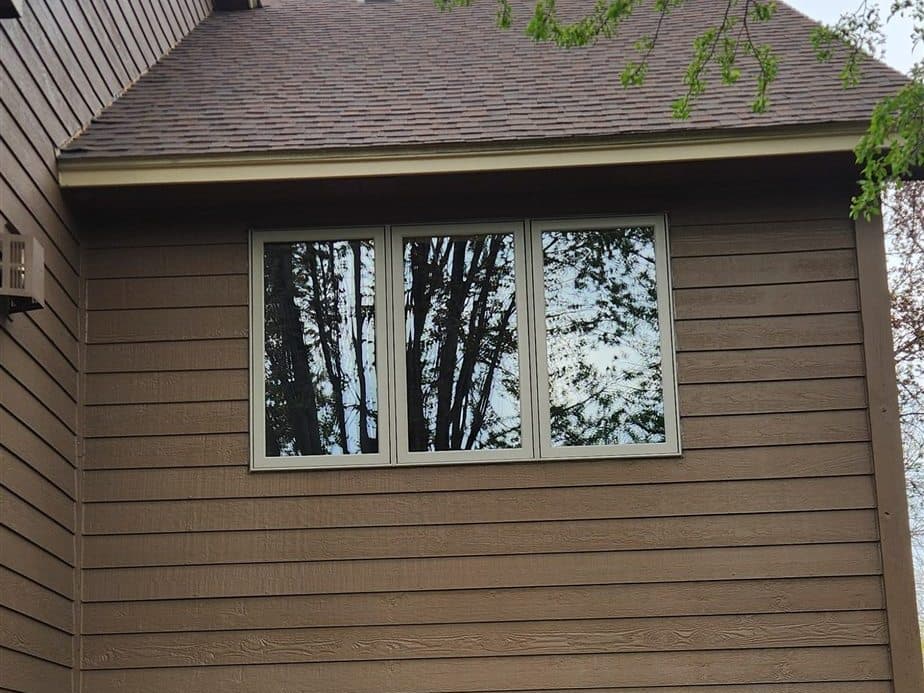
The soffit is the best way into a house for camera cable. It is under the eave, out of the rain, and the attic is right behind it. A hole drilled up through the soffit panel at each camera, the cable pulled into the attic, across to the room with the recorder, and down through a top plate into the wall: no cable showing outside except the few inches into the camera's box.
Where the soffit is not there — a gable end, a vaulted room with no attic, a porch ceiling, a detached garage — the cable goes through the wall behind the camera into a junction box, or along the exterior in a conduit painted to match, or underground to an outbuilding. Every hole through the house gets a sealed box or grommet and every fastener goes into something solid.
Mounting surfaces are the carpentry. Aluminum soffit needs a backer or a mount into the fascia framing, not the thin panel. Brick and block get anchors in the unit face. Stucco gets drilled and sealed so water cannot follow the screw in. Lap siding gets a mounting block so the camera sits flat and the hole is on a flat surface, not a lap joint. This page is the cable and the mount; the whole-system install is on the security camera page.
What you supply
- The cameras and the cable, or tell us the count and run lengths and we supply outdoor-rated cable
- Photos of each side of the house from the yard showing the eaves, and one of the attic access
- Where the recorder, switch or power will be inside the house
- For an outbuilding: a photo of the ground between it and the house
What JMB supplies
- Holes through soffit, wall or fascia, sealed with a grommet or a weatherproof junction box
- Cable pulled through the attic and down into the wall to the recorder location, with a wall plate
- Exterior-rated ethernet or power cable when you want us to supply it
- Mounting blocks for lap siding, backers for aluminum soffit, anchors for brick, block, stone and stucco
- Conduit painted to match where a run has to be on the outside of the house
- Buried conduit to a detached garage or shop when trenching is practical
- Each cable labeled by camera location at the recorder end
How it is priced: per project
Quoted in writing from your photos within one business day. What moves the number:
- Number of cameras and the total length of cable to the recorder
- Attic access to the soffits vs. a vaulted ceiling, a gable end or a porch ceiling
- Surface at each camera: soffit, lap siding, brick, stucco, stone or a post
- Exterior conduit runs or a trench to an outbuilding
- Whether we supply outdoor-rated cable, boxes and mounting blocks
- Height: cameras at a second-story eave take a taller ladder and more time
Send photos of each side of the house showing the eave and where the cameras go, plus one of the attic hatch. The runs can usually be figured from that without a visit.
How long it takes
Four cameras through the soffit with attic access: one day. A gable or vaulted section with a through-wall run: add a half day. An outbuilding with a trench: add a day.
How your project works
- 1
Send photos, get a written quote
Send three photos of the space and a sentence about what you want. You get a clear, itemized quote within one business day. We only come out to measure first when the job needs a tape measure — no pressure, no games.
- 2
Pick materials, or bring your own
We help you choose profiles and materials that fit the house and the budget, or match your existing millwork exactly — or you buy the door or trim yourself and we install it. Everything is confirmed before the crew is scheduled.
- 3
Clean, precise installation
The crew shows up on time, protects floors and furniture, and installs with tight joints and consistent reveals. Photos of the finished work go in your job folder.
- 4
Walkthrough and invoice
We walk the finished work with you. If anything is not right, we fix it before we call the job done. Then one invoice, paid by check or direct deposit — no card fees, no payment links.
Situations and options
Through the soffit into the attic
The standard route. A hole in the soffit under each camera, cable up into the attic, across to the recorder room and down through the top plate to a wall plate. Nothing shows outside.
Through the wall into a junction box
For a gable end, porch ceiling or a wall with no attic above. The camera mounts on a weatherproof box, the cable passes through the wall behind it into the room or a closet inside.
Camera on brick, stucco or stone
Anchors set into the brick or stone face, never the mortar; stucco drilled and the hole sealed. A mounting plate or box so the camera base sits flat on a rough surface.
Detached garage or yard camera
Cable in buried conduit from the house to the outbuilding, or a wireless bridge on both buildings when trenching is not practical. Cameras mounted on the outbuilding the same way as the house.
Outdoor Camera Mounting and Wiring Through the Soffit: questions, answered
How do you run camera wire through the soffit?
A hole is drilled up through the soffit panel where the camera goes, sized for the cable and a grommet. From inside the attic the cable is fished to that hole and pulled through, then routed across the attic to the room where the recorder or switch is and dropped down inside the wall to a plate. With aluminum soffit the camera mounts to a backer or the fascia framing, not the panel.
Can you mount a security camera on brick?
Yes. We drill into the face of the brick with a hammer drill, set anchors, and mount the camera or its junction box to them. Never into the mortar joint. The cable hole is drilled once, through a mortar joint where possible since that is easier to seal and patch later, and sealed with a grommet or the box gasket.
What if there is no attic above where the camera goes?
The cable goes through the wall behind the camera into a junction box inside, or up through a porch ceiling into its own framing bay, or along the exterior in a conduit painted to match the trim. Vaulted rooms and gable ends are the usual cases. We look at the photos and tell you which route each camera gets before quoting.
Can the camera cable run outside the house?
It can, in conduit. Bare cable stapled to siding looks bad, gets brittle in the cold and is easy to cut. When a run has to be outside — around a gable or across a garage wall — it goes in a conduit or raceway fastened to the trim and painted to match. Under a deck or along a foundation, outdoor-rated direct-burial cable in a shallow trench is the other option.
How do you get a camera cable to a detached garage?
Buried conduit is the reliable way: a shallow trench between the buildings, conduit with outdoor-rated ethernet in it, up into each building through a sealed hole. When a trench is not practical because of a driveway or a patio, a point-to-point wireless bridge mounted on each building carries the camera signal instead. We quote both and tell you which fits your yard.
Will the holes for the cameras leak?
Not when they are done right. Every cable hole through the house gets a grommet or a gasketed junction box, sealed with exterior sealant. Soffit holes are under the eave and out of the rain. Wall holes are drilled with a slight downward slope to the outside and sealed. Mounting screws on stucco or siding are sealed at the head.
Get a written quote for this job
Three photos and a sentence is enough. You hear back within one business day. Or text the photos to 763-204-2099.
Related jobs we do
Security Camera Installation — Wired and PoE Home Cameras
You picked the camera system; you need it on the house with the cable hidden, the cameras aimed at what matters and every mount sealed against Minnesota weather.
Read moreVideo Doorbell Installation — Ring, Nest and Wired Doorbell Cameras
The doorbell camera is in the box, the old bell button has two thin wires behind it and you are not sure the transformer is big enough — we wire it, mount it and leave it powered.
Read moreFascia Board Repair & Soffit Section Replacement
The gutter is pulling away, the fascia behind it is black and soft, and a soffit panel is hanging down. We replace the bad section, fix what caused it, and put the gutter back where it belongs.
Read moreAlarm Sensor Installation — Door, Window Sensors, Keypad and Base
The kit came with a bag of sensors and double-sided tape; half of them will fall off a cold window by January — we mount them properly and put the keypad and base where they work.
Read moreDoorbell Chime Not Working With Ring — Chime Fix and Replacement
The Ring or Nest doorbell works on the phone but the chime in the hall went silent, or hums, the day it was installed — a chime kit, a chime swap or a plug-in chime puts the sound back.
Read moreDriveway Alarm Installation — Motion Sensors and Buried Probes
A long driveway, a shop out back or a house you cannot see the road from — a sensor at the driveway that chimes inside before the car reaches the door, set so the deer and the mail truck do not trip it.
Read morePage reviewed September 24, 2026 · JMB Builders LLC, MN license BC809005 · All cameras pages
Where we work
Cameras near you
Based in Zimmerman, scheduling across the Twin Cities metro. Closest first: