
Lawn Repair After Construction — Regrade, Topsoil and Seed
The addition is done, the septic is in, the windows are new — and the yard is ruts, clay and a pile where the lawn used to be. We put the grade back and grow a lawn on it.
JMB Builders does lawn repair after construction across the Twin Cities metro and north to St. Cloud. After an addition, a foundation or septic dig, a new driveway or a window and siding job, we fill the equipment ruts, regrade the yard so it drains away from the house, spread screened topsoil, and seed with erosion blanket or lay sod. Compacted subsoil is loosened first so the new lawn takes. Priced per project.
- Priced per project, quote from photos
- Ruts filled, subsoil loosened, yard regraded
- Screened topsoil, then seed and blanket or sod
- Grade set to drain away from the house
- Licensed MN contractor BC809005
Construction leaves two problems in a yard. The first is what you can see: ruts from the skid loader and the delivery trucks, a strip of subsoil where the excavator worked, and a low spot where the trench was backfilled and settled. The second is what you cannot: the soil under the tracks is compacted so hard that seed will sprout and die, and the grade the excavator left often slopes toward the house.
The repair starts with the grade. Low spots at the foundation and along the trench line are filled and the whole area is shaped so water runs away from the house and off the yard, not into a pocket. Compacted subsoil is loosened with a tiller or the loader teeth so roots can get into it. Then screened topsoil is spread and raked to a firm, even surface that meets the old lawn without a lip.
Seed or sod finishes it. Seed is cheaper and works on a large area; it goes on with starter fertilizer under an erosion blanket or straw so the first rain does not wash it into the street, and it wants a spring or late-summer start in Minnesota. Sod is a lawn the same day and is the answer on a slope, a small area, or when you do not want to look at dirt until next year. We do either, and we tell you which one fits the season you are in.
What you supply
- Photos of the damaged area from a couple of angles, and one showing the house and the nearest downspout
- What was done: addition, septic, foundation, driveway, utility trench, or a siding and window job
- Seed or sod, or ask us which fits the time of year and the area
- Water: a hose and sprinkler that reach the area, or an irrigation system we can set
- Keep foot traffic, dogs and vehicles off the new lawn until it is rooted
What JMB supplies
- A grade check with a level from the foundation out, and a plan for where the water goes
- Ruts and trench settlement filled, and the subsoil loosened where equipment compacted it
- Regrading so the yard slopes away from the house and low spots drain
- Screened topsoil delivered, spread, and raked to a firm surface flush with the old lawn
- Seed with starter fertilizer under erosion blanket or straw, or sod laid tight and rolled
- Downspout extensions or a splash block where a downspout was dumping on the repair
- Haul-off of construction debris, rock and leftover fill from the yard
- Watering instructions for the first weeks, and photos of the finished yard in your job folder
How it is priced: per project
Quoted in writing from your photos within one business day. What moves the number:
- Square footage of the damaged area, and whether it is a strip along one wall or the whole yard
- How much topsoil it takes: shallow ruts vs. a trench line or a slope that needs to be rebuilt
- Seed and blanket vs. sod
- Grade problems at the foundation that need more fill than the lawn area does
- Construction debris, rock or a spoils pile to haul away
- Access for a skid loader and a topsoil delivery vs. wheelbarrow work through a gate
- Time of year: sod goes in most of the season, seed wants spring or late summer
Send photos from the house looking out and from the yard looking back at the house, and say what the job was. Most lawn repairs are quoted firm from that.
How long it takes
A strip along one side of the house: one day. A whole backyard after a septic or foundation job: two to three days. Seed shows in a few weeks; sod is a lawn the day it goes down.
How your project works
- 1
Send photos, get a written quote
Send three photos of the space and a sentence about what you want. You get a clear, itemized quote within one business day. We only come out to measure first when the job needs a tape measure — no pressure, no games.
- 2
Pick materials, or bring your own
We help you choose profiles and materials that fit the house and the budget, or match your existing millwork exactly — or you buy the door or trim yourself and we install it. Everything is confirmed before the crew is scheduled.
- 3
Clean, precise installation
The crew shows up on time, protects floors and furniture, and installs with tight joints and consistent reveals. Photos of the finished work go in your job folder.
- 4
Walkthrough and invoice
We walk the finished work with you. If anything is not right, we fix it before we call the job done. Then one invoice, paid by check or direct deposit — no card fees, no payment links.
Situations and options
Ruts from equipment and deliveries
Tracks and tire ruts from a skid loader, a lift or the lumber truck across the yard. The compacted strip is loosened, filled, topsoiled and seeded or sodded so it disappears into the lawn.
Yard after a septic or foundation dig
A large area of subsoil and a trench line that will settle. Regraded away from the house, topsoiled, and usually seeded under blanket because of the size, with the trench line topped off again if it settles.
Strip along the house after siding or windows
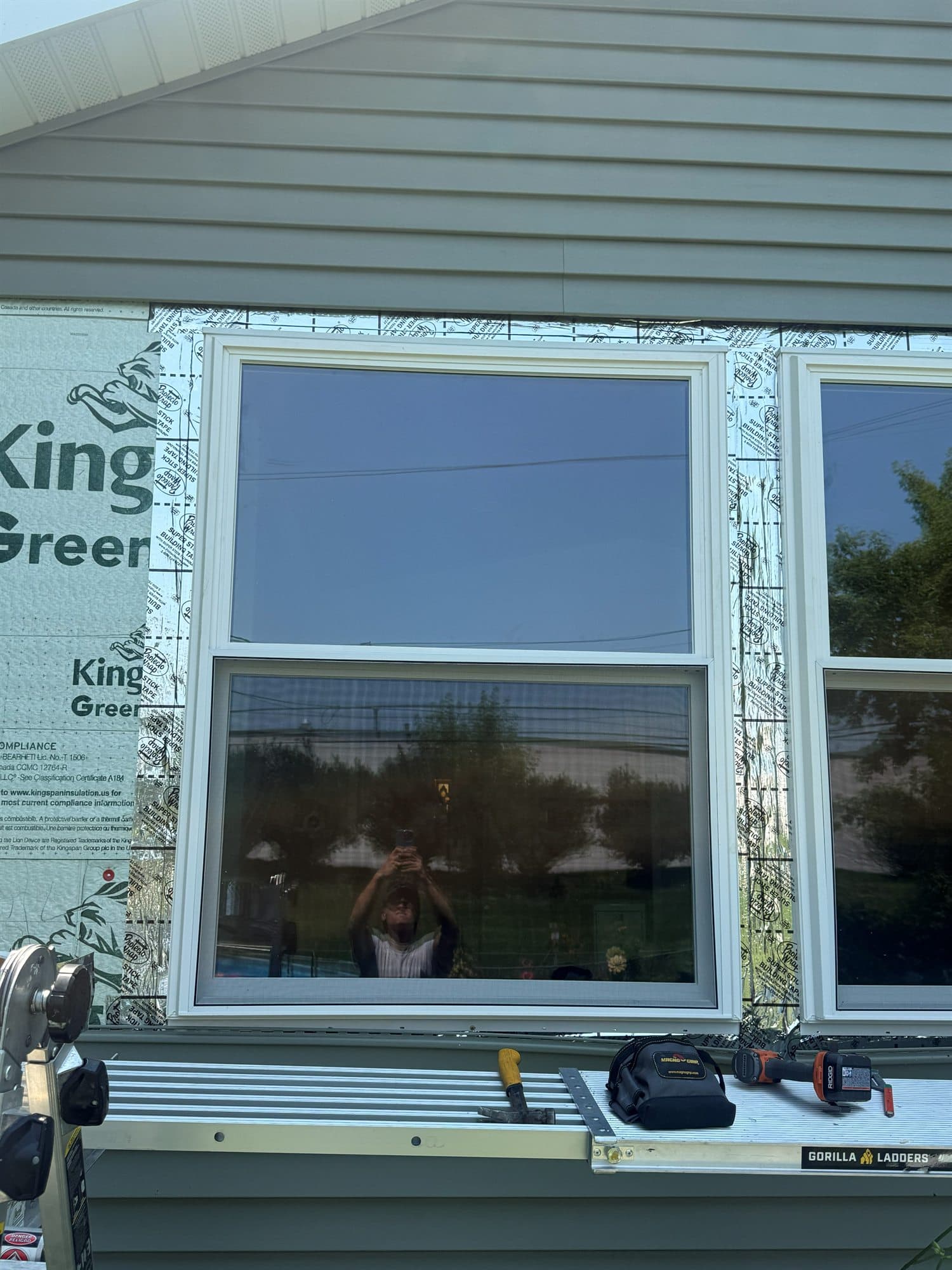
The band along the foundation where the ladders, lift and scaffold sat and the old siding hit the ground. Debris picked, grade rebuilt to slope away, sod or seed to the edge of the beds.
Utility trench across the lawn
A gas, water, electric or fiber trench backfilled and left proud or sunken. Compacted, filled, topsoiled and seeded in a strip, with a second top-off if the backfill keeps settling.
Grade toward the house fixed
When the construction grade slopes back toward the foundation, the fix is fill against the house and a regrade before any lawn goes in. Ties in with our drainage and downspout work.
Lawn Repair After Construction — Regrade, Topsoil and Seed: questions, answered
Why will grass not grow where the equipment was?
Because the soil under the tracks is compacted. Skid loaders and trucks press the soil so tight that roots cannot get into it and water sits on top, so the seed sprouts, dries out and dies. The fix is to loosen that soil with a tiller or the loader teeth, then put screened topsoil over it before seeding. Seed thrown on compacted subsoil is wasted.
Should I seed or sod after construction?
Sod on a slope, a small area, or when you want a lawn now. Seed on a big area or when the budget matters more than the wait. Seed needs a spring or late-summer start in Minnesota and an erosion blanket so rain does not wash it; sod goes in most of the growing season and holds the grade the day it goes down. Both need daily water at first.
Can you fix the grade at the same time?
Yes, and that is the first thing we do. Construction grades often slope toward the house because the backfill against the foundation settled. We add fill at the wall, shape the yard so water runs out and away, extend any downspout that dumps on the repair, and only then put topsoil and lawn on it. A lawn on a bad grade is a wet basement waiting to happen.
How long after construction should I wait to repair the lawn?
Wait until the backfill has settled if you can, usually one good rain or a few weeks after the dig; otherwise the trench line sinks after the lawn goes in. If the job ended in late fall, a dormant seeding after the ground cools works, and the seed comes up in spring. If it ended in winter, we regrade and seed or sod as soon as the ground thaws and dries.
Will the repaired area match the rest of my lawn?
Sod matches from the first day if we use the same grass type as the yard, which in the Twin Cities is almost always a bluegrass blend. Seed matches once it fills in, a season or so, and looks lighter until then. Either way the grade is raked flush with the old lawn so there is no lip to catch the mower.
Do you haul away the construction debris and dirt pile?
Yes. Leftover fill, rock, broken concrete, siding scraps and nails in the grass come out before any topsoil goes down. If the spoils pile is clean soil we spread it where the grade needs it; if it is clay or mixed with debris, it goes on the truck.
Get a written quote for this job
Three photos and a sentence is enough. You hear back within one business day. Or text the photos to 763-204-2099.
Related jobs we do
Sod Installation — New Lawn Sod and Sod Repair Patches
A lawn that never came back, a new house sitting in dirt, or a strip of bare ground where the trench went through — sodded on prepped soil so it takes root instead of shrinking.
Read moreYard Drainage Solutions — Grading and Buried Downspout Extensions
Water in the window well, a wet corner of the basement every spring, a side yard that is mud until June — most of it is fixed outside with a shovel, some pipe and the right grade.
Read moreLandscape Bed Edging and Mulch Installation — Beds Redone
Beds that have lost their edge to the lawn, mulch that is more dirt than mulch, and shrubs hidden in weeds — recut, edged and mulched so the house looks kept.
Read moreLandscape Rock Installation — River Rock Beds and Foundation Rock
Rock is the bed you do not redo every two years: no mulch washing out, no re-spreading, and a clean line along the foundation, the deck or the fence that stays.
Read moreShrub Planting Service and Tree Planting — Foundation Plantings
Dead junipers in front of the picture window, a bare foundation on a new house, or a fence line that needs screening — planted right so it is still alive in three years.
Read morePrivacy Screen Installation — Wood Screens, Lattice Panels, Snow Fence
A patio the neighbors look straight into, an air conditioner beside the front walk, or a driveway that drifts shut every storm — a screen built where it does the job, not a fence around the whole yard.
Read morePage reviewed September 24, 2026 · JMB Builders LLC, MN license BC809005 · All landscaping pages
Where we work
Landscaping near you
Based in Zimmerman, scheduling across the Twin Cities metro. Closest first: