
MDF vs Wood Trim — Which to Choose for Painted Trim
Standing in the molding aisle between the brown primed boards and the white primed boards? Here is how a trim carpenter picks, room by room.
MDF vs wood trim: for painted trim in a dry room, MDF gives the straightest, smoothest result at the lowest material cost, and it is what we install most. Use finger-jointed pine, solid pine or poplar where trim gets wet or kicked: bathrooms, mudrooms, laundry rooms, around exterior doors, and anywhere you want a stain finish. JMB Builders installs both across the Twin Cities metro, priced per linear foot, quoted from photos within one business day.
- Priced per linear foot, either material
- MDF for dry painted rooms; wood where it gets wet or hit
- Quote from photos in 1 business day
- Licensed MN contractor BC809005
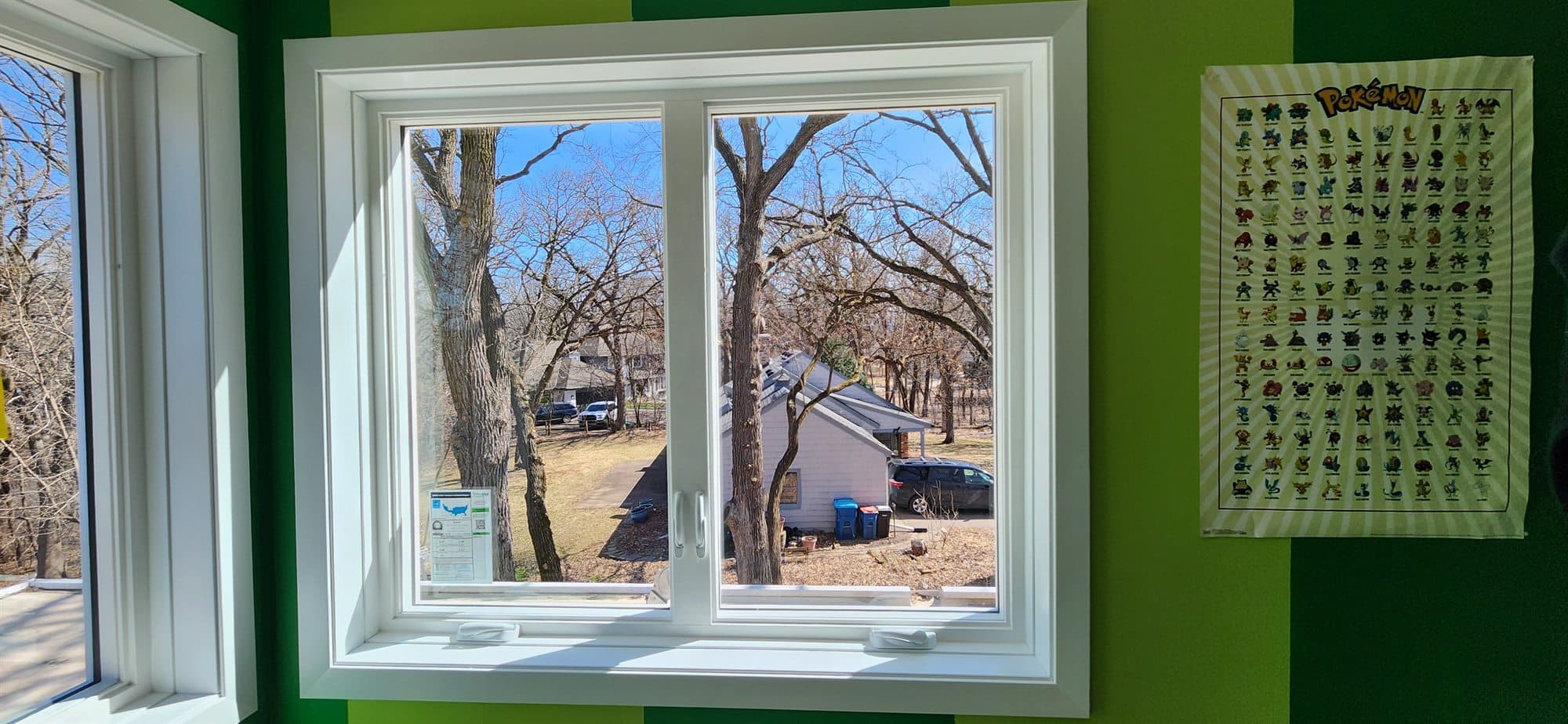
MDF is medium-density fiberboard: wood fiber and resin pressed into a board, then milled into a molding profile and primed. It has no grain, so it never splits along a nail, never has a knot bleed through paint, and comes out of the mill dead straight. Cut it and the edge is fuzzy and drinks primer. Get it wet at the bottom of a baseboard and it swells like a sponge and does not shrink back.
Wood trim comes three ways. Finger-jointed pine is short clear pieces glued end to end, primed, and is the standard painted wood trim. Solid pine has knots and grain and is usually for stain. Poplar is a close-grained hardwood that paints smooth, takes a dent better than either pine, and costs more. All three move with the seasons, which shows up as a hairline at the miters in January. All three can be sanded and refinished where MDF cannot.
So the choice is not one or the other for the house. It is one or the other for the room. JMB Builders installs both across the Twin Cities metro and we tell you which we would use where before you buy a stick. Painting is quoted as a separate line, or leave it primed, filled and caulked and paint it yourself.
What you supply
- Photos of the rooms and a note on which get wet: bathrooms, mudroom, laundry, the entry
- The profile you like, or a photo of existing trim to match
- The trim itself if you are buying it; we tell you MDF or wood, length count and profile first
- Paint or stain color if you want it finished — painting is quoted as a separate line, or leave it primed and caulked and paint it yourself
What JMB supplies
- A room-by-room recommendation: MDF here, pine or poplar there, and why
- The trim, in MDF, finger-jointed pine, solid pine or poplar, when you would rather we source it
- Installation: coped inside corners, glued and pinned miters, scribed to the floor, nail holes filled
- Caulk at the wall and primer on every cut end of MDF so it does not drink moisture
- Removal and haul-away of the old trim
- Painting or staining of the new trim when you want it done, quoted as its own line
- Photos of the finished rooms in your job folder
How it is priced: per linear foot
Quoted in writing from your photos within one business day. What moves the number:
- Material: MDF is the lowest cost per foot, finger-jointed pine next, poplar and solid stain-grade pine higher
- Profile size: a tall baseboard or a built-up casing takes more stock and more fitting than a simple one
- Number of corners and openings, which drive the fitting time more than straight runs do
- Stain-grade work, where every joint has to be tight with no filler and the wood species is chosen for color
- Removing old trim and patching the wall behind it
- Rooms that get wet, where the bottom of the trim is sealed or the material is switched to wood
- Painting or staining, quoted as its own line
Send a photo of each room from the doorway and a close-up of any existing trim you want to match. We give you a foot count per material so you can price it either way.
How long it takes
Baseboard in an average room: a few hours. A full floor of baseboard and casing: one to two days. Stain-grade work takes longer than paint-grade because there is no filler to hide behind.
How your project works
- 1
Send photos, get a written quote
Send three photos of the space and a sentence about what you want. You get a clear, itemized quote within one business day. We only come out to measure first when the job needs a tape measure — no pressure, no games.
- 2
Pick materials, or bring your own
We help you choose profiles and materials that fit the house and the budget, or match your existing millwork exactly — or you buy the door or trim yourself and we install it. Everything is confirmed before the crew is scheduled.
- 3
Clean, precise installation
The crew shows up on time, protects floors and furniture, and installs with tight joints and consistent reveals. Photos of the finished work go in your job folder.
- 4
Walkthrough and invoice
We walk the finished work with you. If anything is not right, we fix it before we call the job done. Then one invoice, paid by check or direct deposit — no card fees, no payment links.
Situations and options
MDF
Straight, smooth, no knots, no splitting, comes primed, and the cheapest per foot. Right for baseboard, casing, crown and board-and-batten in dry rooms with a painted finish. Wrong for anything that gets wet, anything that gets kicked hard, any stain finish, and exterior use. Cut ends must be primed.
Finger-jointed pine
Short clear pine pieces glued end to end and primed. Paints as smooth as MDF, holds a nail better, survives a wet mop, and can be sanded and repaired. The joints can show through paint after a few seasons as faint lines. The default painted wood trim for wet rooms and exterior door casing.
Solid pine
One piece, with knots and grain, sold bare or primed. The choice for stained trim in a cabin, a knotty-pine room or a house where the rest of the trim is stained pine. Painted, the knots need a stain-blocking primer or they bleed through. Softer than poplar, so it dents.
Poplar
A smooth hardwood that paints well, takes a dent better than pine, machines clean and holds a nail tight. The step up for painted trim that will get used hard: mudroom benches, stair skirts, kitchen casing, a family room baseboard. Costs more per foot than pine or MDF. Stains blotchy, so keep it for paint.
Where each one goes
Bedrooms, living room, dining room, hallways, office: MDF. Bathrooms, laundry, mudroom, kitchen kick zone, around the entry and garage doors: finger-jointed pine or poplar. Stained trim anywhere: solid pine, oak, maple or whatever the house has. Exterior: never MDF; PVC or cedar.
Mixing them in one house
Common and invisible once painted. MDF and primed pine are milled to the same profiles, so a house can run MDF in the bedrooms and pine in the bathrooms with the same baseboard from room to room. We flag the switch on the quote so you know which is where.
MDF vs Wood Trim — Which to Choose for Painted Trim: questions, answered
Is MDF trim good enough?
For painted trim in a dry room, yes, and it is often the better choice: straighter than wood, no knots, no splits at the nail, smooth under paint, and lower cost per foot. It is not good enough where it gets wet, where a stain finish is wanted, or where it will get kicked and dented. Match the material to the room and MDF is a solid choice for most of the house.
Does MDF baseboard hold up in a bathroom?
Not well. Water at the base of a bathroom wall wicks into the bottom edge, the board swells, and the swelling is permanent. Around a tub or in a kids' bathroom that gets mopped, use finger-jointed pine or poplar with the bottom edge primed and caulked to the floor. In a powder room that never sees standing water, MDF with a sealed bottom edge usually holds up, but wood is the safer call.
MDF or pine baseboard for a painted house?
MDF in the dry rooms, pine where it gets wet or hit hard. That gives you the straightest, smoothest trim where you will look at it most and wood where it has to survive a mop, a snow boot or a dog. The two are milled to the same profiles and look identical under paint. If the whole house has to be one material, primed finger-jointed pine is the safer single choice.
Can you stain MDF trim?
No. MDF has no grain, so stain just turns it a flat muddy brown, and most of it comes pre-primed white anyway. Any trim that is going to be stained has to be real wood: pine, poplar for a darker stain, oak, maple or whatever matches the house. Stain-grade work also takes longer to install because there is no filler or caulk to hide a joint behind.
Does MDF trim dent or swell?
It dents more easily than poplar and about like pine; a vacuum bumping the baseboard will leave a mark over the years, which paint hides until it does not. It swells only if it gets wet, which is why every cut end gets primed and the bottom edge in a wet room gets caulked to the floor. Keep it dry and it stays as straight as the day it went in.
Which trim material for a mudroom or laundry room?
Poplar if the budget allows, finger-jointed pine otherwise. Both take water, boots and a dropped basket better than MDF, and both can be sanded and repainted when they get scuffed. Prime the bottom edge and caulk it to the floor either way. If the room has a floor drain or gets hosed out, PVC baseboard is the last step up.
Get a written quote for this job
Three photos and a sentence is enough. You hear back within one business day. Or text the photos to 763-204-2099.
Related jobs we do
Baseboard & Casing Installation
Straight lines, tight miters, and coped inside corners — baseboard and window & door casing installed room by room or across your whole home.
Read moreShiplap Accent Wall Installation — Nickel Gap, MDF or Pine
One shiplap wall behind the bed, the sofa or the TV changes the whole room, if the gaps are even and the last board at the ceiling is not a sliver. We lay it out so it lands right.
Read moreBoard-and-Batten Wall Installation
Even batten spacing, level cap rails, and layouts that land clean around outlets and windows — board-and-batten walls built to fit your room, not a template.
Read moreCrown Molding Installation
Crisp corners, seamless joints, and profiles that fit your home — crown molding installed by a licensed Minnesota contractor who treats trim as a craft, not an afterthought.
Read moreTrim Painting and Interior Door Painting After Installation
New trim is only finished when it is painted. We do that part too: fill, caulk, prime, enamel, and the doors sprayed flat, sequenced with the carpentry so the room is done once.
Read moreAttic Hatch Trim — Casing, Painted Panel and Insulated Lid
The scuttle hole with a raw drywall edge and a loose square of drywall dropped on top of it: we case it, build a real lid, seal it and insulate it.
Read morePage reviewed September 24, 2026 · JMB Builders LLC, MN license BC809005 · All finish carpentry pages
Where we work
Finish carpentry near you
Based in Zimmerman, scheduling across the Twin Cities metro. Closest first: