Pick casements where you want the tightest seal, double-hungs where you want the traditional look and easy cleaning, awnings in wet rooms, sliders in the basement, and picture windows where the view matters more than ventilation. This applies to any Minnesota homeowner replacing windows, and to anyone about to order windows to have installed.
You do not have to replace like for like. The style changes ventilation, cleaning, how tight the window seals in a January wind, and what the house looks like from the street. Here is how the common styles compare, and what the glass and the install have to be regardless of style.
Is a double-hung window right for most Minnesota houses?
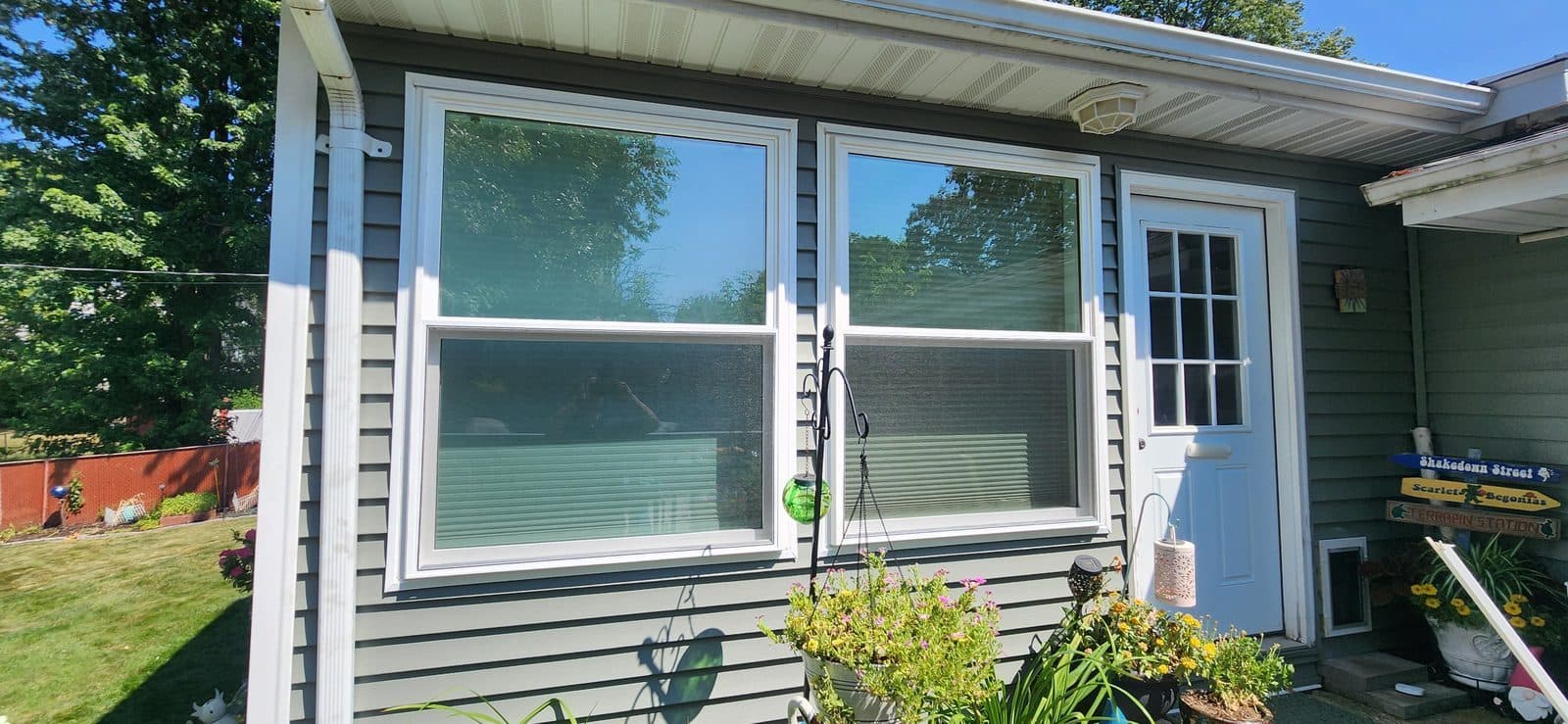
Two sashes slide up and down, and on most models both tilt in for cleaning. That is a real benefit on second stories. Double-hungs suit nearly every house style and are the default in most Minnesota neighborhoods. The sliding seals, usually pile or fin weatherstrip, are good but not the tightest, so brand and install quality matter. The meeting rail where the two sashes overlap is the usual leak point on a worn unit.
Why do casement windows seal the tightest?
A casement cranks outward on side hinges and presses against a compression bulb seal when it closes, pulled tight by one or more locks on the hinge-side jamb. That is the tightest air seal of any operating window, which is why they are the pick for exposed, windy sites. They catch breezes well, give unobstructed glass, and the crank is easy to reach over a sink or counter.
Watch the clearance. Casements swing out, so keep them away from decks, walkways and shrubs where an open sash is in the way. Large triple-pane casements are heavy; the hardware has to be rated for it.
Where do awning windows make sense?
Hinged at the top and opening out, an awning window can stay open in light rain. That makes it right for kitchens, bathrooms and basements. Like a casement it uses a compression seal, so efficiency is good. Awnings are often paired under or beside a large picture window.
When do sliders and picture windows fit?
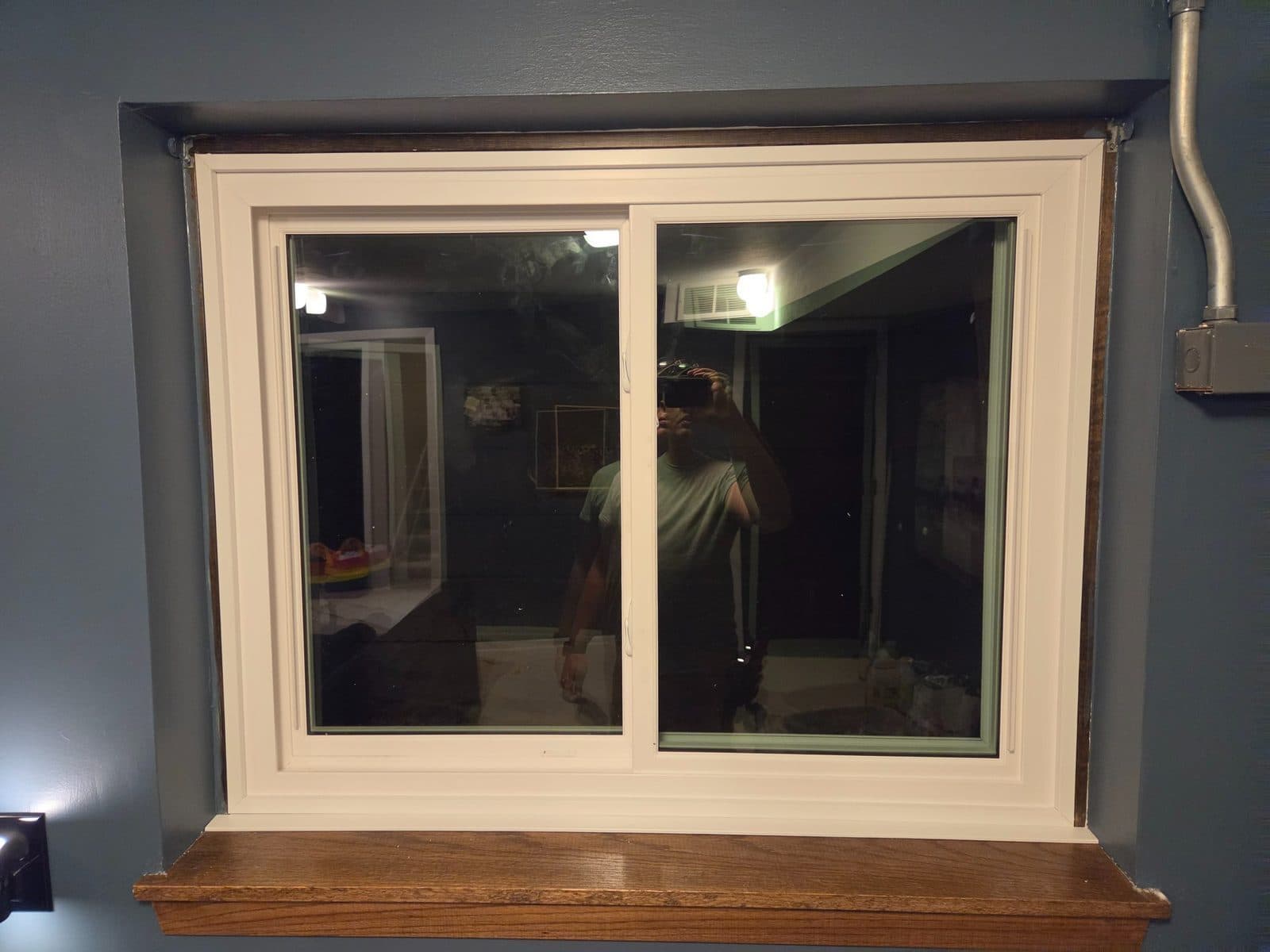
A horizontal slider is simple, affordable, and practical for wide, short openings and egress-height basement installs. Like a double-hung it seals by sliding contact, so it is the leakiest common style. A picture window does not open at all, which makes it the most airtight and the cheapest per square foot of glass. It frames a view and lights a room. Most good window plans mix operating and fixed units.
What are bay and bow windows, and what do they involve?
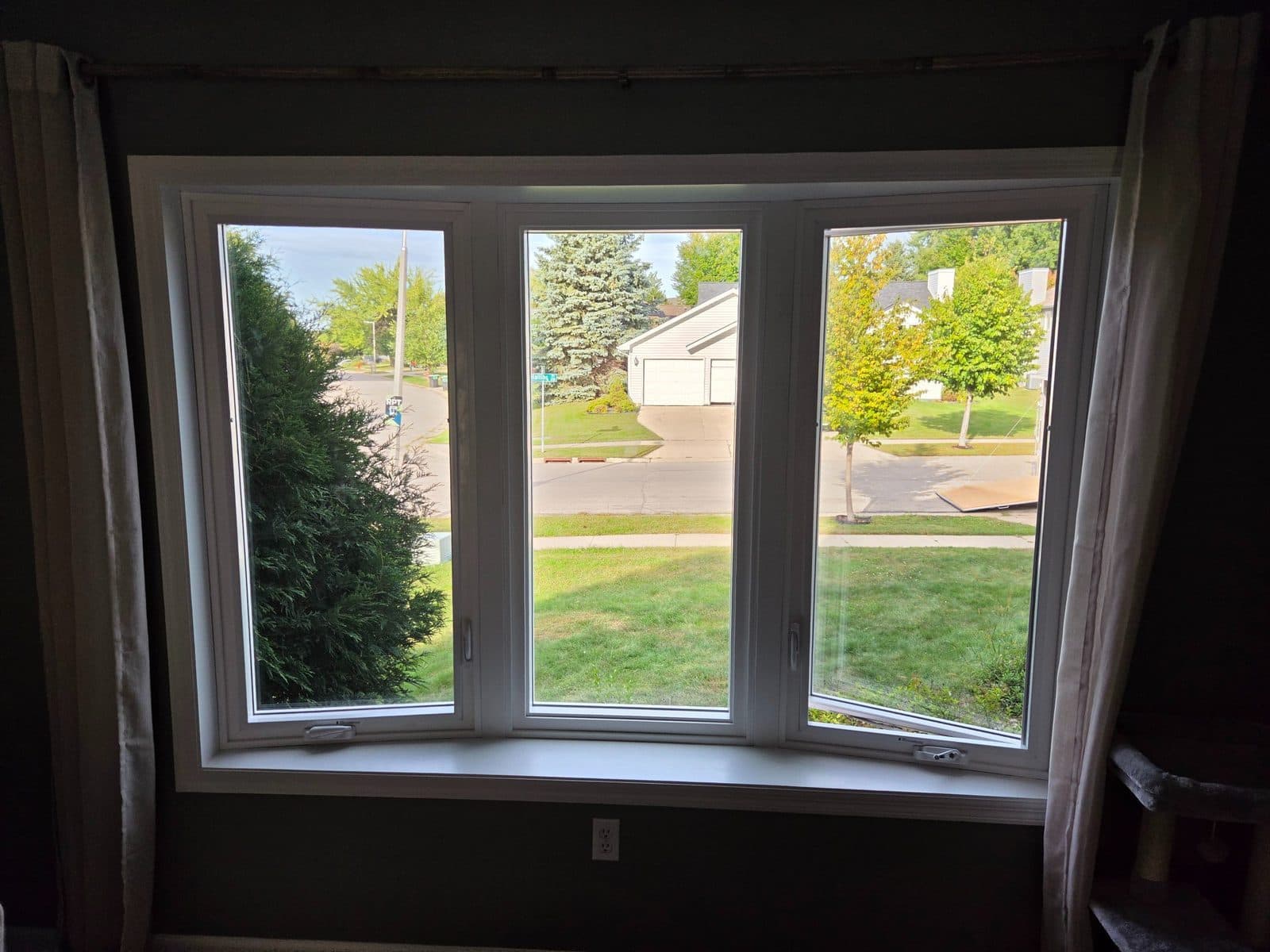
A bay is three units and a bow is four or five, both projecting out from the wall. They add a sill seat, light from three directions and depth to a living or dining room. They are a bigger carpentry job with roof and support framing, and the seat board and head need insulation of their own because they hang outside the wall. They are priced on their own.
Which window style is the most energy efficient?
Style decides one of the two numbers that matter. The NFRC label carries an air leakage rating in cubic feet per minute per square foot of window; ENERGY STAR and the model energy code cap it at 0.3, and the styles rank the way their seals work. Fixed picture windows leak the least because nothing moves. Casements and awnings come next: a compression seal pulled tight by a lock does not depend on a snug fit the way a sliding seal does, and it keeps working as the frame moves with the seasons. Double-hungs and sliders seal by sliding contact and test higher, though a good brand still meets the 0.3 cap.
The other number, U-factor, is set by the glass package and the frame, not the style. Every style in the table below is sold with the same range: double-pane with a soft-coat low-E on surface 2, argon and a warm-edge spacer at about a 0.27–0.30 whole-window U-factor, and triple-pane or a room-side low-E coating to reach the 0.22 that ENERGY STAR Version 7.0 sets for the Northern zone. Two things shift with style. A big picture window is almost all glass, so the glass package dominates and triple-pane shows up most there. A small double-hung has a large share of frame and sash, so a foam-filled frame matters more than it would on a picture window.
| Style | How it seals | Air leakage tendency | Where it fits | Watch for |
|---|---|---|---|---|
| Picture (fixed) | Glazed in place, no seal to wear | Lowest | Views, living rooms, over a bay seat | No ventilation; big glass wants triple-pane |
| Casement | Compression bulb, locked tight | Low | Bedrooms, windy walls, over counters | Swing clearance; weight with triple-pane |
| Awning | Compression bulb | Low | Baths, kitchens, basements, under picture units | Small clear opening; not for egress |
| Double-hung | Sliding pile or fin weatherstrip | Moderate | Traditional facades, second floors | Meeting rail leak on worn units |
| Slider | Sliding pile weatherstrip | Moderate to higher | Wide short openings, basements | Half the width opens; egress math |
What has to be true of the install, whatever the style?
A tight casement in a leaky opening is still a leaky window. On a full-frame install the sill gets a pan with a back dam, the jambs and head get flashing tape lapped shingle-style, and the unit is set level and plumb on shims so a compression seal actually compresses evenly. On an insert the joint between the new frame and the old gets sealed on both sides. In every case the gap between the window frame and the rough opening, usually a quarter to three-eighths of an inch, gets low-expansion foam, with backer rod and sealant on the interior where the gap is wide, and then a sealed trim line. That is where the label number is won or lost.
How do you mix styles in one house?
A common Twin Cities layout: casements or double-hungs in bedrooms for egress and ventilation, awnings in baths and kitchens, picture windows toward the best view, and sliders in the basement. Keep the exterior look consistent by staying in one series and color, and keep the glass package consistent by wall so the tint and reflectivity match from the street. Walk each room and decide what the window has to do before you decide what it looks like.
What JMB Builders does
JMB Builders is a licensed Minnesota residential building contractor (BC809005) based in Zimmerman, working across the Twin Cities metro. We install every style above from any brand, and we check clear opening and jamb depth before a bedroom window is ordered. Call 763-204-2099 (text) or send photos through the site.
- Labor-only installation of windows you bought at a store or online, any style — jmbbuildersmn.com/services/labor-only
- Insert and full-frame replacement windows, measured and ordered by us — jmbbuildersmn.com/services/full-service
- Casement trim after an insert install — jmbbuildersmn.com/services/window-trim/casement-trim-after-insert-install
- Bay window trim-out — jmbbuildersmn.com/services/window-trim/bay-window-trim-out
- Send three photos and we reply within one business day.
Frequently asked questions
Are casement windows better than double-hung in Minnesota?
For air sealing, yes. A casement compresses shut against its weatherstrip, while a double-hung slides past it, so casements leak less in a winter wind. Double-hungs win on looks in a traditional house, on cleaning from inside, and on not swinging out over a deck. Both work here with the same glass package.
Which window style is the most energy efficient?
A picture window, because it does not open. Among operating windows, casements and awnings seal tightest thanks to their compression seals. Sliders and double-hungs seal by sliding contact and leak a little more. With the same glass package and the same frame, that is the order; the U-factor itself comes from the glass, not the style.
Does the window style change the U-factor?
Only a little, through the frame-to-glass ratio. The U-factor comes mostly from the glass package: low-E coating, argon or krypton, two or three panes, warm-edge spacer. A picture window is nearly all glass, so a triple-pane package moves its number the most. A small double-hung has more frame, so a foam-filled frame helps there. Style mainly sets the air leakage rating.
Can I switch from double-hung to casement in the same opening?
Usually, yes. A casement can be ordered to fit the same rough or frame opening. Check two things first: clearance outside for the swing, and clear opening if it is a bedroom, where a casement often meets egress more easily than the double-hung it replaces.
Which window style is best for a basement?
A slider for a wide, short opening above grade, and a casement for an egress well where you need the largest clear opening in the smallest frame. Awnings work for ventilation where egress is not required. Confirm the clear opening before ordering a bedroom window.
What is the difference between a bay and a bow window?
A bay is three windows, a center picture unit with two angled units, that projects out from the wall. A bow is four or five units in a gentler curve. Both need support framing, an insulated seat and head, and a small roof or a header tie-in, so they are a carpentry project priced on their own.