All three brands make a window that handles a Minnesota winter. Pick by the line, not the logo: Andersen 100 (Fibrex) and Pella 250 (vinyl) are the value windows, Pella Impervia and Marvin Essential are all-fiberglass, and Andersen 400, A and E, Pella Lifestyle and Reserve, and Marvin Elevate and Signature are the wood-interior lines. Order the cold-climate glass on any of them; the install decides the rest.
JMB Builders installs all three brands and sells none of them. We are not a dealer for anyone, so this is the comparison we give a Twin Cities homeowner who is holding brochures from a lumberyard, a Pella showroom and a Home Depot desk and wants to know what they are actually looking at.
What is each brand's frame actually made of?
The brand name tells you less than the line name. Each company builds windows in more than one material, and the material is what drives cost, sightline width, paint and stain options, and how the frame moves through a freeze-thaw cycle.
Andersen's 100 Series is Fibrex, Andersen's composite of wood fiber and thermoplastic polymer, which the company describes as twice as strong as vinyl. The 400 Series pairs a real wood interior with a low-maintenance protected exterior. The A-Series puts a wood interior behind a fiberglass and Fibrex exterior, and the E-Series is a wood frame with an aluminum-clad exterior in a wide color palette and custom sizing.
Pella's Encompass and 250 Series are vinyl. The 250 adds multi-chambered frames and more glass options over the base vinyl line. Impervia is Pella's fiberglass, which Pella calls Duracast, sold on strength and slim frames. Lifestyle Series is wood with an aluminum-clad exterior, and Reserve is the premium wood architectural line.
Marvin builds around Ultrex, its pultruded fiberglass. Essential is Ultrex inside and out. Elevate is an Ultrex exterior with a pine interior you can paint or stain. The Signature Ultimate collection is a wood interior with an aluminum-clad exterior, with all-wood units in select styles.
| Tier | Andersen | Pella | Marvin |
|---|---|---|---|
| Value replacement | 100 Series (Fibrex composite) | 250 Series and Encompass (vinyl) | Essential (Ultrex fiberglass in and out) |
| Low-maintenance mid-tier | 400 Series (wood interior, protected exterior) | Impervia (Duracast fiberglass) | Elevate (Ultrex exterior, pine interior) |
| Wood interior, clad exterior | A-Series (fiberglass/Fibrex exterior), E-Series (aluminum-clad) | Lifestyle Series (aluminum-clad wood) | Signature Ultimate (aluminum-clad wood, some all-wood) |
| Architectural / custom | E-Series custom sizing and finishes | Reserve | Signature Ultimate, Modern |
How do fiberglass, Fibrex, vinyl and clad wood behave in a Minnesota winter?
The frame material matters here for one reason more than any other: thermal movement. Glass barely moves with temperature. A frame that expands and contracts a lot more than the glass works the glazing seal every time the temperature swings sixty degrees between a January night and a sunny afternoon on a south wall.
Fiberglass (Marvin's Ultrex, Pella's Duracast) moves the least and is the stiffest, which is why both companies sell it on slim frames and dark colors. Fibrex is a composite that sits between fiberglass and vinyl on stiffness and does not need the internal metal reinforcement that a large vinyl sash sometimes does. Vinyl is the most affordable, is fine in standard sizes and light colors, and is the material most likely to be sold with a thinner wall and a basic glass package when the price has been pushed down.
Clad wood is the warmest-feeling interior and the traditional look, and it is what most stained-trim houses in the older Twin Cities suburbs want to match. The wood is protected outside by aluminum or a composite skin. Where clad wood fails is almost always at the bottom corners, from water that got behind the cladding because the sill pan and flashing were skipped at install, not from the wood itself.
Frame fill and weatherstripping vary by line too. Some vinyl and composite lines offer foam-filled frame chambers as an option. Casements use compression weatherstripping that seals tighter as wind pushes on the sash, which is why casements out-seal sliding sashes on a windy site regardless of brand.
Which glass package should a Minnesota homeowner order from each brand?
This is where the real energy difference lives. All three brands ship a double-pane, low-E, argon-filled unit as the standard glass on their replacement lines. The names differ: Andersen's family is Low-E4, with SmartSun and PassiveSun variants; Pella's is Advanced Low-E, with NaturalSun and SunDefense variants; Marvin's is Low E2 and Low E3, with an optional ERS room-side coating.
The variants do different jobs. A high-solar-gain coating (Andersen PassiveSun, Pella NaturalSun) lets more winter sun through for free heat and works on a south or west wall in a heating-dominated climate. A low-solar-gain coating (Andersen SmartSun, Pella SunDefense) blocks more summer heat and fading and makes sense on a west wall that overheats in July. The standard coating sits between. Ask for the U-factor and SHGC of each option on the NFRC label rather than picking by name.
For the ENERGY STAR Northern zone that covers Minnesota, the Version 7.0 criteria in effect since October 23, 2023 call for a window U-factor of 0.22 or lower with an SHGC of at least 0.17, or an equivalent-performance path that allows a slightly higher U-factor when paired with a higher SHGC. In practice, that number usually means a triple-pane unit or a double-pane with a room-side fourth-surface coating, and every one of these brands sells one as an upgrade on its main lines. The base double-pane glass on a value line generally does not get there on its own.
Two more parts of the glass package to check on any brand: the gas fill (argon is standard, krypton is the upgrade for narrow triple-pane gaps) and the spacer. A warm-edge spacer keeps the edge of the glass warmer than an aluminum spacer, which is what keeps condensation and frost off the bottom inch of the glass in January. Foam spacers run warmer at the edge than stainless steel; both are better than aluminum.
How do the warranties compare, in plain terms?
Warranty terms are the thing most often quoted wrong on a sales call. These are the terms as published at the time of writing; read the current document for your exact line before you buy, because the wording changes and the details differ by product.
Andersen's 100 Series warranty covers glass for 20 years and non-glass components for 10 years, and Andersen's limited warranties transfer from owner to owner. Labor to replace a part is generally not included when a replacement part is supplied.
Pella's limited lifetime warranty on its main lines applies to the original purchaser in an owner-occupied home, with non-glass components covered for as long as that owner has the house. If the house sells, non-glass coverage for the next owner runs 10 years from the original purchase. Pella also warrants its Impervia Duracast frame material against cracking, splitting, corroding and warping for as long as the original owner has the home.
Marvin's standard limited warranty covers insulating glass seal failure for 20 years on units up to 60 square feet (10 years on larger glass), and framing and other non-glass components for 10 years. Marvin describes the warranty as fully transferable to a new owner.
The installer's labor warranty is separate from all of this and is the one that covers the sill pan, flashing and air seal. Get it in writing from whoever installs the window.
Where do you buy each brand in the Twin Cities?
Andersen 100 Series is stocked and special-ordered at The Home Depot, alongside Home Depot's own Andersen-made American Craftsman line. The wood-interior Andersen lines are sold through lumberyards and window dealers, and any Andersen line can be ordered through a dealer.
Pella sells through Lowe's and through its own Pella showrooms. Lowe's carries the vinyl 150 and 250 Series, Impervia and Lifestyle Series wood windows; the Reserve line is only available through a Pella showroom.
Marvin is dealer-only. You will not find it at a big-box store. Lumberyards and independent window dealers across the metro carry Essential, Elevate and Signature, and the dealer does the ordering.
None of this changes the install. We measure the opening, you (or we) place the order, and the window shows up on a truck either way. What changes is who is responsible for the size and the configuration on the order form, which is why we check sizes before any order goes in.
Does the install matter more than the brand?
Yes. The frame and glass set the ceiling on how well a window can perform. The installation sets how close you get to it. A window with a cold-climate triple-pane glass package that is set on bare framing, foamed with high-expansion foam that bowed the jambs and left uninsulated behind the exterior trim will draft, frost and leak long before the glass seal ever fails.
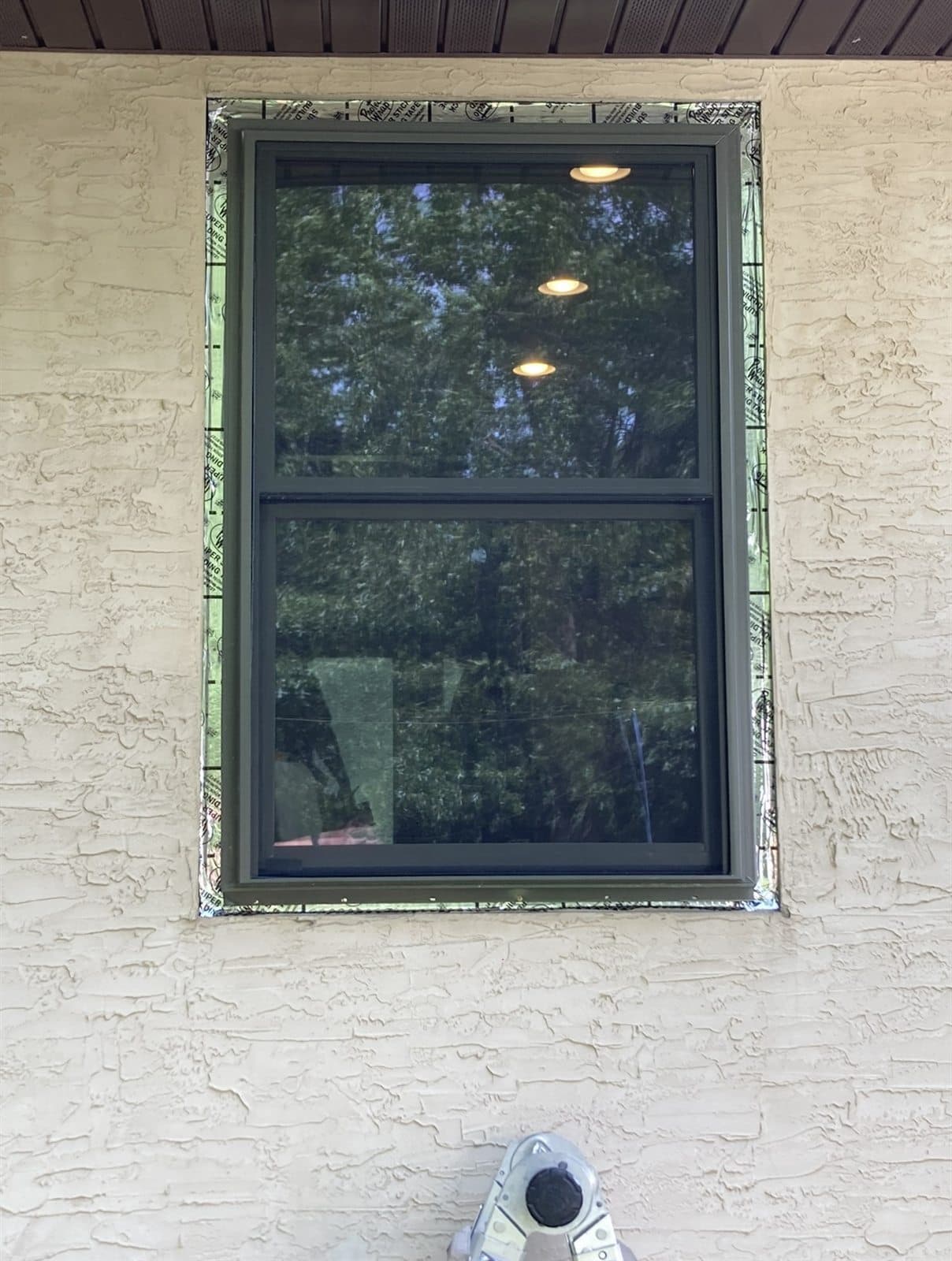
The install steps that matter in Minnesota are the same for all three brands: a sloped or pre-formed sill pan under the unit, self-adhered flashing tape lapped shingle-style up the jambs and over the head flange, low-expansion foam in the shim gap, backer rod and sealant at the interior air seal, and a drip cap or head flashing tied into the housewrap above. Skip any one and the brand name on the sash will not save you.
The other thing an installer notices: the bigger the sash, the more the frame material matters. A small double-hung in vinyl is fine. A wide picture window or a tall casement wants the stiffness of fiberglass, Fibrex or clad wood, or it will bow and the lock will fight you within a few winters.
What JMB Builders does
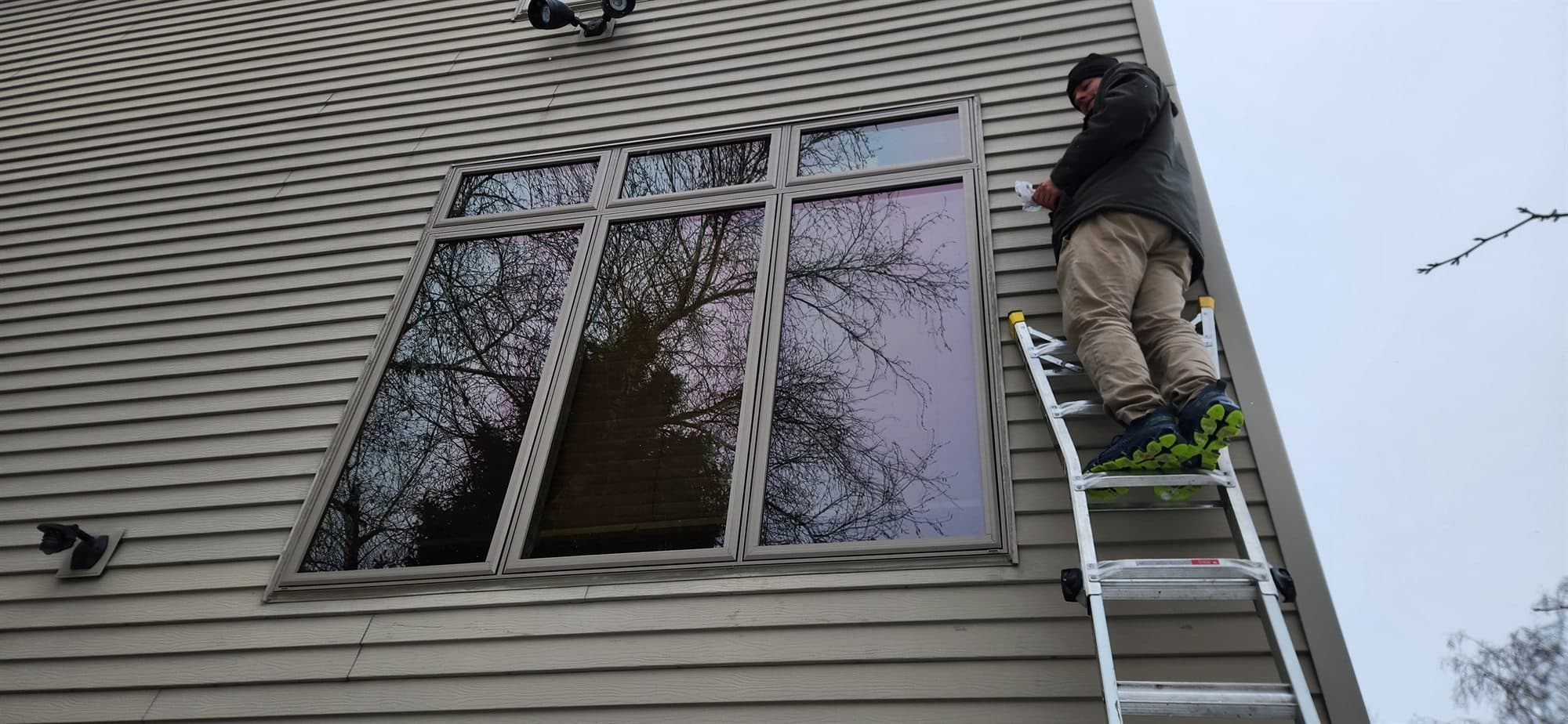
JMB Builders is a licensed Minnesota residential building contractor (BC809005) based in Zimmerman, working across the Twin Cities metro. One crew measures, installs and trims windows from Andersen, Pella, Marvin and every other brand. We sell none of them. Quotes are written from your photos within one business day; a tape-measure visit happens only when the job needs one. Paid by check or direct deposit.
- Andersen 100 and 400 Series window installation, labor only — jmbbuildersmn.com/services/labor-only/andersen-100-400-window-install-labor-only
- Pella 250 Series from Lowe's, installed labor only — jmbbuildersmn.com/services/labor-only/pella-250-window-install-labor-only
- Marvin Essential and Elevate installer, labor only — jmbbuildersmn.com/services/labor-only/marvin-essential-window-install-labor-only
- Which windows to buy for a labor-only install — jmbbuildersmn.com/services/labor-only/which-window-brand-to-buy-for-labor-only-install
- Andersen product lines we install — jmbbuildersmn.com/brands/andersen
- Pella product lines we install — jmbbuildersmn.com/brands/pella
- Send three photos per window, written quote within one business day.
Frequently asked questions
Is Andersen, Pella or Marvin the best window for Minnesota?
None of the three is best across the board. Compare the specific line and glass package instead: Andersen 100, Pella 250 and Marvin Essential are the value lines; Impervia and Essential are the all-fiberglass options; the 400, A, E, Lifestyle, Reserve, Elevate and Signature lines are wood-interior. Order the cold-climate glass on whichever line fits the house and budget, and put the money you save into the install.
What is the difference between Andersen 100 Series and Pella 250 Series?
The frame material. Andersen 100 is Fibrex, a wood-fiber and polymer composite, while Pella 250 is multi-chambered vinyl. Both are sold through big-box stores, both come with low-E argon double-pane glass as standard and both offer upgraded glass. Fibrex is stiffer, which helps on larger sashes and dark colors; vinyl is usually the lower price.
Is Marvin Essential a fiberglass window?
Yes. Marvin Essential uses Ultrex fiberglass on both the interior and exterior of the frame and sash. Marvin Elevate keeps the Ultrex exterior and adds a pine interior you can paint or stain. Both are sold only through Marvin dealers and lumberyards, not big-box stores.
Which glass package do I need to meet ENERGY STAR in Minnesota?
Minnesota is in the ENERGY STAR Northern zone. Under Version 7.0, in effect since October 2023, a Northern window needs a U-factor of 0.22 or lower with an SHGC of at least 0.17, or an equivalent-performance combination. On most lines that means the triple-pane or cold-climate glass upgrade rather than the base double-pane. Check the NFRC label on the exact unit you are ordering.
Can you buy Marvin windows at Home Depot or Lowe's?
No. Marvin sells through certified dealers, lumberyards and independent window retailers. Home Depot carries Andersen 100 Series and Andersen-made American Craftsman, and Lowe's carries Pella's 150, 250, Impervia and Lifestyle lines. A labor-only installer can hang a Marvin window you ordered through a dealer the same way as a store-bought one.
Does the installer or the manufacturer cover a leak around a new window?
The manufacturer's warranty covers the window itself, such as glass seal failure and defective parts. Water or air getting past the frame is an installation issue and falls on the installer's labor warranty. Get that warranty in writing, and make sure the quote names a sill pan, flashing tape, low-expansion foam and an interior air seal, because those are the items that prevent the leak.