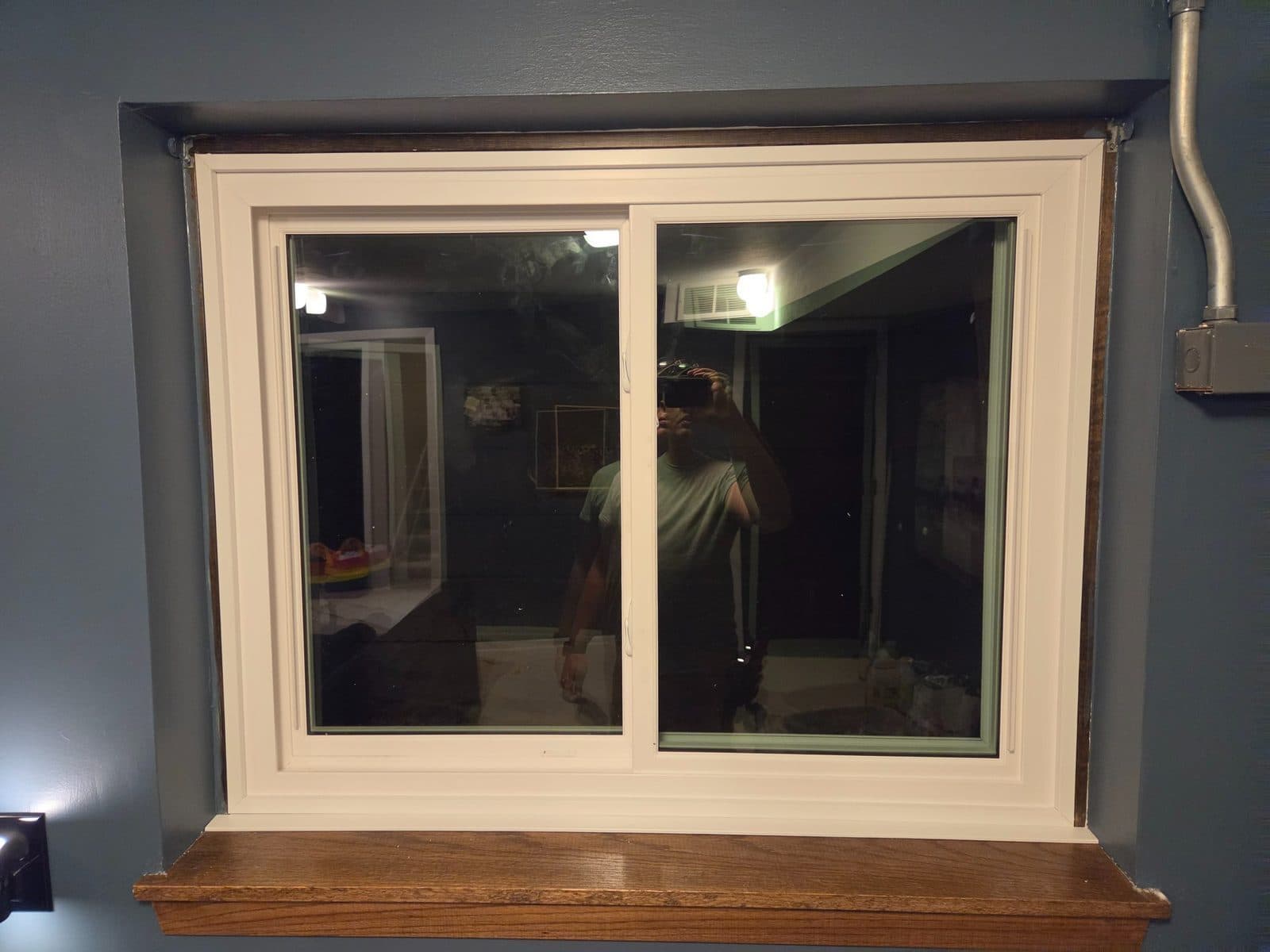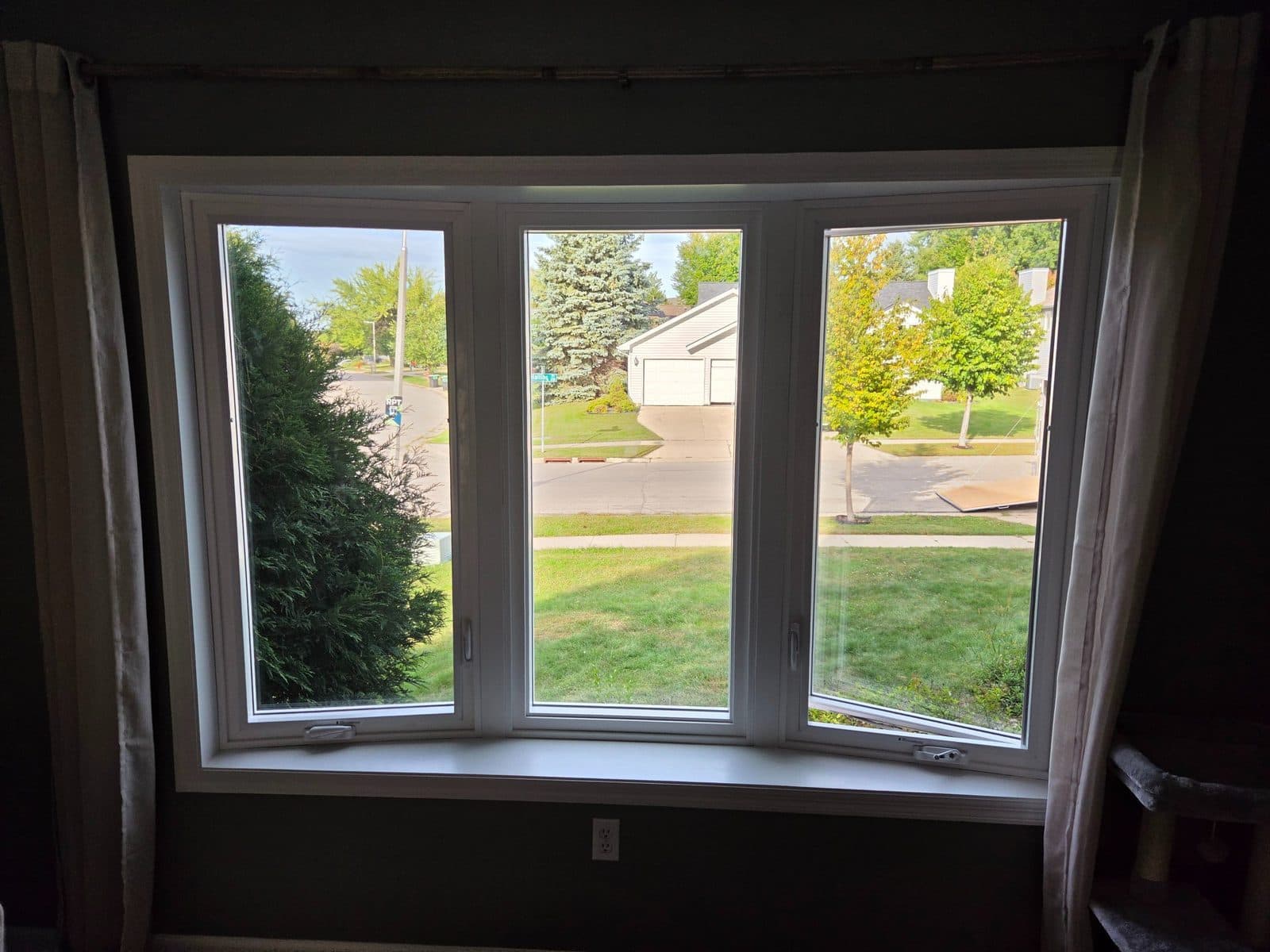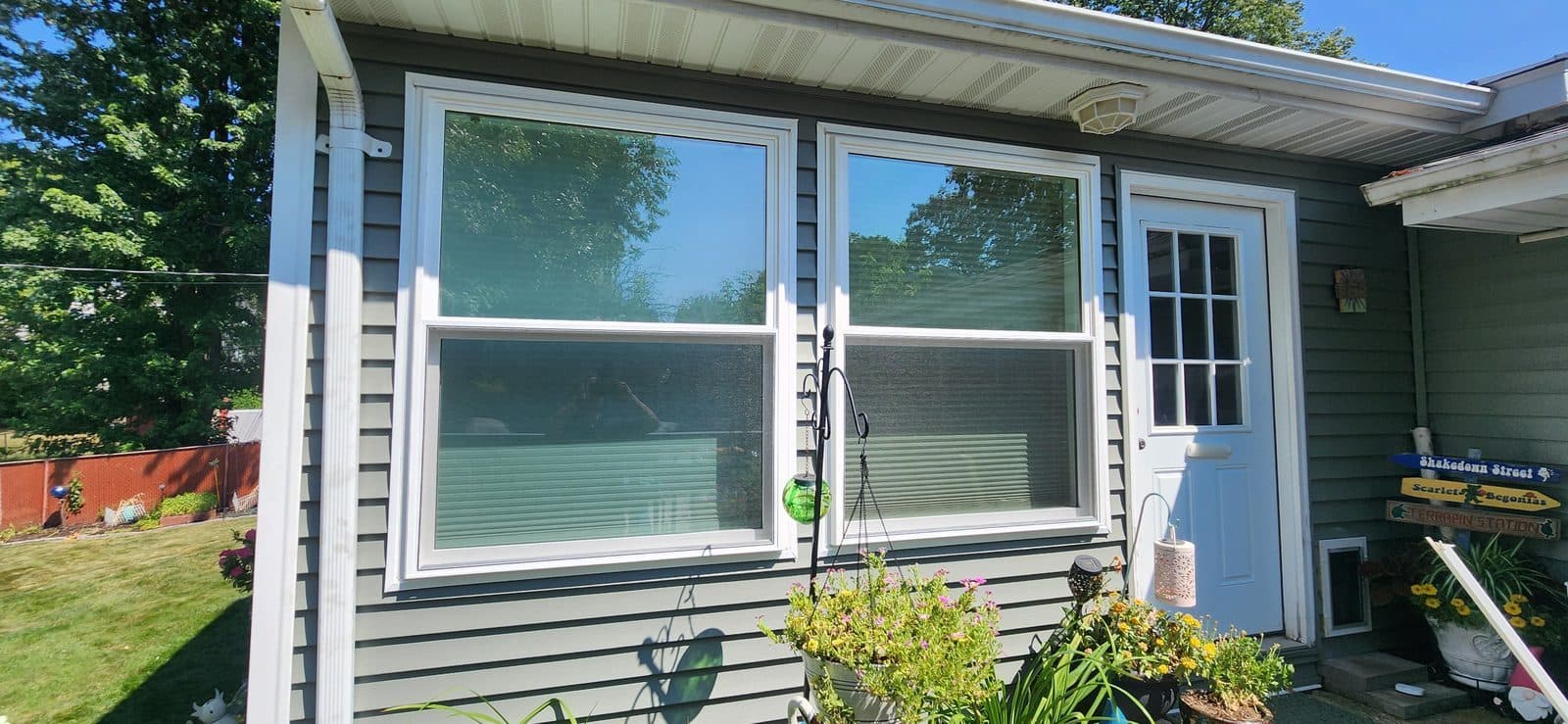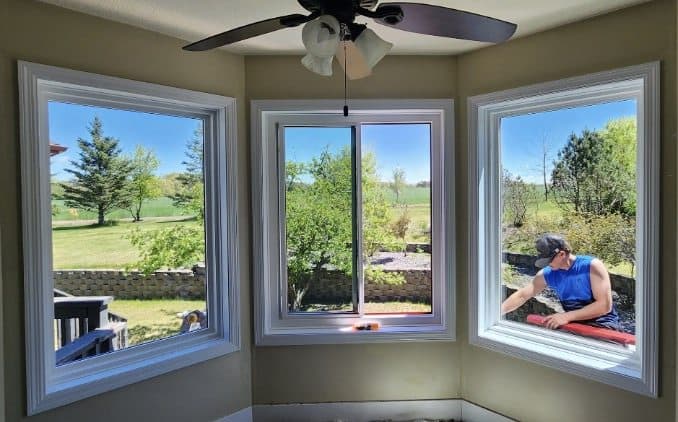
Sound-reducing windows use laminated glass, two panes of different thickness and a wider air space in a compression-seal frame, installed with the gap around the frame foamed and sealed. They keep the low-E coating and argon of a normal window. That applies to any Twin Cities house near a highway, a school or a flight path, and to anyone about to order acoustic glass to have installed.
A wall is siding, sheathing, studs, insulation and drywall. A window is two thin sheets of glass. For sound it is a hole in the wall, which is why the highway and the neighbor's dog come straight through it. Here is what actually blocks the noise, how to keep the window warm while you do it, and what to expect.
What do STC and OITC ratings mean?
Sound Transmission Class, STC, is how much sound an assembly blocks across the speech range. Higher is better. An old single-pane window rates around STC 26–27. A standard double-pane with two equal panes runs about 27–30. Two panes of different thickness reach 30–34 without laminate. Purpose-built acoustic packages with laminated glass reach STC 35 and into the low 40s. A 10-point increase sounds roughly like cutting the loudness in half, and most people notice a clear change from 4–5 points.
OITC, Outdoor-Indoor Transmission Class, weights low frequencies more heavily and is the better number for traffic, trucks and aircraft, which is what most Twin Cities homeowners are trying to block. Ask for both. A window with a flattering STC and a weak OITC will still let the rumble through.
| Glass package | Typical STC | What it means |
|---|---|---|
| Single-pane | 26–27 | Everything comes through |
| Standard double-pane, equal panes | 27–30 | Baseline for a modern window |
| Double-pane, dissimilar thickness | 30–34 | Noticeably quieter, small upcharge |
| Double-pane with one laminated pane | 35–40 | Traffic drops to background |
| Acoustic package or dual window with wide air space | 40 and up | Serious highway or aircraft noise |
What actually blocks sound in a window?
Three things do most of the work:
- Different glass thicknesses. Panes of, say, 3mm and 5mm each block different frequencies. Two identical panes resonate at the same frequency and let it through together.
- Laminated glass. A plastic interlayer bonded between two sheets of glass damps vibration. It is the biggest single upgrade for noise, and it adds security and UV protection. Cardinal and others make laminated panes that take the same low-E coatings as ordinary glass.
- A wider air space. More distance between the panes means less sound coupling, which is one reason dual windows and interior storm panels do so well, and why a triple-pane with three narrow gaps is not automatically quieter than a good double-pane.
Do sound-control windows still insulate against the cold?
Yes, if they are ordered right. Acoustic glass is still an insulated glass unit: a laminated pane on one side, a standard or thicker pane on the other, a spacer and a gas space between. Everything that makes a Minnesota window warm still applies and should be on the order.
Glass: the soft-coat low-E coating goes on surface 2, the inside face of the outer pane, exactly as on a standard unit. Argon fills the gap, and because acoustic units often use a wider gap for sound, the argon has room to work. The spacer should be a warm-edge type, stainless steel, silicone foam or thermoplastic, with a dual seal; laminated glass is heavier and puts more load on the edge seal, so the spacer matters more, not less. A laminated double-pane with low-E and argon rates close to a standard double-pane, about 0.27–0.30 whole-window U-factor. To reach the ENERGY STAR Version 7.0 Northern target of 0.22 you add a room-side low-E on surface 4 or go to a triple-pane with one laminated pane, which some lines offer.
Frame: laminated and thick glass add weight. Casement and awning hardware has to be rated for it, and a multi-chamber vinyl or foam-filled fiberglass frame with an NFRC air leakage rating of 0.3 cfm per square foot or less does double duty, because the same compression seal that stops air stops sound.
Ratings: read the NFRC label for U-factor, SHGC, visible transmittance and air leakage, and the manufacturer's acoustic data sheet for STC and OITC. Laminated glass costs a point or two of visible light; nothing else on the label should move much.
Why does the install matter as much as the glass?
Sound goes through gaps the way air does. A window with good acoustic glass and a sloppy install, uninsulated shim gaps and a poor perimeter seal, leaks noise around the glass. The gap between the frame and the rough opening, usually a quarter to three-eighths of an inch, has to be filled with low-expansion foam, which blocks air and damps sound; fiberglass stuffed in the gap does neither well. Where the gap is wide, backer rod and a bead of sealant on the interior close the air path completely. A sill pan and flashing tape at the jambs and head belong on a full-frame job regardless, and a sealed trim line finishes it. Compression-seal styles like casements and awnings beat sliders for sound for the same reason they beat them for drafts.
What should you expect?
No window makes a house silent, and low-frequency rumble from trucks and aircraft is the hardest to block. But going from worn 1980s double-panes to laminated acoustic glass turns intrusive traffic noise into a faint background. For homes near I-94, Highway 10 or under a flight path, it is a real change in how the house feels. If the wall itself is thin, or a bath fan or attic hatch is the other path, the window alone will not get you there.
Say which noise bothers you when you ask for a quote. Traffic, a school yard and aircraft each point to a different glass package.
What JMB Builders does
JMB Builders is a licensed Minnesota residential building contractor (BC809005) based in Zimmerman, working across the Twin Cities metro. We quote standard and sound-control glass side by side for the same openings, install any brand without being a dealer for it, and every window gets its frame gap foamed and sealed. Call 763-204-2099 (text) or send photos through the site.
- Labor-only installation of acoustic or standard windows you bought — jmbbuildersmn.com/services/labor-only
- Insert and full-frame replacement windows, measured and ordered by us — jmbbuildersmn.com/services/full-service
- Trim-out after another company's window installation, including foaming the gap they left — jmbbuildersmn.com/services/window-trim/trim-out-replacement-windows-left-bare
- Solid-core doors for the bedrooms once the windows are quiet — jmbbuildersmn.com/services/doors/solid-core-door-upgrade-sound
- Send three photos and we reply within one business day.
Frequently asked questions
What STC rating do I need for a quiet bedroom?
Most people notice the change going from the STC 27–30 of a standard double-pane to 35 or better. Laminated acoustic packages reach 35 to the low 40s. A 10-point gain sounds about half as loud, so a bedroom facing a busy road is worth the laminated glass; a bedroom on the quiet side of the house usually is not. Ask for the OITC number too if the noise is traffic or aircraft.
Do triple-pane windows reduce noise?
Some. The third pane and the extra air space help, and mixed glass thicknesses help more. For real traffic or aircraft noise, laminated glass does more than the third pane alone. A laminated double-pane often beats a plain triple-pane for sound, while the triple-pane wins on U-factor; some lines offer a triple-pane with one laminated pane that does both.
Do sound-reducing windows have low-E glass and argon?
Yes, when ordered that way, and they should be. The laminated pane is one side of a normal insulated glass unit, so the low-E coating on surface 2, the argon fill and a warm-edge spacer all still apply. A laminated low-E argon double-pane rates about the same U-factor as a standard one. Confirm the NFRC numbers on the acoustic option, not just the STC.
Is laminated glass the same as soundproof glass?
Laminated glass is what most makers sell as sound-control glass: two sheets bonded to a plastic interlayer that damps vibration. Nothing is truly soundproof. Laminated glass in a well-sealed frame is the biggest single step toward a quiet room, and it also resists break-in and blocks UV.
Can I add a second window inside the existing one for noise?
An interior storm window or a second sash set inside the opening adds a wide air space and can cut noise a lot without replacing the window. It works best on a window that is otherwise sound. If the existing window is drafty or fogged, replacing it with acoustic glass fixes both problems at once.
Why is my new window still noisy?
Usually the gap around the frame was never foamed and sealed, so the noise goes around the glass. Sometimes the noise is coming through the wall, a vent or an attic and the window was never the main path. Pull the casing and check the gap first; low-expansion foam and a bead of sealant there is a cheap fix.