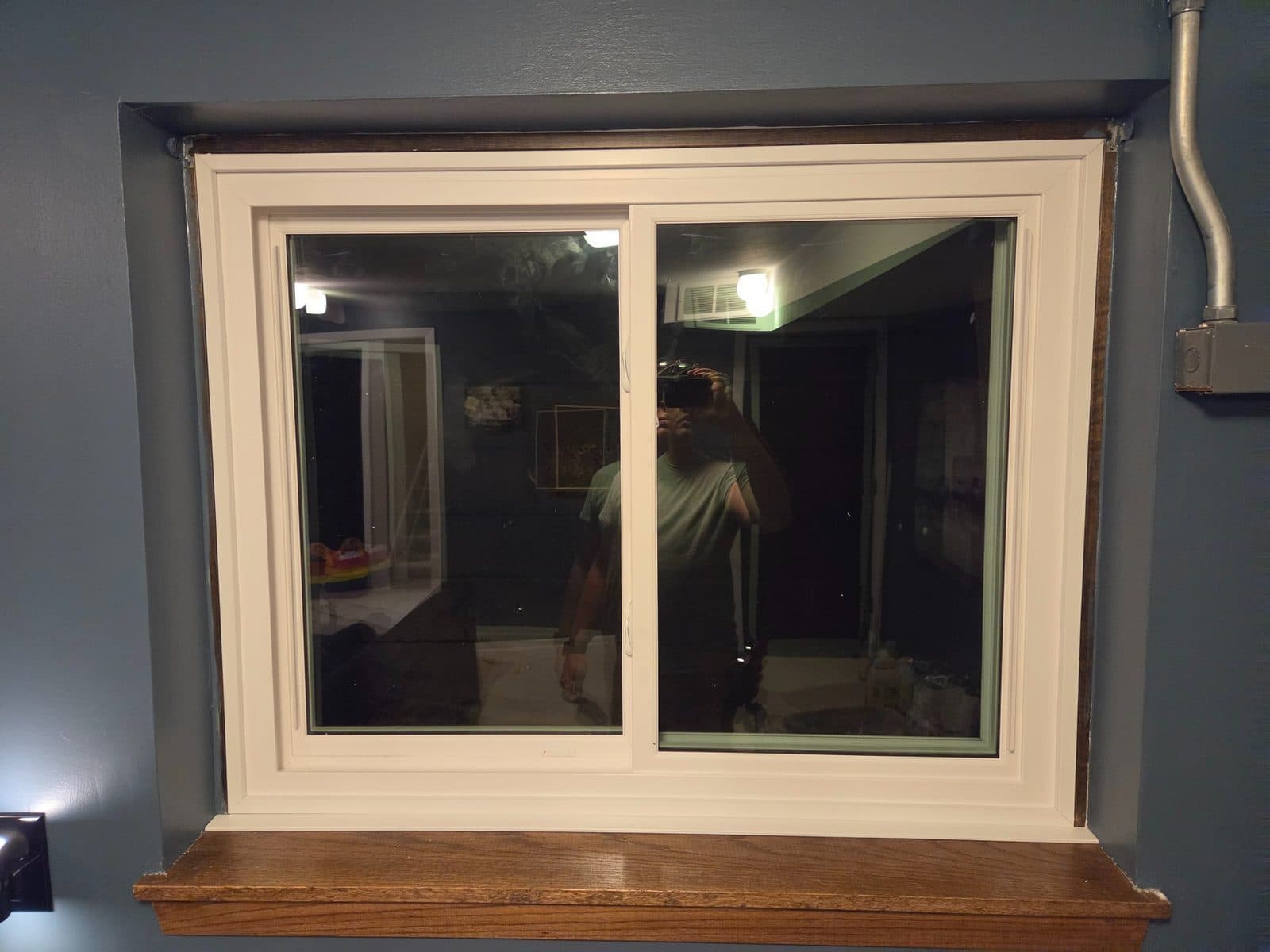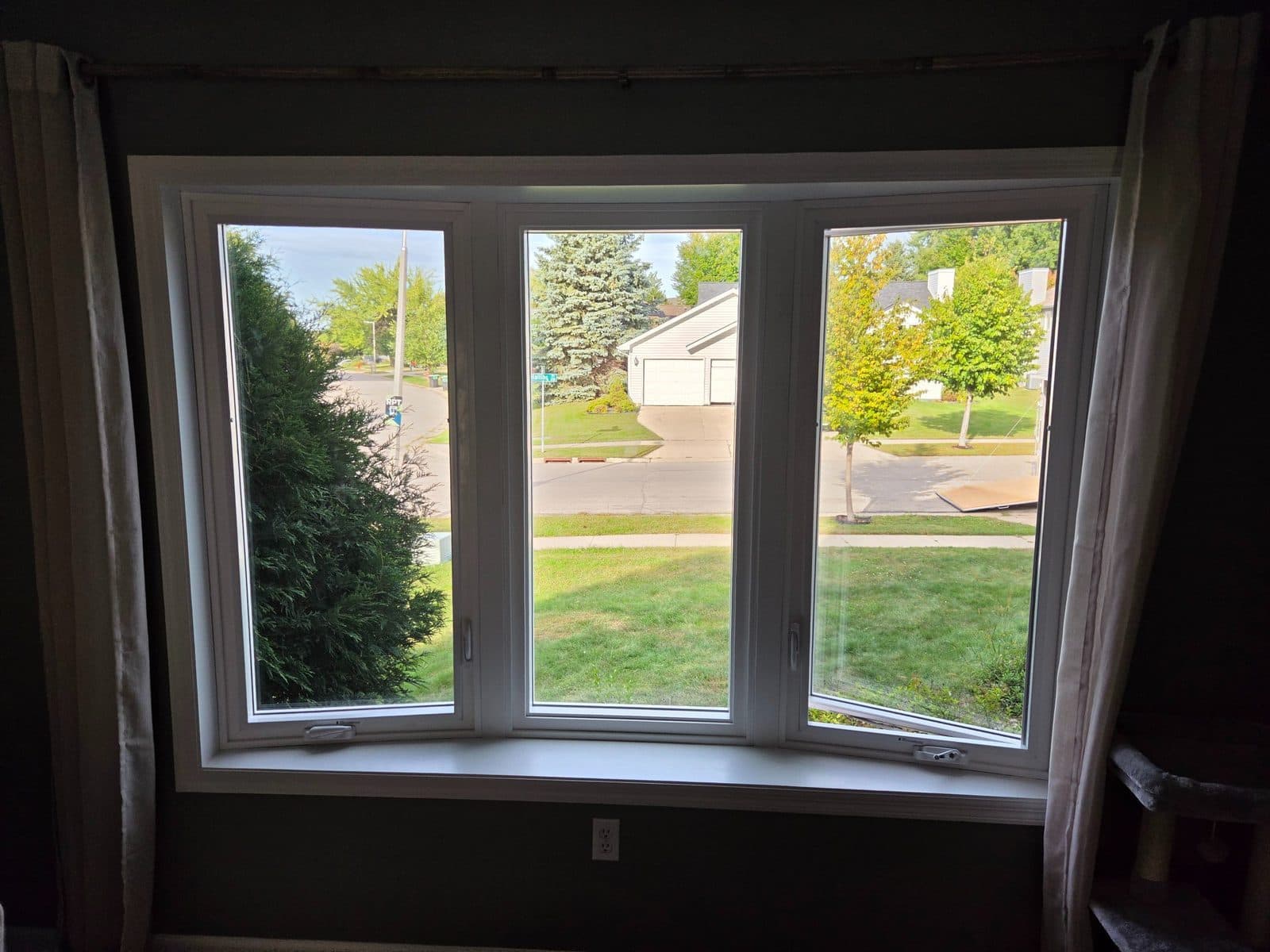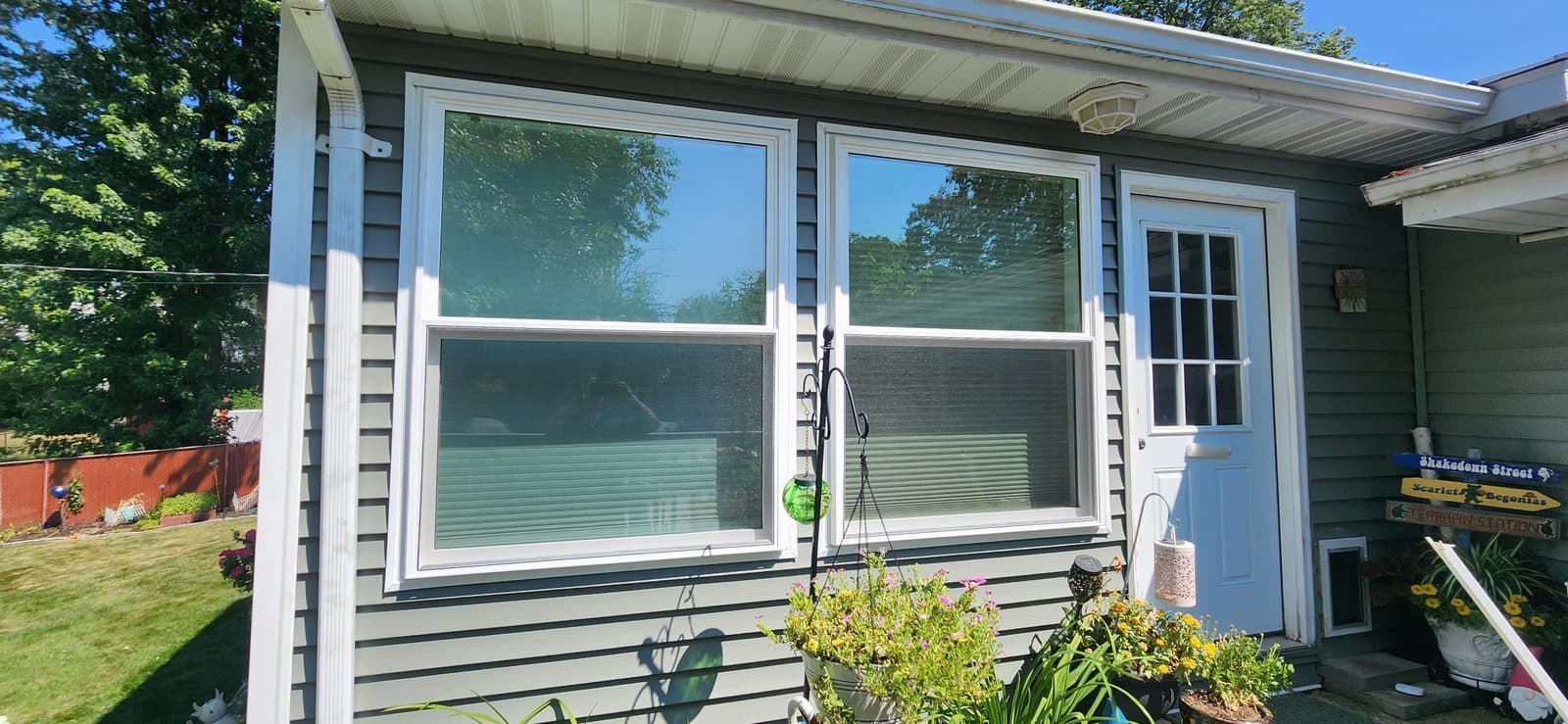
Pick casements where air sealing and reach matter and double-hungs where the look and the space outside the window matter. Casements close by compressing the sash into the weatherstripping, so they test tighter on air leakage. Double-hungs cost less and tilt in for cleaning. That is the short answer for any Twin Cities house, whether we supply the windows or you buy them and hire the install.
Both styles come from every major brand in the same materials and glass packages. They differ in how they seal against a January wind, how you clean them and where they physically fit. Here is the comparison, plus the glass and install details that matter more than the style.
How does each style work?
A casement window is hinged on one side and cranks outward like a door. When it closes, the lock pulls the whole sash tight against compression weatherstripping on all four sides.
A double-hung window has two sashes that slide up and down past each other on balances. Both sashes tilt into the room for cleaning, and you can vent from the top, the bottom or both. Because the sashes have to slide, they seal with pile or fin weatherstripping that needs a little clearance.
Casement vs. double-hung side by side
How the two styles compare on the things that matter in our climate:
| Factor | Casement | Double-hung |
|---|---|---|
| Air sealing | Excellent. The sash compresses into the seal and wind makes it tighter. | Good. Sliding sashes need clearance, so a little more air moves. |
| Ventilation | The full opening vents and catches a side breeze. | Top or bottom vents; about half the opening. |
| Cleaning | Crank open and reach both sides from inside on most sizes. | Both sashes tilt in. Easiest of any style. |
| Egress fit | Meets bedroom egress in smaller openings because the full width opens. | Needs a larger opening to meet egress clear-space rules. |
| Obstructions | Swings outward. Avoid over decks, walkways and patios. | Never protrudes. Safe anywhere. |
| Hardware | Crank and multi-point lock. More moving parts. | Simple locks and balances. Less to maintain. |
| Screen | Inside the room, so it stays cleaner but shows from indoors. | Outside the sash, the traditional look. |
| Cost | More than a double-hung of the same size and series. | The value benchmark for replacement windows. |
Where do casements win in a Minnesota home?
The compression seal is the headline. On a windy site, an open lot, lake exposure, the west wall of a two-story, a casement out-seals a sliding sash, and you feel it during a windchill week. On NFRC air leakage tests, casements and awnings from good manufacturers routinely post the lowest numbers of any operable style.
Casements are also the answer for hard-to-reach openings: over the kitchen sink, behind a tub, anywhere you would struggle to push a sash up. A fold-away crank takes little effort at full reach. In basements and small bedroom openings, a casement is often the easiest way to meet egress, because the whole sash swings clear.
Where do double-hungs win?
Double-hungs are the traditional look. On a 1920s St. Paul four-square or a Minneapolis bungalow they look correct, especially with grilles that match the era.
They are the right call anywhere an outward-swinging sash would be in the way: along decks, patios, sidewalks and play areas. Cleaning is the other advantage. Both sashes tilt into the room, which matters on the second story every spring. A double-hung also handles a wide opening with one sash, where a casement that wide would be too heavy for its hinges.
Does the style change the energy performance?
Less than people expect. The NFRC label rates the whole window, glass, spacer and frame together, and the glass package sets most of the U-factor. A casement and a double-hung from the same series with the same glass land within a few hundredths of each other on U-factor. The casement wins on air leakage, which the label lists as an optional number: 0.3 cfm per square foot is the code ceiling, good casements test at 0.1 or lower, and good double-hungs are not far behind.
So spend the decision on the glass first. Look for double-pane low-E with argon fill and a warm-edge spacer at minimum, a whole-window U-factor around 0.26–0.30 for a good double-pane, or 0.22 or lower for the ENERGY STAR Version 7.0 Northern zone mark. Triple-pane reaches the low 0.20s and below, keeps the inside glass warmer and cuts road noise, and is available in both styles.
Then the frame. Multi-chamber or foam-filled vinyl, fiberglass, composite or clad wood all work in either style. Ask how the weatherstripping is replaced when it wears, because that is the maintenance item on both.
What about the install?
Both styles go into the opening the same way, and a bad install wastes a good window of either kind. The gap between the frame and the rough opening gets low-expansion foam, never fiberglass stuffing. The sill gets a pan or flexible flashing so water drains out. Jamb and head flashing tie into the housewrap on a full-frame job, and the interior edge of the frame gets backer rod and sealant or an air-barrier tape before the trim goes on.
A casement adds one demand: the frame has to be set dead plumb and square, or the sash will not swing and lock cleanly. Shimming at the hinge side and the lock side gets extra attention. The trim-out, casing, stool and apron or drywall returns, is identical for both.
Most homes end up with a mix
This is not all or nothing. A typical whole-house order uses casements in the kitchen and primary bedroom, double-hungs across the street-facing front, and an awning or two in the basement. Brands offer both styles in the same series, so color, hardware finish and glass match across the house.
If you are weighing styles for a Twin Cities replacement project, send three photos of the openings in question, inside and out, and say what is outside each one. you hear back from us within one business day, with the style we would put in each spot and why.
What JMB Builders does
JMB Builders is a licensed Minnesota residential building contractor (BC809005) based in Zimmerman, working across the Twin Cities metro. One crew does the measuring, the install and the trim. We install every brand and sell none. Paid by check or direct deposit. Call 763-204-2099 (text) or send photos through the site.
- Labor-only installation of casement or double-hung windows you bought at a store or online — jmbbuildersmn.com/services/labor-only
- Insert and full-frame replacement windows and doors, measured and ordered by us — jmbbuildersmn.com/services/full-service
- Casement trim-out after an insert install — jmbbuildersmn.com/services/window-trim/casement-trim-after-insert-install
- Egress window trim-out — jmbbuildersmn.com/services/window-trim/egress-window-trim-out
Frequently asked questions
Which is more energy efficient, casement or double-hung?
With the same glass package, a casement tests better on air leakage because the sash compresses into its weatherstripping instead of sliding past it. Either style from a decent manufacturer is far tighter than the worn windows it replaces. The glass package moves the U-factor more than the style does, so compare NFRC labels.
Do casement window cranks wear out?
Crank operators are a wear item over decades, but on quality brands they are metal-geared and replaceable. Keep the hinge track clean and never force a sash against a locked position. Those two habits are most of the operator's life.
Can I replace double-hung windows with casements?
Usually, yes. The rough opening does not care which style fills it. Check the outside for anything that blocks the swing, and check the proportions: a very wide opening may need paired casements or a casement-picture-casement combination.
Which style is better for bedroom egress in Minnesota?
Casements usually meet egress in smaller openings because the full sash swings clear. If you are replacing bedroom windows in an older house, check the clear opening against the current code before you settle on a style. JMB Builders checks it from your photos and measurements before anything is ordered.
Do casement windows cost more than double-hungs?
Yes, for a comparable size and series, because of the crank, the multi-point lock and the hinge hardware. Ask for both prices per opening from the same series so you are comparing like for like. The install labor is about the same per opening, and the trim-out is the same job either way.
Are casement windows harder to install than double-hungs?
No. Both go into the opening the same way: sill pan, set, shim, fasten, flash, foam and seal. A casement needs the frame set dead plumb and square so the sash swings and locks cleanly, so the shimming gets a little more attention. The trim-out is identical.