
Window Sill Trim — Stool and Apron Installation & Replacement
A window with no ledge, or a ledge that is split, swollen or painted into a lump — we install and replace window stools and aprons so there is a real sill to set things on.
Window sill trim is two parts: the stool, the ledge that runs past the casing, and the apron, the board under it. JMB Builders installs and replaces stools and aprons across the Twin Cities metro — on drywall-return windows that never had a ledge, and on older windows with a stool that is cracked, swollen or rotted from condensation. Priced per window, quoted from photos within one business day.
- Priced per window
- Add a stool to a drywall return or replace an old one
- Quote from photos in 1 business day
- Licensed MN contractor BC809005
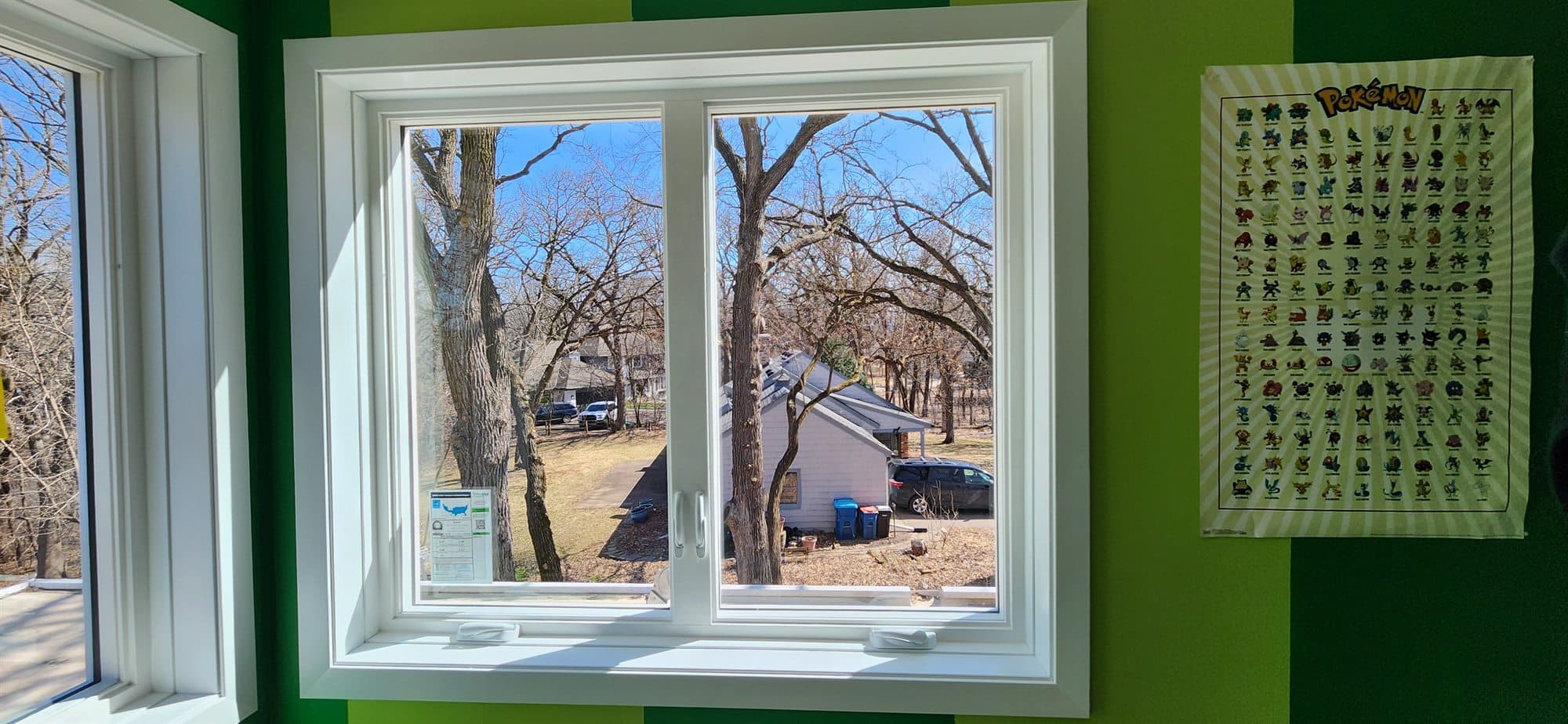
The stool is the flat piece at the bottom of the window on the inside, the part most people call the windowsill. It sits on the rough sill, runs back to the window frame, and extends past the casing on each side — those ends are the horns. The apron is the trim under it that covers the joint to the wall and supports the stool from below. Together they are the traditional bottom of a cased window, and they are exactly what a drywall return is missing.
Two kinds of people search for window sill trim. The first has drywall-return windows and wants a ledge: for plants, for a candle, or because the soft drywall edge is already chipped. The second has an old stool that is splitting, that swelled from condensation, or that has been painted so many times the profile is gone. Both are per-window jobs and both are ours.
JMB Builders does window stool replacement and new stool-and-apron installs across the Twin Cities metro. We cut the stool from 5/4 stock so it is stout, notch the horns to fit around the jambs and casing, set it dead level, and back it with an apron with returned ends. Primed and caulked, or stain-grade to match the rest of the trim. Painting or staining is quoted as a separate line, or finish it yourself.
What you supply
- A straight-on photo of the window and one from the side showing the depth of the opening
- What is there now: drywall all the way around, or an old stool and apron
- A photo of a window that already has a stool you like, if you want the new ones to match
- Your paint or stain color, if we are finishing it; paint-grade goes in primed and caulked, stain-grade sanded
What JMB supplies
- 5/4 stool stock, paint-grade or hardwood, cut to the opening with horns
- Apron in a matching or standard profile with returned ends
- PVC stool where the window sweats — basements, bathrooms, over a sink
- Shims, construction adhesive, fasteners, filler and caulk
- Removal and haul-away of the old stool and apron
- Photos of the finished window in your job folder
- Painting or staining when you want it done, quoted as its own line
How it is priced: per window
Quoted in writing from your photos within one business day. What moves the number:
- Adding a stool to a drywall return (drywall cut back, horns fitted to the wall) vs. swapping an old stool
- Wall depth — a deeper opening takes a wider stool
- Paint-grade vs. a stain-grade hardwood matched to existing trim
- Whether the side jambs are drywall or wood, which changes how the horns are notched
- Rot or damage at the rough sill under the old stool
- Windows over counters or tubs with tight access
- Number of windows in one visit
Put a tape measure across the depth of the opening in the side photo, and one across the width. That is enough to quote it firm.
How long it takes
Replacing a stool and apron: about an hour to two per window. Adding one to a drywall-return window takes a bit longer, since the drywall is cut back and the horns fitted to the wall. A room of windows in a half day.
How your project works
- 1
Send photos, get a written quote
Send three photos of the space and a sentence about what you want. You get a clear, itemized quote within one business day. We only come out to measure first when the job needs a tape measure — no pressure, no games.
- 2
Pick materials, or bring your own
We help you choose profiles and materials that fit the house and the budget, or match your existing millwork exactly — or you buy the door or trim yourself and we install it. Everything is confirmed before the crew is scheduled.
- 3
Clean, precise installation
The crew shows up on time, protects floors and furniture, and installs with tight joints and consistent reveals. Photos of the finished work go in your job folder.
- 4
Walkthrough and invoice
We walk the finished work with you. If anything is not right, we fix it before we call the job done. Then one invoice, paid by check or direct deposit — no card fees, no payment links.
Situations and options
Add a stool to a drywall-return window
The sides and head stay drywall. We cut the drywall out of the bottom of the opening, set a wood stool on the rough sill with horns that run onto the wall, and add an apron below. You get a ledge without trimming the whole window.
Replace a cracked, swollen or rotted stool
The old stool and apron come out, the rough sill is checked and repaired if it is soft, and a new stool goes in level with a new apron. The casing stays if it is in good shape.
Stool and apron with full casing
The complete traditional trim-out: extension jambs on the sides and head, stool with horns, apron, and casing that lands on the stool. Priced as one window.
Stain-grade hardwood stool
Oak, maple or poplar to match stained casing or cabinets. The grain runs the length of the stool, edges are eased or profiled to match the existing trim, and it is sanded ready for stain.
Window Sill Trim — Stool and Apron Installation & Replacement: questions, answered
What is the difference between a window sill and a window stool?
The sill is the sloped piece at the bottom of the window on the outside, part of the window itself, that sheds water. The stool is the flat ledge on the inside that you set things on. Most people call the stool a windowsill and everyone knows what they mean, but when you are ordering trim or talking to a carpenter, the inside piece is the stool and the board under it is the apron.
Can you add a windowsill to a window that has drywall returns?
Yes, and it is a common request. We cut the drywall out of the bottom of the return, set a wood stool on the rough sill so it runs back to the window frame, notch the horns so they wrap past the drywall sides onto the face of the wall, and install an apron under it. The sides and head stay drywall. The result is a clean modern window with a real ledge at the bottom.
How far should the window stool stick out past the casing?
The horns usually run about three-quarters of an inch to an inch past the outside edge of the casing on each side, and the front edge of the stool stands out from the wall by about the thickness of the apron plus a little more. On a drywall-return window with no casing, the horns run a similar distance past the edge of the opening. If the house already has stools, we match the existing horn length so every window reads the same.
My window stool is swollen and peeling at the ends. Why?
Condensation. Water forms on cold glass, runs down the sash and sits on the stool, and if the stool is MDF or finger-jointed pine with a bad paint seal, it soaks it up and swells. Replacing it with the same material buys a few years. Replacing it with solid wood sealed on all sides, or with PVC on a window that sweats badly, fixes it. Running the furnace humidifier lower in January helps too.
Do I need an apron under the window stool?
Yes, practically. The apron covers the joint between the stool and the wall, stiffens the stool so the horns do not flex, and finishes the bottom of the window the way casing finishes the sides. Skipping it leaves a raw edge and a caulk line. On a drywall-return window with a stool, a narrow, flat apron keeps the look simple.
What material is best for an interior window stool?
Solid pine or poplar for paint, oak or maple for stain, and PVC anywhere water is a regular problem: basements, bathrooms, over the kitchen sink. Avoid MDF on any window that sweats in winter, which in Minnesota is most of them. Whatever the material, the stool should be cut from 5/4 stock, not 3/4, so it does not look thin next to the casing.
Get a written quote for this job
Three photos and a sentence is enough. You hear back within one business day. Or text the photos to 763-204-2099.
Related jobs we do
Window Returns With Drywall or Wood Casing? We Do Both
Your builder wrapped the windows in drywall. Keep the clean look and have the returns rebuilt right, or add wood jambs and casing — here is how to decide. We do both.
Read moreJamb Extensions for Windows — Installation & Casing
The window frame stops short of the wall and there is nothing to nail casing to. Extension jambs fix that — sized to your wall, set straight, reveal even, cased the same day.
Read moreCracked Drywall Return Window Repair: Corner Bead, Stains & More
A split corner, a chipped edge, a brown stain at the bottom of the return, or a window the drywaller never came back to finish — we fix it square and leave it ready for paint.
Read moreBasement Window Trim-Out — Half-Below-Grade & Egress Windows
Thick foundation walls, a sill that sweats every winter, an egress unit sitting in a window well — basement windows need trim built for a basement, not copied from upstairs.
Read moreBaseboard & Casing Installation
Straight lines, tight miters, and coped inside corners — baseboard and window & door casing installed room by room or across your whole home.
Read moreWindow Trim & Casing for New Construction
Wood jambs and casing added to every window and patio door your builder wrapped in drywall — installed after closing, before or after you move in, by a licensed Minnesota contractor.
Read morePage reviewed September 24, 2026 · JMB Builders LLC, MN license BC809005 · All window trim pages
Where we work
Window trim near you
Based in Zimmerman, scheduling across the Twin Cities metro. Closest first: