
Trim After Insert Window Installation — Casing Fit to the New Reveal
The new casements went into the old frames, and now there is a step, a strip of foam and an old jamb that does not meet the new window. We fit the trim to what is actually there.
Trim after an insert window installation has to bridge two things: the old wood jamb that stayed in the wall and the new, shallower frame sitting inside it. JMB Builders fits filler strips, jamb extensions and casing to insert and pocket windows across the Twin Cities metro so the step between old jamb and new frame disappears. Priced per window, quoted from your photos within one business day.
- Priced per window, filler, jambs and casing
- Fits the old jamb and the new frame together
- Quote from photos in 1 business day
- Licensed MN contractor BC809005
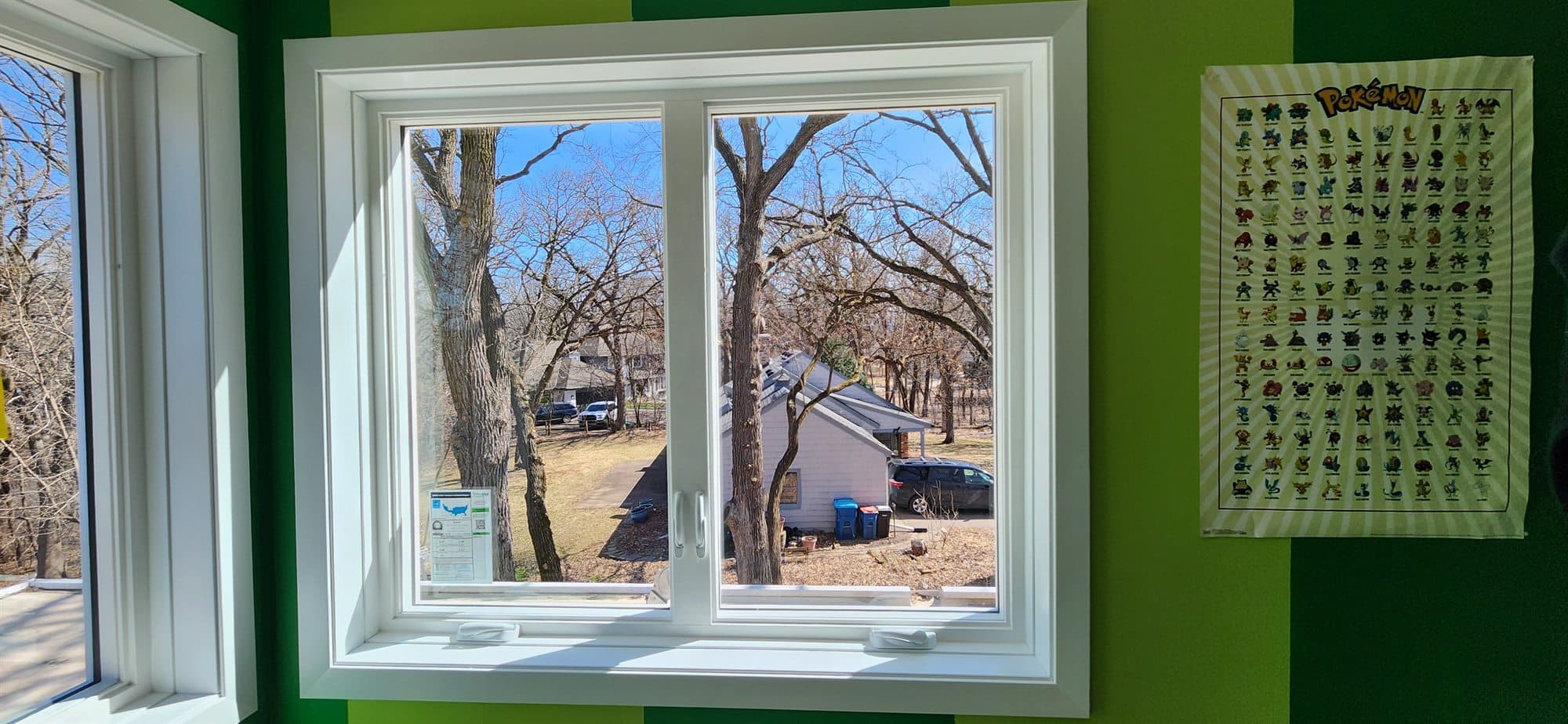
An insert window, also called a pocket or frame-in-frame replacement, goes into the old window's frame. The old sash and stops come out, the old jambs stay, and the new unit sits inside them. It is fast and it does not disturb the siding or the exterior trim. It also leaves the inside in a state no stock trim fits: the new frame is narrower and shallower than the old sash was, so there is a step between the face of the new window and the old jamb, a strip of foam in the gap, and casing that either survived or did not.
The trim job is to make that step go away. Sometimes it is a filler strip ripped to the exact depth and set with an even reveal so the old jamb meets the new frame cleanly. Sometimes the new frame sits so far in that the old jamb needs a new extension on the room side. When the old casing was pulled to get the window in, it gets reset or replaced. Casements are the common case because a new casement pair is the usual swap into an old double-hung frame, but the same work applies to any insert.
JMB Builders does insert window trim across the Twin Cities metro, for homeowners after the window company has left and for window companies that do not carry a trim carpenter. We measure the step at each window, rip fillers and extensions to it, reset or replace the casing, add a stool where the old one was cut, and caulk it so it reads like the window was always there. Painting or staining is quoted as a separate line, or paint it yourself.
What you supply
- A straight-on photo of one window and a close-up of the corner where the new frame meets the old jamb, with a tape across the step
- A photo of a window or door in the house that still has its original casing, so the profile matches
- Whether the installer left the old casing on, took it off and saved it, or threw it out
- Your paint or stain color if we are finishing it; painting is quoted as a separate line, or paint it yourself
What JMB supplies
- Filler strips ripped to the exact depth of the step, in paint-grade or a stain-grade species that matches the old jamb
- Jamb extensions on the room side where the new frame sits deep in the old one
- Foam trimmed flush, backer rod and sealant in the gap before the filler goes on
- New stops where the old ones were removed, sized to the new frame
- Casing reset from what was saved, or new casing in a matching profile
- A new stool and apron when the old stool was cut back for the install
- Photos of the finished windows in your job folder
- Painting or staining when you want it done, quoted as its own line
How it is priced: per window
Quoted in writing from your photos within one business day. What moves the number:
- Size of the step between the new frame and the old jamb — a thin filler vs. a full jamb extension
- Whether the old casing was saved and can go back, or new casing has to be matched
- Paint-grade vs. stain-grade fillers matched to old fir, oak or pine jambs
- Old stools that were notched or cut for the install and need replacing
- Windows set out of square in the old frame, which take scribed fillers
- Older casing profiles that have to be sourced or built up
- Number of windows in the same visit
A tape across the step at one corner, from the face of the new frame to the face of the old jamb, tells us whether it is a filler or an extension job at that window.
How long it takes
A window with the casing saved: about an hour to fit the filler, reset the casing and caulk. A window that needs new stops, filler, stool and casing: two to three hours. A house of inserts over two or three days.
How your project works
- 1
Send photos, get a written quote
Send three photos of the space and a sentence about what you want. You get a clear, itemized quote within one business day. We only come out to measure first when the job needs a tape measure — no pressure, no games.
- 2
Pick materials, or bring your own
We help you choose profiles and materials that fit the house and the budget, or match your existing millwork exactly — or you buy the door or trim yourself and we install it. Everything is confirmed before the crew is scheduled.
- 3
Clean, precise installation
The crew shows up on time, protects floors and furniture, and installs with tight joints and consistent reveals. Photos of the finished work go in your job folder.
- 4
Walkthrough and invoice
We walk the finished work with you. If anything is not right, we fix it before we call the job done. Then one invoice, paid by check or direct deposit — no card fees, no payment links.
Situations and options
Filler strip and reset casing
The old casing survived. We rip a filler to the step, set it with an even reveal on the new frame, nail the old casing back over it and caulk. The fastest version and the most common.
Jamb extension on the old jamb
The new frame sits deep enough that the old jamb needs to come forward. A new extension is glued and pinned to the old jamb face, flush with the new frame, and cased over. Used when the installer set the unit to the exterior side.
New casing to match the house
The old casing was pulled and did not survive. We match the profile from another window or door, source or build it, and case the window fresh with a new stool and apron where needed.
Convert to drywall returns
If you want to lose the casing, the old jamb is cut back or covered and the opening gets a drywall return to the new frame. That is a different look and a different job; ask and we quote both.
Trim After Insert Window Installation — Casing Fit to the New Reveal: questions, answered
Why is there a step between my new window and the old wood frame?
Because an insert window is smaller than the frame it went into. The old sash was thick and sat in the middle of the old jamb; the new frame is thinner and the installer set it toward the outside, so the old jamb now stands proud of it on the room side. That step is normal on every insert installation. The trim carpenter closes it with a filler strip or a jamb extension, not the window installer.
What are jamb extensions on an insert window?
A new strip of wood fastened to the face of the old jamb so it comes forward to meet the new frame. On a full-frame replacement, extensions bring the new jamb out to the wall. On an insert, the old jamb is already at the wall; the extension goes the other way, filling the depth between the old jamb and the new window. Same word, opposite direction.
Can the old casing go back on after an insert window?
Yes, if the installer took it off carefully and saved it. We fit the filler first so the casing has something flat to land on, then reset the casing in its old position and fill the nail holes. If the casing was split getting it off or was thrown out, we match the profile and case the window new.
Do insert windows need new interior stops?
Usually. The old interior stops were removed to get the old sash out, and the new frame is a different size, so the old stops rarely fit. New stops are ripped to the new frame and set with a small reveal, or the filler strip is made wide enough to act as the stop. Either way the joint to the new frame gets sealed.
The new windows are stained wood and the old jambs are painted. What then?
Two choices. Paint the fillers and casing to match the old jambs, and the new window sits as a stained frame inside painted trim, which is common and looks fine. Or replace the old jambs' faces with stain-grade extensions and new stain-grade casing so the whole opening reads as stained wood. The second costs more and looks like the window was always there. We quote both from the photos.
Should I have the window company do the trim instead?
If they offer it and you like their trim, yes. Most do not, and their contracts say interior trim by others. We trim inserts for homeowners after the install and as a sub for window companies, so either path ends up here. Send photos of one window and we quote the house.
Get a written quote for this job
Three photos and a sentence is enough. You hear back within one business day. Or text the photos to 763-204-2099.
Related jobs we do
Window Company Didn't Do Trim? We Finish Replacement Windows
The new windows are in and they look great from outside. Inside there is foam, a gap and no trim, and the window company says that was not part of the job. It is part of ours.
Read moreJamb Extensions for Windows — Installation & Casing
The window frame stops short of the wall and there is nothing to nail casing to. Extension jambs fix that — sized to your wall, set straight, reveal even, cased the same day.
Read moreInstall a Window You Bought Online — Labor-Only Window Installation
The window company wants to sell you their window. You already found yours online and just need it put in right: flashed, foamed, square, and trimmed by a crew that installs windows for a living.
Read moreWindow Sill Trim — Stool and Apron Installation & Replacement
A window with no ledge, or a ledge that is split, swollen or painted into a lump — we install and replace window stools and aprons so there is a real sill to set things on.
Read moreMatch Old Window Trim Profile — Historic Casing Replacement
One window in a 1920s house got new trim that matches nothing, or the old casing is gone and the lumberyard has never seen the profile. We get the profile made and put it back.
Read moreArched Window Trim — Casing and Jambs for Round Top Windows
The window company set the arch and stopped. The straight legs are easy; the curve is where most trim jobs fall apart, and it is the part you look at every day.
Read morePage reviewed September 24, 2026 · JMB Builders LLC, MN license BC809005 · All window trim pages
Where we work
Window trim near you
Based in Zimmerman, scheduling across the Twin Cities metro. Closest first: