
Spring Home Exterior Inspection — Check the House After Winter
The snow is gone and you can see the house again. Here is what a carpenter checks on the walk around, in the order the damage usually shows up.
A spring home exterior inspection is a walk around the house after the snow is gone, looking for what winter did: soft trim at the bottoms of doors and windows, split caulk, flashing that lifted, siding pulled loose, shingles missing at the roof edge, and grading that now slopes toward the foundation. JMB Builders does that walk-around across the Twin Cities metro, with photos, and writes an itemized quote so you fix the items in any order. Priced per project.
- Every item is its own line on the quote
- Photos of each problem in your job folder
- Quote from your photos in 1 business day, or we walk it
- Licensed MN contractor BC809005
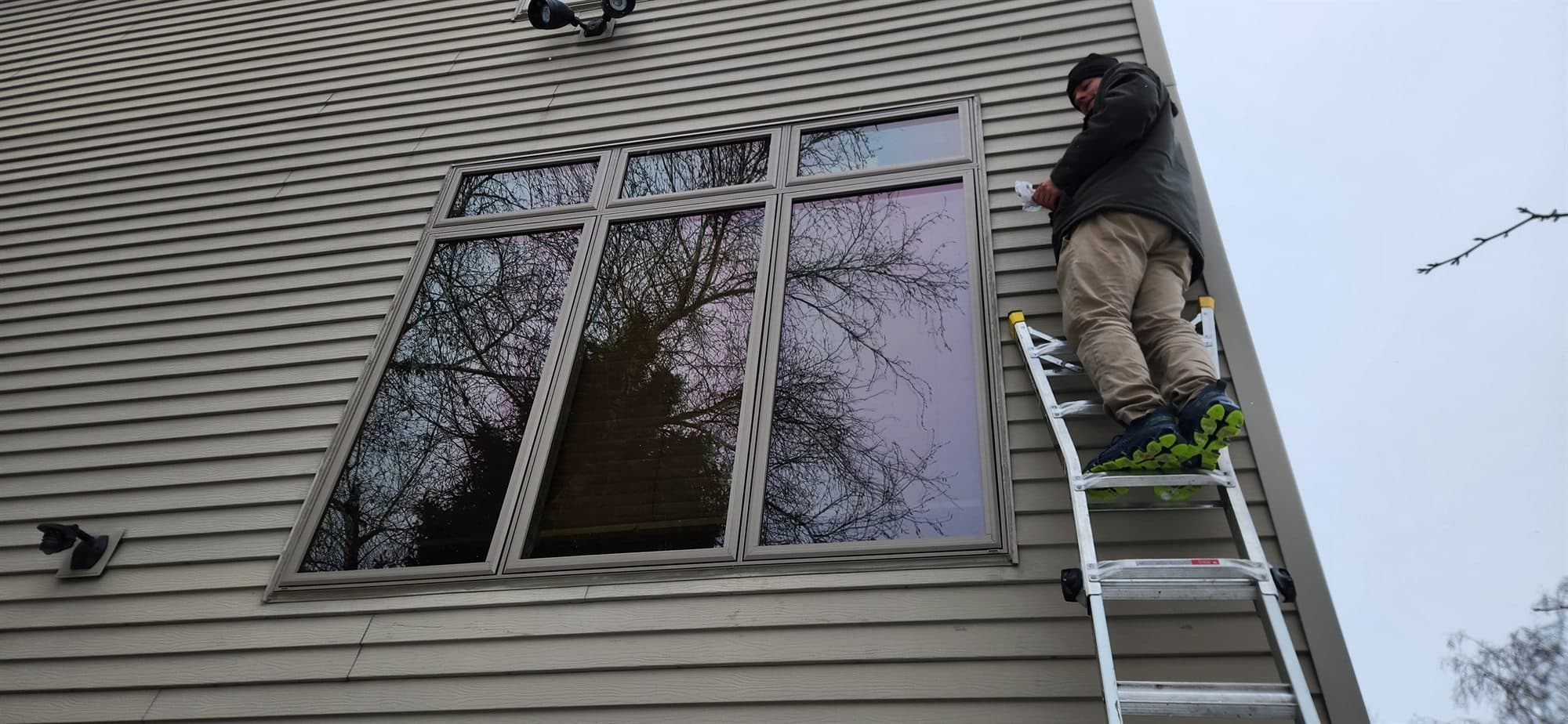
Winter does its damage quietly. Water gets into a hairline crack in the caulk, freezes, opens it a little, and does it again forty times. By April the bottom of the door casing is soft, the corner board has pulled away, the drip cap is sitting a quarter turn off where it was, and the downspout that froze solid split at the seam. None of it looks like much from the driveway. All of it gets worse by next winter if it is left.
The spring walk-around is how we catch it while it is still a caulk job or a one-board repair. We go around the house once at eye level, once looking up at the roof edge and soffit, and once looking down at the grade, the stoops and where the downspouts dump. Every problem gets a photo and a note. You get the photos, a short explanation of what each one means, and a quote with one line per item.
JMB Builders does this across the Twin Cities metro. If you already know what you are looking at, send your own photos and we quote from those within one business day. If the list is long or you do not know what to photograph, we walk it with you.
What you supply
- Photos of anything you have already noticed: soft spots, gaps, stains, loose pieces
- Where water showed up inside over the winter, if it did
- Which items you care about first, if you have a budget order in mind
- Paint colors if you want repairs painted — painting is quoted as a separate line, or leave it primed and caulked and paint it yourself
What JMB supplies
- The walk-around: doors, windows, trim, caulk joints, flashing, siding, roof edge, gutters, grade and stoops
- A photo of every problem and a plain explanation of what it means and how urgent it is
- A probe test on suspect trim so soft wood is found before the paint hides it
- An itemized quote: one line per repair, priced separately, in any order you want
- The repairs themselves: PVC or cedar trim, drip caps and flashing, caulk, siding pieces, sill and threshold work
- Referral for what is not ours, such as a chimney that needs a mason or a foundation crack
- Painting of any new trim when you want it done, quoted as its own line
How it is priced: per project
Quoted in writing from your photos within one business day. What moves the number:
- How many separate items are on the list after the walk
- Caulk and paint touch-up vs. trim that has to come off and be replaced
- Rot that goes past the trim into the jamb, sill or sheathing behind it
- Flashing and drip caps that are missing entirely vs. ones that just need resetting
- Roof edge items: a few shingles and a drip edge section vs. an eave that needs opening up
- Grading and downspout extensions, which may need dirt brought in
- Whether the repairs are done in one visit or split into rounds
Send a wide shot of each side of the house plus close-ups of anything that looks off. Most spring lists can be quoted from that without the walk.
How long it takes
The walk-around takes about an hour on a typical house. Small repairs, caulk and drip caps: one day. Trim replacement on several openings: one to two days. Bigger items are scheduled as their own jobs.
How your project works
- 1
Send photos or book the walk
Four wide shots, one per side, and close-ups of anything that worries you. If you would rather we look, we schedule the walk-around, usually within the week in spring.
- 2
The walk-around
One lap at eye level, one looking up, one looking down. A probe on every suspect board. A photo and a note for each item, numbered so the quote matches.
- 3
Itemized quote
Within one business day: each item priced on its own line with what it involves and how urgent it is. You choose what to do now and what to leave.
- 4
Repairs
Small items done in one visit. Trim replacement, flashing and siding work scheduled as their own days. Photos of the finished work in your job folder.
Situations and options
Doors and door trim
Press a screwdriver into the bottom of each exterior door casing and brickmould, the jamb legs, and the threshold. Soft means rot. Check that the sweep still touches the threshold and the weatherstrip is not torn. Look for daylight at the corners of the door when it is closed.
Window trim and sills
Bottom corners of window casing and the sill nosing go first. Look for paint that has bubbled or cracked in a line, which means the wood under it moved. Check the joint between the sill and the siding for a gap.
Caulk joints
Every place trim meets siding, siding meets a corner board, or a pipe or wire comes through the wall. Caulk that has pulled away from one side is open. Caulk that is cracked across the middle is done. Both get cut out and redone, not caulked over.
Flashing and drip caps
Above every door and window there should be a drip cap tucked behind the siding. Look for one that is missing, bent, or has caulk where a lap should be. Check the kick-out flashing where a roof meets a wall above a gutter; a stained wall below it means it is missing.
Siding and corner boards
Vinyl that unhooked in the wind, lap siding with a split or a nail head backing out, corner boards pulled loose at the bottom, and the bottom course sitting on wet dirt or mulch. Woodpecker holes on LP or cedar show up now.
Roof edge, gutters and downspouts
From the ground: shingles lifted or missing along the eave, drip edge hanging, gutters sagging or pulled off the fascia by ice, downspouts split at a seam or knocked off the elbow. Stained or peeling soffit under the eave means an ice dam or a gutter overflow.
Grading, stoops and walks
Frost lifts stoops and settles the dirt against the foundation. Look for ground that now slopes toward the house, a gap between the stoop and the wall, and downspouts dumping right at the foundation. A front step that heaved and is now a trip is a common spring find.
Decks, rails and posts
Push on every rail post. Check the bottom of each post where it meets the deck or the ground, the ledger where the deck meets the house, and stair stringers for splits. Loose or rotted rails are a fall risk, so they go near the top of the list.
Spring Home Exterior Inspection — Check the House After Winter: questions, answered
What should I check on my house exterior after winter?
Start at the doors: press on the bottom of the casing and threshold for soft wood. Then window sills and the bottom corners of the casing, every caulk joint, the drip caps above openings, siding that unhooked or split, the roof edge and gutters from the ground, and the grade along the foundation. Finish with deck rails and posts. Anything soft, gapped, stained or leaning goes on the list.
Do you charge for the spring walk-around?
If you send photos, the quote is written from those at no charge within one business day, the same as any other job. When the list is long or you are not sure what to photograph, we walk the house and price the visit as part of the project. Ask when you book and we tell you up front.
Can I just caulk over the cracks I find?
Caulk over old caulk does not hold. The new bead sticks to the old failed one and pulls away with it. The old caulk gets cut out, the joint cleaned and dried, and a new bead of exterior sealant run and tooled. If the trim under it is soft, caulk is not the fix at all; the board comes off and the reason it got wet gets fixed first.
How do I know if exterior trim is rotted or just needs paint?
Push a screwdriver or an awl into it. Sound wood stops the point; rotted wood lets it sink in with little effort. Paint that has bubbled, cracked in lines, or peeled in a sheet on one board and not its neighbors usually means the wood under it is wet. Rot almost always starts at the bottom end of a board, so probe there.
Should the spring inspection include the roof?
From the ground, yes: missing or lifted shingles at the eave, drip edge hanging, and gutters pulled off by ice all show from the lawn. We do not walk a roof for a routine spring check unless something from the ground says we should. If you see a stain on a ceiling or a torn shingle, that becomes a roof leak repair with its own page and its own look.
What is the most common thing you find in spring?
Rot at the bottom of exterior door trim, followed by split caulk at window sills and a drip cap that was never there. Grading that has settled toward the foundation and a downspout dumping at the wall are next. Most of it is a one-board or one-tube fix in April and a bigger job by the following spring.
Get a written quote for this job
Three photos and a sentence is enough. You hear back within one business day. Or text the photos to 763-204-2099.
Related jobs we do
Rotted Door Trim Replacement — Casing, Brickmould & Flashing
The paint is bubbling at the bottom of the door casing and a screwdriver sinks right in. We replace the rotted trim and fix the water path that caused it, so it stays fixed.
Read moreDrip Cap Installation Above Doors and Windows
Water stains at the top corners of the casing, paint peeling off the head trim, rot showing up at the bottom of the door: the house is missing a drip cap. We add one without tearing off the siding.
Read moreWindow Brickmould Replacement — Rotted Exterior Window Casing
The bottom corners of the window trim are soft, the paint will not stay on, and there is a gap opening between the trim and the siding. We replace the brickmould and fix what is behind it.
Read moreFascia Board Repair & Soffit Section Replacement
The gutter is pulling away, the fascia behind it is black and soft, and a soffit panel is hanging down. We replace the bad section, fix what caused it, and put the gutter back where it belongs.
Read moreYard Drainage Solutions — Grading and Buried Downspout Extensions
Water in the window well, a wet corner of the basement every spring, a side yard that is mud until June — most of it is fixed outside with a shovel, some pipe and the right grade.
Read moreCorner Board Replacement — Rotted Exterior Corner Trim
The bottom of the corner board is soft, the paint is lifting in sheets, and the siding ends behind it are starting to go too. We replace the corner, flash it, and tie the siding back in so it stays dry.
Read morePage reviewed September 24, 2026 · JMB Builders LLC, MN license BC809005 · All exterior trim pages
Where we work
Exterior trim near you
Based in Zimmerman, scheduling across the Twin Cities metro. Closest first: