
Blocking for a Shower Seat and Grab Bars Before Tile
The shower is open to the studs and someone in the house will need to sit down in it. Now is the only time to put wood behind the tile. We set the blocking, then hang the seat when the tile is done.
Blocking for a shower seat is solid wood set between the studs before the cement board and tile go on, so a fold-down seat and the grab bars next to it screw into wood instead of anchors. JMB Builders installs the blocking during a bath remodel across the Twin Cities metro, marks and photographs where it is, coordinates with your tile setter, and comes back to mount the seat after the tile is done. Priced per unit.
- Priced per unit: blocking plus seat install
- Blocking set before cement board, photographed and measured
- Seat and grab bars mounted after tile, into the blocking
- Quote from photos in 1 business day
- Licensed MN contractor BC809005
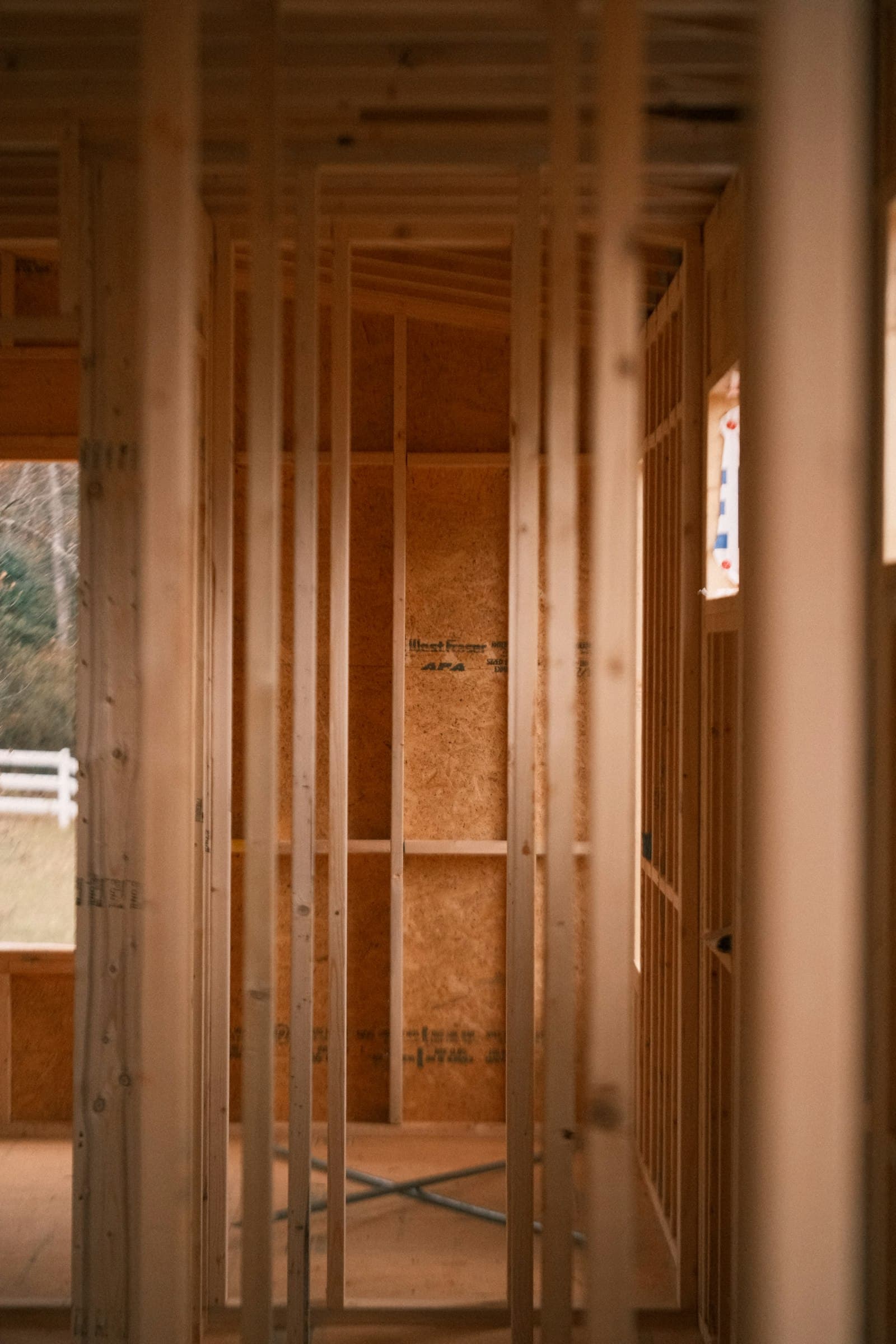
A fold-down shower seat carries a person's full weight on a few screws. Those screws have to go into solid wood. A seat mounted into tile and drywall with anchors will feel fine the first month and pull loose the day it matters. The only reliable way to get wood behind the tile is to put it there while the wall is open, which means during the remodel, before the cement board goes up.
JMB Builders does that part. We set solid blocking between the studs across the full width and height where the seat will mount, and more blocking where the grab bars next to it will go: one on the wall beside the seat, one across from it, one at the shower entry. The blocking is let in flush with the studs so the cement board lies flat, it is screwed to the studs so it cannot move, and we measure and photograph every piece from a fixed reference so it can be found after the tile is on.
Then the tile setter does their job. When the tile is cured we come back, find the blocking from our photos and measurements, drill through the tile, and mount the seat and the grab bars into wood. It is two short visits inside somebody else's remodel, and we schedule them around the tile setter, not the other way round.
What you supply
- The seat: fold-down wall-mounted seat, or a fixed bench, with its mounting template if it has one
- The grab bars you want next to the seat, or we supply standard stainless bars
- A photo of the open shower wall from the doorway, and the rough dimensions of the shower
- Who the seat is for and how they will use it, so the seat height and the bar positions make sense for them
- Your tile setter's name and schedule so we can set the blocking before cement board and come back after tile
What JMB supplies
- Solid wood blocking let in flush between the studs where the seat, its arms and the grab bars will mount
- Blocking screwed to the studs, not toe-nailed, so it stays put when the seat is loaded
- A layout drawing and photos with measurements from the shower floor and a fixed corner, so the blocking can be found through the tile
- A note to the tile setter marking the blocking locations on the cement board
- The second visit: seat and grab bars mounted through the tile into the blocking with the right anchors and sealant
- Standard stainless grab bars when you want us to supply them
- Photos of the finished seat and bars in your job folder
How it is priced: per unit
Quoted in writing from your photos within one business day. What moves the number:
- Blocking only, or blocking plus the return visit to mount the seat and bars
- Fold-down seat with wall-mounted arms vs. a fixed bench, which changes how much blocking goes in
- Number of grab bars getting blocking along with the seat
- Whether the shower walls are open now or we have to open a section of drywall to add blocking
- Seat and bars supplied by you or by us
- Distance to the job and whether the two visits can be paired with other work in the house
Send a photo of the open wall and the seat you bought, or the one you are looking at, and we quote both visits as one price.
How long it takes
Blocking: an hour or two while the wall is open. Seat and grab bar install after tile: about half a day. The gap between them is up to your tile setter.
How your project works
- 1
Send photos, get a written quote
Send three photos of the space and a sentence about what you want. You get a clear, itemized quote within one business day. We only come out to measure first when the job needs a tape measure — no pressure, no games.
- 2
Pick materials, or bring your own
We help you choose profiles and materials that fit the house and the budget, or match your existing millwork exactly — or you buy the door or trim yourself and we install it. Everything is confirmed before the crew is scheduled.
- 3
Clean, precise installation
The crew shows up on time, protects floors and furniture, and installs with tight joints and consistent reveals. Photos of the finished work go in your job folder.
- 4
Walkthrough and invoice
We walk the finished work with you. If anything is not right, we fix it before we call the job done. Then one invoice, paid by check or direct deposit — no card fees, no payment links.
Situations and options
Fold-down wall seat
A seat that folds up against the wall when it is not needed. It hangs from a wall bracket and often has legs that fold with it, so all the weight goes into the wall. Needs the widest blocking, across the full mounting plate and above it for the arms.
Fixed bench or corner seat
A permanent seat in the shower, either a tiled bench the tile setter builds or a solid surface seat on wall cleats. We frame the bench or set the cleat blocking so it carries weight at the wall and at the floor.
Seat plus grab bars
Blocking for the seat and for the bars a seated person uses: one beside the seat to lower onto it, one to stand up with, and one at the entry. Positions are set for the person who will use them, not off a chart.
Wall already tiled
If the remodel is done, we can still mount a seat, but only where a stud or existing blocking lines up, or by opening the wall from the other side to add blocking. We tell you which from the photos.
Blocking for a Shower Seat and Grab Bars Before Tile: questions, answered
Do I need blocking for a fold-down shower seat?
Yes. A fold-down seat puts a person's full weight on its mounting screws, and the seat makers call for screws into solid wood. Studs are rarely where the seat needs to be, so blocking is added between the studs before the tile goes on. Without it, the seat is held by anchors in tile and drywall, which is not enough for someone dropping their weight onto it every day.
When does the blocking for a shower seat have to go in?
After the old wall is stripped and before the cement board goes up. That is a short window in a bath remodel, usually a day or two, and it is the only time the studs are exposed. We coordinate with your tile setter or your remodeler so the blocking is in and photographed before they close the wall. If the wall is already closed, the options are worse and we explain them.
How do you find the blocking after the tile is on?
Before the wall is closed we measure every piece of blocking from the shower floor and from a fixed corner, draw it, and photograph it. We also mark the locations on the cement board for the tile setter. After tile, we lay the measurements out on the wall, confirm with a small pilot hole, and mount the seat and bars into the wood. It is a simple process if it was done before the tile, and a guessing game if it was not.
Can you install a shower bench into the studs without blocking?
Only if the mounting holes happen to land on studs, which they rarely do. A seat bracket is a fixed width and studs are where the framer put them. If one side hits a stud and the other does not, the seat is only half supported. That is why we add blocking during the remodel, and why we tell you honestly when a finished wall does not have wood where the seat needs to go.
Where should the grab bars go next to a shower seat?
Where the person who will use them can reach from sitting and from standing: one on the wall beside the seat to lower down and push up with, and one across or at the entry to hold while stepping in. The exact positions depend on the person, their reach and which side is stronger, so we set them with that person or their family, then block for those spots. Blocking the whole wall section behind the seat gives room to adjust.
Do you work with my tile setter or remodeler on the shower seat?
Yes, and it works best that way. Your remodeler opens the wall, we set the blocking and mark it on the cement board, the tile setter tiles, and we come back after cure to mount the seat and bars. We do the carpentry and the mounting; the tile and the plumbing stay with the trades already on the job.
Get a written quote for this job
Three photos and a sentence is enough. You hear back within one business day. Or text the photos to 763-204-2099.
Related jobs we do
Grab Bar Installation — Anchored Into Studs or Blocking
A grab bar has to hold a falling adult. We find the studs, add blocking when the studs are in the wrong place, drill the tile cleanly and set the bar where you reach for it.
Read moreWiden a Doorway for a Wheelchair or Walker
A bathroom door that a wheelchair cannot get through has two fixes, one small and one real. We tell you which one your door needs and do the framing, door and patching in one job.
Read moreThreshold Ramp for an Entry Door — Rubber, Aluminum or Wood
The front door has a sill and a step that a wheelchair cannot get over. We ramp the threshold, or the one step in front of it, so the person can get in and out on their own.
Read moreSecond Handrail on Stairs — Rails on Both Sides
One rail is a code minimum. Two rails is what lets someone with a weak side, a cane or a bad knee use their own stairs. We add the second one so it matches the first and holds.
Read moreLever Door Handles and Threshold Ramps for Seniors
Knobs you cannot turn and thresholds you trip on are the two small things that make a house hard to live in. We swap every knob for a lever and fix every threshold in one visit.
Read moreExterior Window Trim After New Siding Replacement
The siding is done, the windows are sitting in a thin strip of J-channel, and the house still looks unfinished. We trim them out in boards that shed water and last.
Read morePage reviewed September 24, 2026 · JMB Builders LLC, MN license BC809005 · All aging in place pages
Where we work
Aging in place near you
Based in Zimmerman, scheduling across the Twin Cities metro. Closest first: