
Pavers vs Concrete Patio — Which Lasts Longer in Minnesota
Deciding between a poured patio and a paver patio? Here is how each one handles a Minnesota freeze-thaw, what fails on each, and what fixing it looks like ten winters in.
Pavers vs concrete patio in Minnesota: a poured slab is one piece, so when frost lifts a corner it cracks, and the crack is permanent. Pavers are hundreds of pieces on a compacted gravel base; when a spot heaves or settles you lift those pavers, fix the base and set them back. Concrete costs less to pour; pavers cost less to fix. JMB Builders builds paver patios across the Twin Cities metro, priced per project after a site measure.
- Priced per project after a site measure
- Pavers on compacted class 5, built for Minnesota frost
- We remove cracked slabs and replace them with pavers
- Licensed MN contractor BC809005
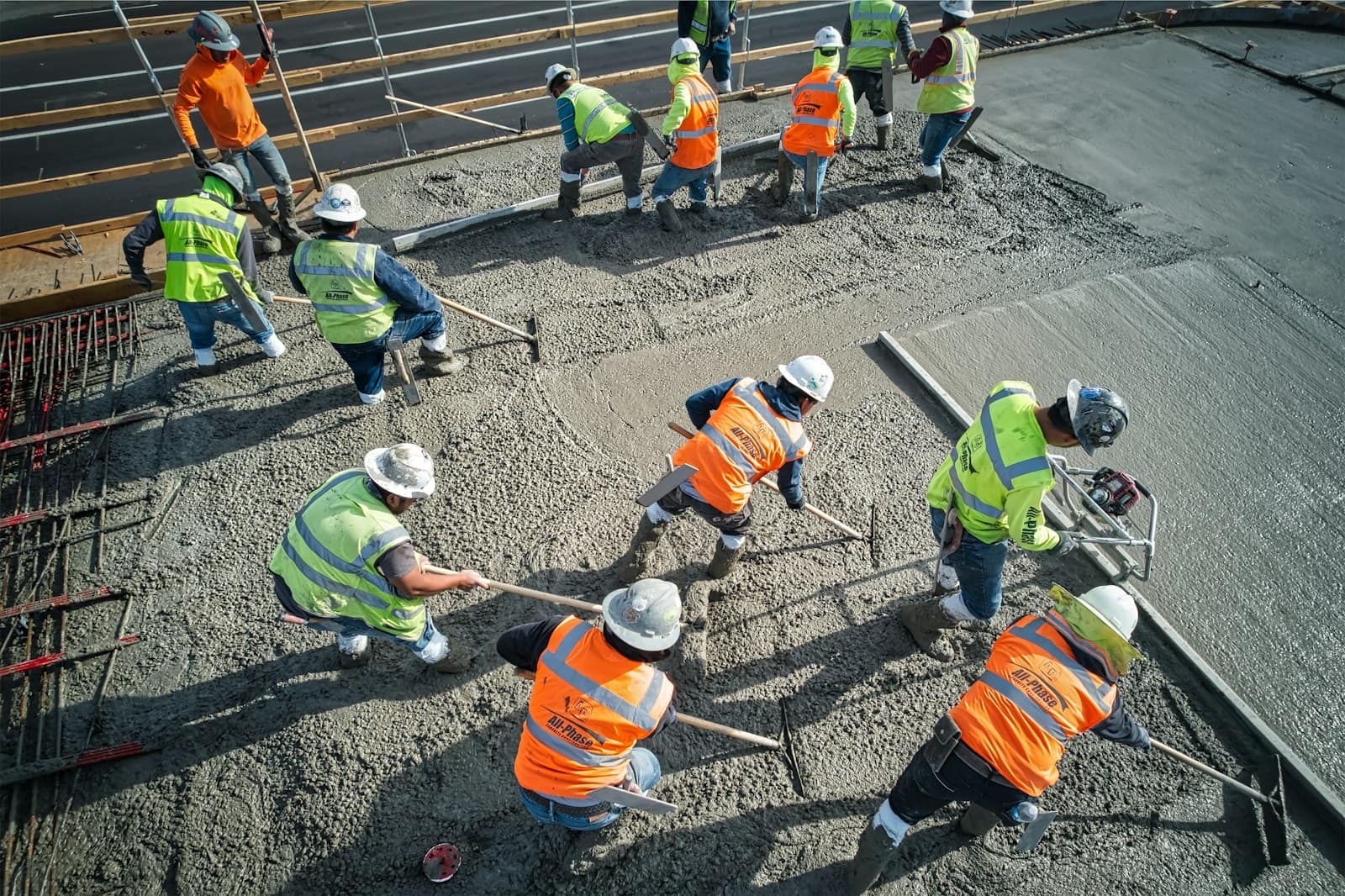
Every patio in Minnesota sits on soil that freezes deep and lifts when it does. The question is not whether the ground moves under it; it is what the patio does when the ground moves. A poured concrete slab is one rigid piece. It cannot bend, so when one edge lifts and the other does not, it cracks. Control joints tell it where to crack, but a crack in a patio is still a crack, and it collects water, freezes, and gets wider every year.
A paver patio is a flexible surface. Each paver sits on bedding sand over a thick, compacted gravel base, held in by an edge restraint, with sand locking the joints. When frost lifts a spot, the pavers ride up and settle back with it. When a spot settles for good, usually along the house where the backfill was never compacted, those pavers come up, the base gets fixed, and they go back down with no seam showing. That is the difference in one sentence: concrete cracks, pavers move.
JMB Builders builds paver patios, walks and steps across the Twin Cities metro, and we take out cracked slabs and replace them with pavers. We do not pour concrete flatwork; if a slab is the right answer for your yard we say so and point you to a concrete crew. The base is where a paver patio is won or lost, and it is the part you never see, so we photograph it before the pavers go down.
What you supply
- Photos of the patio area from the house and from the yard, and of any existing slab and its cracks
- A rough size and shape, and where the door, grill and steps are
- The paver you like, or a photo of one; we tell you what it needs for a base and an edge
- Utility locate scheduled before we dig, which is a free call in Minnesota
- Where the downspouts dump, so the patio can be pitched away from the house and the water has somewhere to go
What JMB supplies
- A straight answer on pavers vs. concrete for your yard, soil and budget before the measure
- Removal and hauling of an old slab, or excavation of the area to the base depth for our frost
- Compacted class 5 base in lifts, bedding sand screeded flat, and a pitch away from the house
- Pavers laid to the pattern, cut at the edges, with a solid edge restraint spiked in
- Polymeric sand in the joints, compacted and set
- Steps, a seat wall or a fire pit built into the same base when you want them
- Photos of the base before the pavers cover it, in your job folder
How it is priced: per project
Quoted in writing from your photos within one business day. What moves the number:
- Square footage and shape: curves and cut pavers take more time than a rectangle
- The paver itself: a plain concrete paver vs. a thick, textured or natural-stone unit
- Excavation depth and how much base has to be brought in, which is more on clay than on sand
- Removing an existing concrete slab, which is heavy and has to be hauled
- Access for a skid steer and dump trailer vs. wheelbarrows through a gate
- Steps, walls, a fire pit or a border in a different paver built into the patio
- Drainage work: regrading, a downspout extension or a drain tile under the patio
Send a photo from an upstairs window if you have one; it shows the shape and the slope better than anything from the ground. Then we measure on site.
How long it takes
A typical paver patio: two to four days once the site is dug, more if an old slab comes out first or the base needs to be deep. Ground must be thawed; the season runs from spring thaw to the first hard freeze.
How your project works
- 1
Send photos, get a written quote
Send three photos of the space and a sentence about what you want. You get a clear, itemized quote within one business day. We only come out to measure first when the job needs a tape measure — no pressure, no games.
- 2
Pick materials, or bring your own
We help you choose profiles and materials that fit the house and the budget, or match your existing millwork exactly — or you buy the door or trim yourself and we install it. Everything is confirmed before the crew is scheduled.
- 3
Clean, precise installation
The crew shows up on time, protects floors and furniture, and installs with tight joints and consistent reveals. Photos of the finished work go in your job folder.
- 4
Walkthrough and invoice
We walk the finished work with you. If anything is not right, we fix it before we call the job done. Then one invoice, paid by check or direct deposit — no card fees, no payment links.
Situations and options
Frost heave
Water in the soil freezes and pushes up whatever is on top of it. A slab lifts as one piece where the frost is worst and cracks where it is held down elsewhere. Pavers lift the same way and settle back in spring, because the sand joints let each piece move. A deep, drained base keeps water from sitting under either.
Cracking
Concrete cracks; the only question is where. Control joints are cut so it cracks in a straight line, but shrinkage, frost and tree roots find their own places. A crack cannot be repaired invisibly, and patch products fail in freeze-thaw. Pavers do not crack in use; a broken paver is one piece, lifted out and swapped.
Repair
A settled or heaved section of pavers gets lifted, the base under it fixed and recompacted, and the same pavers go back. No seam, no color mismatch. A settled slab gets mudjacked or foam-lifted, a separate trade that does not fix the crack, or it gets cut out and repoured with a visible joint that never matches.
Drainage
Both need to pitch away from the house. Water that sits on a slab freezes into a rink; water on pavers drains through the joints into the base and out. Downspouts that dump next to either patio are the most common cause of the settled corner. We move them or extend them as part of the job.
Stamped concrete
A poured slab pressed with a pattern and colored to look like stone or pavers. It is still one piece and still cracks, and the crack runs across the pattern. The color is a surface coat that wears in traffic paths and needs resealing. It can approach a paver price. If you want the paver look, pavers can be repaired.
Weeds, ants and sealing
Paver joints filled with polymeric sand resist weeds and ants; plain sand does not. Joints get topped up every few years, and pavers can be sealed or left alone. Concrete has no joints to weed but the cracks grow them. Neither is maintenance-free; pavers ask for a little every few years rather than one big fix.
Replacing a cracked slab with pavers
The slab is broken up and hauled, the area is dug to base depth, and the patio is rebuilt in pavers on a compacted base. A cracked slab cannot be fixed; a paver patio in its place will still be flat when the neighbor's new slab has cracked again. Pavers over the old slab only works when the slab is sound and drains.
Pavers vs Concrete Patio — Which Lasts Longer in Minnesota: questions, answered
Which lasts longer, pavers or a concrete patio?
Pavers, in a freeze-thaw climate, because they can be repaired and a slab cannot. A concrete patio in Minnesota will crack; when it does, the crack widens every winter and the only real fix is to remove and repour. A paver patio on a proper base settles or heaves in spots over the years, and those spots get lifted and reset with the same pavers. The paver patio is still the same patio decades in; the slab is on its second pour.
Do pavers heave in Minnesota winters?
They lift a little with the frost and settle back in spring, which is the point: the sand joints let each paver move without breaking anything. Pavers that heave and stay heaved, or settle and stay settled, are telling you the base was too thin, not compacted, or is holding water. A deep compacted class 5 base with good drainage and a solid edge restraint keeps the movement to what you cannot see.
Why does my concrete patio crack?
Concrete shrinks as it cures, moves with temperature, and lifts unevenly when the ground under it freezes. It is rigid, so any of those cracks it. Control joints are cut so the cracks land in a line, but frost heave at a corner, a tree root, or a downspout soaking one edge makes its own crack. Once it cracks, water gets in, freezes, and the crack grows. There is no repair that makes it disappear.
Can you put pavers over an existing concrete patio?
Sometimes. If the slab is flat, sound, not heaving, and drains away from the house, thin pavers can be set on it with a drainage layer and an edge. If the slab is cracked and moving, it will move the pavers with it, and the height it adds can block a door threshold. Usually the better job is to take the slab out and build a proper base. We look at the slab and tell you which.
Is stamped concrete better than pavers?
It looks similar from the deck and behaves like a slab: one piece, cracks with frost, and the crack runs across the stamped pattern where it is hardest to hide. The color coat wears in traffic paths and needs resealing. Stamped work costs more than plain concrete and can land near a paver price. If you want the look of stone or pavers in Minnesota, pavers give you the same look and can be repaired.
What base do pavers need to survive frost?
Excavation deep enough for a thick layer of compacted class 5 gravel, put down in lifts and compacted each time, then a thin screeded bed of coarse sand, then the pavers, then an edge restraint spiked into the base and polymeric sand in the joints. Deeper on clay soil, a bit less on sand. The base has to drain; water that sits in it is what freezes and lifts the patio. Skipping base depth is how a patio ends up wavy in three winters.
Get a written quote for this job
Three photos and a sentence is enough. You hear back within one business day. Or text the photos to 763-204-2099.
Related jobs we do
Paver Patio Installation — Built on a Base for Minnesota Frost
A backyard paver patio that is still flat after the fifth winter: the base does that, and the base is where we spend the time.
Read morePaver Repair — Relevel Sunken Pavers and Reset a Patio
Pavers are the one patio you can fix instead of replace. A sunken corner, a heaved walk or a whole wavy patio comes up, gets a new base, and goes back down flat.
Read morePaver Walkway Installation — Front Walks and Paths
A cracked, heaved front walk is the first thing a visitor steps on. A paver walk on a proper base stays flat, sheds water, and can be reset if the ground ever moves.
Read moreFire Pit Patio — Backyard Fire Pit Built with Pavers
A place in the yard to sit around a fire on a fall night, with pavers under the chairs instead of mud, and a pit that is built to take the heat.
Read moreBlock Steps Installation — Paver and Retaining Wall Block Stairs
Timber steps rotting into the hill, a front walk that ends in a scramble up the grade, or a retaining wall you need to get through — steps built in block that stay level and even.
Read morePaver Driveway Apron — Paver Border and Edge on a Driveway
The concrete apron at the garage is cracked, the asphalt edge is crumbling into the lawn, or you want a band of pavers to dress up a plain driveway — cut out, based and set to carry a vehicle.
Read morePage reviewed September 24, 2026 · JMB Builders LLC, MN license BC809005 · All pavers pages
Where we work
Pavers near you
Based in Zimmerman, scheduling across the Twin Cities metro. Closest first: