
Clay Brick Paver Patio — Brick Patios, Walks and Salvaged Brick
A real brick patio or front walk, the kind that goes with a 1920s house, laid in a pattern on a base that keeps it flat through the winter.
A clay brick paver patio is built with real fired clay pavers, new ones such as Pine Hall or Whitacre Greer type clay pavers or salvaged street brick, set in herringbone, basket weave or running bond on a compacted class 5 base with edge restraint. JMB Builders builds clay brick patios and walks across the Twin Cities metro. Clay holds its color for good and suits an older house. Priced per project after a site measure.
- Priced per project after a site measure
- Fired clay pavers or salvaged brick, sorted and set by hand
- Herringbone, basket weave or running bond on a frost base
- Quote from photos, reply within one business day
- Licensed MN contractor BC809005
Send photos and hear back within one business day — or book a free in-home estimate.
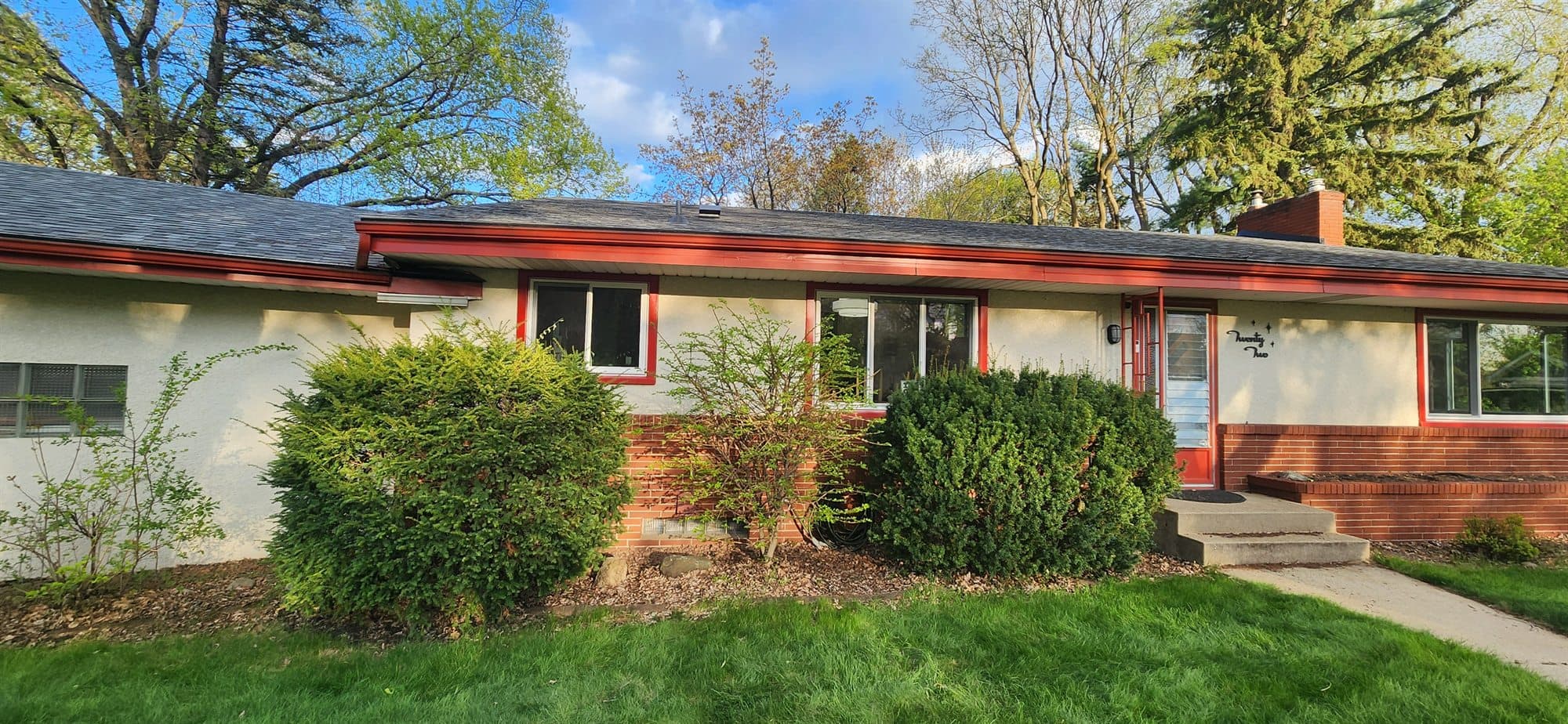
A clay paver is a brick fired for paving: denser than a wall brick, rated for freeze-thaw, and colored all the way through, so it never fades the way a dyed concrete paver does. It is the right surface for a patio or front walk at an older house, a cottage, or anywhere a concrete paver would look too new. New clay pavers come in a handful of reds, browns and flashed blends from makers such as Pine Hall or Whitacre Greer; salvaged street brick and building brick come from reclaimed yards with a hundred years of wear already on them.
The base is built the same as any patio in Minnesota: excavation to firm ground, class 5 compacted in lifts, screeded bedding sand, edge restraint spiked in on every open edge, and sand swept into the joints. What changes is the laying. Clay pavers are smaller and less uniform than concrete, especially salvaged ones, so they are sorted, set by hand to a string line, and tapped to level one at a time. Herringbone takes the most cuts and locks the tightest; basket weave needs no cuts in the field and suits a square patio; running bond is the fastest and the most forgiving with brick that varies.
Salvaged brick is its own job. Not all old brick is paving brick; soft building brick spalls in the first winter. We sort what you have or what the reclaimed yard has, keep the hard, dense ones for the field and the softer ones for an edge that does not get walked on, and tell you how many you are short before we start.
What you supply
- The brick: new clay pavers picked at a paver yard, or salvaged brick from a reclaimed yard or your own pile
- The pattern: herringbone, basket weave or running bond, and whether you want a soldier-course border
- The rough size and shape; we mark it out on site with you
- Access to the yard for a skid loader or a wheelbarrow route, and a place to stage the pallets
What JMB supplies
- A site measure, layout and the utility locate before we dig
- Excavation and haul-off, geotextile fabric where the soil calls for it, class 5 compacted in lifts
- Screeded bedding sand and the brick set by hand to a string line in the pattern you chose
- Salvaged brick sorted for hardness, with the count of what you are short
- Wet-saw cuts at the borders and the house, a soldier or sailor course on the edges
- Rigid edge restraint spiked into the base, and joint sand swept, compacted and set
- The patio pitched away from the house, sod repair at the edges, and photos in your job folder
How it is priced: per project
Quoted in writing from your photos, with a reply within one business day. What moves the number:
- Square footage, and whether it is a patio or a narrow walk with a lot of edge
- New clay pavers vs. salvaged brick, which takes sorting and more hand-fitting
- Pattern: herringbone has the most cuts, basket weave the fewest
- Brick size consistency; salvaged brick that varies a lot is slower to lay flat
- Excavation and soil, the same as any patio
- A border course, steps or a landing at the door in the same brick
- Removing an old concrete walk or patio first
Send a photo of the space and, for salvaged brick, a close-up of a few bricks and the size of the pile. The quote is written after a site measure.
How long it takes
A front walk in clay brick: two to three days. A patio: four to six working days, a day or two longer than concrete pavers of the same size because the brick is set by hand. Salvaged brick adds sorting time.
How your project works
- 1
Send photos, get a written quote
Send three photos of the space and a sentence about what you want. You get a clear, itemized reply within one business day. Prefer a look in person? A free in-home estimate is always an option.
- 2
Pick materials, or bring your own
We help you choose profiles and materials that fit the house and the budget, or match your existing millwork exactly — or you buy the door or trim yourself and we install it. Everything is confirmed before the crew is scheduled.
- 3
Clean, precise installation
The crew shows up on time, protects floors and furniture, and installs with tight joints and consistent reveals. Photos of the finished work go in your job folder.
- 4
Walkthrough and invoice
We walk the finished work with you. If anything is not right, we fix it before we call the job done. Then one invoice, paid by check or direct deposit — no card fees, no payment links.
Situations and options
Herringbone brick patio
Brick set at 45 or 90 degrees in a herringbone with a soldier-course border. The tightest-locking pattern and the most cuts at the edges; the classic look for a brick patio.
Basket weave front walk
Pairs of brick alternating direction, which needs no cuts in the field on a walk sized to the brick. Fast to lay and suits a straight walk to a front door.
Running bond walk or path
Brick in staggered rows, the most forgiving pattern for salvaged brick that varies in size. Curves well around a bed.
Salvaged street brick patio
Reclaimed paving brick with a century of wear, sorted for hardness, set with the worn face up. No two the same, and the patio looks like it has always been there.
Clay Brick Paver Patio — Brick Patios, Walks and Salvaged Brick: questions, answered
Do clay brick pavers hold up in Minnesota frost?
Paving-grade clay brick does. It is fired harder than wall brick and rated for severe weathering, and clay street brick has been in Minnesota streets for over a century. What fails is soft building brick used as paving, which soaks up water and spalls in the first winter, and any brick set on an uncompacted base. We use pavers rated for freeze-thaw, sort salvaged brick for hardness, and build the base the same as for any paver.
Can you build a patio from salvaged or reclaimed brick?
Yes, and it is a good use of old brick, as long as it is paving brick or a hard building brick. We sort through the pile and keep the dense, ringing bricks for the field; the soft ones that crumble at a corner go in a border that does not get walked on or go to the dump. Expect to be short some; a reclaimed yard can usually match the color for the rest. The patio takes longer to lay than new brick and looks like nothing you can buy.
Clay brick or concrete pavers?
Clay is colored through, so it never fades, and it looks right on an older house. It costs more, comes in fewer sizes and shapes, and is slower to lay. Concrete pavers come in every shape and color, cost less, lay faster and are the right call for a driveway. For a patio or walk where the look matters and the house has some age, clay is worth the difference.
Which brick pattern is best for a patio?
Herringbone locks the tightest, so it is the best pattern anywhere a wheelbarrow or a cart rolls, and it is the classic brick patio look; it also takes the most cuts at the edges. Basket weave needs no cuts in the field on a patio sized to the brick, and suits a square patio. Running bond is the most forgiving with salvaged brick that varies in size, and curves well. All three go on the same base.
Do clay pavers need to be sealed?
No. Clay does not fade, and sealer on it tends to trap moisture and turn cloudy. The joints get a polymeric or a plain joint sand that is topped up every few years, and the brick itself is washed with a hose. Moss in a shady corner comes off with a stiff brush.
Can clay brick be used for a front walk and steps too?
Yes. A brick walk is built the same way as the patio, with edge restraint on both sides and a border course. Steps are built with solid step units or wall block as the riser and clay brick set on the treads, so the whole run from the sidewalk to the door is one material. A landing in brick at the stoop ties it together.
Recent JMB work, from our job log
59 installs recorded across 30 Twin Cities communities since Dec 2025. Window and door installs for homeowners, builders and dealers. Counts come straight from our job log; no customer names.
Get a written quote for this job
Three photos and a sentence is enough: a reply within one business day, or ask for a free in-home estimate. Or text the photos to 763-204-2099.
Related jobs we do
Paver Patio Installation — Built on a Base for Minnesota Frost
A backyard paver patio that is still flat after the fifth winter: the base does that, and the base is where we spend the time.
Read morePaver Walkway Installation — Front Walks and Paths
A cracked, heaved front walk is the first thing a visitor steps on. A paver walk on a proper base stays flat, sheds water, and can be reset if the ground ever moves.
Read morePorcelain Paver Patio — 2 cm Porcelain on a Gravel Base or Pedestals
A patio in large porcelain slabs that look like stone or wood and shrug off salt, grease and Minnesota freeze-thaw, built on a base flat enough to carry them.
Read morePaver Sidewalk — Cracked Concrete Sidewalk Out, Pavers In
The concrete sidewalk along the house has a slab tipped up at every joint; it comes out, and a paver sidewalk that can be lifted and reset if the ground ever moves goes in.
Read moreFront Entry Paver Courtyard — Front-Yard Patio With a Low Wall
A courtyard where the front lawn used to be — pavers to the door, a low capped wall for privacy and a seat, and the grade handled with a step, not a slope.
Read moreBlock Steps Installation — Paver and Retaining Wall Block Stairs
Timber steps rotting into the hill, a front walk that ends in a scramble up the grade, or a retaining wall you need to get through — steps built in block that stay level and even.
Read morePage reviewed October 1, 2026 · JMB Builders LLC, MN license BC809005 · All pavers pages
Where we work
Pavers near you
Based in Zimmerman, scheduling across the Twin Cities metro. Closest first: