
Rotted Door Jamb Bottom — Exterior Door Frame Rot Repair
The paint at the bottom of the door frame is bubbling, a screwdriver sinks into the wood, and the weatherstrip has nothing to hold it.
Reply within one business day. Or call / text 763-250-3621.
A rotted door jamb bottom is spliced: the soft section of the jamb leg is cut out above the rot, a PVC or treated jamb bottom spliced in, a sill pan set under the threshold, the threshold reset, and the weatherstrip and stop reset so the door still seals. JMB Builders repairs them across the Twin Cities metro; rot into the framing is quoted as its own line. Priced per door, quoted from photos; reply within one business day.
- Priced per door; jamb splice, sill pan, threshold reset
- PVC jamb bottoms that cannot rot again
- Quote from photos, reply within one business day
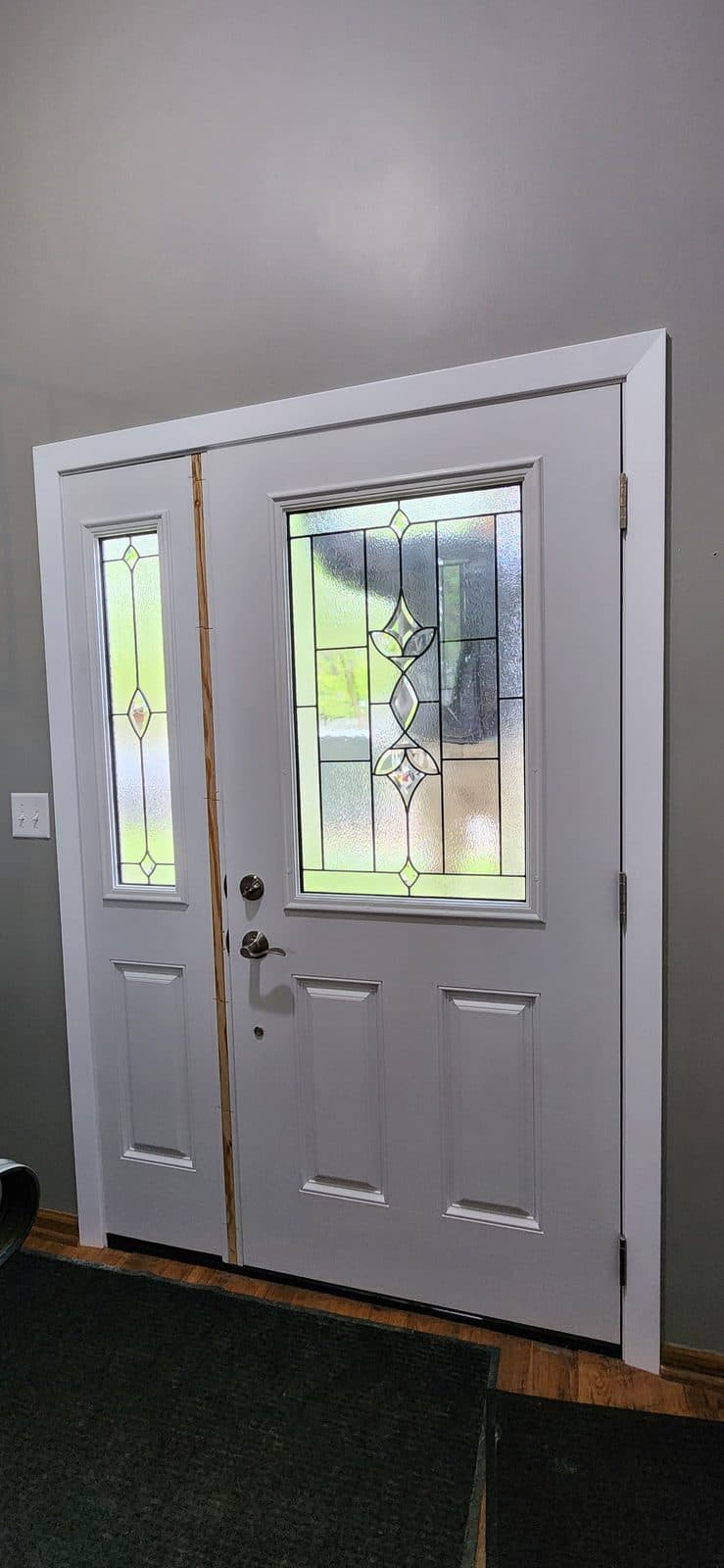
Exterior door jambs rot from the bottom up. Water runs down the face of the door, wicks into the end grain of the jamb leg where it sits on the sill, and sits there. Snow piles against it all winter. In a few years the bottom of the jamb is soft, the weatherstrip kerf is gone, and the stop is loose. The rest of the jamb, and the door itself, are usually fine. That is why this is a splice, not a door replacement.
The repair is to cut the jamb leg square well above the last soft wood, remove the rotted piece and the wet insulation behind it, check the subfloor and the framing, and splice in a new bottom section. We use cellular PVC for the splice on painted jambs because it cannot rot, or treated and primed wood on a stained jamb. The joint is glued and screwed, filled and sanded. Under the threshold goes a sill pan with end dams, which is the part that was missing in the first place, so water that gets past the door drains out instead of into the new wood.
This page is the jamb itself. The casing and brickmould on the outside of the door rot for the same reason and are covered on the rotted door trim page; the two repairs are often done in the same visit. JMB Builders does both across the Twin Cities metro, priced per door, with an honest call on when the rot has gone too far and the whole unit should be replaced.
Get a written quote for this job
Three photos and a sentence is enough: a reply within one business day, or ask for a free in-home estimate. Or text the photos to 763-250-3621.
What you supply
- A close-up photo of the bottom of each jamb leg, inside and outside, and one of the threshold
- A wider photo of the door showing what is above it: roof edge, gutter, storm door, or nothing
- Whether the jamb is painted or stained, so the splice material matches
- Paint for the repaired jamb, or add painting as a line on the quote
What JMB supplies
- Rotted jamb bottom cut out square and removed, along with wet insulation and any soft subfloor at the corner
- PVC or treated jamb bottom splice cut to the jamb profile, with the weatherstrip kerf and stop line carried through
- Sill pan with end dams under the threshold, and flashing tape up the jamb behind the splice
- Threshold reset and re-bedded in sealant, adjusted to the door sweep
- Weatherstrip and stop reset on the new section, corner pad at the sill
- Subfloor or framing repair at the corner when it is soft, quoted from the photos
- Filler, caulk and primer on the repair; painting quoted as its own line
- Photos of the finished jamb in your job folder
How it is priced: per door
Quoted in writing from your photos, with a reply within one business day. What moves the number:
- One jamb leg rotted vs. both legs
- How high the rot runs: a short splice at the sill vs. a longer section, or the whole leg
- Whether the subfloor, rim joist or jack stud behind the jamb is soft and has to be repaired
- Painted jamb (PVC splice) vs. stained jamb (matched wood splice)
- Threshold: reset the existing one vs. replace it because the wood under the cap is gone
- Brickmould and exterior casing repair done in the same visit
- Number of doors in the same visit; back doors and garage service doors usually rot together
A close-up of the jamb bottom with a screwdriver or key pushed into it shows us how deep the rot is. Add a photo of the door from a few feet back and we can quote it firm.
How long it takes
One jamb leg spliced with a sill pan: three to four hours. Both legs plus threshold: most of a day. Add time when the subfloor or framing at the corner is soft.
How your project works
- 1
Send photos, get a written quote
Send three photos of the space and a sentence about what you want. You get a clear, itemized reply within one business day. Prefer a look in person? A free in-home estimate is always an option.
- 2
Pick materials, or bring your own
We help you choose profiles and materials that fit the house and the budget, or match your existing millwork exactly — or you buy the door or trim yourself and we install it. Everything is confirmed before the crew is scheduled.
- 3
Clean, precise installation
The crew shows up on time, protects floors and furniture, and installs with tight joints and consistent reveals. Photos of the finished work go in your job folder.
- 4
Walkthrough and invoice
We walk the finished work with you. If anything is not right, we fix it before we call the job done. Then one invoice, paid by check or direct deposit — no card fees, no payment links.
Situations and options
PVC jamb bottom splice
For painted jambs. A section of cellular PVC is cut to the jamb profile, kerfed for the weatherstrip, glued and screwed to the cut end of the sound jamb above, filled and primed. It cannot rot, so the same spot does not fail again.
Wood splice on a stained jamb
For stained fir or oak jambs where PVC would show, a matching species splice is scarfed in, sealed on the end grain, and stained to blend. Sill pan and flashing behind it protect it the same way.
Sill pan and threshold reset
The reason the jamb rotted is that nothing was under the threshold. We pull the threshold, set a sill pan with end dams that turn up the jambs, re-bed the threshold in sealant and adjust it to the sweep. This goes with every splice.
Full jamb leg or full unit
When the rot runs most of the way up a leg, or both legs and the head are soft, a splice does not make sense. We replace the jamb leg from the sill to the head, or replace the whole prehung unit and reuse your door slab and hardware where they are sound.
Rotted Door Jamb Bottom — Exterior Door Frame Rot Repair: questions, answered
Can a rotted door jamb be repaired without replacing the door?
Yes, in most cases. Rot on an exterior door jamb is almost always at the bottom of the leg where it meets the sill, and the door slab, hinges and the rest of the frame are fine. We cut the soft section out above the last bad wood, splice in a PVC or treated wood bottom, add a sill pan and reset the threshold and weatherstrip. The door goes back to sealing and latching as it did, and the new section will not rot.
What causes the bottom of an exterior door frame to rot?
Water sitting at the end grain of the jamb. Rain runs down the door, snow piles against the sill, and without a sill pan under the threshold the water wicks up into the bottom of the jamb leg and stays there. A storm door can make it worse by trapping heat and moisture against the frame. Paint slows it down but does not stop it. The fix that lasts is a splice in a material that does not rot, plus a sill pan so water drains out.
Do you use PVC or wood for the jamb splice?
Cellular PVC on painted jambs. It cuts and kerfs like wood, takes paint, and cannot rot, so the bottom of the jamb stops being the weak point. On a stained jamb we splice in matching wood, seal the end grain, and stain it to blend, because PVC does not take stain. Both get a sill pan and flashing tape behind them.
How do I know if the rot has gone into the framing?
Push a screwdriver into the jamb bottom; if it sinks in more than the thickness of the jamb, the subfloor corner or the jack stud behind it may be soft too. We find out when the jamb section comes off, and we show you what is there before going further. A soft subfloor corner is a common small add; a rotted rim joist is a bigger repair and is quoted before we touch it.
Is a rotted door jamb covered by homeowners insurance?
Usually not when it is slow rot from years of water at the sill, which most policies treat as maintenance. It can be covered when it traces to a sudden event like an ice dam or a storm. We write up what we found and photograph the repair either way, so you have what you need if you file. We do not decide coverage; your adjuster does.
Is this the same as replacing rotted door trim?
No, though they often happen together. The trim, meaning the casing and brickmould on the outside of the door, is what you see from the driveway and rots at its bottom corners. The jamb is the frame the door hangs on and seals against, inside the trim. This page is the jamb. When both are soft we do both in one visit and quote them as separate lines.
Recent JMB work, from our job log
59 installs recorded across 30 Twin Cities communities since Dec 2025. Window and door installs for homeowners and the builders we work with. Counts come straight from our job log; no customer names.
Related jobs we do
Rotted Door Trim Replacement — Casing, Brickmould & Flashing
The paint is bubbling at the bottom of the door casing and a screwdriver sinks right in. We replace the rotted trim and fix the water path that caused it, so it stays fixed.
Read moreExterior Door Threshold Replacement — Replace a Rotted Door Sill
The threshold rocks when you step on it, the cap is cracked, the wood under it is black, or the sweep has nothing to seal against. We replace the sill and set it so the door closes tight.
Read moreDoor Sweep Replacement & Exterior Door Weatherstripping
Daylight under the door, frost on the inside of the jamb, a rug that moves when the wind blows. The seal is shot, or the door is. We figure out which and fix it.
Read moreGarage Service Door Replacement — Steel Man Door on the Garage
The garage side door is rusted through at the bottom, the jamb is soft, and it has not locked properly in years. A steel prehung unit, set right on a sill pan, and it is done.
Read moreLabor-Only Door Installation — We Install the Door You Bought
You buy the door, we install it right — entry doors, house-to-garage doors, and interior doors hung plumb, sealed tight, and trimmed out by a licensed Minnesota contractor.
Read more1970s Front Door Replacement
The door is original to the house: a dark wood slab with a small diamond or rectangular window, a skinny sidelite, a storm door that rattles, and a sill that has been wet for fifty years.
Read morePage reviewed October 1, 2026 · JMB Builders LLC, MN license BC809005 · All doors pages
Where we work
Door Replacement & Installation near you
Based in Zimmerman, scheduling across the Twin Cities metro. Closest first: