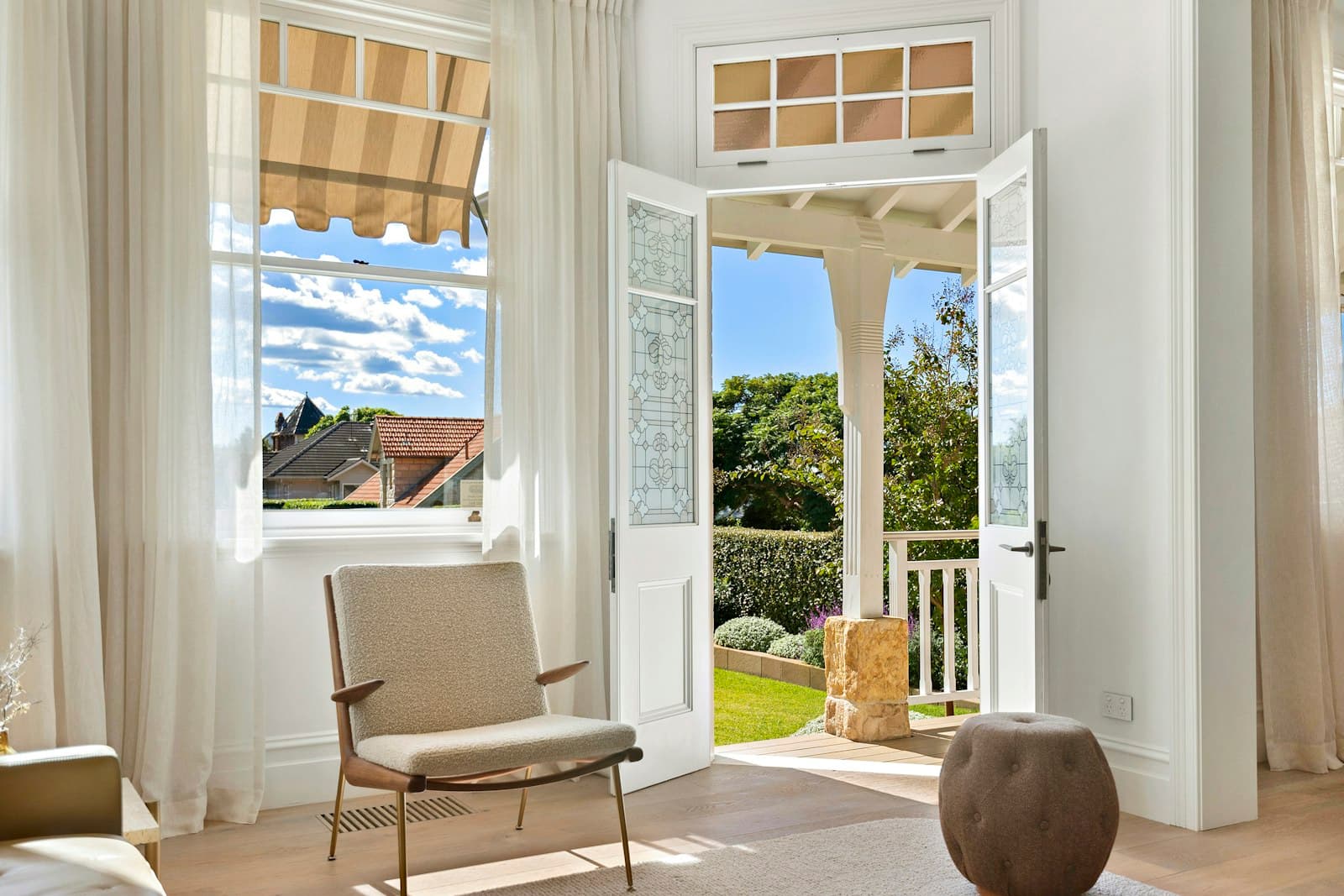
Interior French doors are having a moment in the Twin Cities. Homeowners are closing off the home office that used to be a dining room, adding a door pair to a sunroom, or replacing a wide cased opening between the living room and a den. A pair of glass doors keeps the light and adds a real sense of separation.
The install is more exacting than a single door because two panels have to swing, meet, and latch as one unit. This guide walks through the choices: slab pair vs. prehung, hardware, glass, and what the work typically costs in Minnesota.
Prehung unit vs. two slabs
A prehung French door unit comes with both doors hinged in one jamb, with the astragal or meeting stop already set. If you're converting a cased opening or replacing an existing pair with casing that's coming off, this is the way to go. We set it plumb, shim it, and the doors already meet correctly.
Two slabs into an existing jamb is the option when the frame and casing are worth keeping — common in older St. Paul and Minneapolis homes with stained oak or fir trim. Each slab gets fitted to the opening, hinges get mortised into both the door and the jamb, and the two doors get trimmed so the reveal is even all the way around. It's careful work, and it's why slab installs cost more per door.
Fitting and aligning two doors
Most old openings aren't square, and a French door pair shows it more than a single door. The tolerances that matter:
- An even 1/8" reveal around the top and both hinge sides.
- A consistent gap where the two doors meet, top to bottom — usually 1/8" to 3/16".
- Both doors at the same height, with the tops in a straight line.
- Enough floor clearance for carpet, rugs, or a threshold if flooring changes.
- Hinges mortised so the door sits flat and doesn't spring open or drift closed.
Hardware: how the doors stay closed
Interior French doors usually don't latch like a regular door. Instead, one or both doors are held with catches. Your options, from simplest to most secure:
- Ball catch — a spring-loaded ball in the top of the door that snaps into a strike in the head jamb. Simple, invisible, and fine for most rooms.
- Roller catch — same idea with a roller, a bit smoother and more adjustable. Good for heavier doors.
- Flush bolts — recessed bolts in the edge of the inactive door that slide into the head and floor. Used with a passage or privacy latch on the active door when you want one door to lock solid.
- Dummy handles — fixed handles that don't turn, used with ball or roller catches. Buy them in pairs and match the style to the rest of the house.
- Passage or privacy handles — a working latch on the active door, with flush bolts on the inactive door. This is the setup for a home office or bedroom that needs to lock.
Glass and privacy
Clear glass gives the most light and works for offices and dens. Frosted, reeded, or seeded glass adds privacy without blocking light — popular for pantries, bathrooms off a bedroom, and laundry rooms. Divided-lite doors (10-lite or 15-lite) match traditional trim; single-lite doors suit newer homes. Interior doors use tempered glass, which is standard from most manufacturers.
What French door installation costs in the Twin Cities
For a prehung French door unit in a prepared opening, most metro homeowners see labor in the several-hundred-dollar range plus casing. A slab pair fitted into an existing jamb with new hinges and hardware typically runs higher because of the fitting and mortising time. Converting a cased opening — adding a jamb, header work, or drywall patching — moves the number up again. The doors themselves range widely, from budget hollow-core pairs to solid wood with specialty glass.
JMB Builders installs interior French doors across the Twin Cities metro, prehung or slab, paint-grade or stain-grade, and we'll help you pick hardware that actually works. Licensed Minnesota contractor BC809005, free written in-home estimates: 763-204-2099.
Frequently asked questions
Can I put French doors in a cased opening with no door?
Yes. We add a jamb to the opening, size the doors to fit, and case it. It's the most common French door conversion we do.
Should both French doors open?
Usually one door is the active door and the other is held with flush bolts or a catch, opened only when you need the full width. Both can be active with ball catches if you don't need a working latch.
Do you supply the doors?
You can buy them yourself for a labor-only install, or we can source them. Either way, we'll confirm size, handing, and hardware before anything is ordered.