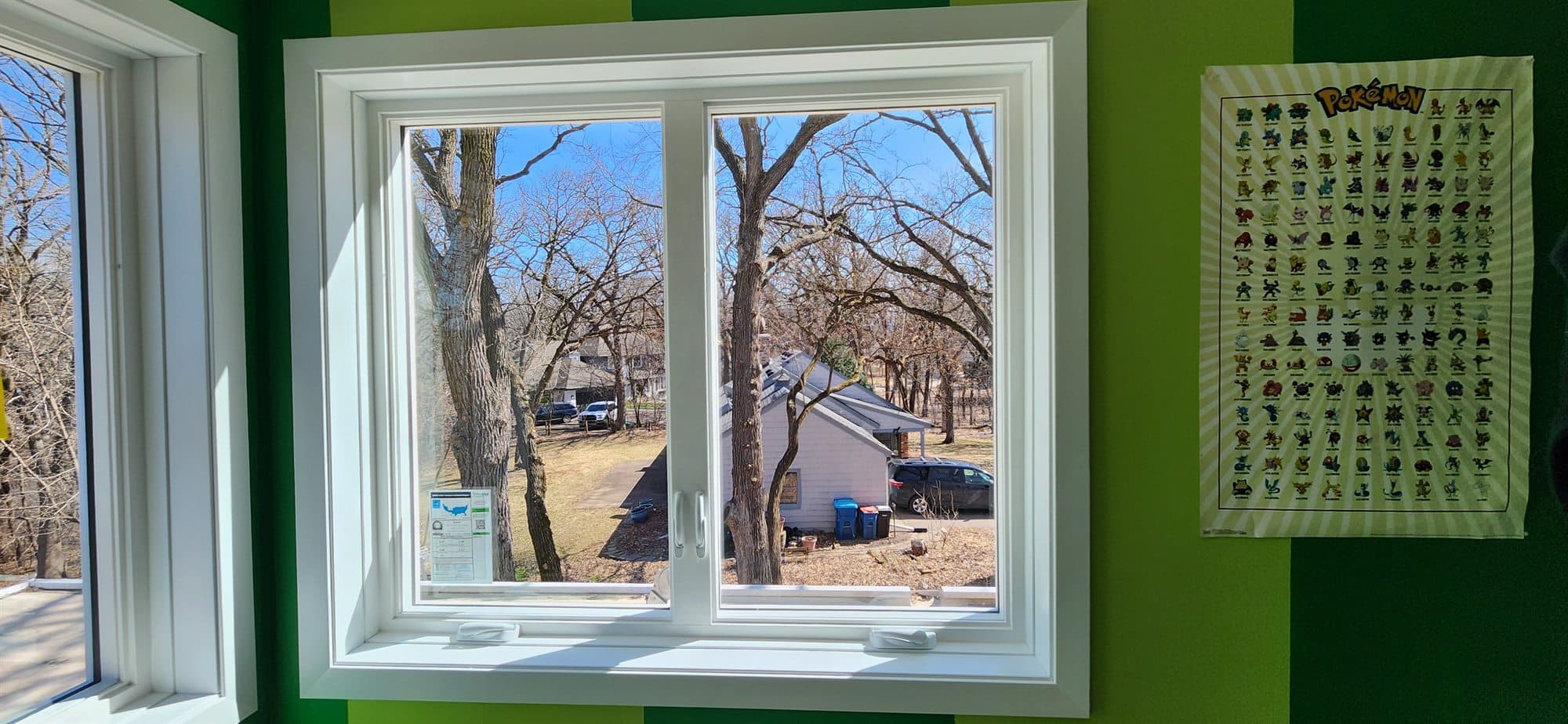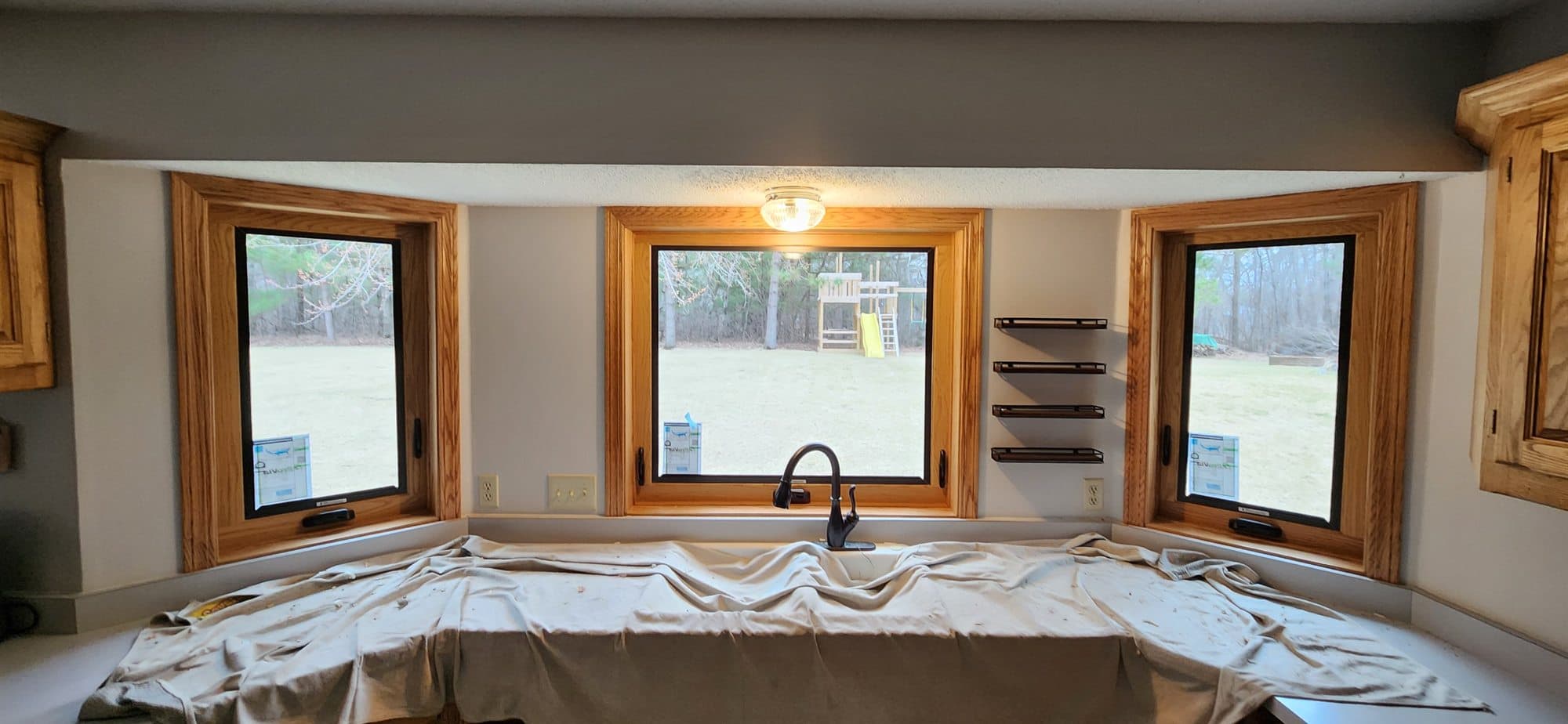
Fill the gap between the window frame and the rough opening with low-expansion window-and-door foam, or with a closed-cell backer rod and a bead of sealant, and put that seal at the interior edge of the frame. Fiberglass pushed into the gap slows heat a little but lets air straight through, and moving air is what makes a Minnesota window feel cold in January.
This is about the half inch or so of framing gap around every window, not the glass. The glass package (Low-E, argon, pane count) sets the rating on the label. The gap decides whether the house gets that rating. It is the cheapest part of a window job and the one most often skipped, on new construction and on replacements alike.
What is the gap around a window, and why is it there?
A window is built smaller than the hole it goes in. The common rule for a wood-framed opening is a rough opening about a half inch wider and a half inch taller than the window unit, which leaves roughly a quarter inch on each side. Some manufacturers call for more, around three-eighths per side on certain fiberglass and composite frames, so the installation instructions in the box win over the rule of thumb.
That space lets the installer shim the frame plumb, level and square inside framing that is never perfect. Once the window is fastened, the gap is still there, running all the way around the frame between the interior drywall and the exterior sheathing. On the outside it is covered by trim or siding and, on a good install, by flashing tape. On the inside it is covered by the casing or the drywall return. What is in it is the question.
On the sill the gap is also the drainage path. A sill pan, whether formed from flashing tape or a preformed pan, catches any water that gets past the exterior and sends it back outside. Anything you put in the gap has to leave that path open.
Low-expansion foam vs. fiberglass vs. backer rod: which one works?
Building-science guidance is consistent on this: the window frame has to be sealed to the rough opening with an air-impermeable material, and stuffing the gap with fibrous insulation does not make an air barrier. Fiberglass slows conduction a little, but the wind goes through it. In a blower-door test a fiberglass-stuffed window reads as a leak. Here is how the three common fills compare.
| Material | Stops air? | Insulates? | Watch out for |
|---|---|---|---|
| Low-expansion window-and-door foam | Yes, when the bead is continuous. | Yes. Closed-cell foam fills the whole cavity. | Must be the low- or no-expansion type made for windows. Standard gap-filler foam expands hard enough to bow a jamb and bind a sash. |
| Closed-cell backer rod plus sealant | Yes. The sealant bead over the rod is the air seal. | Some. The rod fills the gap; the sealant seals it. | Works best when the gap is a uniform width. Rod comes in sizes from about a quarter inch up to an inch and a half; pick one slightly larger than the gap. Open-cell rod can hold water, so use closed-cell. |
| Fiberglass batt strips | No. Air passes through it. | A little, and less when it is packed tight. | Fine as a filler behind a real air seal. On its own it is the reason so many newer windows still feel drafty. |
What is the interior air seal, and why does it go on the inside?
The interior air seal is the continuous line of foam or sealant between the window frame and the framing, placed toward the room side of the gap. It connects the window to the house's air barrier, which in most Minnesota houses is the drywall and the poly or the sheathing behind it. Without that connection, the window is a hole in the air barrier with a nice frame in it.
Building Science Corporation's air-sealing guidance puts the seal toward the interior edge of the frame for two reasons. First, drainage: the sill pan has to be able to drain to the outside, and a seal at the outer edge would dam it. Second, pressure: with the seal on the inside, the outer part of the gap sits at outdoor air pressure, so there is no pressure difference pulling water into the joint. The exterior side gets flashing and trim, not a full seal, with a drainage gap left at the bottom.
In practice that means a full-frame install gets the foam or backer rod run around the frame from the inside, after the window is shimmed and fastened and before the casing goes on. The foam does not need to fill the whole depth of the wall. A continuous bead at the interior side, with the shims in it, does the job.
What happens when the insulation around a window is skipped?
The window works and the gap does not. Cold outdoor air moves through the gap and through any crack in the casing, so the trim and the wall around the window run cold. On a January morning in the Twin Cities that shows up in a few predictable ways:
- A draft you can feel with your hand along the casing, not at the glass. People blame the window; it is the frame gap.
- Frost or condensation on the stool and the bottom of the casing, because that wood is the coldest surface in the room. Over a few winters it becomes stained, swollen or rotted trim.
- Condensation at the bottom corners of the glass that is worse than the rest of the house. Cold air washing across the frame drops the edge-of-glass temperature.
- Rooms that will not hold heat with the door closed, and a furnace that runs more than the window's rating says it should.
- On new construction, a blower-door number that misses the target because two dozen unsealed windows add up to a hole the size of a small window left open.
How do I check the insulation around an existing window?
You do not have to guess. One piece of casing off one window tells you how the whole house was done, because the same crew did them all the same way.
- 1Pick a window on the windiest side of the house, usually west or northwest. Score the paint line where the side casing meets the wall and where it meets the jamb with a utility knife so nothing tears.
- 2Slide a stiff putty knife behind the casing, then a flat bar behind the putty knife, and work the casing off from the bottom. Pull the nails through the back of the trim with pliers rather than hammering them back out.
- 3Look into the gap between the jamb and the framing. You will see one of four things: foam, a backer rod and sealant bead, loose fiberglass, or nothing but daylight and the back of the exterior trim.
- 4On a cold, windy day hold a stick of incense or a thin strip of tissue near the gap. If it moves, so does the air. An infrared thermometer pointed at the jamb, the casing and the wall beside it tells the same story in numbers.
- 5If the gap is empty or has fiberglass, pull the fiberglass out, run low-expansion foam or push in backer rod and caulk it, and let it cure before the trim goes back.
- 6Reinstall the casing with finish nails, fill the holes, caulk the joint to the wall and touch up the paint. Painting is quoted as a separate line when we do this, or leave it primed and caulked and paint it yourself.
How does the seal fit with the sill pan, flashing and trim?
The gap is one step in a sequence, and the order matters. On a full-frame replacement or new-construction window, the opening gets a sloped or back-dammed sill pan first, then the window is set in a bead of sealant at the head and jambs (not the sill), shimmed and fastened, then flashed on the outside with the jamb tape over the nail fin and the head tape over that, lapped under the house wrap. Only then does the interior gap get foamed or rodded, and only then does casing or drywall return cover it.
Foam in the wrong place causes its own trouble. Foam sprayed into a sash track or a weep channel stops the window from working. Foam that expands against a hollow vinyl jamb before the shims are set bows the frame, and a casement that no longer latches is the result. The low-expansion product, applied after fastening, in a bead rather than a fill, avoids all of it.
Weatherstripping is the other line of defense and it belongs to the window, not the installer. A frame that is square and plumb lets the sash compress its weatherstrip evenly. A frame pulled out of square by shims or foam leaves a gap at one corner that no amount of insulation around the outside will fix. If you are choosing a window, the frame's own air-leakage rating is on the NFRC label and matters as much as the U-factor in a windy spot.
Does this apply to insert replacement windows too?
Yes, with one difference. An insert (pocket) replacement sets the new frame inside the old wood jambs, so there are two gaps: the new one between the insert and the old jamb, and the old one between the original frame and the wall framing, which has been sitting there since the house was built and is usually empty or fiberglass.
A good insert install foams or rods the new gap from inside, caps the outside with trim and sealant, and leaves the sill drainable. The old gap is only reachable if the interior casing comes off, which is why an insert job that includes pulling and resetting the casing does more for comfort than one that leaves the trim alone. If the old frame gap is open to the wall cavity, the cold air still has a path to the room around the outside of the old jamb.
Full-frame replacement is the only way to insulate around the window completely, because the whole opening is exposed. That is the honest reason it costs more, and the reason we recommend it when the frame is rotted, out of square or on the side of the house that takes the wind. For the choice between the two, see our insert vs. full-frame guide at jmbbuildersmn.com/blog/full-frame-vs-insert-window-replacement.
What JMB Builders does
JMB Builders is a licensed Minnesota residential building contractor (BC809005) based in Zimmerman, working across the Twin Cities metro. One crew sets the window, seals the gap, flashes it and trims it. Paid by check or direct deposit. Call 763-204-2099 or send photos through the site.
- Labor-only installation of windows you bought at a store or online, sealed with low-expansion foam or backer rod at the interior edge — jmbbuildersmn.com/services/labor-only
- Insert and full-frame replacement windows and doors, measured and ordered by us — jmbbuildersmn.com/services/full-service
- Trim-out on replacement windows a window company left bare, casing off and gap sealed before the new trim goes on — jmbbuildersmn.com/services/window-trim/trim-out-replacement-windows-left-bare
- Rotted stool and sill trim from years of cold, wet casing — jmbbuildersmn.com/services/window-trim/interior-window-sill-rot-replacement
- Fall weatherproofing: doors, windows and rim joist sealed before snow — jmbbuildersmn.com/services/insulation/fall-weatherproofing-package
- Send three photos, written quote within one business day.
Frequently asked questions
Can I use regular spray foam around windows?
Use the low-expansion foam labeled for windows and doors. Standard gap-and-crack foam expands with enough force to bow a jamb inward, which makes sashes bind and casements miss their latch. Window foam cures softer and stays flexible so the frame can move with the seasons without breaking the seal.
Is fiberglass around windows a code violation?
Fiberglass is not banned, but modern energy codes require the window to be sealed to the air barrier, and fiberglass on its own does not do that. Inspectors and blower-door tests treat a fiberglass-stuffed window as a leak. Fiberglass is fine as filler behind a proper foam or sealant seal; it is not a substitute for one.
Where exactly does the air seal go around a window?
At the interior edge of the frame, between the window and the rough framing, all the way around. Building-science guidance puts it on the inside so the outer part of the gap can drain through the sill pan and stays at outdoor pressure. The outside gets flashing tape and trim with a drainage gap at the bottom, not a full seal.
How can I tell if my windows were insulated properly without removing trim?
On a cold, windy day, run your hand or a stick of incense slowly along the joint between the casing and the wall and along the stool. Moving smoke or a cold line means air is coming through the frame gap. An infrared thermometer that reads the casing much colder than the wall beside it says the same thing. Pulling one piece of casing confirms it.
Will insulating around my windows stop the drafts?
It stops drafts that come from the frame gap, which on many houses is most of them. It will not fix a worn sash weatherstrip, a warped sash or a failed glass unit. Check where the cold air is coming from first: along the trim means the gap, at the meeting rail or the sash edge means the window itself.
Do replacement windows get insulated around the frame?
They should, but many insert installs stop at a bead of caulk on the exterior. Ask the installer in writing how the gap between the new frame and the old jamb will be sealed and whether the interior casing comes off. A full-frame replacement exposes the whole opening and is the only way to seal and insulate all the way to the framing.