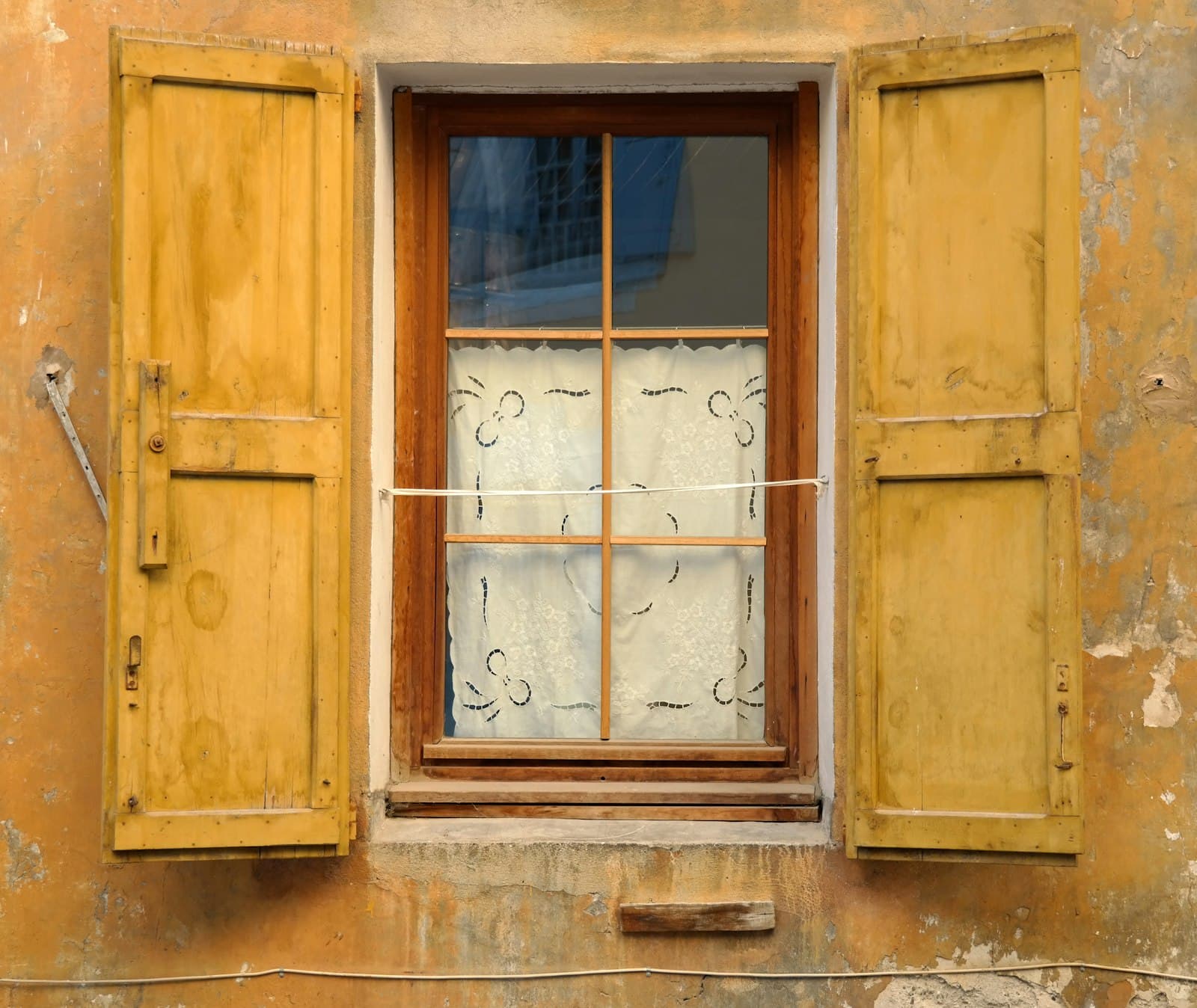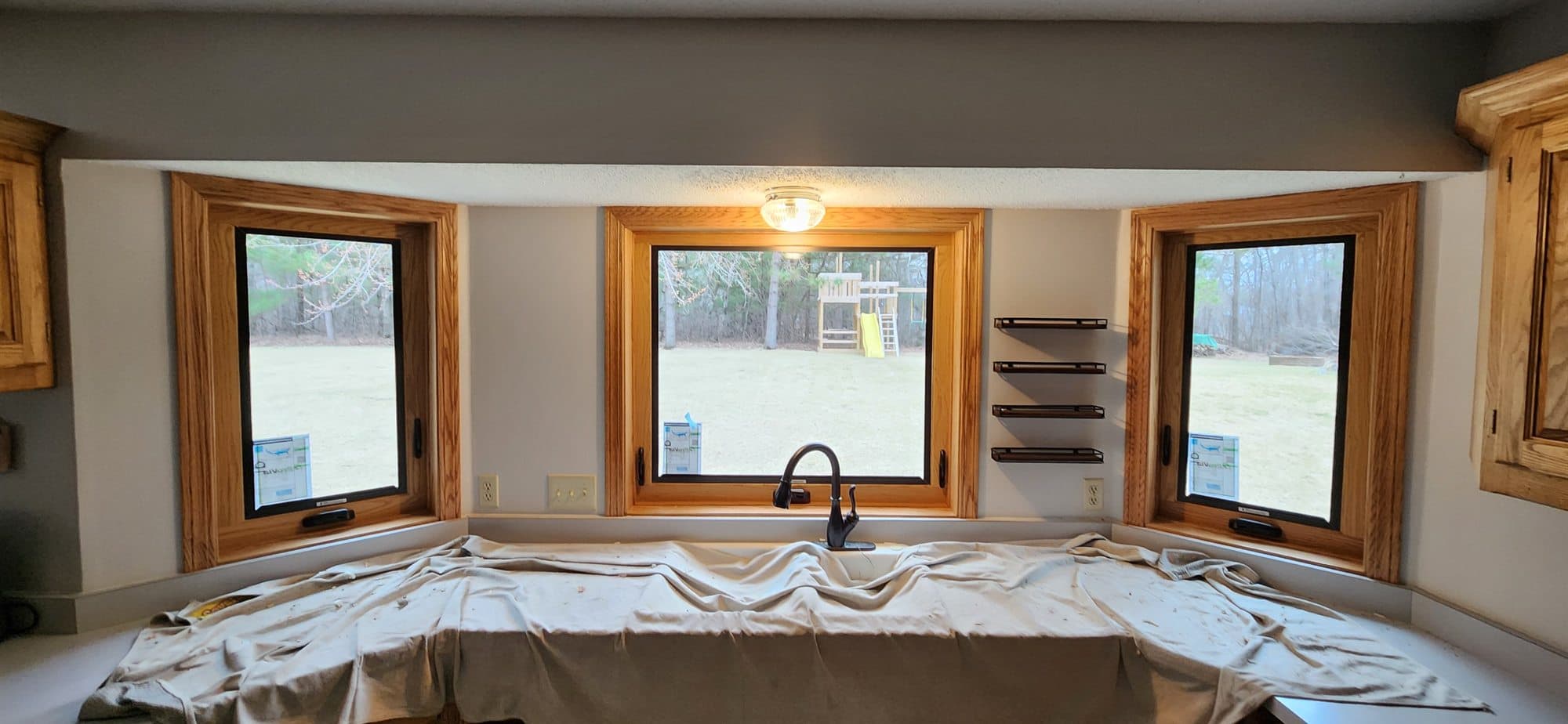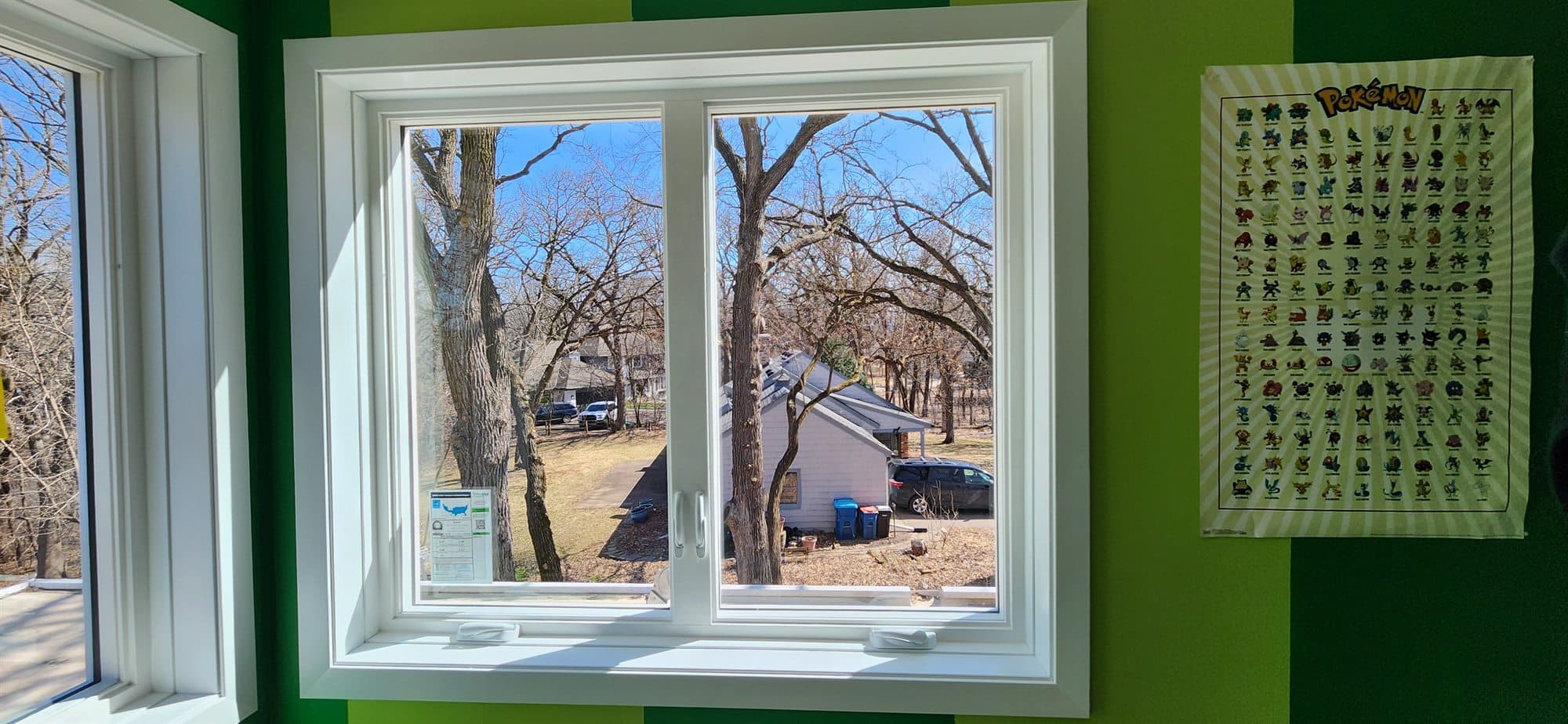
The air leakage (AL) rating on a window label is how much air blows through the closed window, measured in cubic feet per minute per square foot of window, under a test pressure equal to about a 25 mph wind. Lower is tighter. ENERGY STAR will not certify a window that tests above 0.3, and the best casements and awnings come in at 0.10 or under.
U-factor gets all the attention in Minnesota, but on a windy January night the AL number is what you feel with your hand. This post explains how the rating is measured, why it is often missing from the label, why the window style matters more than the brand, and how the install decides whether the rating means anything in your wall.
What does the air leakage number actually measure?
A window is mounted in a test wall in a lab, closed and locked, and a fan pulls a pressure difference across it equal to what a wind of about 25 miles per hour would push against the outside. The lab measures how many cubic feet of air per minute get through the closed unit, then divides by the area of the window. That is the AL number: cubic feet per minute per square foot.
An AL of 0.3 on a window that is 10 square feet means about 3 cubic feet of air per minute moving through the sash seals and frame joints in that wind. It sounds small. Multiply it across twenty windows and a whole winter and it is a steady trickle of heated air leaving the house and cold air coming in at the baseboard.
The number is a whole-unit figure. It includes the meeting rail on a double-hung, the corners where weatherstripping ends, the lock side of a casement and the frame joints. It does not include the crack between the window frame and your house, which is a separate problem covered further down.
Why is the AL rating often missing from the label?
The NFRC label always shows U-factor, solar heat gain coefficient and visible transmittance. Air leakage is an optional line, and many manufacturers leave it off. Some list it on the product spec sheet instead of the label; some publish only that the window meets the ENERGY STAR limit.
A missing AL line does not mean the window leaks. It usually means the manufacturer did not pay to print it. Ask for the tested number on the exact series and style you are buying. A supplier that sells a tight window will hand it over; one that cannot find it is telling you something.
Look for the AL next to the U-factor, in the lower part of the label, sometimes written as "Air Leakage (U.S./I-P)" with a number like 0.1 or 0.2. If you see "≤ 0.3" instead of a tested number, the window passed the ENERGY STAR gate but you do not know by how much.
Why do casements and awnings seal tighter than sliders and double-hungs?
It comes down to how the sash meets the frame. A casement is hinged on one side and cranks out. When you turn the lock, a multi-point mechanism pulls the whole sash inward against a continuous gasket on all four sides. Wind pushing on the window pushes the sash harder into the gasket. An awning window works the same way, hinged at the top.
A double-hung has two sashes that slide up and down past each other and past the frame. Sliding parts need clearance to move, so the seal has to be a flexible brush or fin that the sash drags across, and the meeting rail where the two sashes overlap is a long horizontal joint that relies on the lock to pull it tight. A horizontal slider has the same problem turned sideways, plus a bottom track that collects grit and holds the sash slightly off its seal.
The difference is not small. Published comparisons put a typical casement at 0.01 to 0.05 cubic feet per minute per foot of sash crack, against 0.05 to 0.30 for a double-hung. The U.S. Department of Energy says the same thing in plain words: casements typically have lower air leakage than sliding types because the sash closes by pressing against the frame.
A well-made double-hung with good balances, a tight meeting-rail lock and fresh pile seals can still be a fine window. It just starts from a harder position, and its seals wear as they are dragged across every time the window opens.
Compression vs pile weatherstripping: what is the difference?
Compression weatherstripping is a hollow bulb or fin of rubber, silicone or vinyl that the sash squeezes when it closes. It seals by being crushed slightly. Because the sash moves toward it, not across it, it does not wear from friction, and it can be shaped to seal the corners. Casements, awnings and most hinged doors use it.
Pile weatherstripping is a strip of dense synthetic bristles, often with a thin plastic fin down the middle, set in a groove so the sash slides along it. It seals by filling the clearance gap with bristles that flex. It has to allow movement, so it can never be as tight as a compressed bulb, and it loses height as the bristles pack down over years of sliding.
When you shop, look at the sash edge. Fresh pile that stands up straight with a fin in the middle is the good version. A single flat strip of pile with no fin is builder-grade. On a casement, look for a bulb gasket that runs continuous around the corners rather than four straight pieces butted together; the corners are where a cheap casement leaks.
- Compression bulb or fin: casements, awnings, hopper windows, hinged patio doors. Tightest seal, no wear from sliding.
- Fin-pile (pile with a center fin): better double-hungs and sliders. Seals well when new, slowly packs down.
- Plain pile: budget sliders and double-hungs. Adequate when new, noticeably leaky in ten years.
- Interlocking metal or vinyl meeting rails: found on better double-hungs to close the horizontal joint between sashes.
What AL number should a Minnesota window have?
The ENERGY STAR ceiling is 0.3. Treat that as the floor of acceptable, not the goal. Most name-brand casements test well under it, and many double-hungs from the same brands do too. The table gives a practical reading of the number for a house that sees a Twin Cities winter.
| AL (cfm/ft²) | What it means | Where you see it |
|---|---|---|
| 0.10 or less | Very tight. You will not feel it on a windy night. | Quality casements, awnings, fixed picture units |
| 0.11 to 0.20 | Tight. A good result for any operable window. | Better double-hungs and sliders, most casements |
| 0.21 to 0.30 | Passes ENERGY STAR. Noticeable near the sash on a cold, windy day. | Builder-grade double-hungs and sliders |
| Above 0.30 | Fails ENERGY STAR. Not worth installing in this climate. | Bargain units, some storm-only products |
| Not published | Unknown. Ask for the test report before you buy. | Some spec sheets and labels |
Does a tight window fix a drafty opening?
Not by itself. The AL rating is tested with the window sealed into a lab wall. In your house there is a gap between the window frame and the rough framing, usually a quarter inch to a half inch on each side, and that gap is not part of the rating. If the installer stuffs it with fiberglass or leaves it open behind the casing, the tightest casement made will still let cold air pour around it.
A proper replacement seals that gap in three layers. Outside, flashing tape over the nailing fin, or a sealed exterior joint on an insert, keeps water out and blocks wind at the face. In the middle, low-expansion window and door foam fills the gap without bowing the frame. Inside, a bead of sealant or a backer rod and caulk at the frame-to-drywall line stops warm indoor air from leaking into the cavity and condensing there.
On a full-frame replacement a sill pan goes under the unit first, so any water that gets past the exterior seal drains out instead of into the wall. If your window quote does not mention foam, flashing and an interior air seal, the AL number on the label is describing a different building than yours.
How does air leakage fit with the rest of the label?
For a Minnesota house the label has three lines that matter, in this order. U-factor is how fast heat conducts out through the whole unit; ENERGY STAR Version 7.0, in effect since October 2023, requires 0.22 or lower for a window in the Northern zone on the prescriptive path, with a minimum solar heat gain coefficient of 0.17, or a slightly higher U-factor if the SHGC is higher to match. Solar heat gain coefficient is how much sun warmth the glass lets in; here you want it higher, not lower. Air leakage is the third line, and it is the only one that changes with the window style.
The glass package drives the U-factor: a Low-E coating on the inside face of the outer pane, argon or krypton between the panes, double or triple glazing, and a warm-edge spacer so the edge of the glass does not frost. The frame drives the rest of the U-factor and all of the air leakage, through its material, whether it is foam-filled, and the weatherstripping design. A window with an ENERGY STAR U-factor and a poor AL is a window that was built to hit a number, not to keep out wind.
If you are comparing two quotes, line up U-factor, SHGC and AL side by side for the same style. The lowest U-factor with a missing AL is not automatically the better window.
What JMB Builders does
JMB Builders is a licensed Minnesota residential building contractor (BC809005) based in Zimmerman, working across the Twin Cities metro. We install every brand and no brand in particular, so the AL number gets read off the label, not sold. Foam, flashing and an interior air seal are part of every window we set. Call 763-204-2099 or send photos through the site.
- Labor-only installation of windows you bought at a store or online — jmbbuildersmn.com/services/labor-only
- Which windows to buy for a labor-only install, and what to check on the label — jmbbuildersmn.com/services/labor-only/which-window-brand-to-buy-for-labor-only-install
- Insert and full-frame replacement windows, measured and ordered by us — jmbbuildersmn.com/services/full-service
- Door sweeps and weatherstripping on exterior doors, the other place wind gets in — jmbbuildersmn.com/services/doors/door-sweep-and-weatherstripping
- Send three photos per window, written quote within one business day.
Frequently asked questions
What is a good air leakage rating for a window?
Anything at or below 0.3 cubic feet per minute per square foot passes ENERGY STAR. A good operable window tests at 0.20 or under, and a quality casement or awning is often at 0.10 or less. Lower is tighter, and the difference between 0.3 and 0.1 is something you can feel with your hand on a windy night.
Is the air leakage rating on every NFRC label?
No. U-factor, solar heat gain coefficient and visible transmittance are always printed. Air leakage is optional, and many manufacturers leave it off the label or print only that the window meets the ENERGY STAR limit. Ask for the tested number on the specific series and style you are buying.
Do casement windows really leak less air than double-hung windows?
Yes. A casement locks by pulling the sash into a compression gasket on all four sides, and wind pushes it tighter. A double-hung slides past brush seals and has a long horizontal meeting rail between the sashes. Published figures put typical casements at roughly a fifth to a tenth of the leakage of a double-hung.
Why is my new window still drafty if it has a low AL rating?
The rating covers the window unit only. The gap between the frame and the rough opening has to be filled with low-expansion foam and sealed inside with caulk or backer rod, and the exterior has to be flashed or sealed. If that was skipped, cold air comes around the window instead of through it, and no label number will fix it.
Does the AL rating matter more than U-factor in Minnesota?
They matter for different reasons. U-factor sets how much heat conducts out every hour whether or not the wind blows, and ENERGY STAR Northern requires 0.22 or lower. AL sets how drafty the window feels in wind and how much heated air you lose on those days. Buy a window that is good on both; do not trade one for the other.
Can old window weatherstripping be replaced to lower air leakage?
Often, yes. Pile and fin seals on vinyl and wood double-hungs slide out of their grooves and can be replaced with matching stock, and casement bulb gaskets can be replaced on many brands. It does not change the published rating, but it brings a worn window back near where it started. If the frame is racked or the sash no longer meets the frame evenly, new weatherstripping will not close the gap.