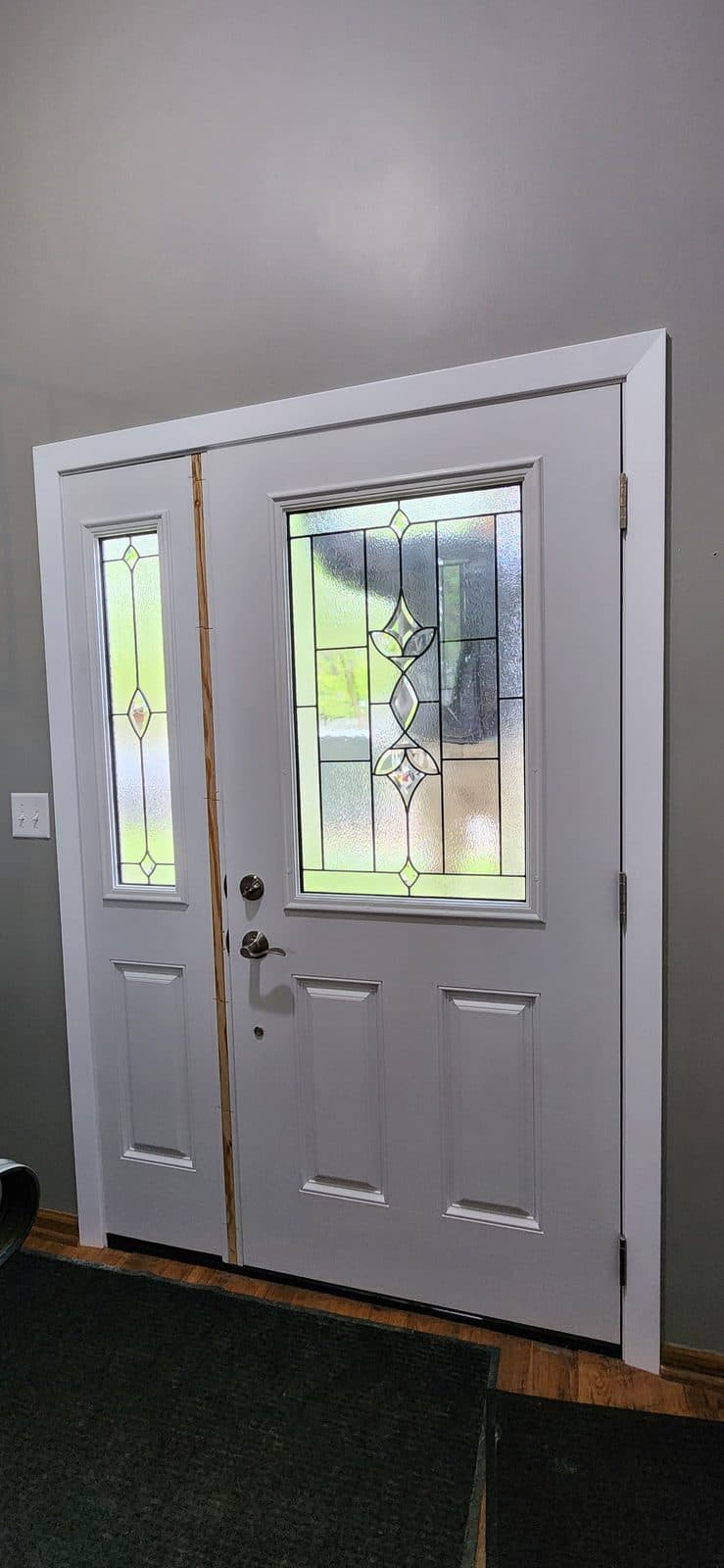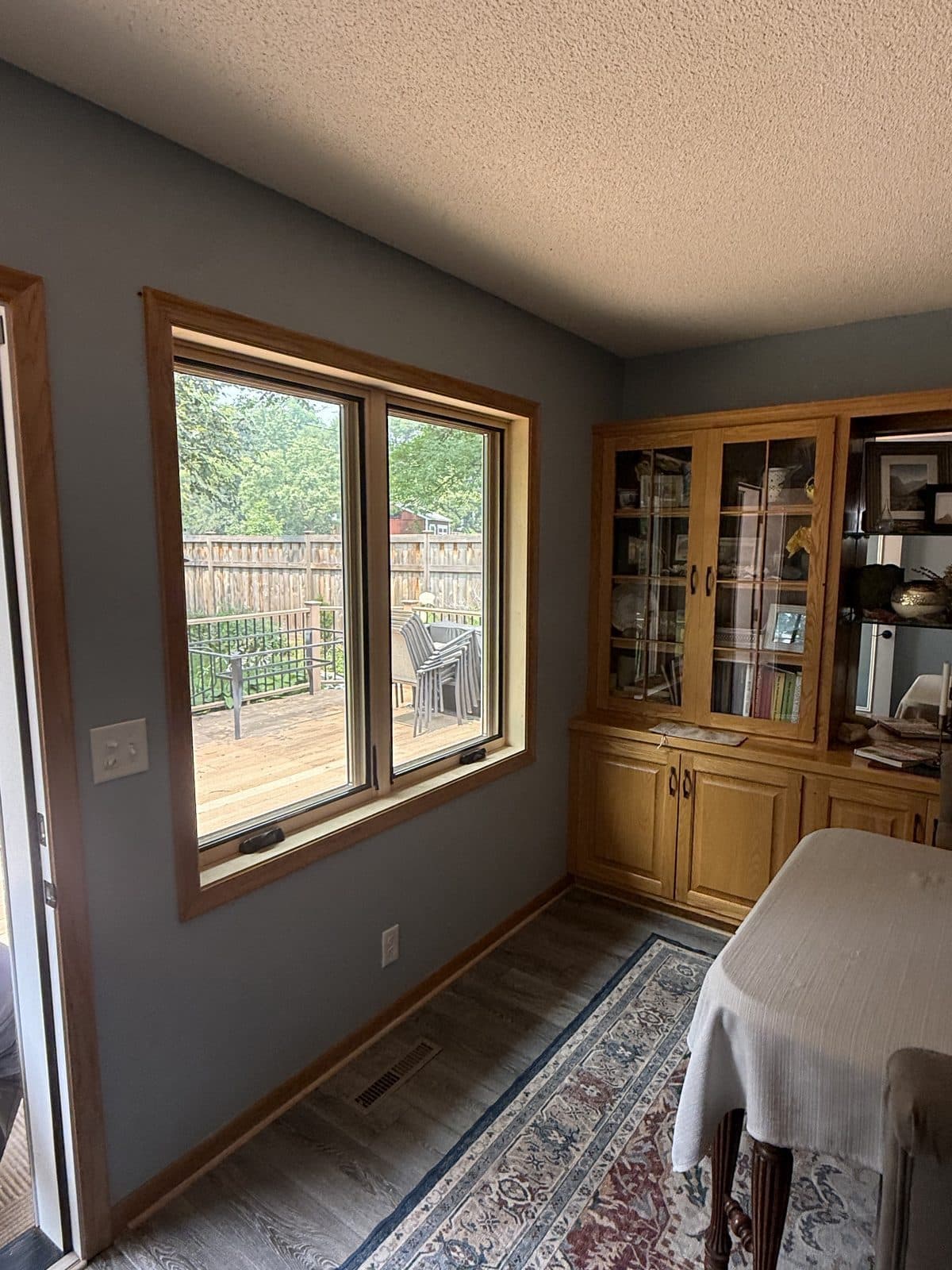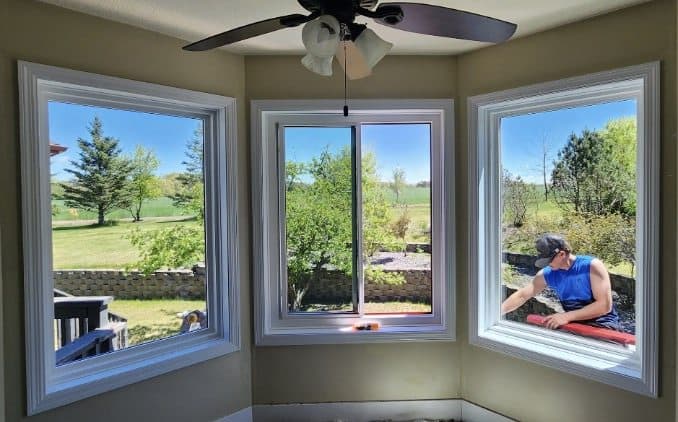
A finish carpenter in Minnesota costs roughly $60–$110 per hour in published 2026 cost guides, or a defined job is priced per linear foot for base and casing and per opening for doors and windows. Per-opening pricing is the easiest to compare between two bids, because both carpenters are counting the same doors and windows.
That applies to any Twin Cities house getting new casing, base, jamb extensions or an accent wall, whether the carpenter supplies the trim or you buy it at Menards and hire the labor. Below is how each method works, what moves the total, what a day of trim work actually produces, and how to read a trim quote before you sign.
How is finish carpentry priced?
Three ways, and each fits a different kind of job. Which one a contractor uses tells you how the job will go. The ranges below are planning numbers from published 2026 cost guides for Minnesota and the upper Midwest, labor only, not a quote.
| Method | Published range | Best for |
|---|---|---|
| Hourly | $60–$110 per hour | Repairs, punch lists, odd jobs with unknown scope |
| Per linear foot | $3–$8 per foot for base and casing; more for crown | Whole-room or whole-house trim packages |
| Per opening | $125–$300 per door or window | Casing doors and windows, jamb extensions |
| Per project | Quoted as a lump sum | Board and batten, built-ins, mantels, stair work |
What moves the price of trim work?
Two houses with the same number of windows can land at very different totals. These are the drivers:
- Profile and size. A simple 2-1/4" colonial casing goes on fast. Wide, built-up or back-banded casing takes two or three passes per opening.
- Stain-grade vs. paint-grade. Stain-grade wood has to be cut with tight joints because nothing hides a gap. Paint-grade MDF gets caulked and filled, which is faster.
- Condition of the walls and openings. Out-of-plumb jambs, wavy drywall and drywall-return windows all add fitting time.
- Painting. New trim goes in primed, filled and caulked. Painting is quoted as a separate line, or you paint it yourself.
- Demolition. Pulling old trim without wrecking the drywall is slower than trimming a bare opening.
- Access. Third-floor rooms, occupied houses and furniture to move all cost hours.
How much trim does a carpenter finish in a day?
This is the part most cost guides skip, and it is the best way to sanity-check an hourly bid. A carpenter with a good setup, a miter saw stand, a nailer and a helper, cases a standard interior door in well under an hour once the material is on site. A window with jamb extensions, stool and apron takes noticeably longer than a door, because every extension is measured and ripped to its own depth. Base goes fast on long straight walls and slow in closets, bathrooms and anywhere with lots of inside corners.
So a bedroom with one door, one window and base around the room is roughly half a day of carpentry, with the caulk and fill done as the crew goes. A whole main floor of casing and base in paint-grade MDF is usually a few days for one crew. Stain-grade work runs slower for the same footage, and so does anything in an older house where nothing is square. If an hourly estimate implies far more or far fewer hours than that, ask why.
Why does paint-grade MDF cost less than stain-grade wood?
Paint-grade MDF casing and base are the standard in most newer Twin Cities suburbs. It is straight, stable and cheap, and it takes paint well. The joints get caulked, so the carpenter moves fast. Primed finger-jointed pine is a step up in durability at a similar price.
Stain-grade trim, oak, maple, poplar for a light stain, or fir and pine to match older St. Paul and Minneapolis millwork, costs more per foot and takes more labor per foot. Every miter has to close tight, nail holes get filled to match, and the grain direction is planned around the room. Expect stain-grade labor to run noticeably higher than paint-grade for the same footage.
How do you read a trim quote?
A good finish carpentry quote is specific. It names every room or opening, the profile by name or photo, the material, whether material is included or the price is labor only, and painting as its own line. It also says what is excluded: drywall repair, removing old trim and disposal are the usual gray areas.
If a quote just says "trim — $2,400," ask for the breakdown. That is the only way to compare it to another bid, and the only way both sides know what done looks like.
- Every opening or run listed, with a count: 6 doors, 4 windows, 140 feet of base.
- The profile and size named, or a photo of it attached.
- Material included or labor only, stated plainly.
- Caulk and fill included, painting or staining as its own line.
- Exclusions in writing: drywall repair, old trim removal, disposal.
Can you buy your own trim and hire labor only?
Yes. Plenty of Twin Cities homeowners buy casing and base at Menards, Home Depot or a lumberyard and hire a carpenter to install it. The carpenter measures, tells you how many feet and which profile to buy, and you supply the material. It is priced per opening or per foot the same way.
Buy it in the longest lengths the store carries so runs have fewer joints, add about ten percent for cuts and waste, and let it sit inside the house for a couple of days before the install. MDF that comes in from a cold truck in January and goes straight on the wall will move once it warms up.
To get a firm number, send three photos: the opening or wall, the existing trim you want matched, and the room. You hear back from us within one business day. An in-home measure only when the photos are not enough.
What JMB Builders does
JMB Builders is a licensed Minnesota residential building contractor (BC809005) based in Zimmerman, working across the Twin Cities metro. One crew does the measuring, the install and the caulk and fill. Painting is quoted as a separate line, or leave it primed and paint it yourself. Paid by check or direct deposit. Call 763-250-3621 or send photos through the site.
- Finish carpentry: casing, base, crown, accent walls and built-ins — jmbbuildersmn.com/services/finish-carpentry
- Baseboard and door casing, per foot or per opening — jmbbuildersmn.com/services/finish-carpentry/baseboard-casing
- MDF vs. wood trim, which to buy — jmbbuildersmn.com/services/finish-carpentry/mdf-vs-wood-trim-which-to-choose
- Labor-only installation of doors you bought yourself — jmbbuildersmn.com/services/finish-carpentry/door-installation-labor-only
- Jamb extensions and casing on drywall-return windows — jmbbuildersmn.com/services/window-trim/drywall-returns-vs-wood-casing
- Trim and door painting, quoted as its own line — jmbbuildersmn.com/services/painting/trim-and-door-painting
- Send three photos and we reply within one business day.
Frequently asked questions
How much does a finish carpenter charge per hour in Minnesota?
Published Minnesota cost guides in 2026 put finish carpenters at roughly $60–$110 per hour for labor. Hourly makes sense for repairs and punch lists where the scope is unknown. For a defined job like casing eight windows, ask for a per-opening or per-project price instead.
Is it cheaper to hire a finish carpenter hourly or by the job?
For small, open-ended repairs, hourly is fair to both sides. For a defined scope, a per-opening or per-project price protects you from surprises and lets you compare bids line by line. The total is usually similar; the fixed price just moves the risk to the carpenter.
How much does it cost to case a door or window in Minnesota?
Published 2026 ranges put casing a door or window at about $125–$300 per opening for labor in the Twin Cities. Simple colonial casing in paint-grade MDF sits at the low end. Stain-grade wood, wide or built-up profiles, stool-and-apron and jamb extensions push it up.
Does the price include painting the trim?
Not unless the quote says so. New trim goes in primed, filled and caulked. JMB Builders quotes painting or staining as a separate line on every trim job, or you leave it primed and paint it yourself. Ask every bidder the same question and get the answer in writing.
Can I supply my own trim to save money?
Yes. Buying your own casing and base and hiring labor-only installation is common in Minnesota. Confirm the profile and the footage with the carpenter before you buy, add ten percent for cuts and waste, and let the material sit inside the house a couple of days before it goes up.
Why does stain-grade trim cost more to install than paint-grade?
Nothing hides a gap on stained wood. Every miter has to close tight, nail holes are filled to match the stain, and the grain has to run the right way around the room. Paint-grade MDF gets caulked and filled, so the same footage takes fewer hours.