Fiberglass for the front door, steel for the service door. That is the answer for most Minnesota houses. Both have polyurethane foam cores that insulate far better than the old wood slab they replace, and both handle the weather here. They age differently, feel different on a cold morning, and steel typically runs $500–$1,500 less installed by published 2026 estimates.
This applies to anyone standing in a door aisle or comparing two quotes in the Twin Cities. Here is how the two compare where it counts: wear, insulation, security, looks and price.
Which door ages better?
Steel is tough but shows its history. A hard hit dents the skin, and a scratch through the factory finish needs prompt touch-up or it rusts, more so where road salt tracks in. Fiberglass does not dent, does not rust and shrugs off the freeze-thaw cycling that stresses every exterior surface here. On a high-traffic family entry or an exposed doorway, fiberglass ages better.
Both skins sit on a frame of wood or composite stiles and rails. On a cheaper door of either material the bottom rail is wood, and it is the first thing to rot if the sweep and threshold are neglected. Better doors of both kinds use composite bottom rails that do not wick water. Ask.
Which insulates better?
Both have polyurethane foam cores and both beat a solid wood slab by a wide margin. The difference is the skin. Steel conducts heat readily, so a steel door needs a thermal break, a wood, composite or polymer strip that keeps the outer skin from touching the inner skin at the edges. Without it the inside face goes icy from a few feet away on a subzero morning, the outside shows a frost line, and condensation forms on the inside at the edges. Fiberglass skins barely conduct, so the door does not need the same break and feels neutral to the touch.
On the NFRC label the two often read close. Solid doors of either material can meet the ENERGY STAR Version 7.0 opaque-door criterion of a U-factor of 0.17 or lower. Once you add glass, the glass drives the number for both: an insulated low-E lite with argon fill, and a half-lite or full-lite door lands in a looser tier no matter the skin. Compare the labels of the two doors you are actually choosing between, in the same glass configuration.
The rest of the seal is identical on both: compression weatherstripping in a kerf in the stop, an adjustable threshold, a fin sweep on the door bottom, and corner seal pads. Steel doors add a magnetic weatherstrip on the latch side that grabs the skin the way a refrigerator gasket does. With a good frame and weatherstripping both are winter-capable. Fiberglass holds the comfort edge because of the skin.
| Fiberglass | Steel | |
|---|---|---|
| Core | Polyurethane foam | Polyurethane foam |
| Skin conducts cold | No | Yes, needs a thermal break |
| Dents | No | Yes |
| Rusts | No | Where the finish is broken |
| Stain-grade look | Yes, wood-grain textures | Painted finishes only |
| Weatherstripping | Compression, kerf-in | Compression plus magnetic on latch side |
| Best use | Front entry, exposed doors | Service doors, garage entry, rentals |
| Estimated installed cost gap, 2026 | Higher | About $500–$1,500 less |
Which is more secure?
Both are secure when paired with a solid frame, a deadbolt and a reinforced strike plate. The frame and hardware matter more than the skin. Steel has a reputation edge for raw strength, but a fiberglass door with proper hardware protects the house just as well. Doors get kicked in at the strike, where the jamb splits, not through the panel.
Which looks better?
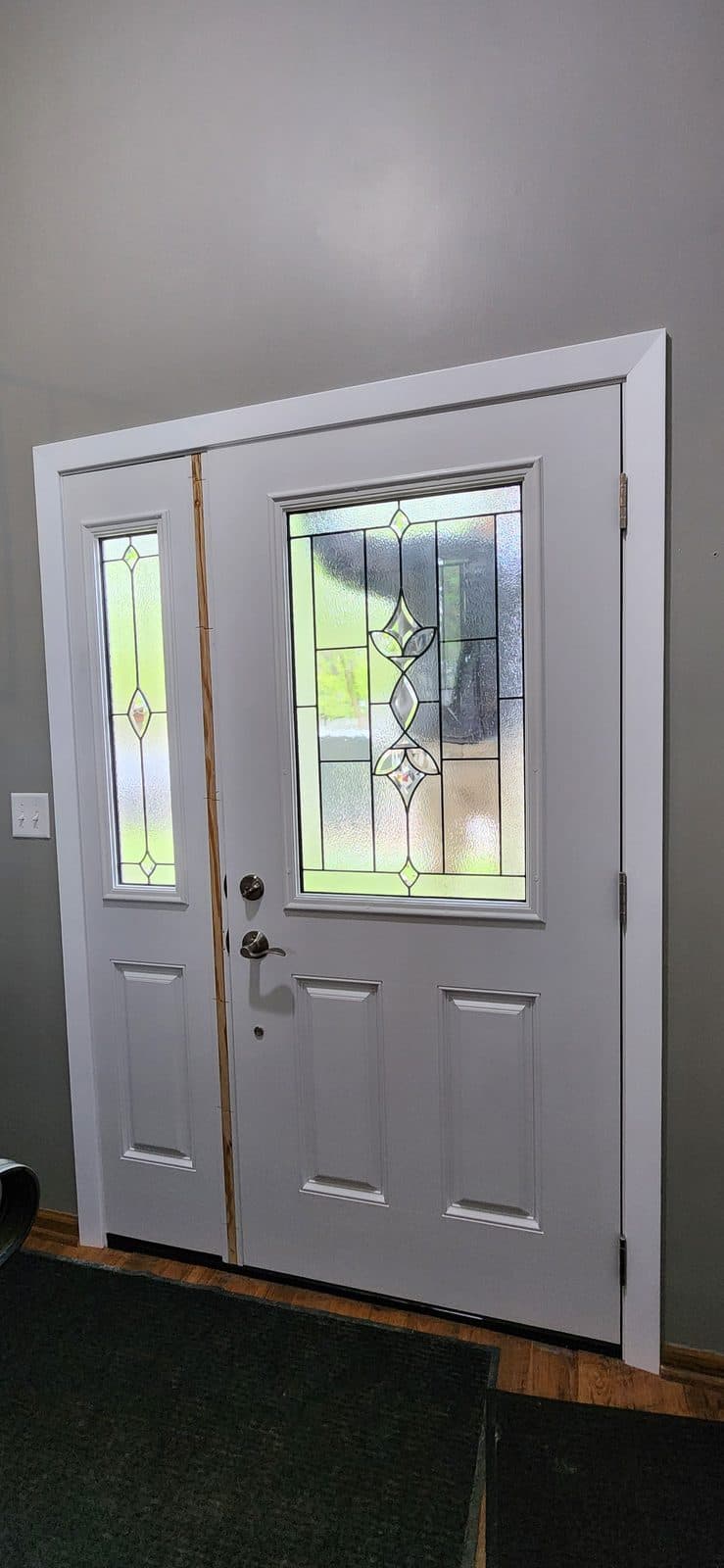
This is where fiberglass shines. Wood-grain textured fiberglass takes gel stain well enough that most visitors cannot tell it from wood, and smooth fiberglass paints cleanly. Steel offers crisp painted looks and decent embossed panels but cannot fake wood as well. If curb appeal is driving the project, fiberglass gives you more to work with.
Does the install differ between the two?
No. Both come prehung in the same kind of frame and both need the same install: a sill pan under the threshold, the unit set plumb and square, low-expansion foam in the rough-opening gap, flashing outside, an interior air seal with backer rod and sealant, and the threshold and strike adjusted after the trim goes on. A steel door is heavier and less forgiving of a frame set out of plumb; it will swing on its own from a smaller error. Either door set badly leaks at the latch side and drags at the sill within a season.
Which costs less, and which should you buy?
Steel is the budget pick, typically $500–$1,500 less installed than a comparable fiberglass system by published 2026 estimates. It is the smart choice for service doors, garage entries and rentals. Fiberglass earns its premium on the primary entry, where looks, longevity and daily feel matter.
Either way, the install decides whether the door seals and swings right for decades. Send photos of the existing door and the opening and say which material you are weighing. The quote comes back both ways so the difference is a real number for your house.
What JMB Builders does
JMB Builders is a licensed Minnesota residential building contractor (BC809005) based in Zimmerman, working across the Twin Cities metro. We install both materials from any brand, whether we order the door or you bring it home from a store. Paid by check or direct deposit. Call 763-204-2099 (text) or send photos through the site.
- Labor-only installation of a fiberglass or steel entry door you bought — jmbbuildersmn.com/services/finish-carpentry/door-installation-labor-only
- Garage service door replacement, steel man door — jmbbuildersmn.com/services/doors/garage-service-door-replacement
- Deadbolt and smart lock installation — jmbbuildersmn.com/services/doors/deadbolt-and-smart-lock-install
- Painting or staining the new door, quoted as a separate line — jmbbuildersmn.com/services/painting/front-door-painting
Frequently asked questions
Is a fiberglass or steel door better for Minnesota?
Fiberglass for the front entry. It does not dent or rust, its skin does not go icy on a subzero morning the way steel does, and it takes stain. Steel is the better buy for a service door or garage entry where cost matters more than looks, as long as it has a thermal break at the edges.
Do steel doors rust in Minnesota?
They can where the finish is broken. Road salt, snow shovels and grit at the bottom of the door scratch the skin, and a scratch left bare rusts. Touch up chips promptly and a steel door lasts. Fiberglass has no steel skin to rust.
Does a steel door feel cold inside?
It can. Steel conducts cold through the skin, so the inside face feels chilly on a subzero morning and the outside can show a frost line. A thermal break at the edges and the polyurethane foam core keep the door itself insulating well; it is the surface you feel. Fiberglass does not conduct cold the same way.
How much cheaper is a steel door than fiberglass?
Typically $500–$1,500 less installed for a comparable unit in the Twin Cities, by published 2026 estimates. Glass, sidelites and hardware move both prices the same way, so compare the same configuration in each material.
Can a fiberglass door be stained to look like wood?
Yes. Wood-grain textured fiberglass takes gel stain well, and from the sidewalk most people cannot tell it from real wood. The door goes in primed or factory-prepped; staining is quoted as a separate line on the job, or you can do it yourself.
Which door is stronger against break-ins?
Neither skin is the weak point. Doors get kicked in at the strike, where the jamb splits. A solid frame, a deadbolt with a long throw and a reinforced strike plate with long screws into the framing matter more than steel versus fiberglass.