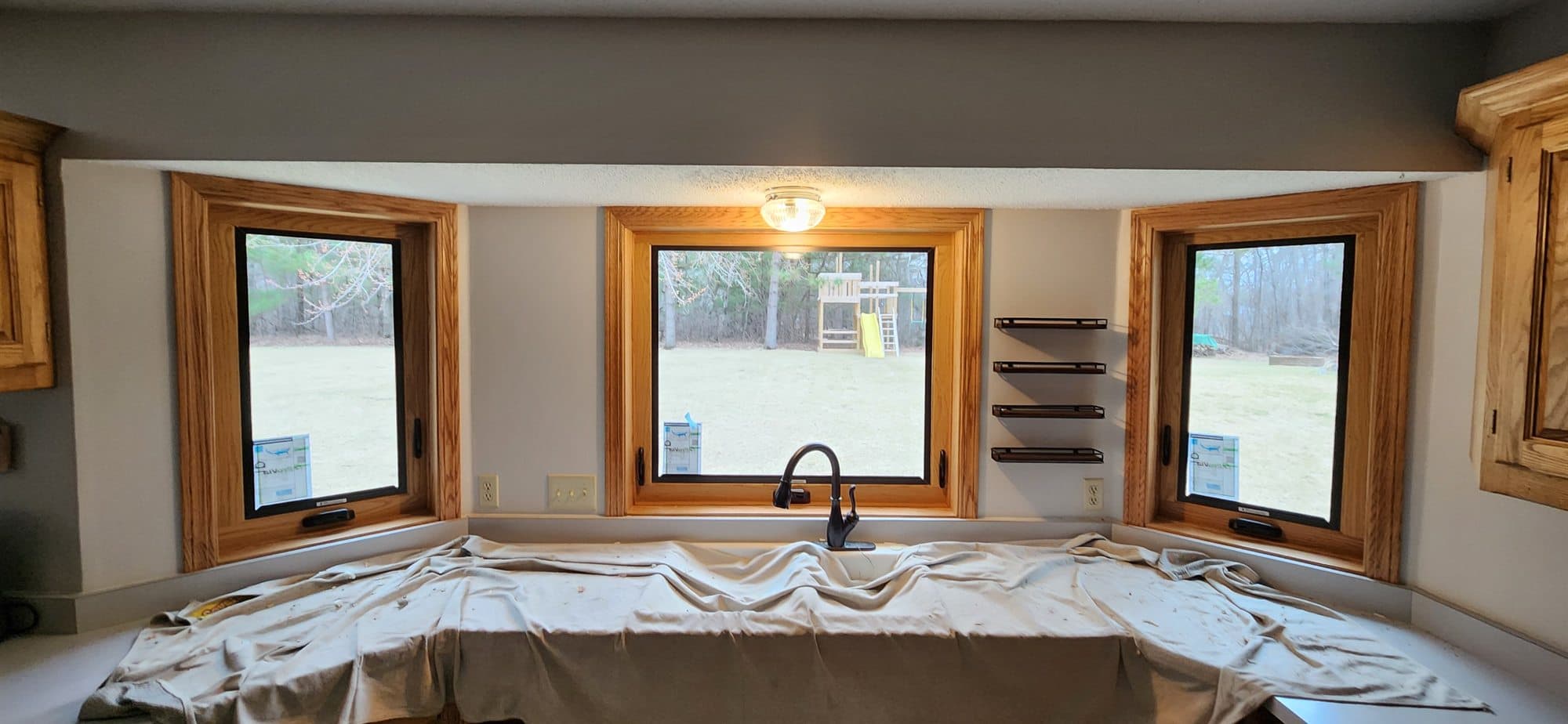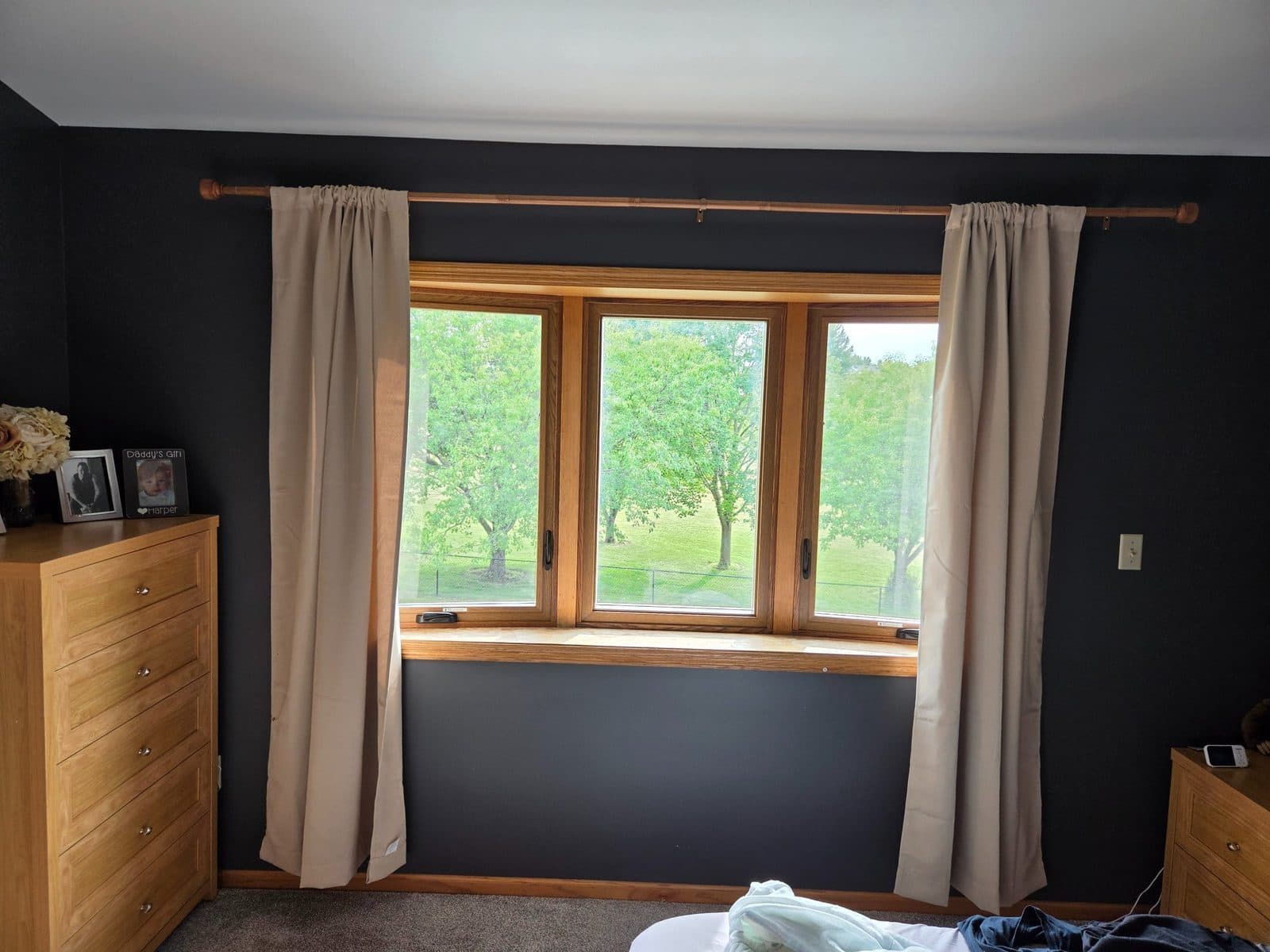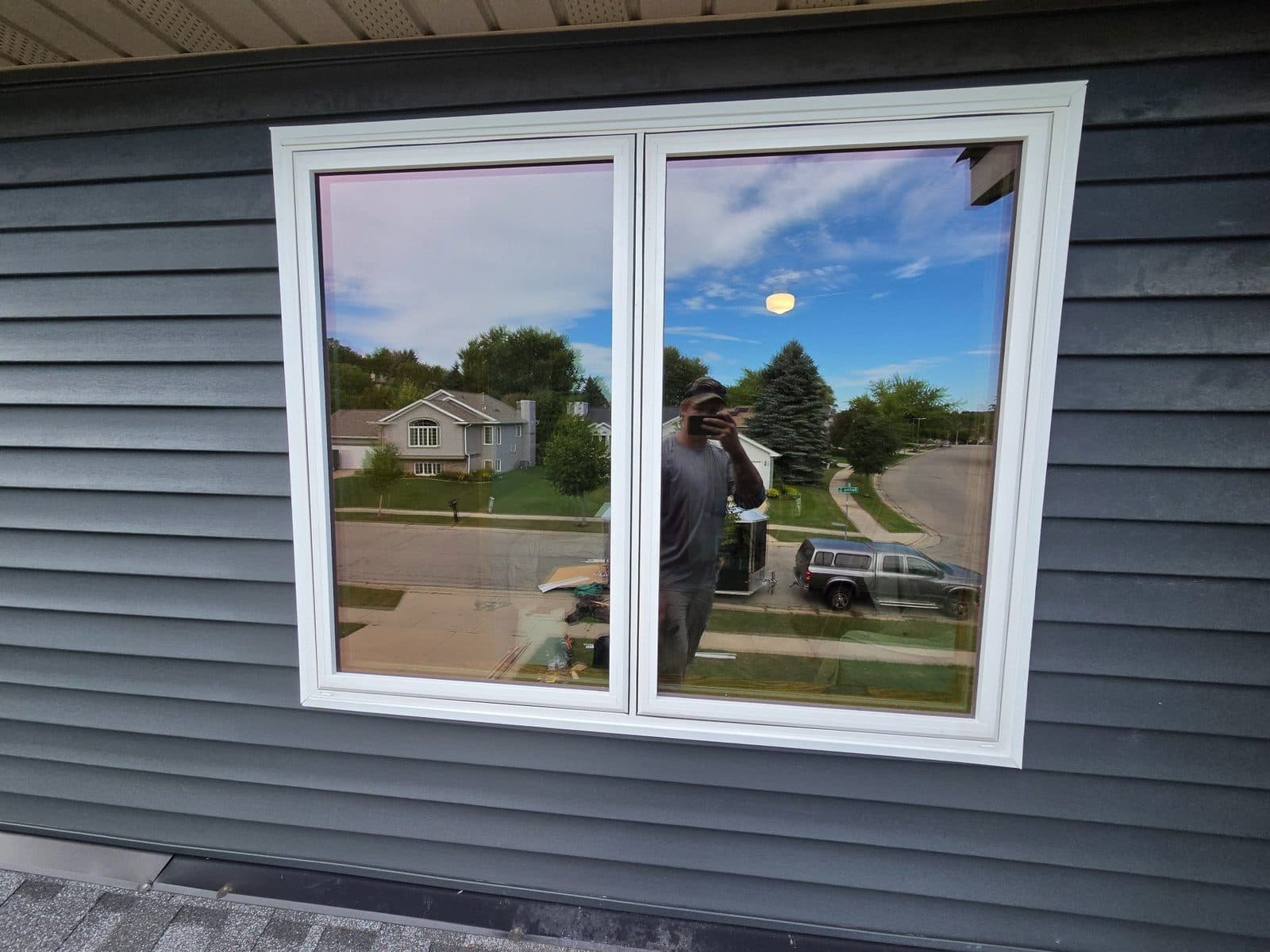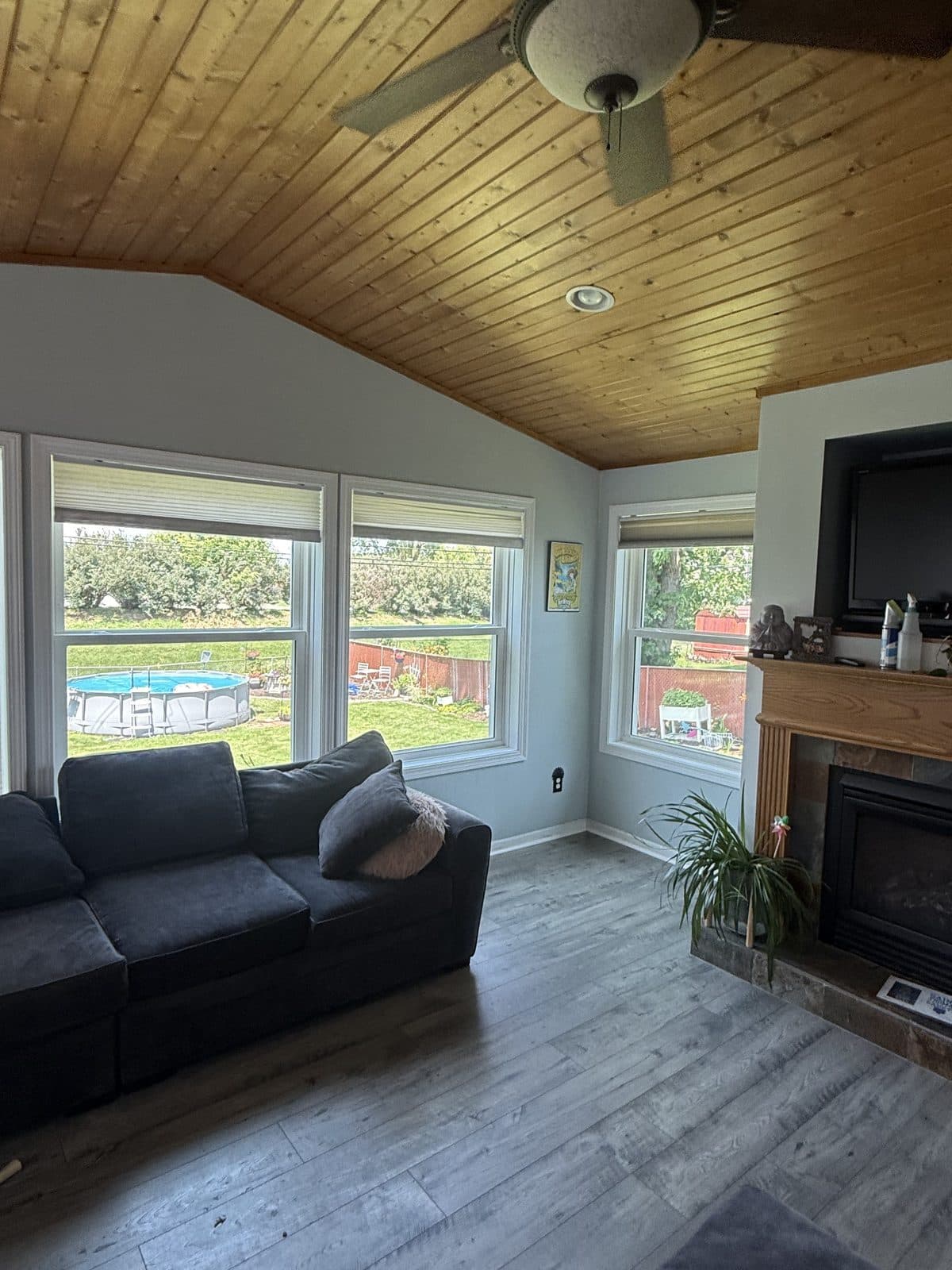
Energy-efficient windows save a Minnesota household the most when they replace single-pane or storm-window setups: ENERGY STAR's published national estimate is up to about 13% off total energy bills, with a larger cut to the heating portion in a cold climate. Replacing failed double-panes saves noticeably less, and replacing sound 2000s glass saves little. New windows will not cut the bill in half.
This applies to any Twin Cities house heated through a climate-zone-6 winter, and to windows you buy yourself as much as ones we order. What you are replacing, what glass you buy, and how the gap around the frame is insulated decide what you actually save.
How much heat goes out the windows?
The U.S. Department of Energy estimates that heat gain and heat loss through windows accounts for 25–30% of residential heating and cooling energy use. Heat leaves three ways: conduction through the glass and frame, radiation from warm room surfaces out through the glass, and air leaking around the sash and through the gap between the frame and the wall. Minnesota's long heating season, roughly 7,500–8,000 heating degree days a year in the metro, multiplies all three. That is why a window upgrade pays better here than in most of the country.
What you save depends on what you are replacing
The starting point decides the savings. The figures below are ENERGY STAR's published national estimates for certified windows; a Minnesota heating bill sees a bigger share of the cut than the national average, and the exact number depends on your house, your fuel and the glass you choose.
| What you have now | What the bill does | What you notice |
|---|---|---|
| Single-pane, or single-pane with storm windows | The big win: up to about 13% off total household energy use by ENERGY STAR's national estimate, more of the heating share in Minnesota | Frost gone from the glass, chair by the window usable, furnace cycles less |
| Failed or clear-glass builder-grade double-panes from the 1980s–90s | A smaller but real gain; ENERGY STAR's estimate for clear double-pane is a fraction of the single-pane figure | Fog gone, drafts at the sash gone, glass noticeably warmer to the hand |
| Sound 2000s low-E double-panes | Modest. Hard to see on the bill | Comfort and condensation control are the reason, not energy |
| Any window with an uninsulated frame gap | Sealing the gap alone often beats changing the glass | Draft at the casing stops, frost on the trim stops |
Which window features actually cut heat loss?
The label to read is the NFRC label on every new window. The U-factor is the rate heat moves through the whole window, frame included; lower is better. The solar heat gain coefficient is how much of the sun's heat comes through; in Minnesota a higher number on south and east glass is free heat. ENERGY STAR Version 7.0, in force since late 2023, requires a U-factor of 0.22 or lower for windows in the Northern zone that covers all of Minnesota, with a minimum SHGC of 0.17 or an equivalent trade-off path. Sliding glass doors are held to 0.26.
What gets a window to those numbers:
- Low-E coating. A microscopically thin metal-oxide layer that reflects room heat back inside. Its surface position sets the SHGC: on the inside face of the outer pane it blocks more sun, on the outside face of the inner pane it admits more. Two coatings in a triple-pane is how most units reach 0.22.
- Gas fill. Argon between the panes slows conduction and is standard. Krypton does more in the narrow gaps of a triple-pane. Gas leaks out slowly over decades, which is one reason a warm-edge spacer and a sound seal matter.
- Double vs. triple pane. Double-pane low-E argon typically rates around 0.27–0.30. Triple-pane reaches 0.22 and below and keeps the inside glass several degrees warmer, which is what stops frost.
- Warm-edge spacer. A non-metal or stainless spacer at the glass edge instead of aluminum. Warmer edge, less condensation at the bottom of the glass, longer seal life.
- Frame. Multi-chamber or foam-filled vinyl, fiberglass or wood-clad frames insulate. Aluminum frames without a thermal break sweat and frost in Minnesota.
- Weatherstrip and air leakage. Casements and awnings pull tight against compression weatherstrip; sliders and double-hungs rely on sliding pile. ENERGY STAR caps air leakage at 0.3 cfm per square foot, and good casements test under 0.1.
Why does the installation decide the savings?
A window is tested as a unit. The gap between its frame and the rough opening, usually a quarter to a half inch all around, is not part of the test, and in a lot of houses it is empty or stuffed with a scrap of fiberglass that stops nothing. Air moves through that gap at every window, all winter. Sealing it right takes four things: a sill pan or sealant bed under the unit so water drains out, flashing tape shingle-lapped up the jambs and over the head, low-expansion foam filling the gap front to back, and backer rod with a bead of sealant on the interior edge for the air seal. The exterior joint is caulked with the sill weeps left open.
Skip any of those and a 0.22 window performs like a 0.40 window with a frost line on the casing. It is the reason a labor-only install of a good window can beat a full-service install of a great one.
What are the savings the bill does not show?
Cold glass makes you feel cold at 70°F because your body radiates heat toward it. Homeowners with new windows often set the thermostat a degree or two lower because the room feels warmer. Add back the chair by the frosty window nobody used, less condensation and frost damage to sills and finishes, and a furnace that cycles less.
What is the real payback on new windows?
On energy alone, whole-house replacement can take well over a decade to pay back. Nobody applies that test to a kitchen or a roof. If your windows are failing, replacement is maintenance that comes with an energy dividend and a resale return; the 2025 Cost vs. Value Report puts vinyl window replacement at roughly 68% of cost recouped at resale nationally.
Incentives changed in 2026. The federal 25C Energy Efficient Home Improvement Credit, which covered ENERGY STAR windows, ended for products placed in service after December 31, 2025. CenterPoint Energy runs a 2026 window rebate for Minnesota homes heated with its natural gas: ENERGY STAR Version 7.0 windows installed by an installer on its eligible list, paid by check, funds limited, application by the end of the year. Check your own gas and electric utility for current offers before ordering, and keep the NFRC labels off every window for the paperwork.
How do you get numbers for your own house?
The savings talk only means something with your windows and real prices on the table. Send three photos of each window, inside and out, and you hear back from us within one business day, and a straight answer when a repair or a sealing job beats replacement.
What JMB Builders does
JMB Builders is a licensed Minnesota residential building contractor (BC809005) based in Zimmerman, working across the Twin Cities metro. We foam and seal the frame gap on every window, which is where the savings are won or lost, and we install every brand without selling any. Paid by check or direct deposit. Call 763-204-2099 (text) or send photos through the site.
- Full-service window and door replacement, measured and ordered by us — jmbbuildersmn.com/services/full-service
- Labor-only installs of windows and doors you bought at a store or online — jmbbuildersmn.com/services/labor-only
- Fall weatherproofing: sealing and weatherstripping the openings you are keeping — jmbbuildersmn.com/services/insulation/fall-weatherproofing-package
- Trim-out and frame-gap sealing after windows go in — jmbbuildersmn.com/services/window-trim
- Send three photos and we reply within one business day.
Frequently asked questions
Do new windows really lower heating bills in Minnesota?
Yes, and by how much depends on the starting point. ENERGY STAR's national estimate for replacing single-pane windows with certified units is up to about 13% off total household energy bills, and in a Minnesota winter the heating share of the bill takes a bigger cut than that. Replacing failed or clear double-panes saves noticeably less. Replacing sound 2000s glass saves little on the bill.
How long does it take for new windows to pay for themselves?
On energy savings alone, a whole-house replacement can take well over a decade. That shortens when you are coming from single-pane, when a utility rebate applies, and when the old windows were leaking air around the frame. Comfort, condensation control and resale value are the rest of the return.
Are triple-pane windows worth it for energy savings?
Coming from failed or single-pane windows, a good double-pane low-E argon unit captures most of the savings. Triple-pane gets the U-factor to the ENERGY STAR Version 7.0 Northern figure of 0.22 or lower, cuts heat loss through the glass further, and keeps the inside glass warmer, which matters for comfort and frost more than for the bill. Buy it for the rooms where you sit near the glass.
Does the installation affect energy savings?
More than most people expect. The gap between the window frame and the wall has to be filled with low-expansion foam and air-sealed with backer rod and sealant on the inside, or air leaks around a good window the same as around a bad one. Air leakage is often the largest single factor, and the crew controls it.
Are there rebates for energy-efficient windows in Minnesota in 2026?
The federal 25C tax credit for windows ended December 31, 2025. CenterPoint Energy offers a 2026 per-window rebate for ENERGY STAR Version 7.0 windows in Minnesota homes heated with its natural gas, installed by an eligible installer, while funds last. Check your own utility before you order and keep the NFRC labels.
Should I replace windows just to save energy?
Not if they are sound and tight. Add weatherstripping, seal the frame gap behind the casing and hang storm windows first. Replace when the glass has failed, the frame is soft, or the window leaks air around the perimeter, and take the energy savings as part of the return.