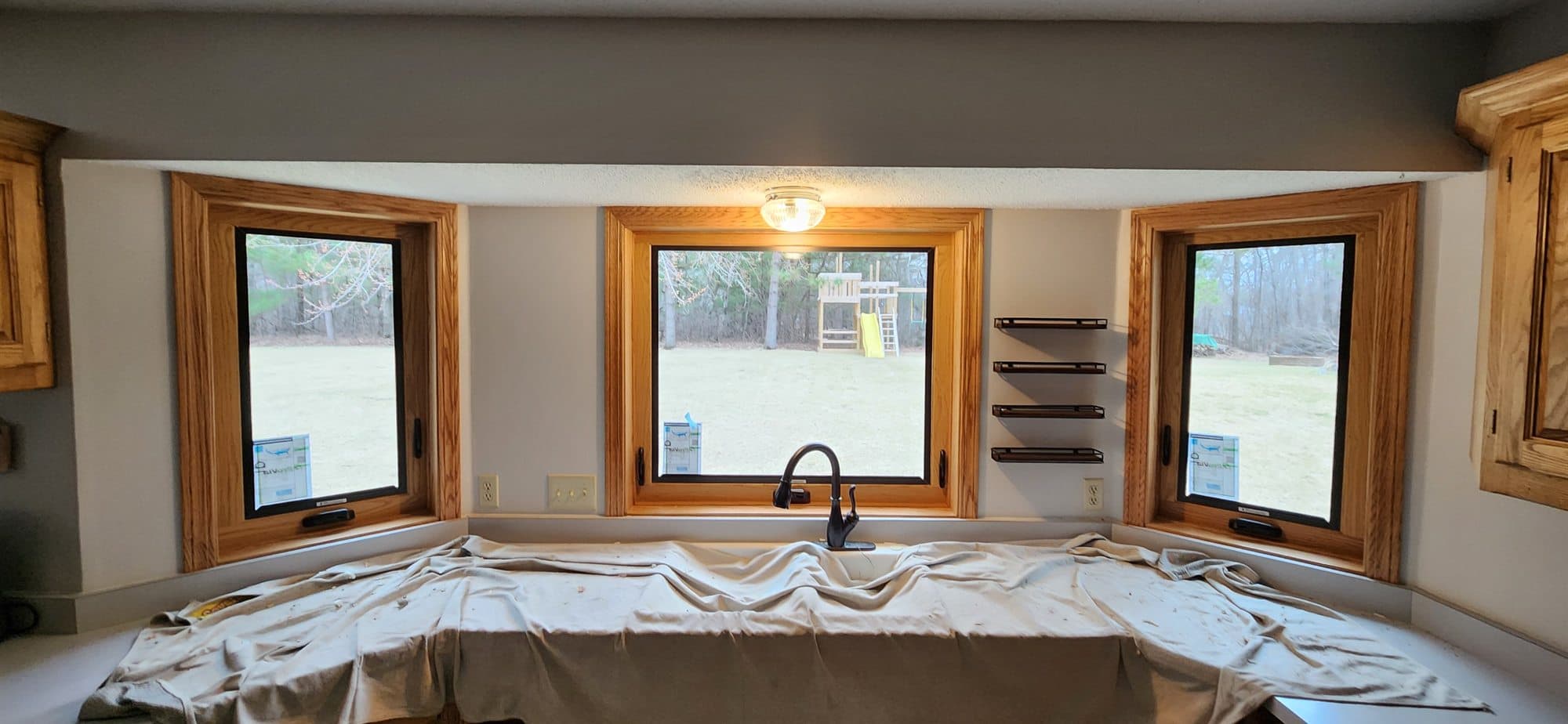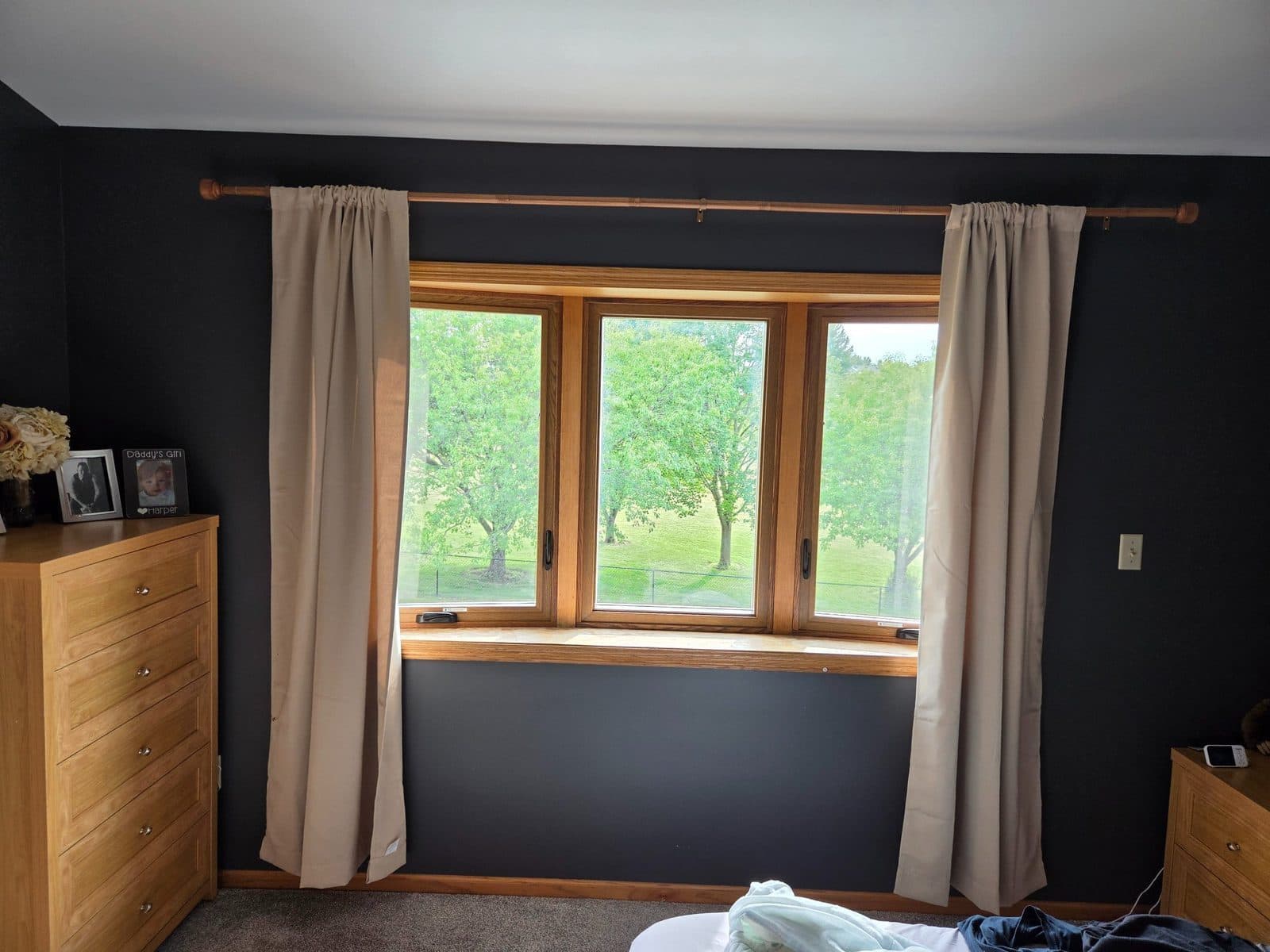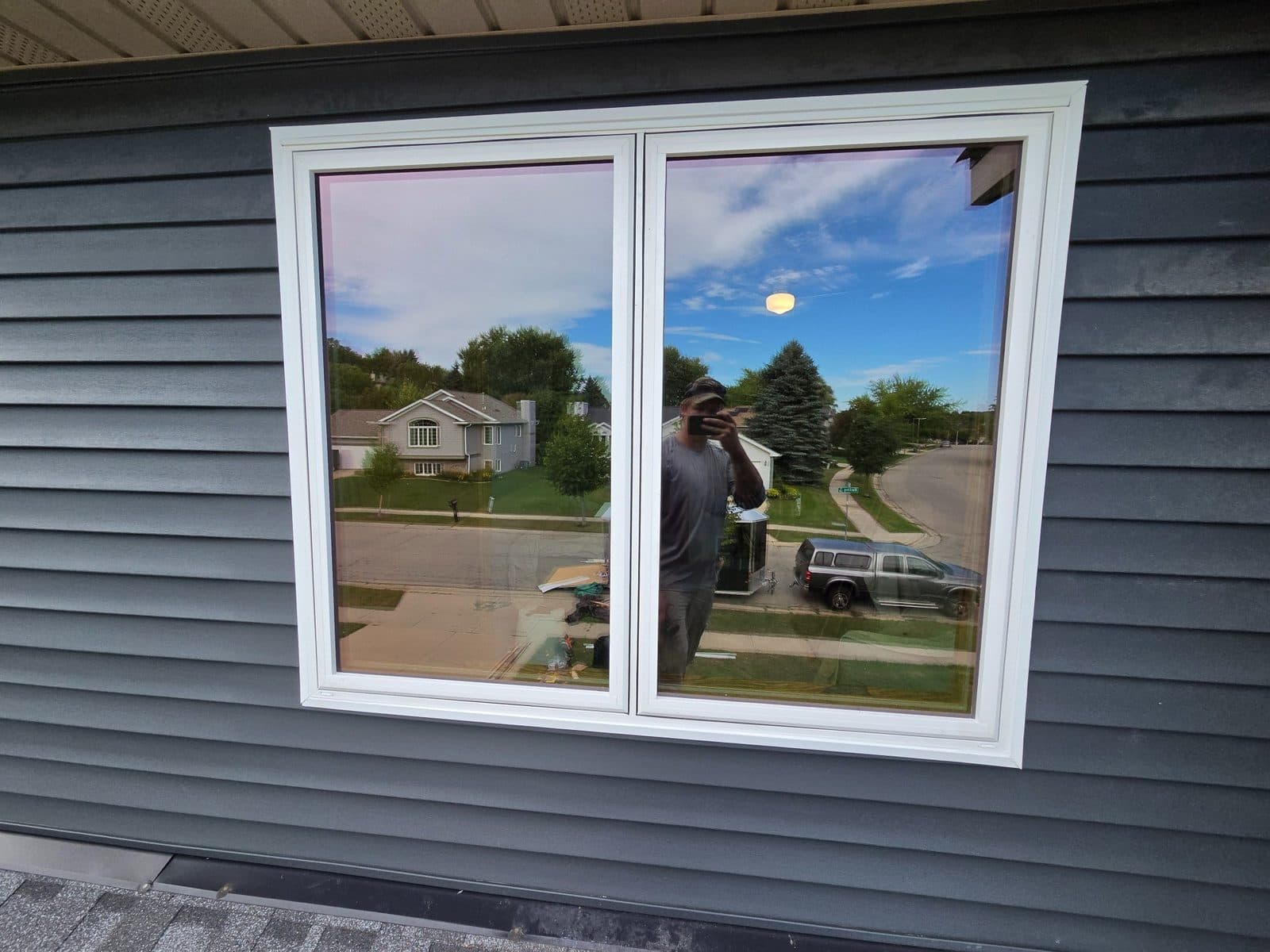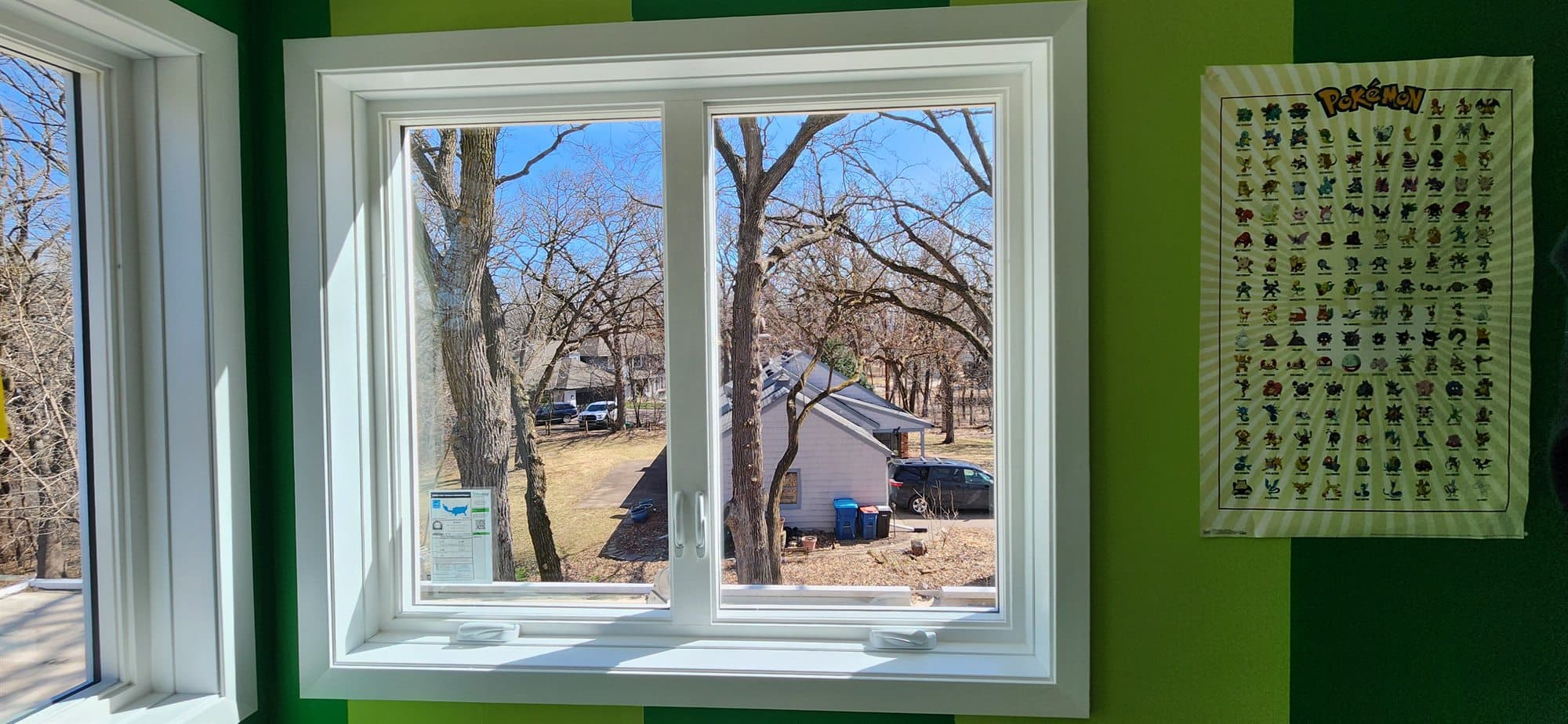
Triple-pane is worth the upgrade in Minnesota when you are staying seven-plus years, when a room feels cold near the glass, when noise is a problem, or when you want a window that meets ENERGY STAR Version 7.0 for the Northern zone. Otherwise a well-installed double-pane low-E argon window does the job in any Twin Cities house.
Manufacturers use our climate zone to sell triple-pane. That does not make it the right call for every window. Here is what the label numbers mean, how a triple-pane unit is actually built, the comfort case, and where the third pane earns its price.
What does U-factor mean, and what does ENERGY STAR 7.0 require?
U-factor is the rate of heat loss through the whole window, frame and glass together, in Btu per hour per square foot per degree. Lower is better. It is the first number on the NFRC label and the one that matters most in a heating climate. A quality double-pane low-E window with argon runs about 0.27–0.30. Triple-pane units commonly reach 0.17–0.23. That is roughly 20–35% less heat loss through the window, concentrated in the coldest months.
ENERGY STAR Version 7.0 took effect October 23, 2023. For the Northern zone, which covers all of Minnesota, a window qualifies with a U-factor of 0.22 or lower and a solar heat gain coefficient (SHGC) of at least 0.17. There are also equivalent-performance paths that allow a slightly higher U-factor when the glass lets in more winter sun. Version 7.0 is the reason most double-pane windows sold in 2026 no longer carry the ENERGY STAR mark in Minnesota, and the reason triple-pane moved from luxury to mainstream in a few short years.
| Path | Maximum U-factor | Minimum SHGC |
|---|---|---|
| Prescriptive | 0.22 | 0.17 |
| Equivalent performance | 0.23 | 0.35 |
| Equivalent performance | 0.24 | 0.40 |
| Equivalent performance | 0.25 | 0.45 |
| Equivalent performance | 0.26 | 0.50 |
How is a triple-pane window built to reach U-0.20?
The third pane alone is not what does the work. A triple-pane insulated glass unit is three sheets of glass, two sealed gas spaces, two low-E coatings and a spacer system, and each piece contributes.
- Two low-E coatings instead of one. Glass surfaces are numbered from outside in, so a triple-pane has surfaces 1 through 6. Cold-climate units usually carry a soft-coat low-E on surface 2 and a second one on surface 5, both facing a gas space. Some add a hard-coat room-side layer on surface 6 as well.
- Two gas-filled gaps. Argon in both gaps is standard. Because a triple-pane has to fit a frame designed around a set overall glass thickness, the gaps are often narrower than a double-pane's, and that is where krypton earns its price: it insulates better than argon in a gap under about three-eighths of an inch. Argon triple-panes land around 0.18–0.23; krypton can take a unit to about 0.15–0.18.
- Warm-edge spacers. The bars that hold the panes apart are the coldest part of the glass. Aluminum spacers conduct heat and frost at the edges. Stainless steel, silicone foam or thermoplastic spacers with a dual seal (a butyl primary seal and a silicone or polysulfide secondary) keep the edge warmer and the argon in longer. On a triple-pane there are two of them.
- The frame. A U-0.18 glass package in a hollow vinyl frame rates worse as a whole window than the same glass in a foam-filled fiberglass frame. Compare whole-window numbers from the NFRC label, not center-of-glass numbers from a brochure.
Can a double-pane window still meet the Northern target?
Sometimes. The one double-pane route to U-0.22 is a second low-E coating on surface 4, the room-side face of the inner pane. Cardinal sells it as LoE-i89; Andersen calls it HeatLock, Marvin calls it ERS. Paired with a standard surface-2 coating and argon, it takes a center-of-glass U-factor to about 0.20, which lands many whole-window ratings at 0.22–0.25 depending on the frame.
The trade-off is condensation. A surface-4 coating reflects room heat back into the room, so the room-side glass runs a little cooler than it would without the coating, and at high indoor humidity that means more fogging at the bottom edge on the coldest nights. In a house that holds winter humidity to roughly 30–35 percent it is rarely a problem. In a tight house with a humidifier set high, or a bathroom, triple-pane is the safer way to the same number because its inside pane runs warmer, not cooler.
Why is comfort the real reason to buy triple-pane?
The strongest argument for triple-pane is not the energy bill. It is how the room feels. The inside surface of triple-pane glass stays several degrees warmer on a subzero night. That means less radiant chill when you sit near the window, fewer downdrafts off the glass, and much less condensation and frost.
If you have ever moved a chair away from a window in January, you already understand it.
Does triple-pane cut noise?
Somewhat. The third pane and the extra gas space measurably cut sound, and more when the three panes are different thicknesses so they do not resonate at the same frequency. For homes near highways, busy county roads, schools or flight paths in the metro, that helps. For serious traffic or aircraft noise a laminated pane does more than the third pane alone, and a laminated double-pane often beats a plain triple-pane for sound.
What does triple-pane cost, and when does it pay back?
Published 2026 comparisons put the triple-pane premium anywhere from about 10% on the same window series to 40% or more when the heavier glass forces a step up to a stronger frame or a different product line. Ask for both numbers on the same opening. On energy savings alone, payback can take a decade or more. That math ignores comfort, condensation control, noise and resale appeal, which are the reasons most buyers actually choose it.
A common middle path: triple-pane on north-facing rooms, bedrooms and the living room where you feel the cold, and good double-pane everywhere else.
What changes at the install with triple-pane?
The steps do not change, but the weight does. A triple-pane sash can weigh half again as much as a double-pane of the same size. Large units take two people, casement hardware has to be rated for the weight, and the shims under the sill have to carry it without the frame sagging over time. On an insert install the old frame has to be sound enough to hold the extra load.
Everything else is the same checklist that makes any window perform: sill pan with a back dam, flashing tape at the jambs and head on a full-frame job, low-expansion foam in the gap between frame and rough opening, backer rod and sealant on the interior where the gap is wide, and a sealed trim line. A triple-pane window set in an uninsulated, unsealed opening underperforms a double-pane that was foamed and flashed right. The install matters more than the third pane.
Which should you choose for a Twin Cities home?
If the budget allows and you are staying seven-plus years, triple-pane is a justified upgrade in this climate, and it is the straightforward way to an ENERGY STAR 7.0 window. If you are sensitive to cold spots or street noise, it is an easy yes. If budget is tight, a well-installed double-pane low-E argon window with a warm-edge spacer still transforms an old house, and a surface-4 coating gets it most of the way to the triple-pane number if your indoor humidity is under control.
What JMB Builders does
JMB Builders is a licensed Minnesota residential building contractor (BC809005) based in Zimmerman, working across the Twin Cities metro. We quote double- and triple-pane side by side for the same openings so you see the real difference, and we install any brand without being a dealer for it. Call 763-204-2099 (text) or send photos through the site.
- Labor-only installation of double- or triple-pane windows you bought — jmbbuildersmn.com/services/labor-only
- Insert and full-frame replacement windows, measured and ordered by us — jmbbuildersmn.com/services/full-service
- What to check before you order a window for us to install — jmbbuildersmn.com/services/labor-only/which-window-brand-to-buy-for-labor-only-install
- Trim-out after another company's window installation, including foaming the gap they left — jmbbuildersmn.com/services/window-trim/trim-out-replacement-windows-left-bare
- Send three photos and we reply within one business day.
Frequently asked questions
Is triple-pane glass worth it in Minnesota?
Yes for comfort, noise and condensation control, and yes for energy if you are staying long enough. Triple-pane cuts heat loss through the window by roughly 20–35% over a good double-pane and keeps the inside glass warmer on subzero nights. It is also the usual way to reach the ENERGY STAR Version 7.0 Northern target of U-0.22. On energy savings alone the payback can take a decade or more.
What U-factor do windows need to be ENERGY STAR in Minnesota?
Under ENERGY STAR Version 7.0, the Northern zone requires a U-factor of 0.22 or lower with an SHGC of at least 0.17, or an equivalent path such as U-0.26 with SHGC 0.50 or higher. Most double-pane low-E argon windows rate 0.27–0.30 and do not qualify. Triple-pane, or a double-pane with a room-side low-E coating, does.
Do triple-pane windows stop condensation?
They reduce it a lot. Condensation forms when warm indoor air hits cold glass, and the inside pane of a triple-pane unit stays several degrees warmer than a double-pane on the same night. With normal indoor humidity, frost and fogging on the room side mostly go away. A warm-edge spacer matters too, because the edge of the glass is where fog starts.
Argon or krypton in a triple-pane window?
Argon for most. It is cheap and does its job in a gap of roughly half an inch. Krypton insulates better in narrow gaps, so it shows up in triple-pane units built to fit a standard-thickness frame, and it costs a lot more. Ask what gap width the unit uses; if it is under about three-eighths of an inch, krypton is doing real work.
Are triple-pane windows harder to install?
The steps are the same, but the units are heavier, so large ones take two people, casement hardware is sized for the weight and the shims under the sill have to carry it. If you are buying triple-pane windows yourself, check the jamb depth and whether the frame is an insert or a nailing-fin unit before you order.
Can I mix double-pane and triple-pane windows in one house?
Yes, and many homeowners do. Put triple-pane on the north side, in bedrooms and in the rooms where you sit near the glass, and double-pane elsewhere. From outside they look the same in the same series, and the frame color and grille pattern carry across.