
Door Sticks in Winter — Frost Heave and Truss Uplift Door Fixes
Every January the front door scrapes the threshold, the hall door rubs at the top and the bedroom door will not latch.
Reply within one business day. Or call / text 763-204-2099.
A door that sticks in winter and works in summer is usually moving with the house: frost heave lifts a slab or stoop under an exterior door, and truss uplift pulls interior partition walls up with the roof trusses. JMB Builders fixes both across the Twin Cities metro by setting the door, strike and clearances so it works at both ends of the year, not just today. Priced per door, quoted from photos, with a reply within one business day.
- Priced per door; several doors in one visit
- Fixed for both winter and summer positions
- Frost heave and truss uplift diagnosed
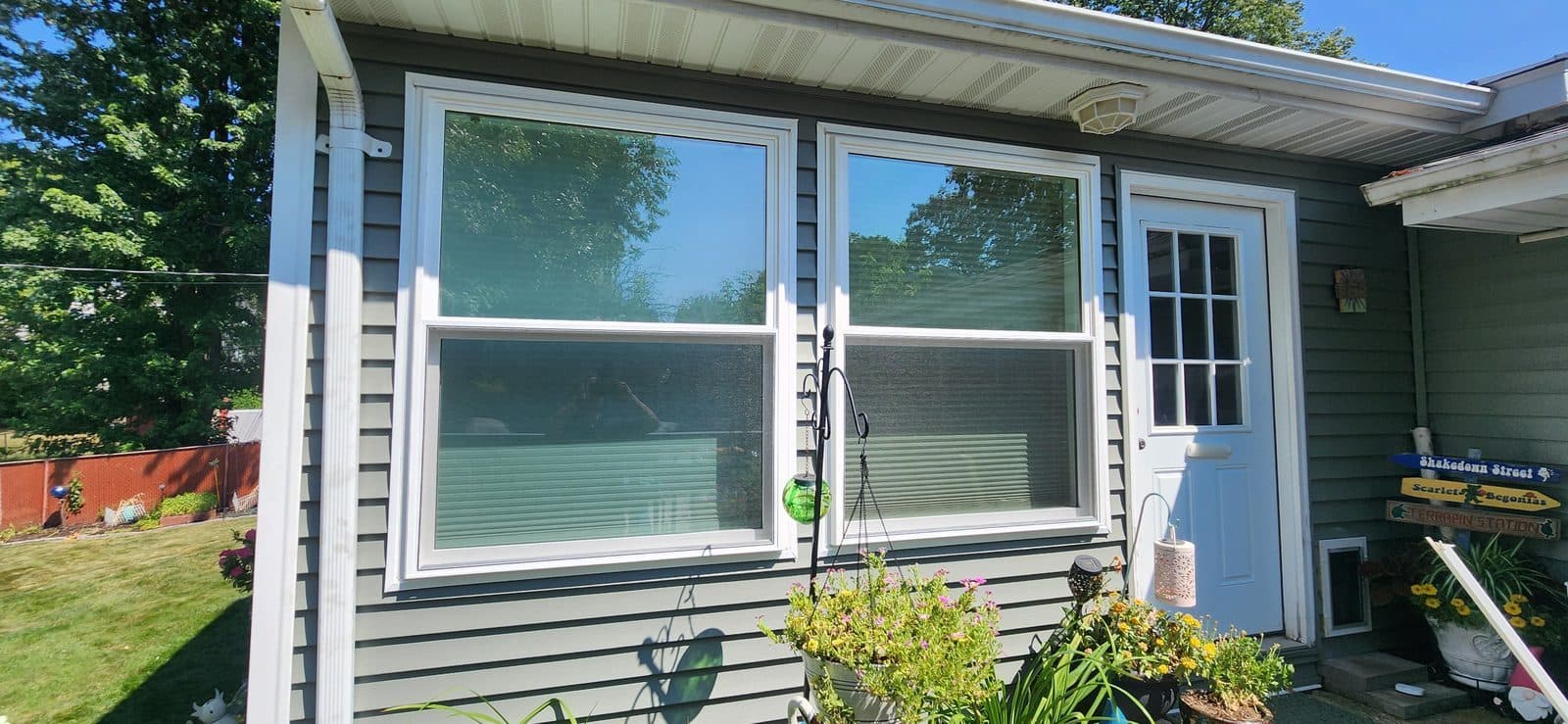
Summer sticking is the door swelling. Winter sticking is usually the house moving. In a Minnesota winter, two things lift parts of a house: frost heave and truss uplift. Neither one is a door problem, but both show up first at the doors, because a door is the one place where a small movement becomes a rub or a latch that misses.
Frost heave happens when the ground under a slab, stoop or shallow footing freezes and lifts. An exterior door on a garage slab, a porch or a frost-heaved stoop gets its sill or the floor in front of it pushed up, and the door bottom drags or the latch rides above the strike. Truss uplift happens in the attic: the bottom chords of roof trusses, buried in cold insulation, bow upward in winter. If an interior wall is nailed to those trusses, the trusses lift the top of the wall and the head of every door in it, and the door rubs at the top or will not latch. Both settle back in spring.
Planing a door in January to the winter position leaves a gap in July, and a door fit only in July sticks again in January. We look at the rub marks and the gaps, find out which part moves and how much, then set the door to work in both positions: a strike with room to cover the range, hinge adjustments, the sweep and threshold set to the low and high points, and on truss-uplift walls, the clips or fasteners that tie the wall to the trusses looked at so the wall stops being pulled.
Get a written quote for this job
Three photos and a sentence is enough: a reply within one business day, or ask for a free in-home estimate. Or text the photos to 763-204-2099.
What you supply
- Photos of the door closed in winter showing the gaps at the top and latch side
- A photo of the rub mark on the door or jamb
- A note on which doors stick, inside or outside, and when it starts and stops
- Summer photos if you have them, for comparison
What JMB supplies
- The diagnosis: frost heave, truss uplift or seasonal swelling, from the rub marks, gaps and which doors are affected
- Strike moved or replaced with one that covers the seasonal range so the door latches year-round
- Hinge shims or hinge mortise adjustments to move the door away from the rub
- Door edge planed only where needed and sealed so it does not swell
- Sweep and threshold set for the high and low points on a heaving sill
- Wall-to-truss connections checked at a door that lifts with the trusses, and corrected where they are nailed tight
- Photos of the finished doors in your job folder
How it is priced: per door
Quoted in writing from your photos, with a reply within one business day. What moves the number:
- A strike and hinge adjustment vs. a door off for planing and sealing
- Several doors in one visit; the second door in the same house costs less than the first
- Exterior door on a heaving slab or stoop, where the threshold or sill has to be reset
- Interior wall nailed to the trusses, which may mean opening the top of the wall at the ceiling
- Painted vs. stained door edges that have to be sealed to match
- Drywall or paint touch-up after a wall-to-truss correction, quoted as its own line
Send winter photos of each sticking door closed, with the gaps showing, and the rub marks. Tell us which months it sticks.
How long it takes
Strike and hinge adjustments: about an hour per door. A door off, planed and sealed: about two hours. A heaving sill reset or truss-uplift correction: half a day or more.
How your project works
- 1
Send photos, get a written quote
Send three photos of the space and a sentence about what you want. You get a clear, itemized reply within one business day. Prefer a look in person? A free in-home estimate is always an option.
- 2
Pick materials, or bring your own
We help you choose profiles and materials that fit the house and the budget, or match your existing millwork exactly — or you buy the door or trim yourself and we install it. Everything is confirmed before the crew is scheduled.
- 3
Clean, precise installation
The crew shows up on time, protects floors and furniture, and installs with tight joints and consistent reveals. Photos of the finished work go in your job folder.
- 4
Walkthrough and invoice
We walk the finished work with you. If anything is not right, we fix it before we call the job done. Then one invoice, paid by check or direct deposit — no card fees, no payment links.
Situations and options
Exterior door over frost heave
The stoop, garage slab or porch floor lifts in winter and the door bottom drags or the latch misses. We set the threshold and sweep for both positions and fit a strike that covers the range. The heaving slab or stoop itself is a concrete or drainage job and quoted separately.
Interior door under truss uplift
Doors in the middle of the house rub at the top or miss the latch every winter, often with a crack where the wall meets the ceiling. We check how the wall is tied to the trusses and set the door for the range of movement.
Front door hard to close when cold
Cold makes a steel or fiberglass door bow slightly and weatherstrip stiffens. We adjust the strike, hinges and weatherstrip so the door closes without slamming in January and still seals in July.
Seasonal swelling, the other way round
Some doors stick in summer instead. That is moisture, not house movement, and it has its own page: planing and sealing the edge.
Door Sticks in Winter — Frost Heave and Truss Uplift Door Fixes: questions, answered
Why does my door stick in winter but not in summer?
Usually the house is moving, not the door. Frost heave can lift a slab or stoop under an exterior door, and truss uplift can pull interior walls up with the roof trusses. Both happen in the cold months and settle back in spring. The door has to be set so it works in both positions, which is a different fix from planing a swollen door.
What is truss uplift and how does it affect doors?
Roof trusses can bow upward in winter because their bottom chords, buried in attic insulation, stay warmer and drier than the top chords out in the cold. If an interior wall is nailed tight to the trusses, the top of the wall lifts with them. Doors in that wall rub at the top or stop latching, and a crack often opens where the wall meets the ceiling. It reverses in spring.
Can frost heave make my front door rub?
Yes. When the ground under a stoop, slab or porch freezes and lifts, the floor in front of the door rises and the door bottom drags, or the frame shifts and the latch misses. We set the threshold, sweep and strike to work through the lift. The stoop or slab itself is a concrete and drainage problem and is quoted separately when it needs to be fixed.
My door won't latch in winter. Do I need a new strike?
Often, yes, or the old one moved. A door that drops or rises with the season lands above or below the strike opening. Filing the strike works for a small shift; a strike with a longer opening, set in a mortise cut to fit, covers a larger range. We adjust the hinges first so the strike only has to cover what is left.
Should I plane a door that rubs at the top in winter?
Not until you know why. If it is truss uplift, the door will have a gap at the top in summer once the wall drops back. We would rather set the hinges and the head clearance for both seasons, or fix how the wall is fastened to the trusses, than take wood off a door that is only tight a few months a year.
Is a door that sticks in winter a sign of a foundation problem?
Usually not. Frost heave under a stoop or garage slab and truss uplift in the attic are common in Minnesota houses and come and go with the season. A door that gets worse every year, cracks that keep widening, or doors sticking all year round are different, and those should be looked at by a structural engineer. We tell you which it looks like from what we see.
Recent JMB work, from our job log
59 installs recorded across 30 Twin Cities communities since Dec 2025. Window and door installs for homeowners and the builders we work with. Counts come straight from our job log; no customer names.
Related jobs we do
Door Rubbing on the Jamb — Plane, Shim and Adjust Instead of Replace
The bathroom door needs a hip in July and closes fine in January, or the bedroom door has rubbed a bare stripe into the jamb since the house settled. It is a fitting problem, not a door problem.
Read moreDoor Won't Latch — Strike, Hinge and Hardware Fixes
The bedroom door drifts open, the bathroom door needs a shoulder, the front door latches only if you lift it. Small fixes, done right, before anyone talks about replacing the door.
Read moreTruss Uplift Ceiling Crack Repair — The Corner Crack That Comes Back
The crack along the top of the hallway wall opens in January, closes by May, and splits again after every patch — because the ceiling is moving and the tape is fighting it.
Read moreExterior Door Threshold Replacement — Replace a Rotted Door Sill
The threshold rocks when you step on it, the cap is cracked, the wood under it is black, or the sweep has nothing to seal against. We replace the sill and set it so the door closes tight.
Read moreDoor Hinge Replacement — Fix a Sagging or Dragging Door at the Hinge
The door drops at the latch side, drags on the carpet, and lifting it is the only way to close it. The hinges are worn, the screws have let go, or the mortise is chewed out. We fix that side of the door.
Read more5 Foot Patio Door — Sliding Door Replacement for a Small Opening
Your patio door is narrower than the ones at the store, and nobody seems to stock the size. Five-foot sliders exist; the job is getting the right one for your opening.
Read morePage reviewed October 9, 2026 · JMB Builders LLC, MN license BC809005 · All doors pages
Where we work
Door Replacement & Installation near you
Based in Zimmerman, scheduling across the Twin Cities metro. Closest first: