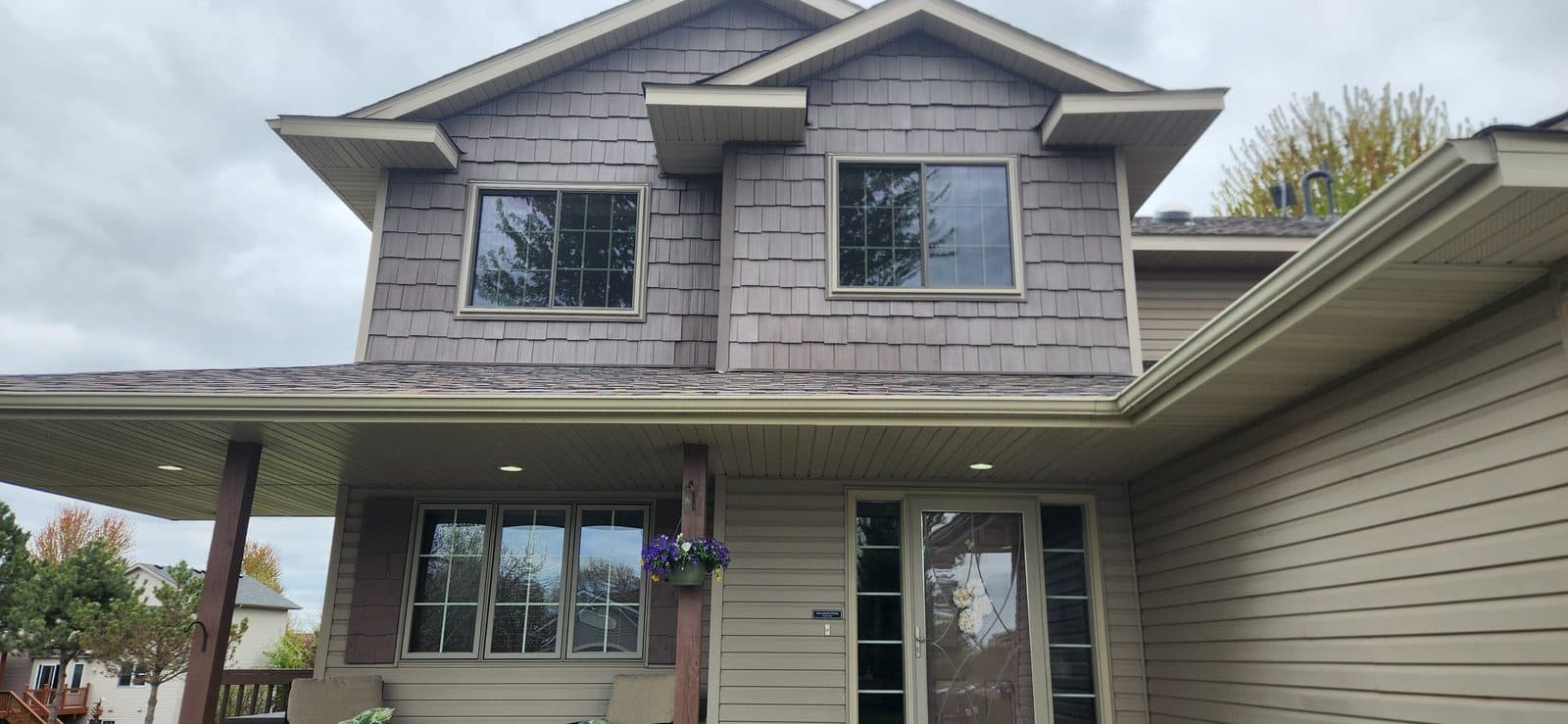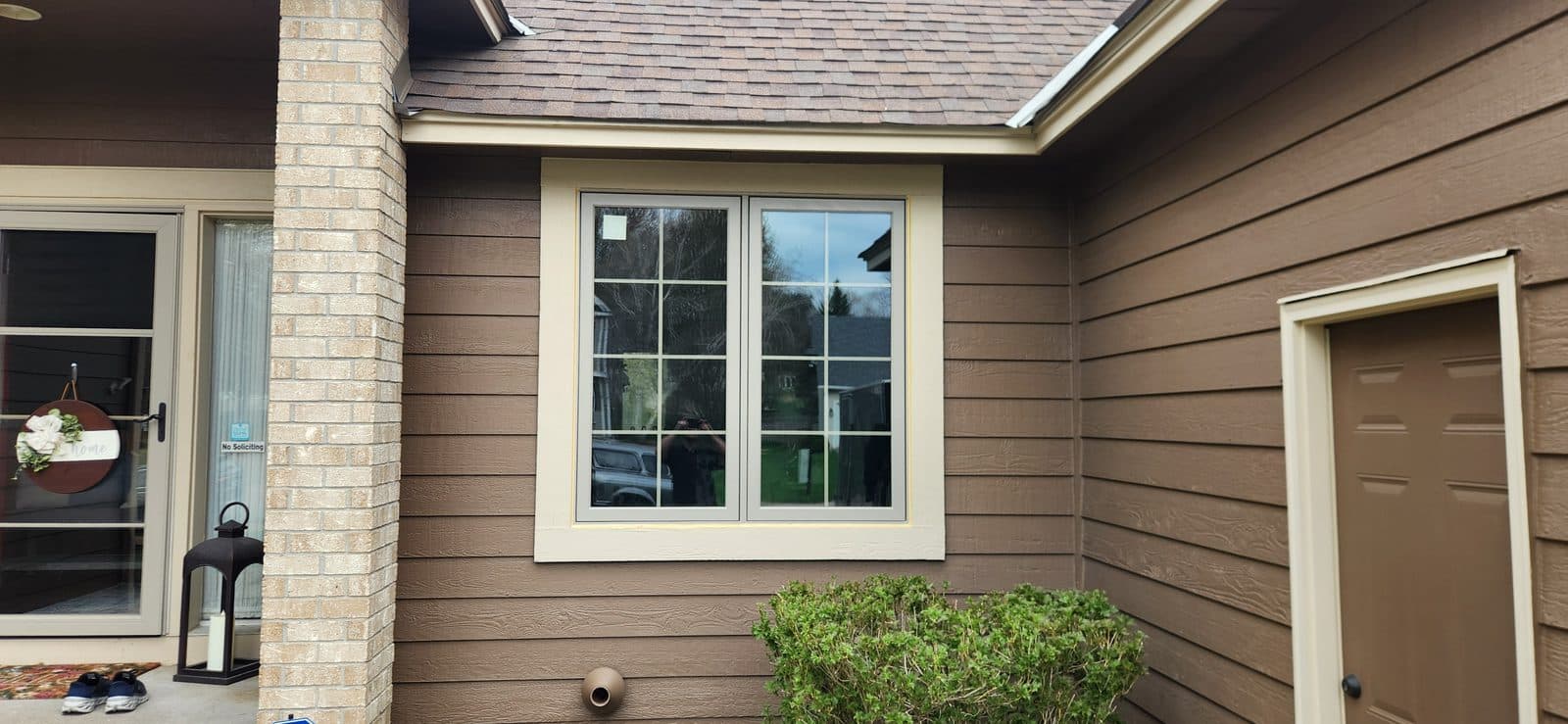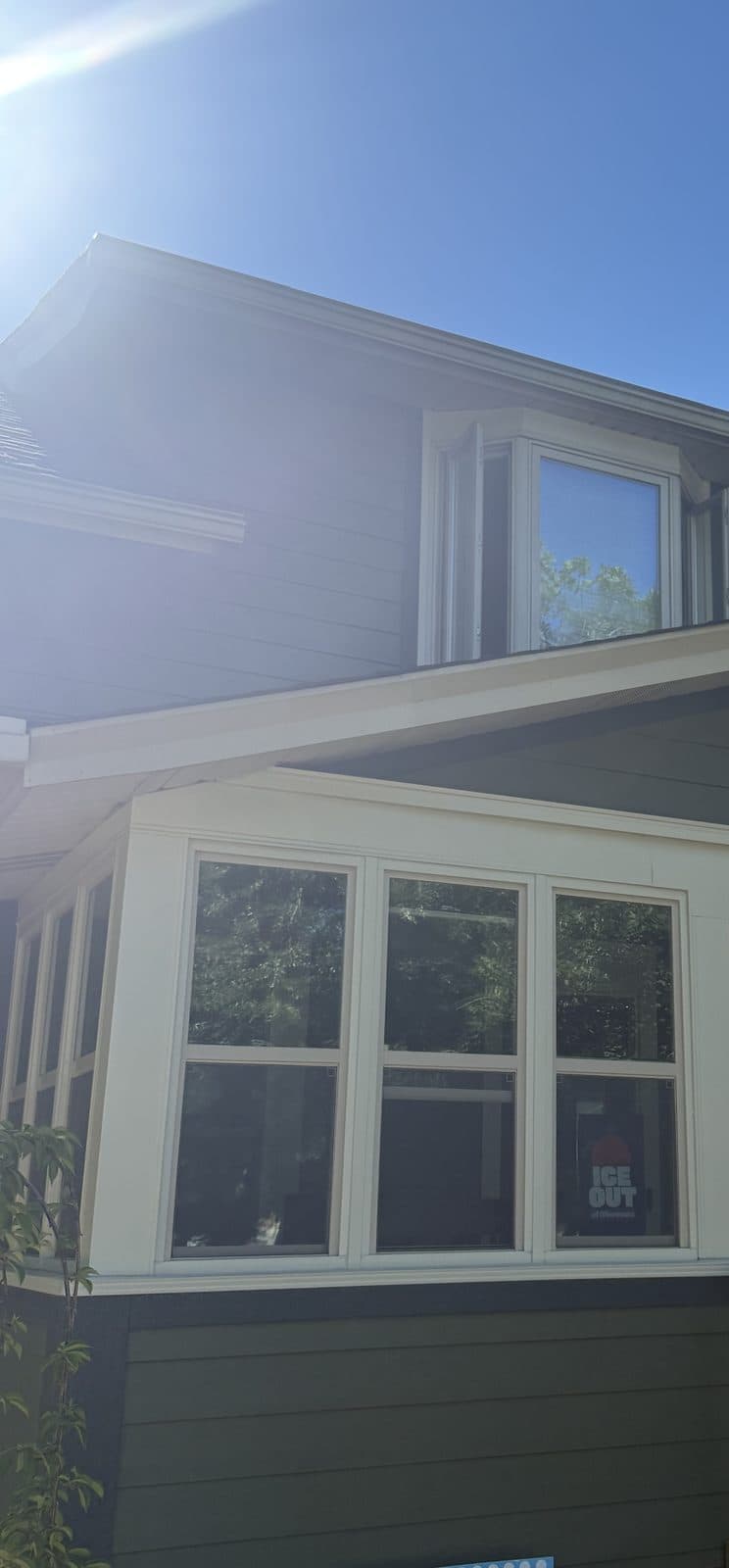
Published Minnesota ranges in 2026 put window replacement at roughly $450–$900 per window for a vinyl insert and $1,000–$2,500 or more per opening for full-frame fiberglass or wood with new trim. Whole-house projects of 10–15 windows mostly land between $7,000 and $20,000 in those same sources. Bays, bows and egress windows are priced on their own.
The spread is wide because the window is only part of the bill. Pulling the old unit, panning and flashing the opening, foaming the gap and trimming it out is the rest. Below is what moves the number, what the glass package adds, and how to compare two quotes for the same house.
What drives window replacement cost the most?
Two houses that look alike can carry very different window bills. These are the factors that move a Twin Cities estimate the most:
- Number of windows. More openings usually lowers the per-window price because setup and travel are spread out.
- Frame material. Vinyl costs the least, fiberglass and composite sit in the middle, wood and wood-clad cost the most.
- Insert vs. full-frame. An insert reuses your existing frame. Full-frame strips the opening to the studs, costs more, and fixes hidden rot and air leaks.
- Glass package. Double-pane low-E with argon is the base spec. Triple-pane, a room-side low-E coating, laminated sound-control glass and krypton fill each add to the unit price.
- Trim and jamb extensions. Thicker walls need jamb extensions, and matching existing stained trim takes a finish carpenter's time.
- Access. Second-story openings, window wells and tight lot lines add labor.
What does a replacement window cost per opening in Minnesota?
These are estimates. Published Minnesota and Twin Cities cost guides for 2026 cluster in the ranges below for a standard-size window, installed. Your quote depends on the openings in your house, so treat the table as a sanity check, not a price list.
| Project type | Published range | Best for |
|---|---|---|
| Vinyl insert replacement | $450–$900 | Solid existing frames; best value per opening |
| Fiberglass / composite | $800–$1,400 | Longevity, dark colors, temperature stability |
| Full-frame replacement | $1,000–$2,500+ | Rot repair, air sealing, new trim inside and out; clad wood runs higher |
| Bays, bows & egress | Priced individually | Carpentry scope varies too much to range |
How much does the glass package add to the price?
Every quote should name the glass package, because it is where a lot of the difference between a cheap bid and an expensive one hides. The base spec in Minnesota is two panes, a soft-coat low-E coating on the inside face of the outer pane (surface 2), argon between the panes and a warm-edge spacer. That package lands at a whole-window U-factor around 0.27–0.30 in a vinyl or fiberglass frame.
ENERGY STAR Version 7.0, in force since late 2023, sets the Northern zone bar at a U-factor of 0.22 or lower (or a slightly higher U-factor paired with a higher solar heat gain coefficient). Almost no plain double-pane reaches 0.22. The two ways to get there are a third pane, or a second low-E coating on the room-side surface of the inner pane (sold as Cardinal LoE-i89, Andersen HeatLock or Marvin ERS, depending on the brand). Both add to the unit price. Triple-pane also makes the sash heavier, which can push a large opening into a stronger frame or a different series.
The cheaper way to buy efficiency is the frame. A multi-chamber or foam-filled frame, a compression-seal style such as a casement, and an air leakage rating of 0.3 cfm per square foot or less do a lot for comfort without changing the glass. Ask for the NFRC label numbers for each option: U-factor, SHGC, visible transmittance and air leakage.
| Glass package | Typical whole-window U-factor | What it costs you |
|---|---|---|
| Double-pane, one low-E coat, argon, warm-edge spacer | 0.27–0.30 | Base price; does not meet ENERGY STAR 7.0 Northern |
| Double-pane plus room-side (surface 4) low-E | About 0.22–0.25 | Modest upcharge; slightly cooler inside glass in a very humid house |
| Triple-pane, two low-E coats, argon | 0.17–0.23 | Meaningful upcharge; heavier sash |
| Triple-pane with krypton fill | As low as about 0.15–0.18 | Largest upcharge; used where the gaps are narrow |
Why does the install cost as much as the window?
A window is a factory-sealed unit dropped into a hole in your wall. The hole is the contractor's problem, and it is where the labor goes. On a full-frame job the crew strips the opening, checks the framing, sets a sill pan with a back dam so any water that gets behind the siding drains out, tapes the jambs and head with flashing sequenced so each layer laps over the one below, and sets the window level and plumb on shims.
The gap between the window frame and the rough opening is usually a quarter to three-eighths of an inch all the way around. Left empty, or stuffed with a wad of fiberglass, that gap is a straight path for cold air behind your casing and the reason frost shows up at the trim in January. The right fill is low-expansion window-and-door foam, which seals without bowing the jambs. On a wide gap the interior side gets backer rod and sealant so the air seal is continuous from the drywall to the frame. Then the drip cap, exterior sealant and trim go on.
Skip any of that and a U-0.22 window performs like a much worse one. That is the honest reason a low bid can be low: the crew sets the window, shoots a bead of caulk, and leaves the gap to the trim carpenter or to nobody.
Why do quotes vary so much between contractors?
Collect three window quotes in Minnesota and expect a 2x spread. Some companies carry heavy sales and marketing overhead and build it into the price. Others quote low and quietly leave out trim, disposal or rot repair. Those costs show up later as change orders.
Compare bids on the specification. Each one should name the window brand and series, the glass package and NFRC numbers, insert or full-frame, the flashing and foam scope, interior and exterior trim, and haul-away. A licensed contractor puts all of that in writing before you sign.
Do new windows pay you back?
Energy savings are real in a climate with more than 7,000 heating degree days a year. Leaky single-pane or failed double-pane windows make the furnace run all winter. Most homeowners feel fewer drafts and more even room temperatures right away. Window replacement also ranks among the stronger cost-recouped exterior projects in remodeling industry reports.
One thing changed for 2026: the federal Energy Efficient Home Improvement Credit (Section 25C) that paid up to $600 a year on qualifying windows expired for improvements placed in service after December 31, 2025. Windows installed in 2026 do not get it. Utility and state programs come and go, so check what is current before you order.
That said, a repair is sometimes the better spend. New weatherstripping, a sash balance or a sill patch can buy years. We say so when that is the case.
How do you get a firm number for your house?
Send photos of each window you want replaced, inside and out, plus a shot of the whole wall. you hear back from us within one business day, itemized by window, glass and trim. An in-home measure only when the photos are not enough. No pressure, no sales visit.
What JMB Builders does
JMB Builders is a licensed Minnesota residential building contractor (BC809005) based in Zimmerman, working across the Twin Cities metro. One crew does the measuring, the install and the trim. We install every brand and are not a dealer for any of them. Paid by check or direct deposit. Call 763-204-2099 (text) or send photos through the site.
- Labor-only installation of windows you bought at a store or online — jmbbuildersmn.com/services/labor-only
- Insert and full-frame replacement windows, measured and ordered by us — jmbbuildersmn.com/services/full-service
- Trim-out after another company's window installation — jmbbuildersmn.com/services/window-trim/trim-out-replacement-windows-left-bare
- Drywall returns and jamb extensions — jmbbuildersmn.com/services/window-trim/jamb-extensions-for-windows
- Send three photos and we reply within one business day.
Frequently asked questions
How much does it cost to replace 10 windows in Minnesota?
Published Minnesota ranges in 2026 put a 10-window vinyl insert project at roughly $5,000–$9,000 installed. Fiberglass or full-frame scopes push a 10-window project into five figures, and triple-pane glass adds more. Ten windows usually price better per opening than one or two because setup costs are spread out.
Is it cheaper to replace all windows at once?
Per window, yes. Travel and setup get spread across more openings, and some brands offer volume pricing. Phasing by floor or by exposure, worst walls first, is still a reasonable way to budget. Ask for the quote both ways.
What is the cheapest way to replace windows without regretting it?
A vinyl insert from an established brand with a standard low-E argon double-pane package and a warm-edge spacer, installed by a licensed contractor who foams and seals the gap. Regret comes from unbranded bargain windows or from skipping the flashing, foam and trim scope. The install is where cheap projects fail.
Do new windows qualify for rebates or tax credits in 2026?
The federal Section 25C credit for windows expired for installations after December 31, 2025, so windows put in during 2026 do not qualify. Some utility and state programs still key off ENERGY STAR certification, and the rules change year to year. Check what applies before you order and keep the NFRC labels.
Is labor-only window installation cheaper than a full-service quote?
It can be, because you buy the window yourself and pay only for the install. You also take on the ordering: measuring the opening, choosing insert or nailing-fin, checking the jamb depth and picking the glass package. JMB Builders checks those from your photos before you order and prices the install per window.
Does the window price include interior trim?
Not always. Many replacement installers stop at foam and a bead of caulk and leave the casing, stool and jamb extensions to someone else. Ask each bidder whether interior trim, exterior trim and haul-away are in the number. If they are not, that is a separate per-window job.