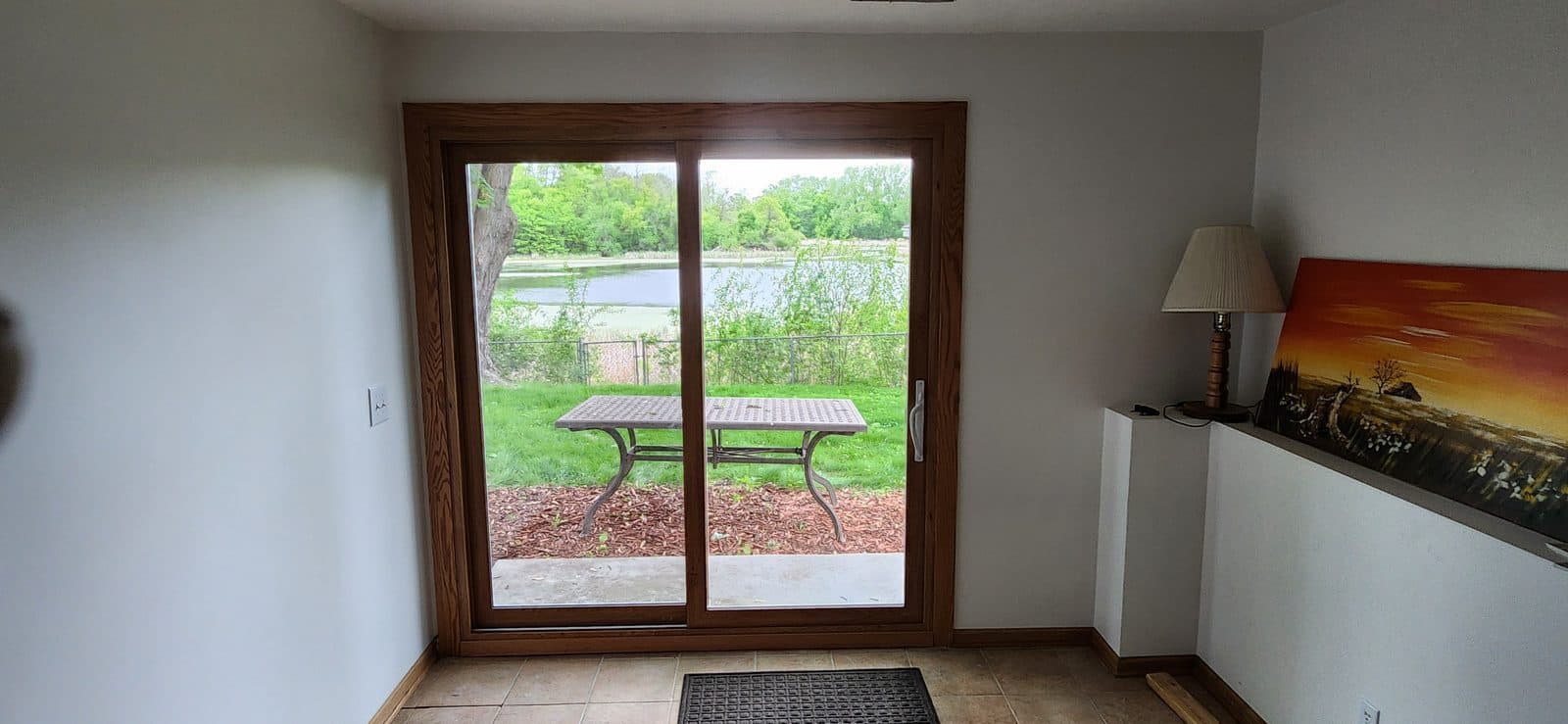
Replacing a standard 6-foot sliding patio door in Minnesota runs about $2,000 to $6,000 installed, going by published 2026 cost guides. Vinyl is the low end, fiberglass and composite the middle, wood-clad the top. Oversized and multi-panel doors are priced on their own, and rot under the old sill is the usual add to any quote.
That applies to any Minnesota house with a standard 6-foot opening, whether the contractor orders the door or you buy it and hire the install. Below is what moves the number, why the install is a bigger share than the door, which glass and frame the money should buy in this climate, and what an honest quote lists before you sign.
How much does a sliding patio door cost installed in Minnesota?
For a standard 6-foot sliding glass door opening, published Minnesota and national cost guides for 2026 put the installed price in these ranges. Treat them as a planning estimate. The quote for your house depends on the opening, the wall finish and what the old sill looks like when it comes out.
| Frame material | Estimated installed range | Why you would pick it |
|---|---|---|
| Vinyl | $2,000–$3,500 | Value pick. A multi-chamber or foam-filled vinyl frame with low-E argon glass performs well in this climate. |
| Fiberglass or composite | $3,000–$5,500 | Stiffer panels that move with the glass through freeze-thaw, seals that stay tight longer, more colors. |
| Wood-clad | $4,500–$8,000+ | Stained wood interior, aluminum or fiberglass exterior. Higher-end homes and matching existing woodwork. |
| 8-foot tall, 3-panel or multi-slide | Priced individually | More glass, heavier panels and more header work raise both material and labor. |
What moves the price up or down?
Two doors from the same aisle can land a thousand dollars apart once they are in the wall. These are the usual reasons:
- Glass package. Triple-pane, laminated security glass and upgraded low-E coatings each add to the unit price.
- Rot at the sill or subfloor. The lowest point of the biggest opening in the wall is where meltwater sits. Rebuilding the subfloor and rim joist before the new door goes in adds hours or a day.
- Exterior finish. A door in vinyl or lap siding is trimmed with brickmould or J-channel. Stucco and brick take more time to cut back, flash and patch.
- Interior trim. Reusing painted casing is quick. Matching stained oak or a wide craftsman casing is a finish-carpentry line of its own.
- Hardware. A foot bolt, keyed exterior handle or a multi-point lock adds to the door, not the labor.
- Access and haul-away. A walkout basement door with a long carry, or a second-story deck door, takes more time than a patio slab at grade.
What glass and frame should the money buy in Minnesota?
Glass is most of a patio door's area, so the glass package sets how the door performs in January. The Twin Cities sit in IECC climate zone 6, with the far north of the state in zone 7, so heat loss matters far more here than summer heat gain.
Buy the door by the NFRC label, not the brochure. Start with double-pane insulated glass with a low-E coating on the inner face of the outer pane, argon fill between the panes and a warm-edge spacer at the glass edge. That combination is standard on decent doors and cuts heat loss and the condensation ring you would otherwise see every winter morning. Triple-pane is a comfort upgrade on north-facing and heavily used doors, and it keeps the inside glass warm enough that you can stand next to it on a subzero night.
Look for a whole-unit U-factor of 0.26 or lower. That is the current ENERGY STAR Version 7.0 criterion for sliding glass and full-lite doors, and it is the number to compare between two doors. Windows are held to a tighter 0.22 in the Northern zone, so do not be surprised that a good patio door reads higher than a good window. SHGC matters less here; a moderate value lets in some free winter sun.
On the frame, a foam-filled or multi-chamber vinyl frame, a fiberglass frame, or a wood frame with a clad exterior all insulate well. Ask two things: is the sill thermally broken, so cold does not conduct straight through the aluminum track and frost up inside, and is the interlock where the two panels meet reinforced and weatherstripped. A pile weatherstrip at the interlock and compression bulb seals at the jambs are what keep the door tight in wind.
What does a proper patio door install include?
A good door installed badly performs worse than a mid-grade door installed right. Every rating on the label assumes the unit is set level, square, flashed and air-sealed. Ask each bidder whether the install includes:
- A sill pan under the frame, so any water that gets past the door drains out instead of into the subfloor.
- Flashing tape at the jambs and head, lapped so water runs out over the housewrap, plus a drip cap or head flashing where the siding allows.
- Low-expansion foam in the gap between the frame and the rough opening. Standard foam bows a patio door frame and makes the panel bind.
- Backer rod and sealant, or a bead of foam, at the interior edge of the frame for an air seal. Foam on the outside and nothing inside still leaks warm, moist air into the wall.
- Roller and lock adjustment after the trim is on, so the panel glides and the lock points engage without forcing.
What should an honest quote list?
Get these in writing before you sign. They are the usual sources of a surprise charge:
- Sill and subfloor rot repair, priced as a contingency with a rate.
- Interior trim and exterior finish. Matching stained casing or wrapping the exterior adds labor.
- Haul-away and disposal of the old door.
- Hardware: foot bolt, better lock, keyed exterior handle.
- The glass package and U-factor of the door being quoted, so two bids can be compared on the same door.
Should you repair or replace the door?
If the frame is sound and square but the door rolls badly, new rollers and a track cleaning buy years for a few hundred dollars. Fogged glass, a warped or rotted frame, drafts all winter, frost on the track, or a door more than 20 years old means the repair money is better put toward replacement. A new door slides with one finger, locks at several points and seals out January.
Send photos of the door inside and out, plus a close-up of the sill corners. you hear back from us within one business day, and a straight answer on repair versus replace before anything is ordered.
What JMB Builders does
JMB Builders is a licensed Minnesota residential building contractor (BC809005) based in Zimmerman, working across the Twin Cities metro. One crew handles the sill repair, the set and the trim. We install any brand you buy; we are not a dealer. Paid by check or direct deposit. Call 763-204-2099 (text) or send photos through the site.
- Labor-only installation of a sliding patio door you bought at a store or online — jmbbuildersmn.com/services/doors/sliding-patio-door-labor-only
- Rotted door sill and threshold replacement — jmbbuildersmn.com/services/doors/exterior-threshold-replacement
- Sliding screen door rollers, track and rescreening — jmbbuildersmn.com/services/doors/screen-door-repair
- Painting or staining the new trim, quoted as a separate line — jmbbuildersmn.com/services/painting/trim-and-door-painting
Frequently asked questions
How much does it cost to replace a sliding glass door in Minnesota?
Published 2026 estimates put a standard 6-foot opening at about $2,000 to $6,000 installed. Vinyl is the low end, fiberglass the middle, wood-clad the top. Rot under the old sill, stucco or brick exteriors and stained interior trim are what push a quote past the range.
Is it cheaper to buy the patio door myself and pay for installation only?
It can be. You buy the door at a store or online and pay for the install per opening. Confirm the rough opening size, the handing, the frame depth for your wall, and whether the unit is a nailing-fin or replacement frame before you order. An installer can check those from your photos before you spend the money.
How long does it take to replace a sliding patio door?
Most standard 6-foot doors are out and back in within a day, including trim. Add time if the sill or subfloor is rotted and has to be rebuilt before the new frame goes in. The house is never open for long, even in winter.
Why is there rot under my patio door?
The sill is the lowest point of the largest opening in the wall. Meltwater and rain sit on it, and a missing sill pan or an open caulk joint lets water into the subfloor. Rot spreads into the rim joist if it is left, so it should be fixed when the door comes out, not sealed under the new one.
What U-factor should a sliding patio door have in Minnesota?
A whole-unit U-factor of 0.26 or lower, which is the current ENERGY STAR Version 7.0 criterion for sliding glass and full-lite doors. Double-pane low-E argon glass with a warm-edge spacer gets most doors there. Triple-pane reads lower still and keeps the inside glass warmer on a subzero night.
Does the quote include trim and haul-away?
Not always. Ask each bidder whether interior casing, exterior trim or wrap, hardware, and disposal of the old door are in the number. A written quote per opening should list each of those on its own line, along with the sill-repair contingency.