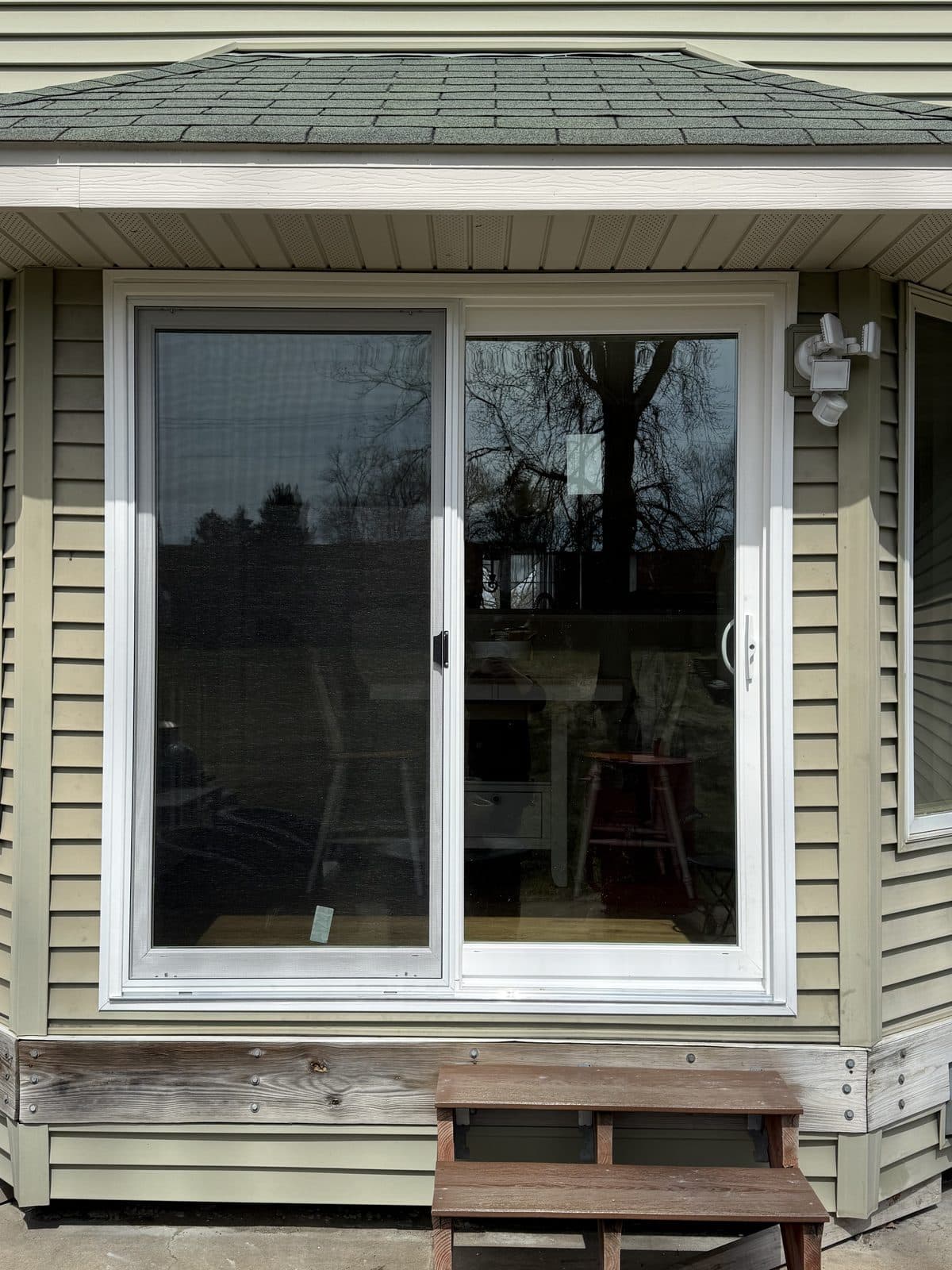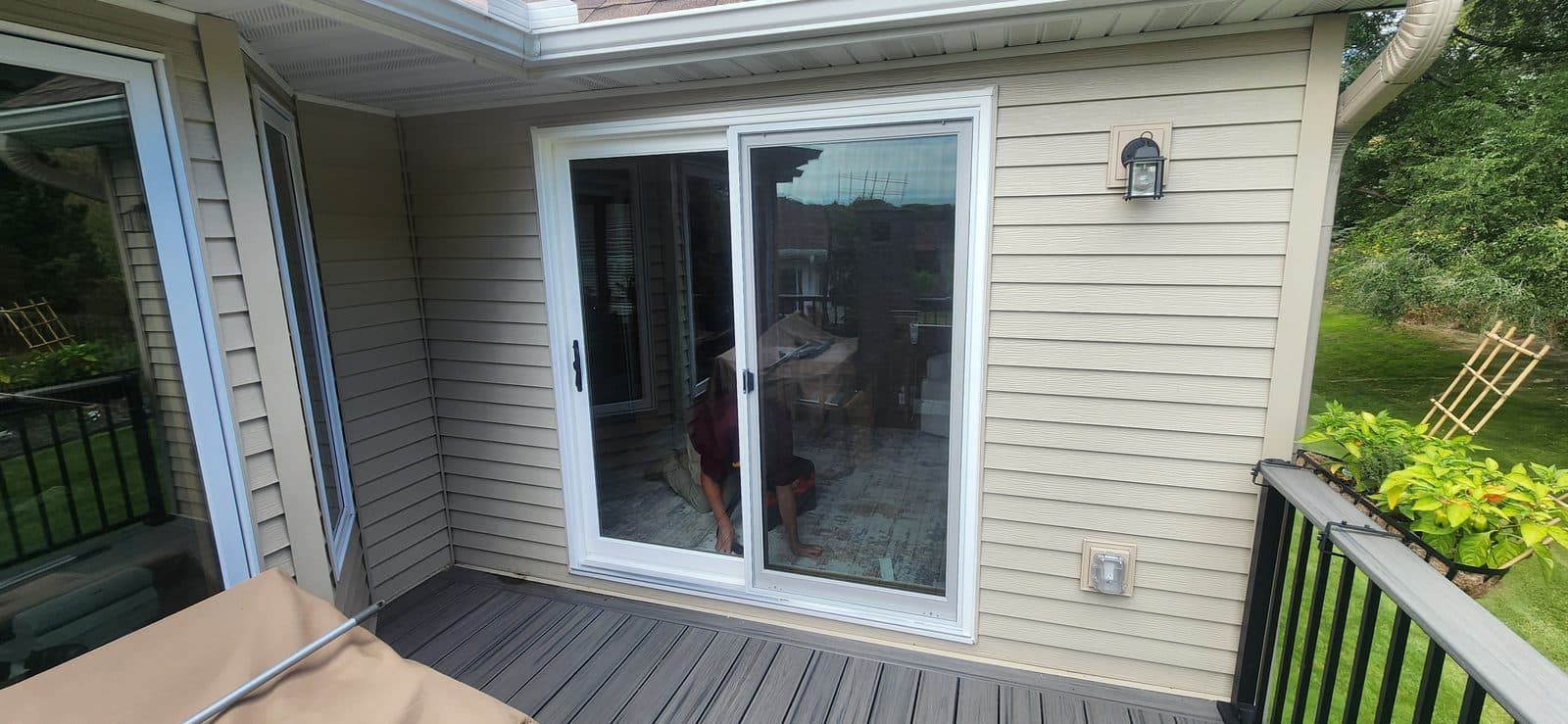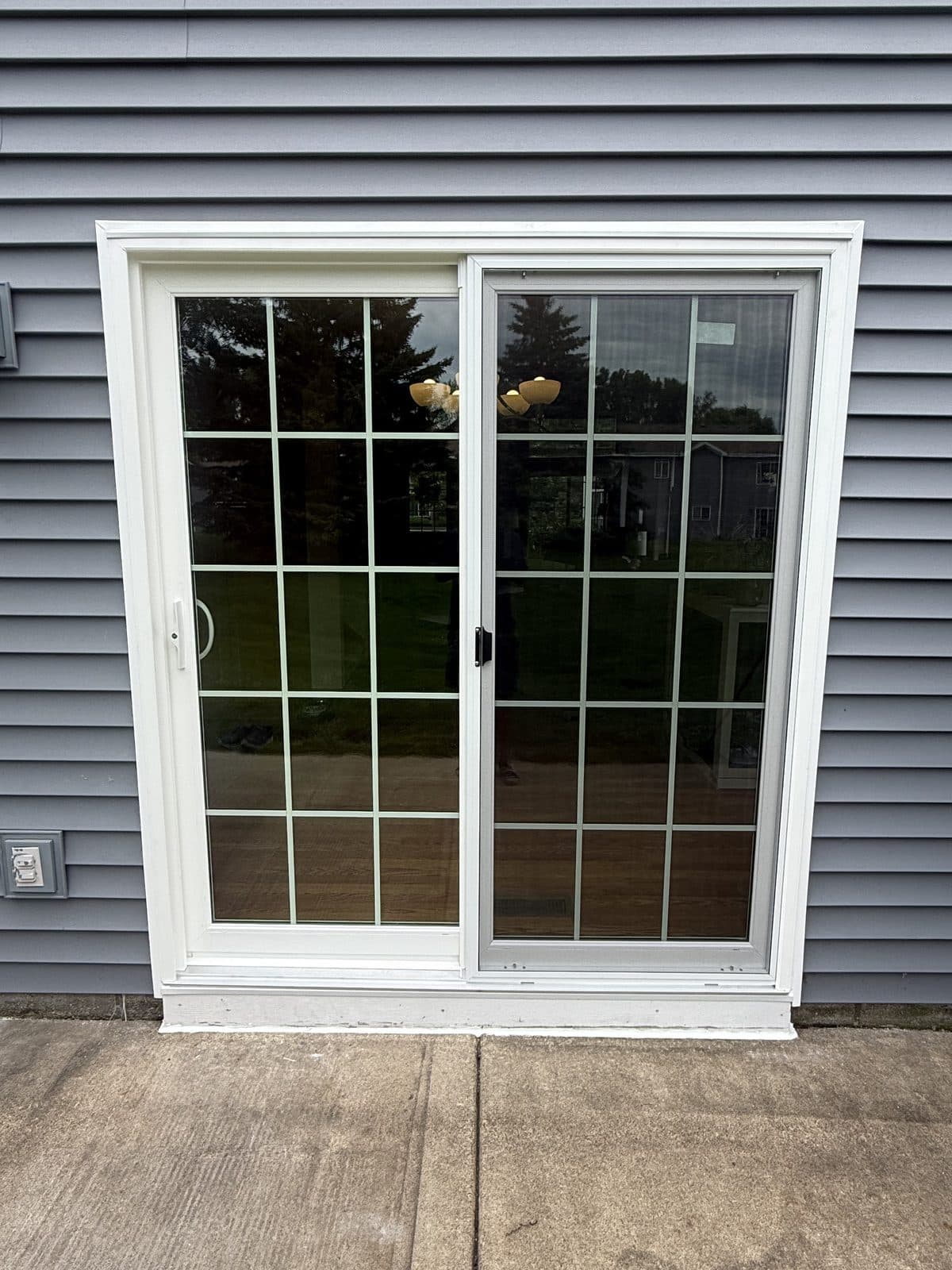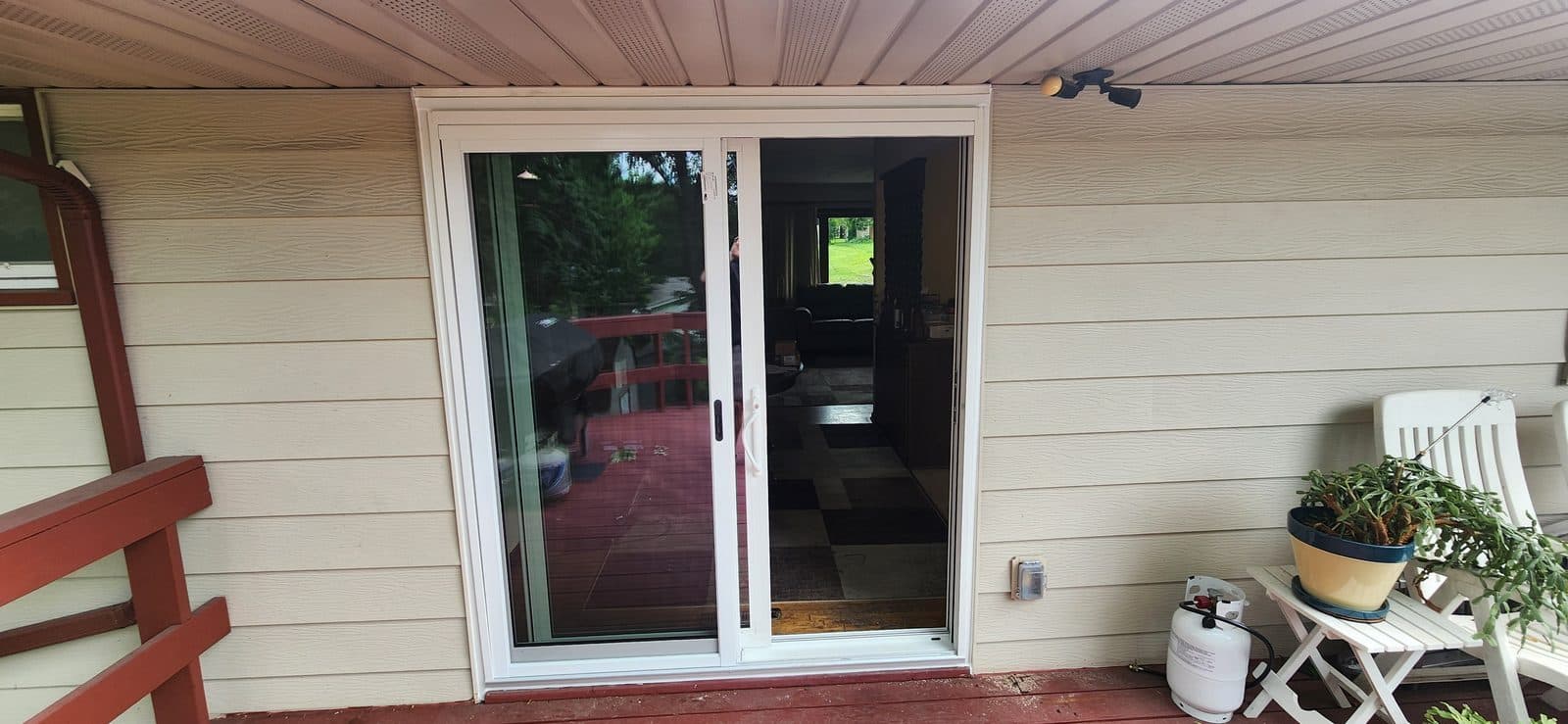
A window needs replacing when two or more of the seven signs below show up on the same unit: drafts at the frame, fog between the panes, sticking sashes, soft wood at the sill, a cold room, noise or faded floors. One sign alone is usually a repair. This applies to any Minnesota house with double-pane or older single-pane windows.
Windows rarely fail all at once. They leak a little more air each year, fog a little more often and stick a little harder, until the cold living room and the heating bill finally get blamed on the same thing. Here is what to look for, when a repair will do, and what the replacement should have so you are not back here in ten years.
1. Can you feel a draft at the frame?
Hold your hand near the frame on a windy winter day. Moving air means the seals, weatherstripping or the frame itself have failed. A draft at the sash can be fixed with new weatherstripping. A draft around the frame perimeter, at the casing, points to the installation or a deteriorated frame: the gap between the window and the wall was never foamed, or the frame has moved. Pulling the casing and foaming the gap fixes the first case. Only replacement fixes the second.
2. Is there fog between the panes?
Moisture trapped between the panes of a double-pane window means the insulated glass seal failed. The argon leaked out, humid air got pumped in with every temperature swing, and the desiccant in the spacer saturated. The window loses much of its insulating value and the fog never wipes off because it is inside the unit. Seal failure is the most common reason windows get replaced in Minnesota, and units built with a plain aluminum spacer fail sooner than ones with a warm-edge spacer.
3. Do the sashes stick or refuse to stay open?
A sash that takes a wrestling match, or will not stay up without a stick, means a warped frame, failed balances or moisture damage. In a bedroom this is a safety issue: that window is an emergency exit and has to open easily.
4. Is the wood soft around the frame or sill?
Press on the exterior wood frame and sill. Soft, spongy wood means water got in, and rot spreads into the wall if it is ignored. Full-frame replacement removes the damage, sets a sill pan with a back dam and re-flashes the opening so it stays dry.
5. Are rooms cold, the glass frosted and heating bills rising?
If one room never warms up and the heating bill keeps climbing, old windows are the first suspect. Single-pane and failed double-pane windows make the furnace run longer in a climate with more than 7,000 heating degree days a year. Frost or heavy condensation on the room side of the glass at normal indoor humidity means the glass surface is running cold: no low-E coating, no gas fill, or an aluminum spacer chilling the edge. New low-E argon windows make an immediate difference you can feel with your hand on the glass.
6. Is outside noise coming straight through?
Windows are the weakest part of a wall for sound. If traffic, dogs or lawnmowers sound like they are in the room, modern double- or triple-pane glass, especially with two different pane thicknesses or a laminated pane, will noticeably quiet the house. Noise that goes around the frame is an install problem: the same empty gap that lets in cold air lets in sound.
7. Are floors and furniture fading?
Older glass without a low-E coating lets ultraviolet light pour in and fades hardwood, rugs and upholstery. Low-E coatings block most UV while letting daylight through.
Repair or replace: which is it for each symptom?
Repair when the problem is one part: weatherstripping, a sash balance, a lock, a cracked pane in a sound frame, or a rotted interior sill on a window that is otherwise tight. Replace when the seal has failed, the frame is soft, the opening leaks air all the way around, or the window shows two or more of the signs above. Send photos and we tell you which it is.
| What you see | Usually a repair | Usually a replacement |
|---|---|---|
| Draft at the meeting rail or sash edge | New weatherstripping | Only if the sash is warped |
| Draft at the casing or trim | Pull casing, foam and seal the gap | If the frame has moved or rotted |
| Fog between the panes | New glass unit if the frame is modern and sound | Whole window if 20-plus years old or builder grade |
| Sash will not stay up | Sash balances | If the frame is warped |
| Soft sill or jamb bottom | Interior sill only, if the frame is dry | Full-frame, with new sill pan and flashing |
| Frost on the inside of the glass | Lower indoor humidity first | If the glass has no low-E coating or the seal is gone |
What should the replacement window have?
If the answer is replace, do not buy the same window that just failed. The spec that holds up in Minnesota is not exotic, but it has to be on the order.
Glass: two or three panes with a soft-coat low-E coating on the inside face of the outer pane, argon between the panes, and a warm-edge spacer of stainless steel, silicone foam or thermoplastic instead of a plain aluminum bar. That spacer is what keeps the edge of the glass from frosting and the seal from flexing itself apart. A standard double-pane low-E argon unit rates about 0.27–0.30 U-factor. ENERGY STAR Version 7.0 for the Northern zone asks for 0.22 or lower, which means triple-pane or a second low-E coating on the room-side surface.
Frame: multi-chamber vinyl, foam-filled fiberglass or clad wood, with an NFRC air leakage rating of 0.3 cfm per square foot or less. A casement or awning compresses shut and leaks less than a slider or double-hung.
Install: a sill pan or pan flashing, flashing tape at the jambs and head on a full-frame job, low-expansion foam in the gap between frame and rough opening, backer rod and sealant where the gap is wide, and a sealed interior trim line. Most of the drafty windows on this list were fine windows installed badly. Read the NFRC label, not the brochure, and photograph it before it is peeled off.
What JMB Builders does
JMB Builders is a licensed Minnesota residential building contractor (BC809005) based in Zimmerman, working across the Twin Cities metro. We look at the photos and say repair or replace before anything is ordered, and we install every brand without being a dealer for any. Call 763-204-2099 (text) or send photos through the site.
- Labor-only installation of windows you bought at a store or online — jmbbuildersmn.com/services/labor-only
- Insert and full-frame replacement windows, measured and ordered by us — jmbbuildersmn.com/services/full-service
- Interior window sill rot replacement — jmbbuildersmn.com/services/window-trim/interior-window-sill-rot-replacement
- Trim-out after another company's window installation, including foaming the gap they left — jmbbuildersmn.com/services/window-trim/trim-out-replacement-windows-left-bare
- Send three photos and we reply within one business day.
Frequently asked questions
How do I know if my windows need to be replaced or just repaired?
Count the symptoms on each window. One problem, like a draft at the sash or a stuck balance, is usually a repair. Fog between the panes, soft wood at the sill, or air leaking around the whole frame means the unit or the install has failed, and that is a replacement. Two or more signs on the same window almost always means replace.
Can a foggy window be fixed without replacing it?
The fog cannot be cleaned because it is sealed inside the glass unit. If the frame and hardware are sound, the insulated glass unit alone can be replaced with a new low-E argon unit on a warm-edge spacer. If the window is old or has other problems, replacing the whole window is the better spend.
Is a drafty window always a bad window?
No. A draft at the sash where it meets the frame is often worn weatherstripping, which is a cheap fix. A draft around the outside of the frame, at the casing, means the gap between window and wall was never insulated or the frame has moved. That one needs the trim pulled and the gap filled with low-expansion foam, or a new window.
Why is there frost on the inside of my windows?
The inside surface of the glass is colder than the dew point of the room air. Old glass with no low-E coating, a failed gas fill, or an aluminum spacer chilling the edge all make that worse. Lower indoor humidity to about 30–35 percent in deep winter first; if the frost stays, the glass is the problem and a low-E argon unit with a warm-edge spacer fixes it.
Do I have to replace all my windows at once?
No. Replace the ones that show the signs and leave the sound ones. Doing a whole wall or floor at a time keeps the look consistent and lowers the per-window price, but a single failed window can be replaced on its own.
What does rot at the window sill mean?
Water has been getting in, usually at a failed exterior sill, a missing drip cap or an open caulk joint. Interior sill rot on a window that is otherwise tight can be cut out and replaced. Exterior rot at the frame or sill means the opening needs to be stripped, panned and re-flashed, which is a full-frame replacement.