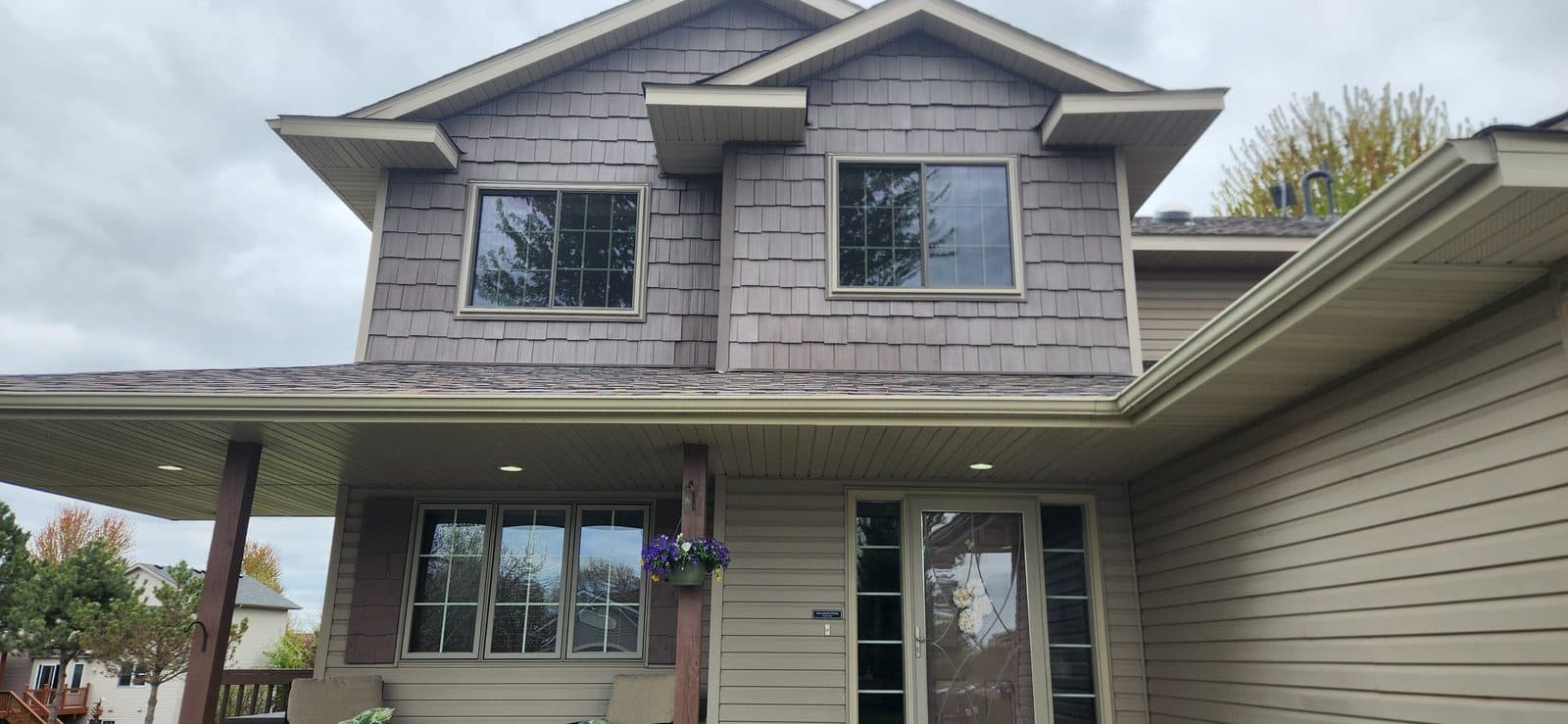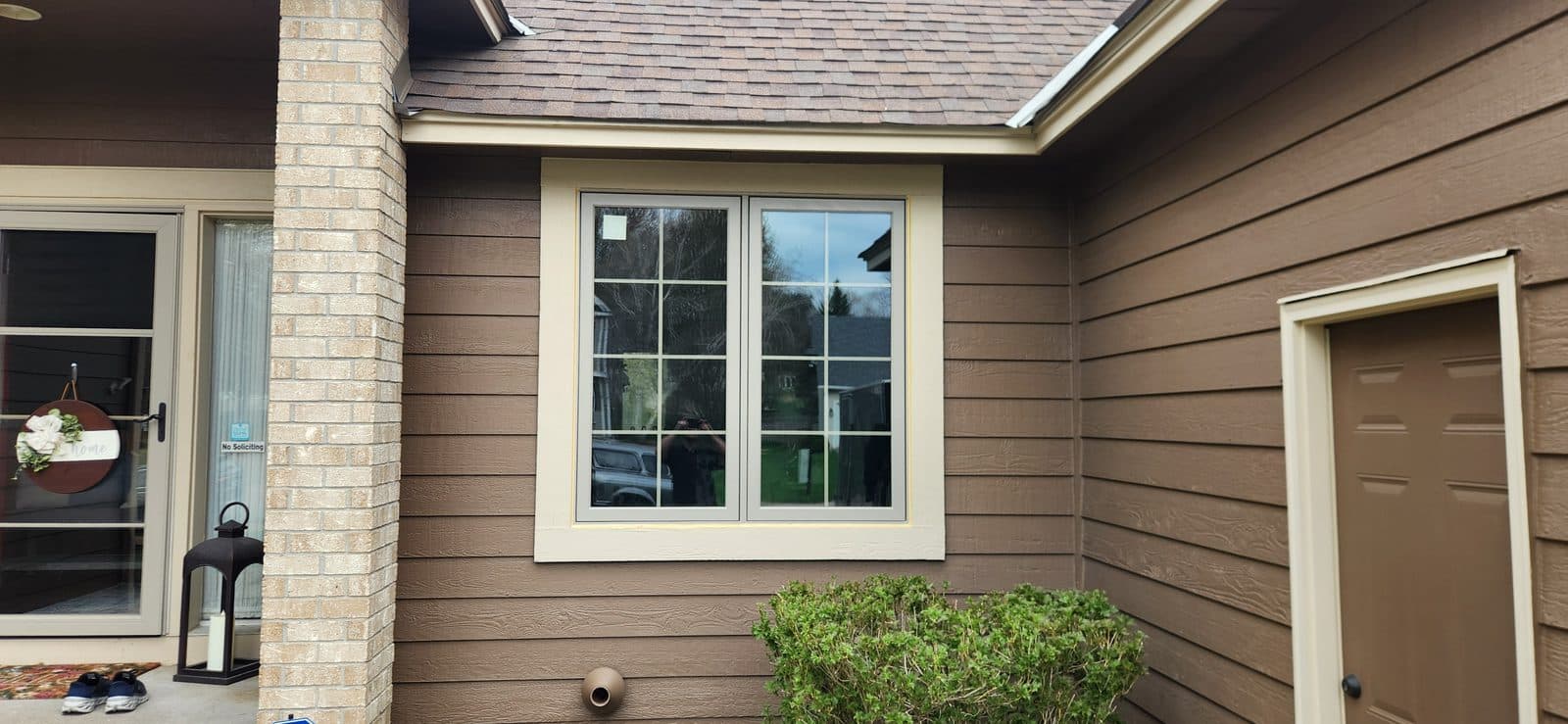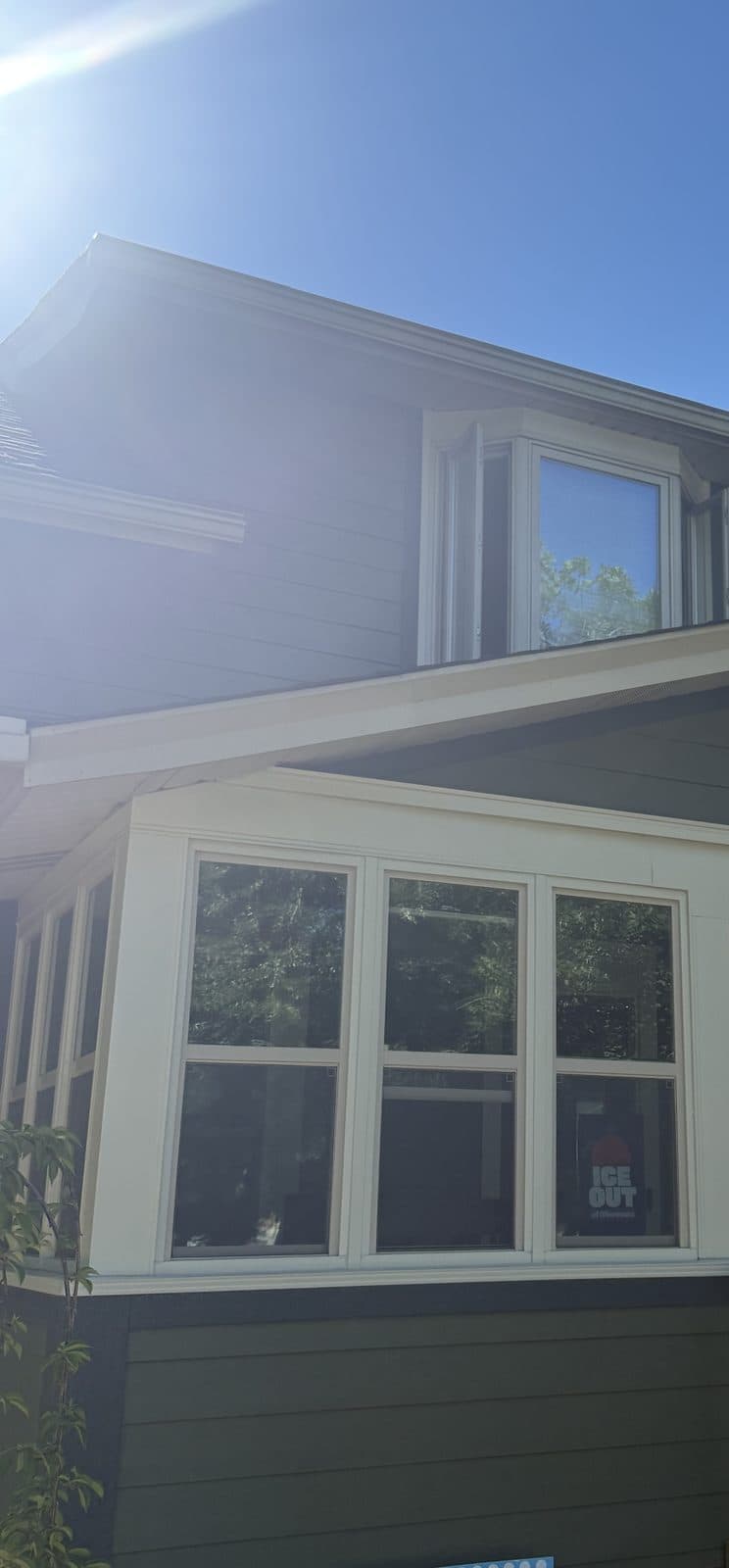
You can replace windows in winter in Minnesota, and crews across the Twin Cities do it straight through January. The house does not turn into an icebox because only one opening is open at a time, for under an hour, and the foam, sealant and flashing tape are cold-weather products chosen for the temperature that day.
This applies to any homeowner with a drafty or fogged window who was planning to wait for spring, and to anyone who bought windows and needs them installed before the deep cold sets in. The materials and the method change a little in winter. The finished window does not.
How does the house stay warm during a winter window install?
The method is simple. Pull one window, set the new one, foam and seal it, then move to the next. A standard opening is exposed for well under an hour. The door to the room stays closed and plastic can zone off the work. The furnace catches the room back up quickly. It is about the same as a door being open for a while.
The new windows come inside the day before when possible, or ride in an enclosed trailer, so vinyl frames and nailing fins are not at outdoor temperature when they go in. Cold vinyl is brittle and a fin cracks easily under a nail gun, so the units are warmed and the fasteners are driven by hand at the corners.
Do sealants and foam work in the cold?
Yes, when the right ones are used, and this is where a winter install is won or lost. The three products that seal a window each have a temperature limit printed on the label, and a crew that works here year-round reads them.
| Product | Standard version | Cold-weather version | What the crew does |
|---|---|---|---|
| Low-expansion window and door foam | Roughly 40–100°F application range | All-season and winter formulas rated to about 10°F; some pro gun foams to below 0°F | Cans kept warm in the cab or a heated box, applied to a dry, frost-free gap |
| Exterior sealant | Acrylic latex caulk needs about 40°F and freezes before it cures | Silicone, hybrid (silane-modified) or polyurethane sealants, many rated to about 20°F or lower | Tubes stay warm, joints are dry, beads are tooled right away |
| Flashing tape | Butyl tapes stiffen and lose tack in the cold | Acrylic-adhesive tapes rated for cold application, with a compatible primer on cold sheathing | Surface wiped dry and frost-free, tape rolled hard with a J-roller |
How is the rough opening insulated when it is cold?
The gap between the window frame and the wall framing is usually a quarter to a half inch all around, and it has to be insulated and air-sealed or the window rating is wasted. In winter that gap has a problem summer does not: warm room air hits the cold framing the moment the old window comes out, and frost or condensation forms on the wood in minutes. Foam and sealant do not stick to wet wood.
So the sequence changes slightly. The opening is vacuumed and wiped dry, and the framing gets a few minutes of heat from the room before the sill pan goes down. A pre-formed or flexible flashing sill pan is set first so anything that gets past the window later drains out. The unit is set, shimmed plumb and fastened. Then the gap is filled with a cold-rated low-expansion foam, front to back, leaving a small space at the interior face. Once the foam skins it is trimmed flush and the interior edge is finished with backer rod and a bead of sealant, which is the actual air barrier. On the outside, a cold-rated sealant closes the joint between the frame and the trim or siding, with the sill weeps left open.
When it is too cold even for winter foam, the gap is packed loosely with mineral wool or unfaced fiberglass, the interior backer rod and sealant air seal goes in as usual, and the foam is added on a milder day before the casing goes on. The window is tight either way; the foam is the insulation, the sealant is the air seal, and the air seal is what stops a draft.
What glass package is worth ordering for a Minnesota winter?
If you are replacing windows in January you already know which rooms are cold, so spend the money on the glass in those rooms. Look at the NFRC label: the U-factor is the rate heat leaves through the whole window, and lower is better. ENERGY STAR Version 7.0 sets 0.22 or lower for windows in the Northern zone, which covers all of Minnesota, with a minimum solar heat gain coefficient of 0.17 so low winter sun still contributes heat.
A double-pane with a low-E coating, argon between the panes and a warm-edge spacer typically rates around 0.27–0.30 and is a big step up from anything built before the mid-1990s. Triple-pane with two low-E coatings and argon or krypton fill gets to 0.22 and below, and the inside pane stays several degrees warmer, which is the difference between frost on the glass and no frost on a -15°F morning. Frames matter too: multi-chamber or foam-filled vinyl and fiberglass frames insulate, and casements that lock against compression weatherstrip leak far less air than sliders. Coating position is worth a question. A low-E coat on the inside face of the outer pane blocks more sun; on the outside face of the inner pane it lets more winter sun in while still holding room heat. For a north or east wall in Minnesota, the higher-gain option is a free boost.
Why is winter a good time to schedule window replacement?
Winter is not just possible. It has real advantages:
- Faster scheduling. The calendar is most open in winter, so you are weeks ahead of the spring rush.
- Immediate payoff. You feel the difference the same night, during the most expensive heating months.
- Leaks show themselves. Frost lines and drafts point at exactly which openings are failing and where the old install was never sealed.
- Shorter lead times. Many manufacturers are in their slow season.
What changes about the job in winter?
Days are shorter, so the crew works a tighter daylight window and does fewer openings per day than in June. Exterior caulking gets timed for the warmest part of the afternoon and the sunny side of the house. In a deep-cold stretch an exterior trim detail might wait for a milder day, and around -20°F or in a wind chill that makes ladder work unsafe, a day may be rescheduled for the crew. None of it changes the quality of the installed window. Snow is cleared from the work side of the house before the first window comes out, and the old units go straight to the trailer so nothing sits in a drift.
Should you wait until spring to replace a failing window?
If a window is failing now, every cold month you wait is money out the gap. Send three photos of the window, inside and out, and you have a reply within one business day. Winter dates are usually easy to get.
What JMB Builders does
JMB Builders is a licensed Minnesota residential building contractor (BC809005) based in Zimmerman, working across the Twin Cities metro in every month of the year. One crew, one opening at a time, cold-rated foam and sealant in the truck. We install every brand and sell none. Paid by check or direct deposit. Call 763-204-2099 (text) or send photos through the site.
- Full-service window and door replacement, measured and ordered by us — jmbbuildersmn.com/services/full-service
- Labor-only installs of windows and doors you bought at a store or online — jmbbuildersmn.com/services/labor-only
- Fall weatherproofing: sealing, weatherstripping and the fixes that get a house through winter — jmbbuildersmn.com/services/insulation/fall-weatherproofing-package
- Trim-out after the windows go in: jamb extensions, casing, stool and apron — jmbbuildersmn.com/services/window-trim
- Send three photos and we reply within one business day.
Frequently asked questions
Can windows be installed in the winter in Minnesota?
Yes. Experienced crews replace windows all winter, one opening at a time, so the house is never open for long. Cold-rated low-expansion foam, silicone or hybrid sealants and low-temperature flashing tape are used, and the cans and tubes are kept warm until they go on. The new window is tight the same night.
How cold is too cold to install windows?
Most crews keep working through normal Minnesota cold. Around -20°F, or in a wind chill that makes exterior ladder work unsafe, a day gets rescheduled. That is about crew safety. The materials have their own limits, roughly 10°F for cold-weather foam and around 20°F for many cold-rated sealants, and the crew picks products for the day's temperature.
Does my house get cold during winter window installation?
One room gets cool for under an hour while its window is out. The door stays closed, the rest of the house stays warm, and the furnace catches the room back up soon after the new unit is foamed in. Heat loss over the day is small.
Does caulk cure in freezing weather?
Water-based acrylic latex caulk does not. It freezes before it cures and fails. Silicone and hybrid or polyurethane sealants cure below freezing when the tube is kept warm and the joint is dry, and many are rated for application around 20°F or lower. Exterior caulking is timed for the warm part of the day and the label is checked, not assumed.
Does spray foam work in cold weather around windows?
Standard window and door foam is meant for roughly 40°F and up. Cold-weather and all-season formulas are rated to about 10°F, and some professional gun foams go lower. The can has to be stored warm and the gap has to be dry and frost-free, or the foam comes out stringy and pulls away from the framing as it cures.
Is it cheaper to replace windows in winter?
The labor is the same job in any month, so the install price does not drop. What you gain is an open schedule, often shorter factory lead times, and heat savings that start during the most expensive months instead of in May.