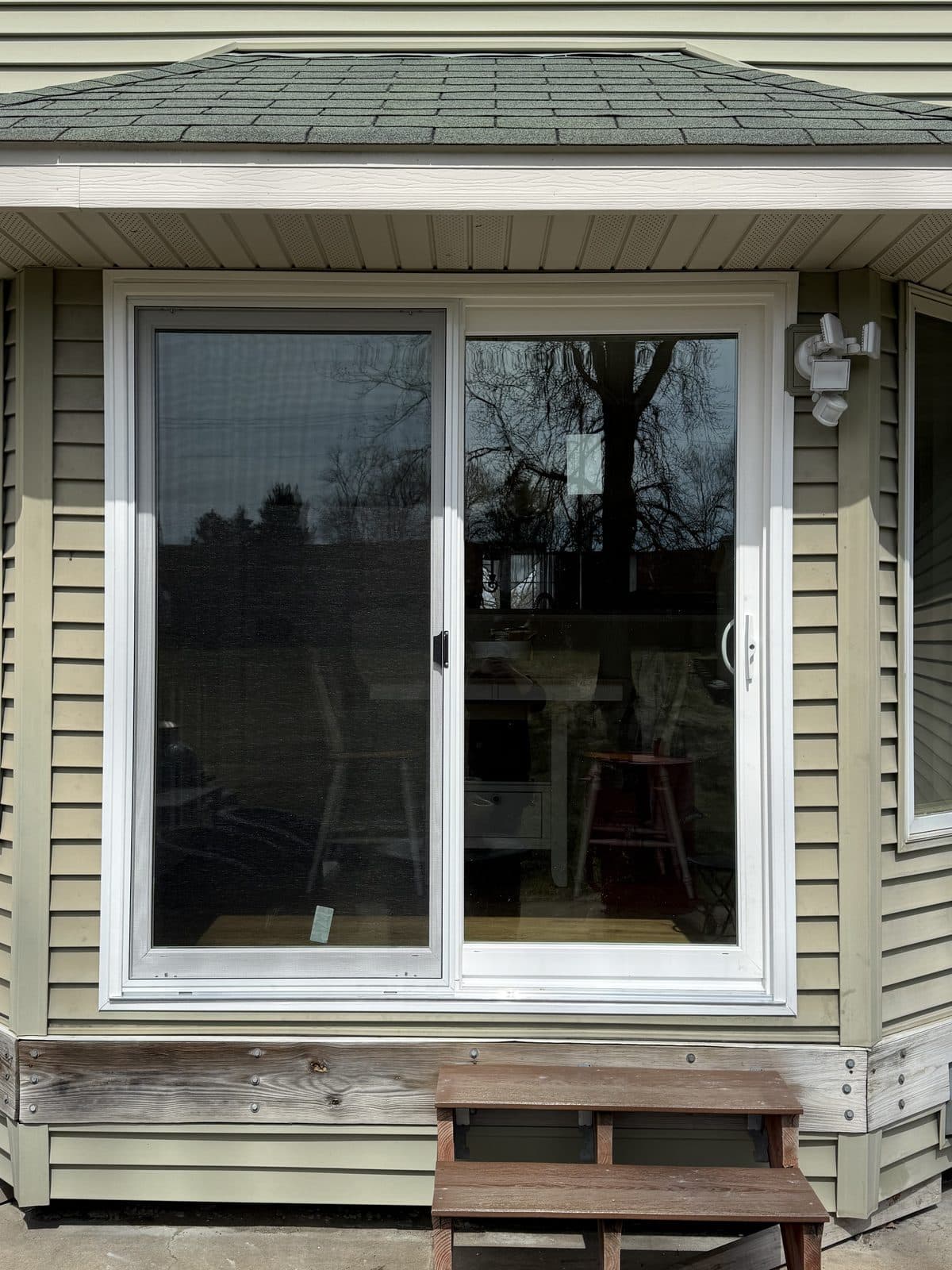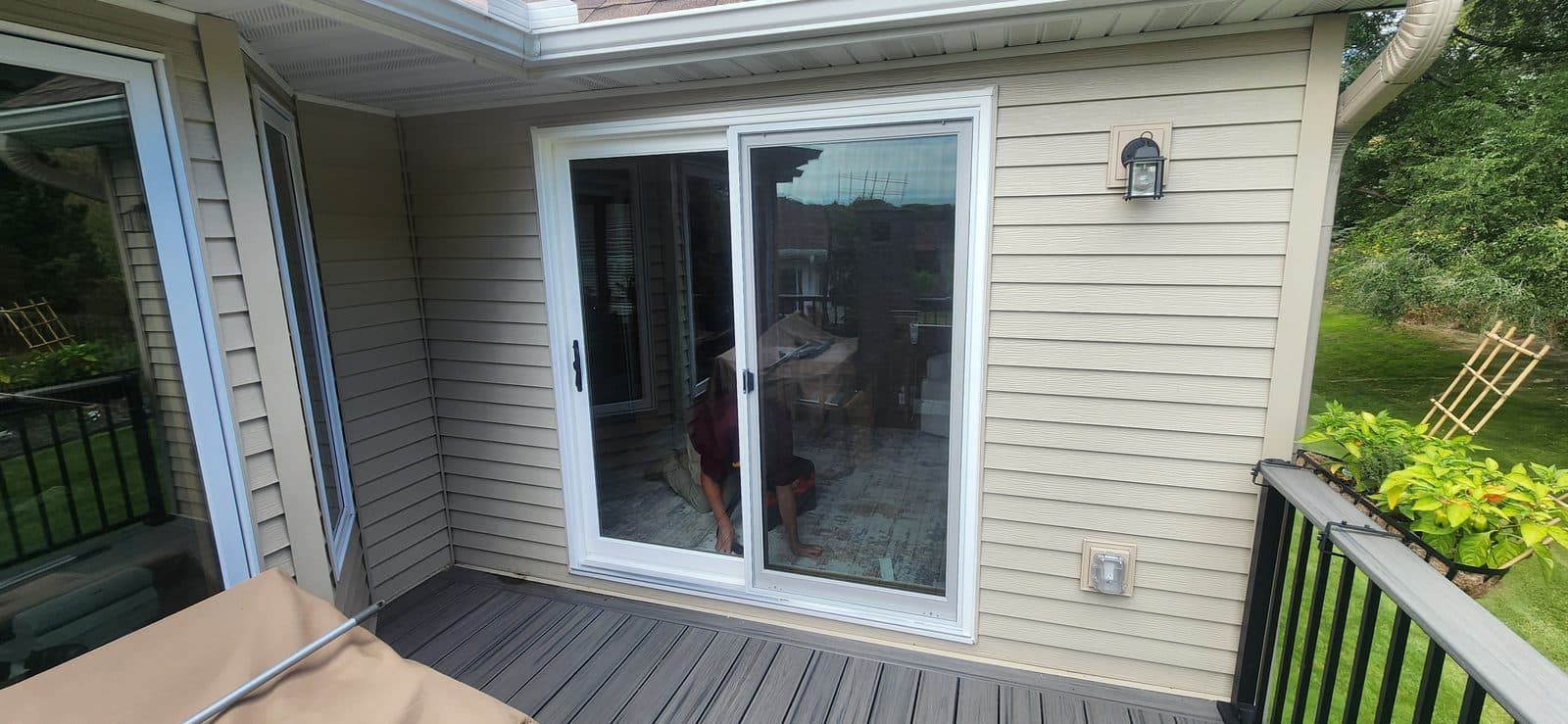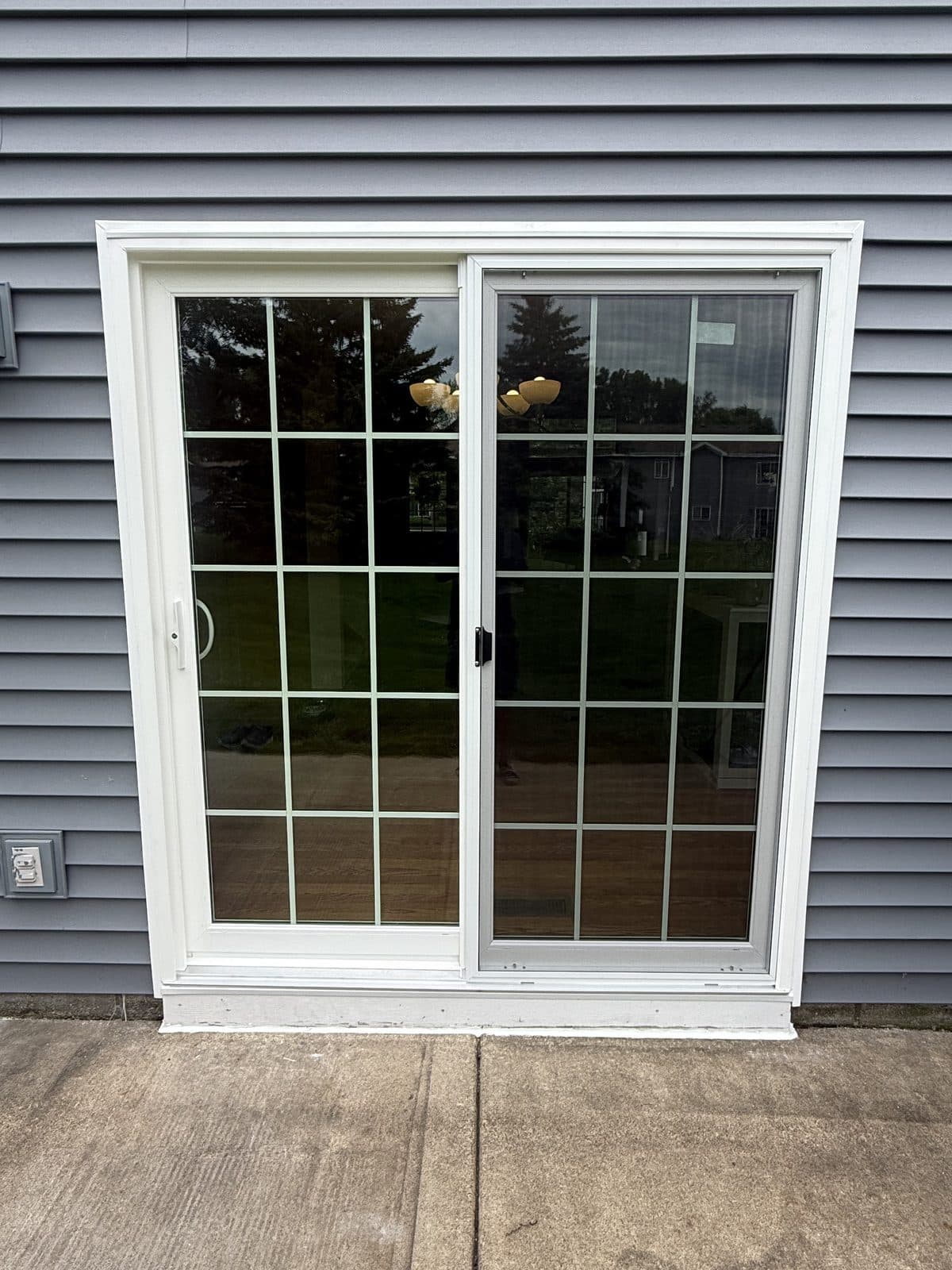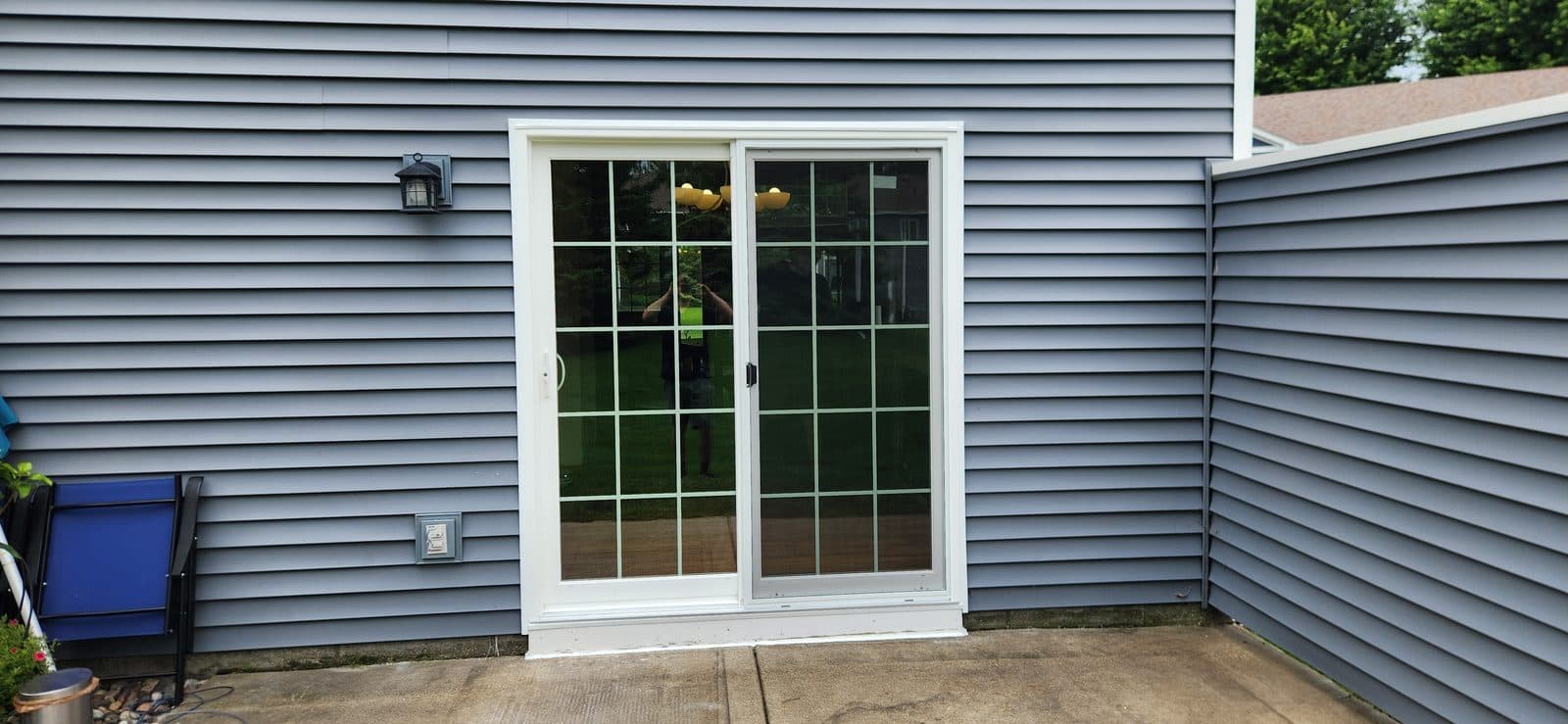
A patio door that will not slide has a dirty track, worn rollers or a frame out of square, in that order of likelihood. Clean and lubricate the track first, then adjust or replace the rollers. If it still binds at one end of its travel, the frame or sill has moved, and that usually means rot or settling. This applies to any sliding patio door in a Minnesota house.
Sliding doors fail slowly: a little resistance, then a shoulder to get it moving, then the door everyone avoids. Some causes are cheap fixes. Some mean the door or the opening is done. Here is how to tell which, in the order a service visit checks them, and what to look for in the replacement if it comes to that.
Why is the track the first thing to check?
The bottom track collects grit, pet hair and debris that grind against the rollers. Vacuum it, scrub it with a stiff brush and mild cleaner, wipe it dry and spray a dry silicone lubricant. Never oil or grease; both turn into grit magnets. If the door improves a lot, you just saved a service call. Repeat a couple of times a year.
While the track is clean, look at the rail the rollers ride on. A rail worn flat, dented or bent up at one end tells you the rollers have been running metal on metal, and a new roller will wear out fast on that rail. Some doors take a stainless track cap that snaps over the worn rail; on others a worn rail is a point for replacement.
How do you know the rollers are worn?
The panel rides on adjustable rollers, and after 15–20 years of cycles they flatten, crack or seize. Signs are a grinding sound, a door that bumps along, a panel that sits low and drags on the track, and visible wear on the track rail. Most panels have adjustment screws on the bottom edge, behind a small plug, that raise the panel and buy time.
Worn rollers can usually be replaced if parts are still made for the door. The panel comes out of the track, which takes two people on a heavy unit, the old rollers come out of the bottom rail, and the new ones go in and get adjusted so the panel runs parallel to the frame. Published repair guides put a roller job at a few hundred dollars, which is money well spent on an otherwise sound door.
- 1Clean the track and try the door. If it glides, stop here.
- 2Find the adjustment screws on the bottom edge of the panel and turn them a quarter turn at a time to raise the panel off the track. Check that the gap between panel and frame is even top to bottom.
- 3If raising the panel does not help, or the screws are at their limit, the rollers are done. Pull the panel and replace them.
- 4If new rollers on a clean track still bind at one end, stop buying parts. The frame has moved.
When is the frame the problem?
If the rollers and track are fine but the door still binds, especially at one end of its travel, the frame is out of square. That comes from the house settling, a sagging header or moisture softening the sill. Look for uneven gaps between panel and frame, a latch that no longer lines up with the keeper, and soft, water-stained wood at the sill corners.
Frame and sill problems cannot be lubricated away. Rot under a patio door spreads into the rim joist and subfloor, so it is worth dealing with sooner rather than later. A sill that has dropped a quarter inch at one corner will make every roller you buy bind at that end.
Is the door leaking heat as well as sticking?
The same age that wears the rollers wears the insulation. Three things to look for in winter, because they change the repair-or-replace answer.
Frost or ice on the bottom track. The sill on an older door is a plain aluminum extrusion with no thermal break, so the cold outside conducts straight through and indoor moisture freezes on it. Cold air getting past a worn pile weatherstrip at the interlock, where the two panels overlap, adds to it. You can replace pile weatherstrip on many doors, but you cannot add a thermal break to a sill.
Fog, haze or a water line between the panes. The seal on the insulated glass unit has failed, the argon is long gone, and the glass is now insulating like two loose sheets. On some doors the glass unit alone can be replaced; on an old builder-grade door it rarely pays.
A cold draft at the latch or the interlock with the door locked. Worn weatherstripping, a bent interlock, or a frame racked enough that the panel no longer meets the jamb evenly. The first is a part. The other two are the frame.
When is replacement the smarter spend?
Replace instead of repair when you see:
- Fogged or hazy glass between the panes. The insulated glass has failed along with the mechanics.
- Rot or soft spots in the sill, frame or surrounding floor.
- A racked frame from settling that would throw new rollers out of line.
- A single-pane or early builder-grade door where the repair costs approach half of replacement.
- Drafts, frost or condensation on the track through the winter.
What should the replacement door have?
If the answer is replace, buy the door by its label, not its price tag. Double-pane low-E glass with argon fill and a warm-edge spacer is the minimum in Minnesota; triple-pane is a comfort upgrade on a north-facing or heavily used door. Compare doors by whole-unit U-factor, and look for 0.26 or lower, the current ENERGY STAR Version 7.0 criterion for sliding glass doors. Then look at the parts that failed on the old door: a thermally broken sill with weep holes so meltwater drains instead of freezing, a reinforced and weatherstripped interlock, adjustable steel tandem rollers, and a multi-point lock that pulls the panel tight against the jamb.
The install decides the rest. A sill pan under the frame, a level set on shims, low-expansion foam in the gap, flashing outside and backer rod and sealant inside are what keep the new sill dry and the new door gliding for the next 20 years.
How do you get a straight answer?
A roller job is the right call on a sound door and a waste on a failing one. Send three photos: the door from inside, the bottom track and sill corners, and the meeting stile where the panels overlap. you hear back from us within one business day saying repair or replace, and a quote either way.
What JMB Builders does
JMB Builders is a licensed Minnesota residential building contractor (BC809005) based in Zimmerman, working across the Twin Cities metro. We say repair or replace from the photos before anything is ordered, and we install any brand you buy. Paid by check or direct deposit. Call 763-204-2099 (text) or send photos through the site.
- Labor-only installation of a sliding patio door you bought at a store or online — jmbbuildersmn.com/services/doors/sliding-patio-door-labor-only
- Sliding screen door rollers, track and rescreening — jmbbuildersmn.com/services/doors/screen-door-repair
- Rotted door sill and threshold replacement — jmbbuildersmn.com/services/doors/exterior-threshold-replacement
- Rotted jamb bottoms on exterior doors — jmbbuildersmn.com/services/doors/exterior-door-jamb-bottom-rot
Frequently asked questions
Why is my sliding glass door so hard to open?
Usually a dirty track or worn rollers. Grit in the bottom track grinds the rollers, and the rollers themselves flatten or seize with age. If cleaning the track and adjusting the rollers does not fix it, the frame has gone out of square, often from a soft sill or the house settling.
Can I replace the rollers on a sliding patio door myself?
Often, yes, if parts are still made for the door. The panel has to come out of the track, which takes two people on a heavy unit, and the new rollers are set with the adjustment screws on the bottom edge. If the brand is gone or the frame is racked, new rollers will not fix it.
What lubricant should I use on a sliding door track?
A dry silicone spray, on a track that has been vacuumed, scrubbed and dried first. Never oil, grease or a penetrating oil. Those attract grit and make the door worse within weeks.
How do I know if the patio door frame is out of square?
The door binds at one end of its travel and slides fine at the other. The gap between the panel and the frame is wider at the top than the bottom, or the latch no longer lines up with the keeper. Soft or stained wood at the sill corners means the sill has moved because of rot.
Is it worth repairing a 20-year-old patio door?
If the frame is sound and square, the glass is clear and the only complaint is the slide, yes. New rollers and a track cleaning are a small job, a few hundred dollars by published repair estimates. If the glass is fogged, the sill is soft or the door frosts up in winter, the money is better put toward a replacement.
Why does my patio door frost up on the track in winter?
Cold air is getting past the interlock or the sill, and indoor moisture freezes on the metal track. Worn pile weatherstripping at the meeting stiles and an aluminum sill with no thermal break are the usual causes. Frost every winter on an older door is one of the signs that replacement makes sense; a new door with a thermally broken sill and weep drainage does not do this.