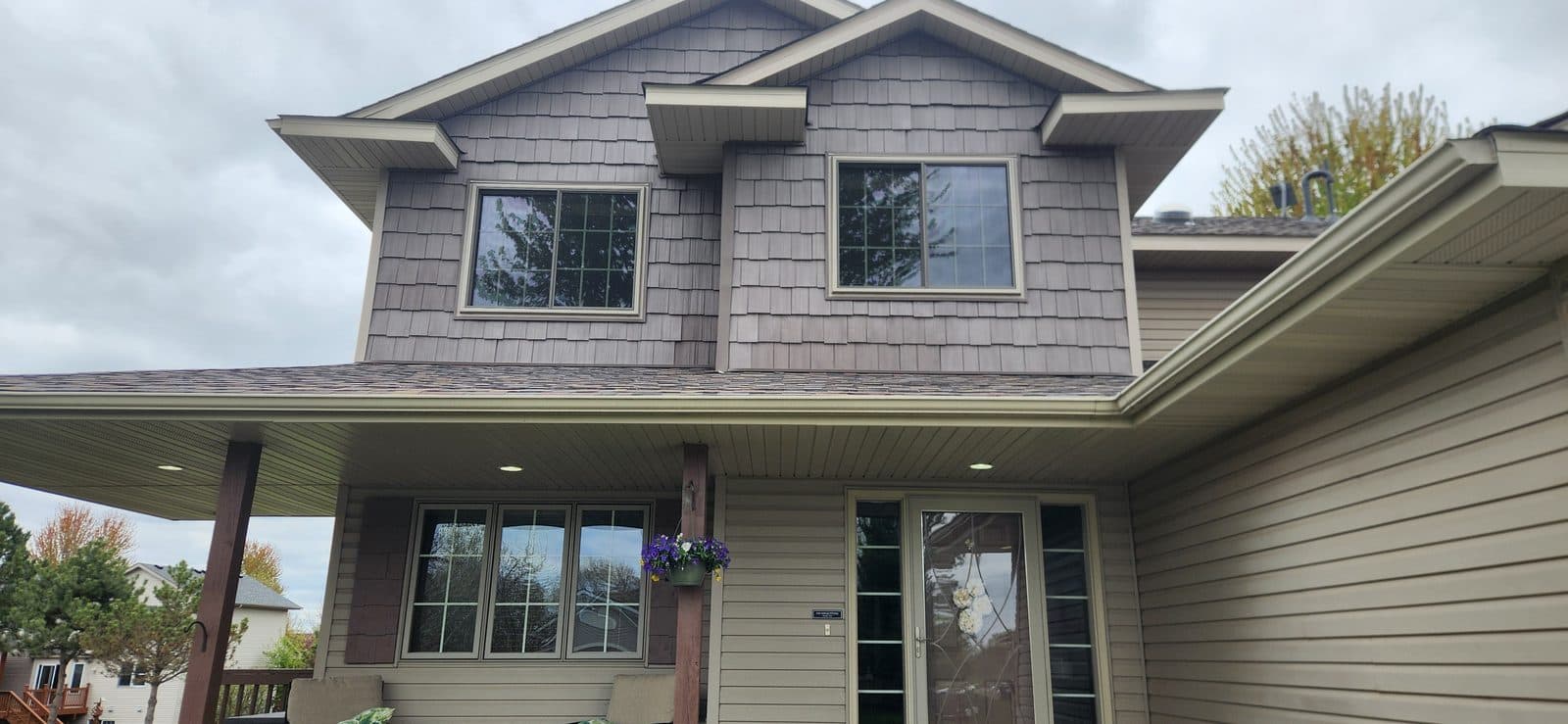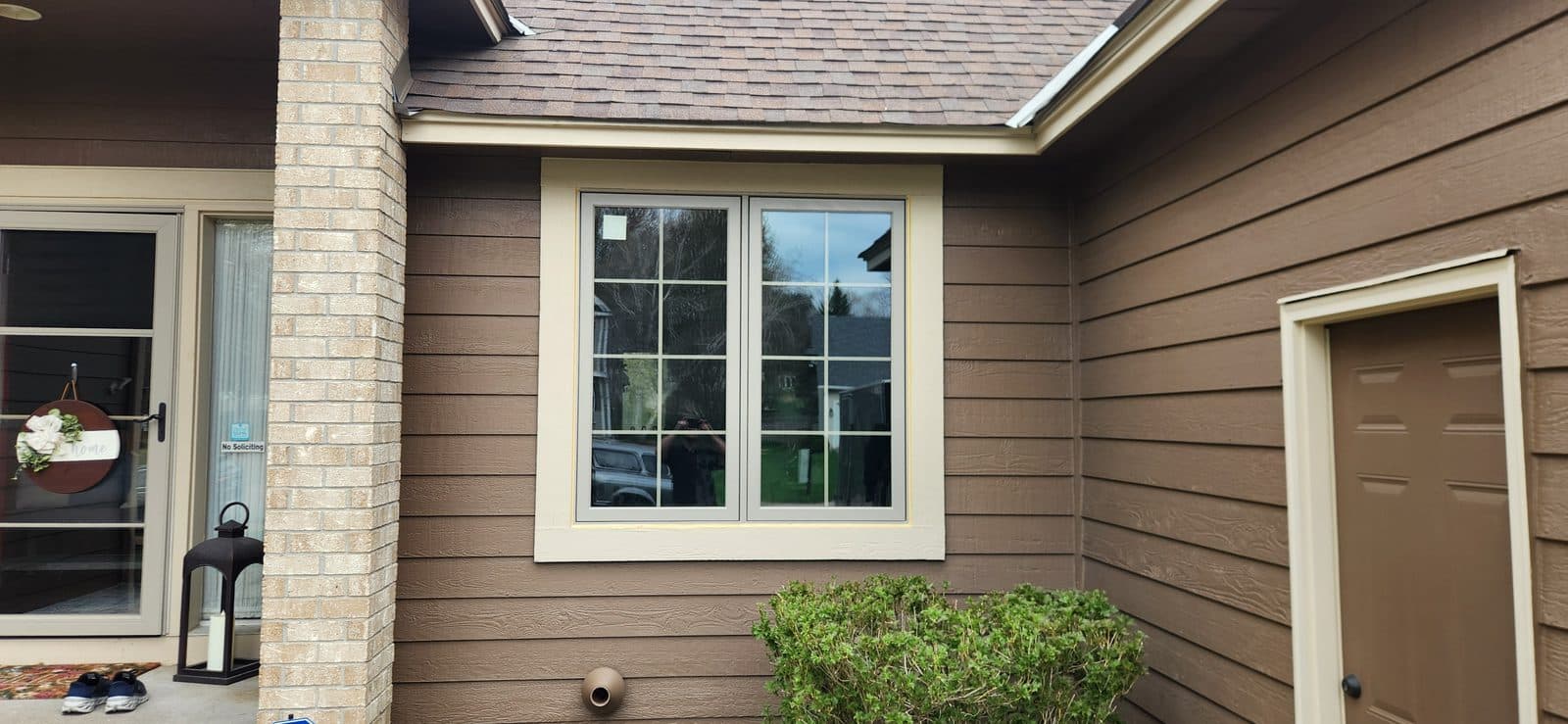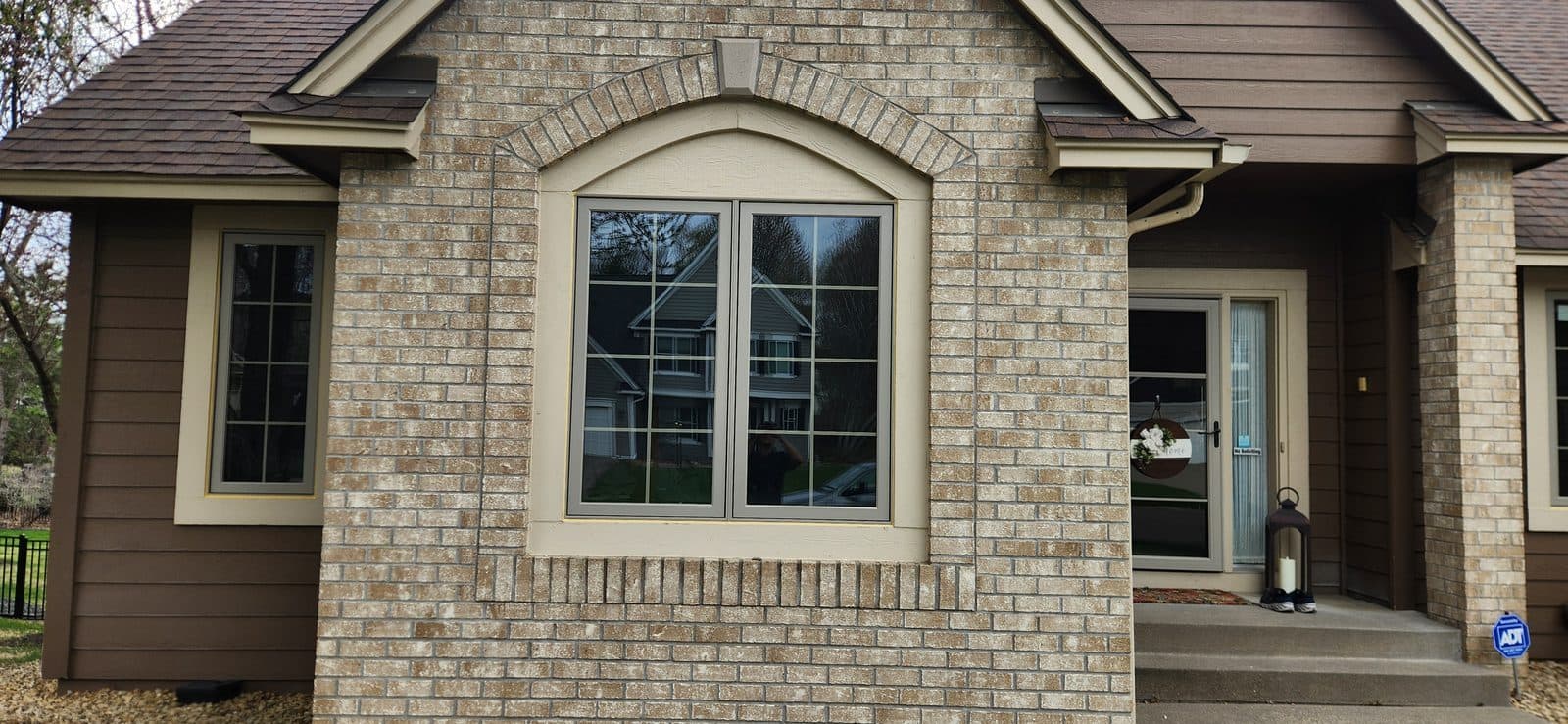
A window replacement quote is complete when it names the window (brand, series, glass package and U-factor), says insert or full-frame, spells out the install steps (sill pan, flashing, foam, interior seal), lists interior and exterior trim, includes haul-away and carries a Minnesota license number. If a bid skips any of those, ask for it in writing before you compare prices.
This applies to any Twin Cities homeowner holding two or three bids, whether they came from a big window company, a local carpenter or a store install program. The same checklist works on a labor-only quote for windows you bought yourself, where the window lines are on your receipt and the install lines are on the contractor's quote.
What should the quote say about the window itself?
"Energy-efficient vinyl window" can describe a builder-grade unit or a premium one at several times the price. A real quote names the manufacturer and the product line, such as Andersen 400 Series, Marvin Essential or ProVia Endure, because the series sets the frame construction, the hardware, the glass options and the manufacturer's warranty you are buying.
Then the frame details. Vinyl frames should be multi-chamber and, on better lines, foam-filled. Fiberglass and composite frames hold their shape in cold and sun. Wood-clad frames put aluminum or fiberglass on the outside and wood on the inside. Ask what the weatherstripping is (compression bulb on casements, fin or pile on sliding sashes) and whether the frame color is painted, laminated or through-color.
How do I compare the glass packages on two quotes?
The glass package is where most of the energy performance lives and where quotes quietly differ. Every certified window carries an NFRC label with the same tested numbers, so ask each bidder for the NFRC ratings of the exact glass they priced and line them up:
| Line | What to look for in Minnesota | Question to ask the bidder |
|---|---|---|
| Pane count | Double-pane is the standard. Triple-pane runs warmer inside glass and quieter rooms. | Is this double or triple, and what does the other cost per opening? |
| Low-E coating | A thin metallic coating that reflects room heat back inside. Which surface it sits on changes the solar gain. | Which low-E coating is this, and is it the high-solar-gain or sun-control version? |
| Gas fill | Argon in the gap is standard on decent glass. Krypton for the narrow gaps in triple-pane. | Is the gap argon-filled, and is that on the NFRC label? |
| Spacer | Warm-edge spacers (stainless, foam or composite) keep the glass edge warmer than an aluminum box spacer. | What spacer is in this glass unit? |
| U-factor | Lower is better. ENERGY STAR Version 7.0 Northern zone is 0.22 or lower for windows; a good double-pane low-E argon window lands around 0.26–0.30. | What is the whole-window U-factor on the NFRC label? |
| SHGC | Solar heat gain, 0 to 1. Moderate values are fine in a heating climate; go lower only on a west wall that overheats. | Is the SHGC the same on every opening, or did you vary it by wall? |
| Air leakage | Optional on the label. 0.3 cfm per square foot is the code ceiling; tight windows test at 0.1 or lower. | Does the label list air leakage, and what is it? |
Insert or full-frame: which job are you comparing?
An insert replacement sets the new window inside your existing frame. It is faster and cheaper, and the right call when the frame is square, solid and dry. It keeps the old exterior trim and sill and gives up a little glass area to the second frame.
A full-frame replacement strips the opening to the rough framing, old frame, sill and trim included, and rebuilds it with a new sill pan, flashing and trim. It costs more. It is the only honest fix when there is rot, water damage or an opening badly out of square, and the only way to insulate the full rough-opening gap properly.
Two bids with a real gap per window are often not the same job: one is an insert, the other is full-frame. Neither is wrong. You just need to know which one you are reading, and the quote should say what happens to the price if rot turns up mid-job.
What install steps should the quote list?
The label rates the window as it left the factory. The install decides whether you get that performance. A good window set in an unsealed hole leaks around the frame, and air leaking around a window carries far more heat than the glass loses. Look for these lines, or ask for them:
- 1Sill pan or flexible sill flashing under the window, so any water that gets past the exterior drains back out instead of into the wall.
- 2Jamb and head flashing tied into the housewrap or, on an insert, sealant and backer at the exterior joint. Head flashing goes over the wrap, never behind it.
- 3Shims at the fastening points and a check that the frame is plumb, level and square before it is fastened.
- 4Low-expansion foam in the gap between the window frame and the rough opening. Not fiberglass stuffing, not a bead of caulk over an empty gap.
- 5Backer rod and sealant, or a tape air barrier, at the interior edge of the frame before trim goes on. That interior air seal is what stops winter drafts and frost on the casing.
- 6Exterior finish: capping, brickmould or siding repair, and a named sealant at the exterior joint.
What does a complete window quote include?
Put every bid through this list. A professional quote answers all of it in writing.
- 1Window brand, series, material and color, inside and out.
- 2Glass package: pane count, low-E, gas fill, spacer, and the NFRC U-factor and SHGC.
- 3Scope: insert or full-frame, and what happens if rot turns up mid-job.
- 4Install steps: sill pan, flashing, shims, low-expansion foam, interior air seal.
- 5Interior finish: jamb extensions, casing, stool and apron, paint or stain, or a clear note that it is your job.
- 6Exterior finish: capping, siding repair, caulking.
- 7Haul-away and disposal of the old windows and debris.
- 8The installer's labor warranty, in writing, separate from the manufacturer's.
- 9Payment schedule. A modest deposit is normal. Paying in full up front is not.
- 10License number and proof of insurance.
- 11Price per opening, so you can compare window to window.
Which red flags should end the conversation?
These show up again and again on the jobs that end up needing a second contractor.
- The today-only discount. Real prices do not expire when the salesperson leaves your kitchen.
- A price that drops sharply when you hesitate. If the first number had that much air in it, nothing else in the pitch was straight.
- No physical address or license number on the paperwork.
- Cash only, or a deposit over half the project.
- "We don't need to measure." Photos get you a quote. A measured opening comes before any window is ordered.
- A glass package with no NFRC numbers. Every certified window has them.
How does JMB Builders write a quote?
Send three photos of each window, inside and out, plus one of the whole wall. You hear back from us within one business day, itemized per opening, naming the exact product and glass, insert or full-frame, and the install steps above. A measure happens before the order, only when the photos are not enough. Painting or staining the new trim is its own line, or leave it primed and caulked and paint it yourself. No expiring discounts, no sales visit, and if a repair makes more sense than replacement we say so.
What JMB Builders does
JMB Builders is a licensed Minnesota residential building contractor (BC809005) based in Zimmerman, working across the Twin Cities metro. One crew measures, installs and trims. We install every brand and sell none. Paid by check or direct deposit. Call 763-204-2099 (text) or send photos through the site.
- Labor-only installation of windows you bought at a store or online — jmbbuildersmn.com/services/labor-only
- Insert and full-frame replacement windows and doors, measured and ordered by us — jmbbuildersmn.com/services/full-service
- Which window brand to buy for a labor-only install — jmbbuildersmn.com/services/labor-only/which-window-brand-to-buy-for-labor-only-install
- Trim-out of replacement windows another installer left bare — jmbbuildersmn.com/services/window-trim/trim-out-replacement-windows-left-bare
Frequently asked questions
How many window quotes should I get?
Two or three complete, itemized bids are enough. Five vague quotes teach you less than two detailed ones. Match the scope first, brand, glass package, insert or full-frame, install steps and finish work, then compare the numbers.
Why is one quote thousands of dollars higher for the same windows?
Usually it is not the same job. Check the product series, the glass package and U-factor, insert or full-frame, the install steps and what finish work is included. When those truly match, the rest of the difference is overhead. Companies with big ad budgets and commissioned sales staff build them into your price.
Is the cheapest window bid a bad idea?
Not automatically. Check that the low bid names the same product and glass, describes the same install steps, includes trim and haul-away, and comes from a licensed contractor with a written labor warranty. A low bid that is vague on any of those usually gets expensive through change orders.
Should I pay a deposit for window replacement?
A deposit of about a third or less when you sign is normal, because windows are custom-ordered to your openings. Be careful of anyone asking for full payment before installation, or cash-only terms.
Should a window quote include the interior trim?
It should at least say. Many replacement installers stop at foam and a bead of caulk and leave the casing, stool and jamb extensions to someone else. If interior trim is not on the quote, it is a separate per-window job, and you want to know that before you compare prices.
What should a labor-only window install quote include?
A price per opening, what the installer supplies (shims, low-expansion foam, sill pan and flashing tape, fasteners, sealant, backer rod), what you supply (the windows, and any trim), and whether haul-away of the old units is included. It should also say who checks the sizes before you order. That check is what keeps a labor-only job from stalling on delivery day.