Compare two window quotes by lining up the glass package, not the bottom number. Write down each quote's pane count, low-E coating, gas fill, spacer, and the U-factor and SHGC from the NFRC label, then what the install includes: sill pan, flashing, foam, air seal and trim. Quotes that match on all of that are comparable. Quotes that do not are for different windows.
This is the second step after checking that a quote names a brand, a series and a scope. If you have not done that part, our line-by-line quote guide covers it. This post is about the glass and the install details underneath, which is where most Twin Cities quotes hide their differences.
Where on the quote is the glass package?
On a good quote it is its own line under each opening, or a note at the top that applies to every window: something like double-pane, low-E, argon, with the coating name. On a weak quote it is folded into a product description like 'energy-efficient vinyl window' and you have to ask.
Ask for the glass package in writing on every quote before you compare anything else. Then ask for the NFRC ratings of that exact configuration. Every certified window has an NFRC label with the same four numbers, and the manufacturer can give you the values for the unit on your order. If a salesperson cannot produce them, that tells you something.
What do U-factor and SHGC on the NFRC label mean?
The NFRC label carries four ratings, and two of them decide your heating bill.
U-factor measures how fast heat moves through the whole window, frame and glass together. Lower is better. It is the number that matters most in a heating climate, because it is what the window does at two in the morning in January when there is no sun at all.
SHGC, the solar heat gain coefficient, measures how much of the sun's heat comes through. It runs from 0 to 1, and lower means less solar heat. In Minnesota you do not always want the lowest number. Some winter sun through a south window is free heat. That is why the ENERGY STAR Northern criteria set a minimum SHGC rather than a maximum, and why glass makers sell a high-solar-gain coating for cold climates next to a low-solar-gain one for hot ones.
Visible transmittance tells you how much light comes through, and air leakage tells you how much air moves through the assembly under test pressure; lower is tighter. Some labels also carry a condensation resistance number. Compare all of them between the two quotes, but sort by U-factor first.
For reference, Minnesota is in the ENERGY STAR Northern zone. The Version 7.0 criteria in effect since October 23, 2023 call for a U-factor of 0.22 or lower with an SHGC of at least 0.17, or an equivalent-performance path with a somewhat higher U-factor offset by a higher SHGC. If one quote's glass meets that and the other does not, they are not the same window.
| Line item | What to write down | Why it matters in Minnesota |
|---|---|---|
| Pane count | Double or triple | Triple adds a second air space and usually a second coating; quieter and warmer at the glass. |
| Low-E coating | The coating name and the surface it is on | Surface 2 is standard; a fourth-surface (room-side) coating drops U-factor on a double-pane. |
| Gas fill | Argon, krypton, or none | Argon is the standard insulator; krypton suits narrow triple-pane gaps; 'none' is air. |
| Spacer | Foam, stainless, or aluminum | Warm-edge (foam or stainless) keeps the glass edge warmer; aluminum frosts first. |
| U-factor | The NFRC number for this exact unit | Heat loss. Lower is better. The main number for a heating climate. |
| SHGC | The NFRC number | Solar gain. Northern zone wants a minimum, not a minimum-possible. |
| Air leakage | The NFRC number if listed | Drafts. Lower is tighter. Casements usually beat sliders. |
Low-E coatings, gas fill and spacers: what is standard and what is an upgrade?
Low-E is a thin metallic coating on one of the inside glass surfaces. Counting from outside, a double-pane has surfaces 1 through 4; the standard coating goes on surface 2, facing the gap. The two upgrades you will see on a quote are a different formulation of that coating (high-solar-gain for winter sun, low-solar-gain for a hot west wall) and a second coating on surface 4, the room side, which reflects heat back into the room and lowers the U-factor without adding a pane. Andersen, Pella and Marvin each sell versions of both under their own names; the NFRC numbers are how you compare them.
Gas fill is argon on almost every quote. It is denser than air and slows heat moving across the gap. Krypton is denser still and is the choice when the gap is narrow, which is what happens in a triple-pane unit that has to fit a standard frame. Krypton costs more and only pays off in that narrow-gap situation. A quote that names no gas at all is worth a question.
The spacer is the strip that holds the panes apart at the edge. An aluminum spacer conducts cold straight to the glass edge, which is where the frost line forms on a cold morning. Warm-edge spacers, either foam or a stainless-steel box design, keep that edge warmer. Foam runs warmer than stainless, and both beat aluminum. Two quotes with the same U-factor and different spacers will frost differently.
Then the frame: ask whether the frame chambers are foam-filled (an option on some vinyl and composite lines), what the weatherstripping is, and whether the sash is a compression seal (casement, awning) or a sliding seal (double-hung, slider). The NFRC air leakage number captures most of this if it is on the label.
What does an 'energy package' upsell actually change?
Most window companies bundle the glass upgrades into a named package, and the package name is where the confusion starts. One company's premium package is a triple-pane with krypton and a foam spacer. Another's is the same double-pane with a different coating name. The only way to know is the NFRC numbers before and after.
A rule that holds up: an energy package is worth paying for if it moves the U-factor enough to change the label, especially if it takes the unit from above the ENERGY STAR Northern threshold to at or below it. If the upgrade changes the coating name and the SHGC but leaves the U-factor about where it was, you are paying for a different glare and fade behavior, not a warmer house.
Watch for packages that are really about something else: laminated glass for sound, tempered glass where code requires it near a door or floor, obscure glass for a bathroom. Those are legitimate line items. They are not energy upgrades and should not be sold as one.
Why does the install scope belong on the same comparison?
Because the glass package sets what the window can do and the install decides whether it gets to do it. A triple-pane unit set without a sill pan and foamed with high-expansion foam performs like a leaky double-pane. Two quotes for the same glass can be a very different job.
The install items to line up, in the order they happen on the wall:
- 1Sill pan: a sloped or pre-formed pan under the unit so any water that reaches the sill drains out, not in.
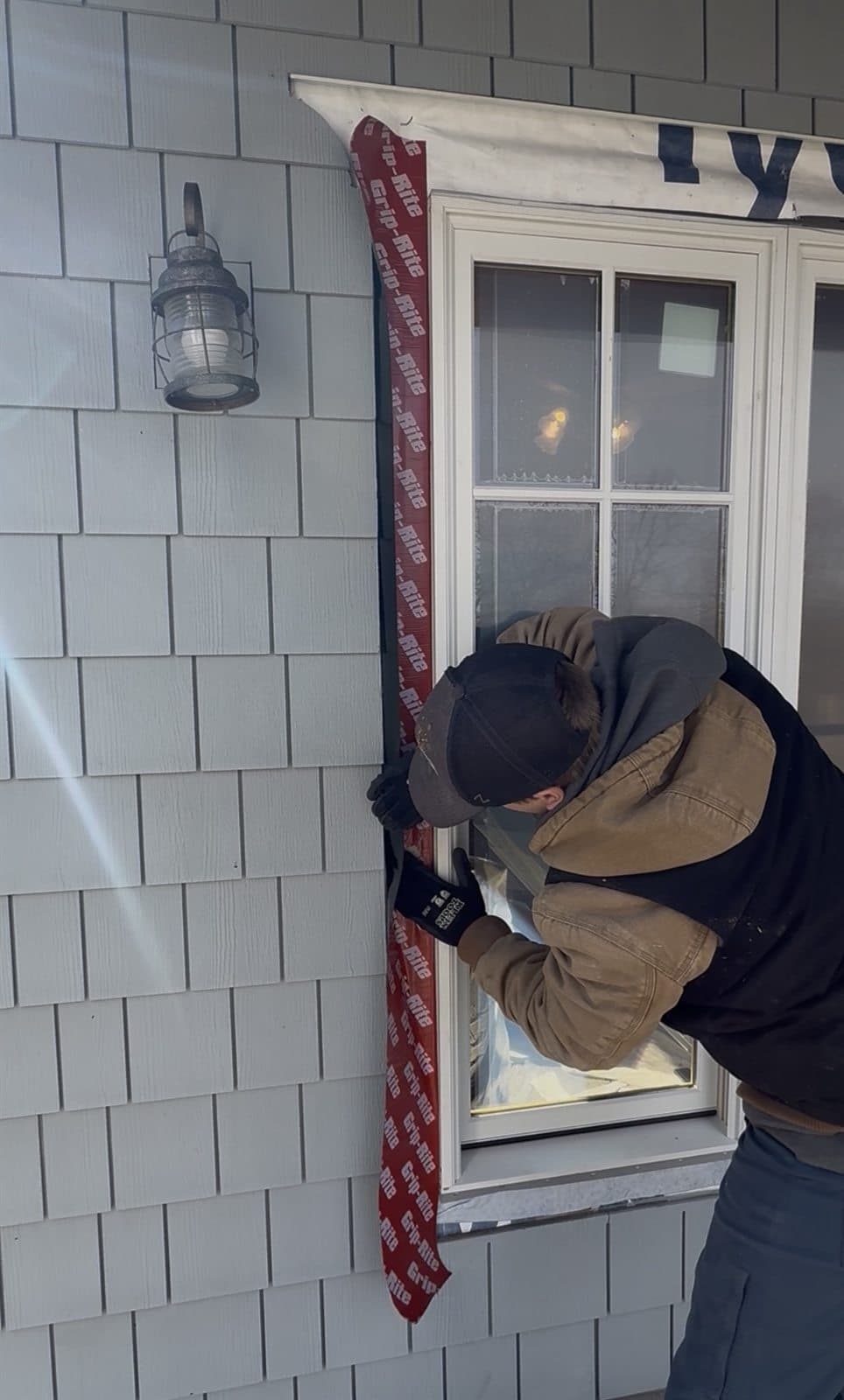
- 2Flashing: self-adhered tape lapped shingle-style up the jambs and over the head flange, tied into the housewrap.
- 3Head flashing or drip cap above the window, especially on siding and stucco.
- 4Shim and fasten: shims at the hinge and lock points, the unit checked plumb, level and square before it is fastened.
- 5Low-expansion foam in the shim gap. Standard foam bows jambs and binds sashes.
- 6Interior air seal: backer rod and sealant, or a sealant bead over the foam, at the inside edge. This is the seal that stops warm indoor air from reaching the cold framing.
- 7Exterior sealant and trim, capping or brickmould.
- 8Interior trim: jamb extensions, casing, stool and apron, or a note that it is excluded.
How do you turn two quotes into one decision?
Make a sheet with a row per opening and a column per quote. Fill in the glass package line and the NFRC numbers for each. Fill in yes or no for each install item above. Then compare price per opening, not the project total.
When the sheet is done, one of three things is true. The two quotes match on glass and install and the cheaper one wins. The cheaper one is missing glass performance or install steps and you now know what the gap is buying. Or the more expensive one includes an energy package you did not ask for, and you can ask for it to be removed or matched.
If a quote is for windows you are buying yourself, for a labor-only install, the same sheet works. You fill in the glass package from the store listing, and the installer's quote should list every install item above so you know what you are getting for the labor price.
What JMB Builders does
JMB Builders is a licensed Minnesota residential building contractor (BC809005) based in Zimmerman, working across the Twin Cities metro. One crew installs and trims windows from any brand, and we sell none of them, so the glass package on your order is your choice, not our margin. Quotes are written from your photos within one business day and list every install item above. Paid by check or direct deposit.
- Install a window you bought online or at a store, labor only — jmbbuildersmn.com/services/doors/install-window-bought-online
- Which windows to buy for a labor-only install — jmbbuildersmn.com/services/labor-only/which-window-brand-to-buy-for-labor-only-install
- Andersen 100 and 400 Series installation, labor only — jmbbuildersmn.com/services/labor-only/andersen-100-400-window-install-labor-only
- Jamb extensions and casing after the window goes in — jmbbuildersmn.com/services/window-trim/jamb-extensions-for-windows
- Send three photos per window, written quote within one business day.
Frequently asked questions
What is a glass package on a window quote?
It is the description of the insulated glass unit: how many panes, which low-E coating and on which surface, what gas is between the panes, and what spacer holds them apart. Manufacturers bundle these into named packages. The NFRC label translates the package into U-factor and SHGC numbers you can compare between brands.
What U-factor should replacement windows have in Minnesota?
Lower is better, and the current ENERGY STAR Northern zone criterion under Version 7.0 is a U-factor of 0.22 or lower with an SHGC of at least 0.17, or an equivalent-performance combination. Many standard double-pane packages land above that and still perform well; the upgrade packages are what reach it. Compare the NFRC number on the exact unit rather than the package name.
Is argon or krypton better in windows?
Argon is the standard fill and is the right choice for a normal double-pane gap. Krypton insulates better in a narrow gap, which is why it shows up in triple-pane units built to fit a standard frame depth. Paying for krypton in a wide double-pane gap buys very little. A quote that names no gas at all may be air-filled and should be questioned.
What does a warm-edge spacer do?
The spacer separates the panes at the edge of the glass. Aluminum spacers conduct cold to the glass edge, which is where frost and condensation form first on a Minnesota morning. Warm-edge spacers, made of foam or a stainless-steel box section, keep that edge warmer. Foam runs warmer than stainless, and both are a clear improvement over aluminum.
Should I pay for the energy package upgrade on my windows?
Only if the NFRC U-factor drops enough to matter, ideally to the ENERGY STAR Northern threshold or below. Ask for the before and after numbers for the exact unit. If the package only changes the coating name and the SHGC, it changes glare and fade, not heat loss. If it adds a pane, a room-side coating or a warm-edge spacer, it usually earns its price in a heating climate.
Why does a window quote need to list the sill pan and flashing?
Because those are the items that keep water and air out of the wall around the window, and they are the first things left off a low bid. A quote should name a sill pan, self-adhered flashing tape, low-expansion foam and an interior air seal. Without them, the best glass package in the world is sitting in a hole that leaks.