A store-bought window is a real window from a national manufacturer, sold in a limited set of lines, sizes and glass packages. In the Twin Cities, Home Depot stocks Andersen 100 Series and American Craftsman, Lowe's stocks Pella, JELD-WEN and ReliaBilt, and Menards stocks Crestline, JELD-WEN and house-labeled lines. Buy the right size with the right glass and any licensed installer can set it.
JMB Builders installs windows from all three stores every week, labor only, and does not sell windows from anyone. This is the guide we send when someone asks which store to go to before they send photos.
What is a store-bought window, exactly?
It is a window built by a national manufacturer and sold through a retail channel instead of a dealer. The manufacturer is the same company that sells to lumberyards; the difference is the product line and the options the store chooses to carry. Andersen makes the 100 Series that Home Depot sells and the American Craftsman line built for Home Depot. Pella makes the 150 and 250 Series that Lowe's stocks. JELD-WEN builds lines for both Lowe's and Menards. Crestline is a Menards-distributed brand.
What you give up is range. A dealer can order any size, any color, any glass. A store carries a short list, and the list is organized around what sells: white vinyl, common sizes, base glass. What you gain is a posted price, a window you can see and touch, and the option to walk out with it that day.
One thing to be clear on: a store install program (the store's contracted installer) and a labor-only installer you hire directly are different services. This post is about buying the window yourself and hiring the install yourself.
Which brands does each Twin Cities store actually carry?
Brand lineups shift, so confirm at the store or on the store's site before you plan a job around one. As of this writing, the lineups look like this.
| Store | Brands and lines | Notes |
|---|---|---|
| The Home Depot | Andersen 100 Series (Fibrex composite); American Craftsman (Andersen-made vinyl); JELD-WEN | Andersen 100 in stock in common sizes and special order in all sizes, colors and insert configurations. |
| Lowe's | Pella 150 Series and 250 Series (vinyl), Impervia (fiberglass), Lifestyle Series (wood); JELD-WEN V-2500; ReliaBilt | Pella Reserve is showroom-only, not at Lowe's. In-stock Pella is a short list of sizes and styles. |
| Menards | Crestline (Quick Series stock, Select 250 special order); JELD-WEN Builders Series and custom JELD-WEN; other distributed lines | Menards also lists house-labeled lines and basement window brands; ask which factory builds the one you are looking at. |
Stock or special order: which should you buy?
Stock windows sit on the rack in a few standard sizes, almost always white, almost always with the base glass package, and mostly in double-hung, single-hung and slider styles. They are new-construction units with a nailing flange or insert units sized for common rough openings. If your opening happens to match and you are doing a full-frame job on a house with standard framing, a stock window works.
Special order is the same brand built to your size, in your color, with the glass you choose, and often in styles the rack does not have: casements, awnings, picture windows, transoms. It takes a few weeks. It is the right path for almost every replacement job on an older house, because old openings are rarely a stock size and an insert window has to fit the existing frame within a fraction of an inch.
The trap is ordering the wrong kind of window for the job. A replacement or insert window goes inside the existing frame and has no flange. A new-construction window has a flange and needs the old frame gone and the siding or stucco opened up. Ordering a flanged window for an insert job, or the reverse, means a return trip and a restock fee or a window you own and cannot use.
- Buy an insert (replacement) window when the existing frame is square, solid and dry, and you want to keep the exterior trim and siding untouched.
- Buy a new-construction (flanged) window when the frame is rotted or out of square, when the siding is coming off anyway, or on an addition.
- Special-order the size. Stock sizes fit a stock opening; most houses older than a couple of decades do not have one.
What glass packages do the stores offer?
On the shelf, the glass is the base package for that line: a double-pane, low-E, argon-filled unit. That is a decent window and a large improvement over single-pane or a failed-seal double-pane. It is not, in most cases, a window that meets the ENERGY STAR Northern criteria that cover Minnesota, which under Version 7.0 call for a U-factor of 0.22 or lower with a minimum SHGC, or an equivalent-performance combination.
The upgrade glass is a special order at every store. Andersen 100 at Home Depot lists Low-E and SmartSun options and configurations by unit. Lowe's Pella listings include the manufacturer's Version 7.0 energy guide and the 250 Series offers more glass options than the 150. Menards' Crestline Select 250 listings name an argon-filled low-E unit. In each case the way to know what you are getting is the NFRC label for the specific configuration, which the store listing or the manufacturer's site will show.
What to check on that label: U-factor first, SHGC second, then whether the unit is double or triple pane, the gas fill, and the spacer type if stated. If two configurations of the same window differ only in the coating name and not the U-factor, the upgrade is about fade and glare, not heat loss.
How do you order the right window for a labor-only install?
The order form is where store-bought jobs succeed or fail. The installer can only hang what shows up. Here is the sequence that avoids a second trip.
- 1Send photos first. Inside and outside of each window, plus one of the whole wall. An installer can tell from photos whether the job is an insert or a full-frame, and whether the frame looks sound.
- 2Get the sizes checked before ordering. Insert windows are ordered to the inside of the existing frame with a small clearance; flanged windows are ordered to the rough opening. This is the one step where a tape measure beats a photo.
- 3Choose the style for the room. A casement over a kitchen sink, a double-hung on the front, a slider or hopper in a basement. Style also affects egress in a bedroom, so ask if the room is a sleeping room.
- 4Pick the glass package from the NFRC numbers, not the package name. Ask for the label of the exact configuration.
- 5Confirm the details a store form asks for: color inside and outside, grille pattern and whether it is between the glass or applied, screen, hardware finish, tempered glass where required near a door, tub or floor.
- 6Get the delivery date and have the installer scheduled after it, not before. Do not schedule the install for the day the truck is due.
- 7Inspect the windows when they arrive: size on the label, glass package on the NFRC sticker, no cracked glass or bent flanges. Refuse or return damage before the installer opens the wall.
What does the install include when you bring your own window?
The same things it should include on any window job. A store-bought window is not a lesser install. What matters is that the labor quote lists them, because none of them come in the box.
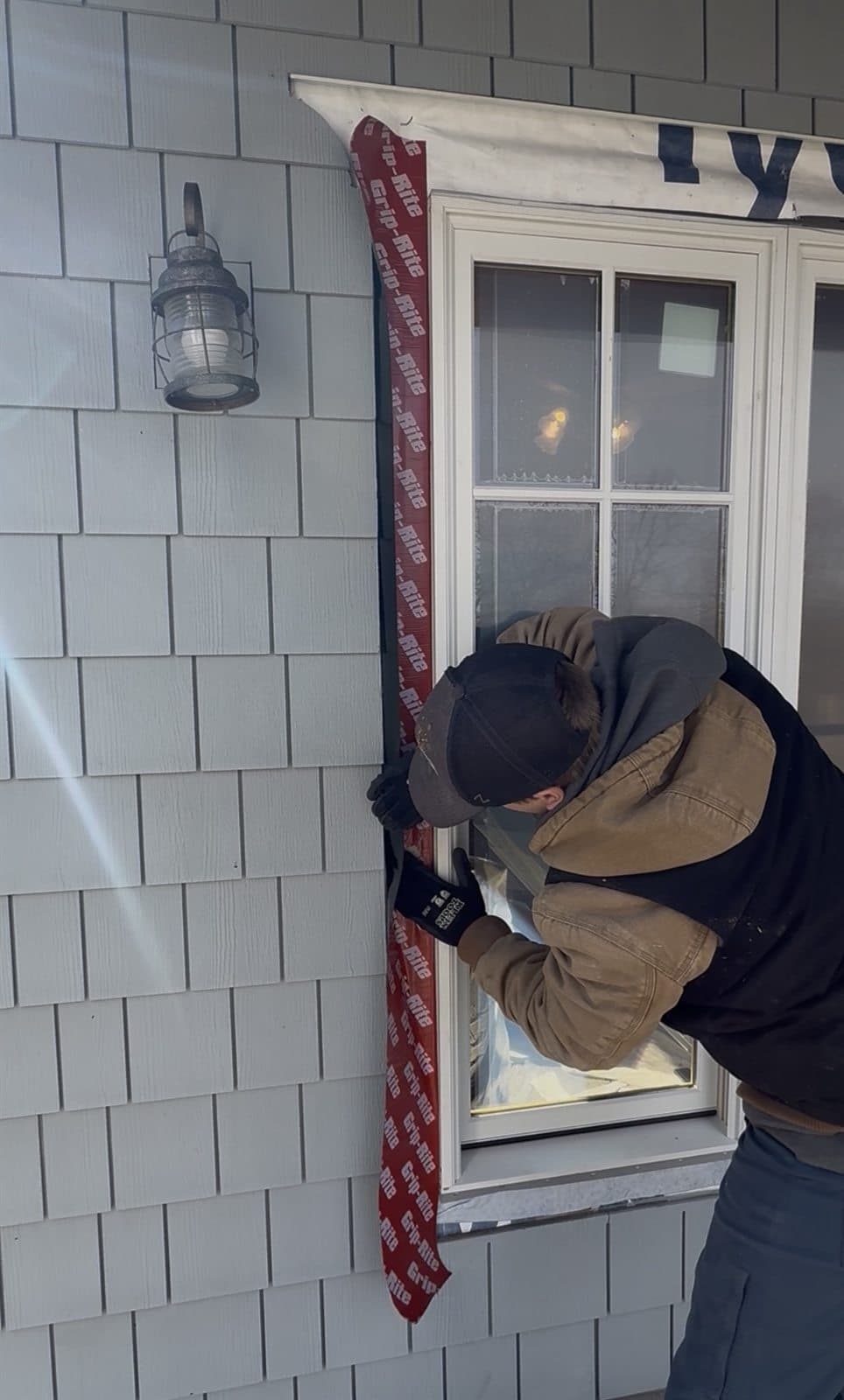
For a full-frame window: the old unit and frame out, the rough opening checked and repaired, a sloped or pre-formed sill pan, self-adhered flashing tape lapped shingle-style up the jambs and over the head flange into the housewrap, the unit shimmed plumb and level and fastened through the flange, low-expansion foam in the shim gap, backer rod and sealant for the interior air seal, exterior trim or capping, and interior trim.
For an insert: the old sashes and stops out, the old frame checked for rot, the sill area sealed, the new unit set with shims, low-expansion foam in the gap, an interior air seal, exterior sealant at the frame, and new interior stops or casing where the old ones do not fit.
Trim is the piece most often left off. Ask whether jamb extensions, casing, stool and apron are in the labor price. Painting is quoted as its own line, or you can leave the trim primed and caulked and paint it yourself.
What JMB Builders does
JMB Builders is a licensed Minnesota residential building contractor (BC809005) based in Zimmerman, working across the Twin Cities metro. One crew installs and trims windows and doors from Home Depot, Lowe's, Menards or an online order, labor only. We sell no windows. Quotes are written from your photos within one business day; a tape-measure visit happens only when the sizes need checking before you order. Paid by check or direct deposit.
- Install a window you bought online or at a store — jmbbuildersmn.com/services/doors/install-window-bought-online
- Which windows to buy for a labor-only install — jmbbuildersmn.com/services/labor-only/which-window-brand-to-buy-for-labor-only-install
- Andersen 100 and 400 Series installation, labor only — jmbbuildersmn.com/services/labor-only/andersen-100-400-window-install-labor-only
- Pella 250 Series from Lowe's, installed labor only — jmbbuildersmn.com/services/labor-only/pella-250-window-install-labor-only
- Menards door installation, labor only — jmbbuildersmn.com/services/doors/install-door-from-menards
- Home Depot or Lowe's door installation, labor only — jmbbuildersmn.com/services/doors/install-door-from-home-depot-or-lowes
- Send three photos per opening, written quote within one business day.
Frequently asked questions
Which big-box store has the best windows?
None of them has a clear edge; they carry different brands. Home Depot has Andersen 100 Series (Fibrex composite) and American Craftsman, Lowe's has Pella 150, 250, Impervia and Lifestyle plus JELD-WEN and ReliaBilt, and Menards has Crestline, JELD-WEN and house-labeled lines. Pick the store by the line you want, then order the size and glass package the job needs.
Are Menards windows any good?
Menards sells windows built by national manufacturers, including JELD-WEN and Crestline, and the stock lines are basic vinyl with low-E argon glass. They are fine windows when the size is right and the install is done properly. Ask which factory builds any house-labeled unit, get the NFRC label for the exact configuration, and special-order the size rather than forcing a stock unit into an old opening.
Can I buy a window at Home Depot and have someone else install it?
Yes. Buying the window yourself and hiring a licensed labor-only installer is a normal arrangement. Send the installer photos before you order so the job type (insert or full-frame) and the sizes are confirmed. The installer supplies shims, flashing tape, sill pan material, low-expansion foam, sealant and fasteners; you supply the window and any trim.
What is the difference between a stock window and a special-order window?
A stock window is on the rack in a few common sizes, usually white, with the base glass package. A special-order window is the same brand built to your size, color, style and glass, and takes a few weeks to arrive. Most replacement jobs on older houses need special order because the openings are not stock sizes and an insert window has to fit the existing frame closely.
Do store-bought windows meet ENERGY STAR in Minnesota?
The base glass on the shelf usually does not meet the current ENERGY STAR Northern criteria, which under Version 7.0 call for a U-factor of 0.22 or lower with a minimum SHGC or an equivalent combination. The upgraded glass packages on the same lines can, as a special order. Check the NFRC label for the exact configuration before you buy and photograph it after delivery.
Should I buy a replacement window or a new-construction window at the store?
Buy a replacement (insert) window when the existing frame is square, solid and dry and you want to keep the siding and exterior trim untouched. Buy a new-construction window with a nailing flange when the frame is rotted or out of square, when the siding is coming off anyway, or on an addition. Ordering the wrong type is the most common store-window mistake and usually means a return trip.