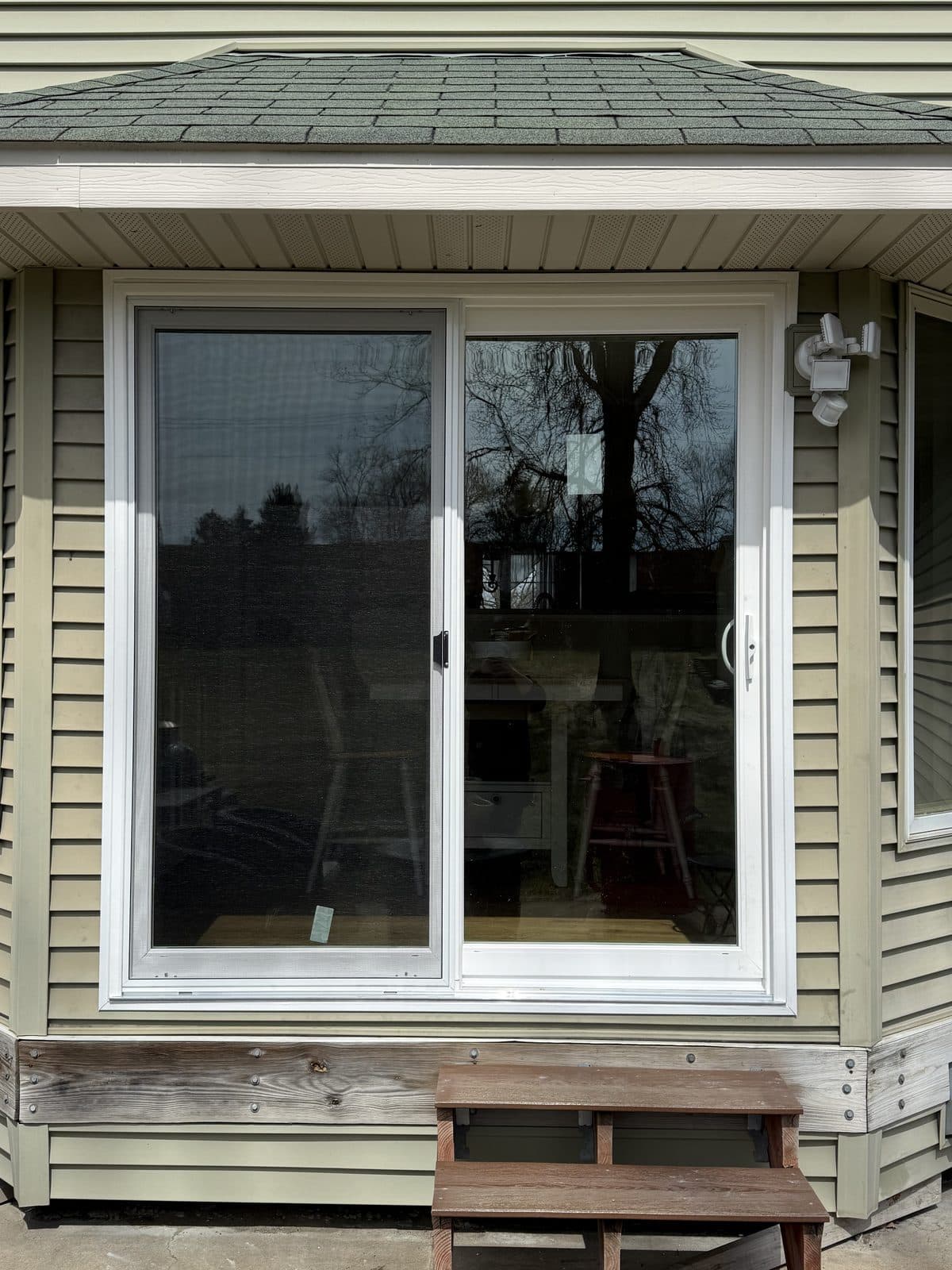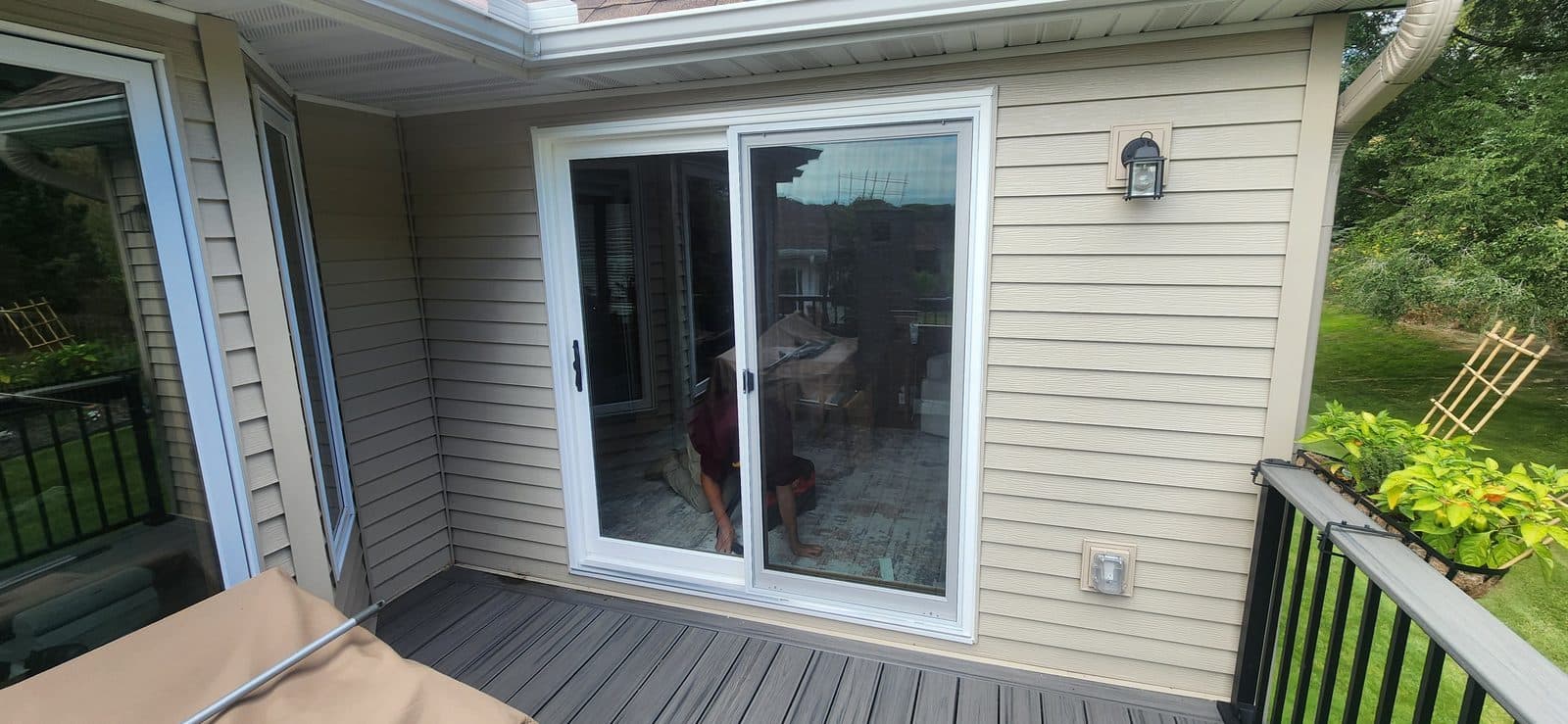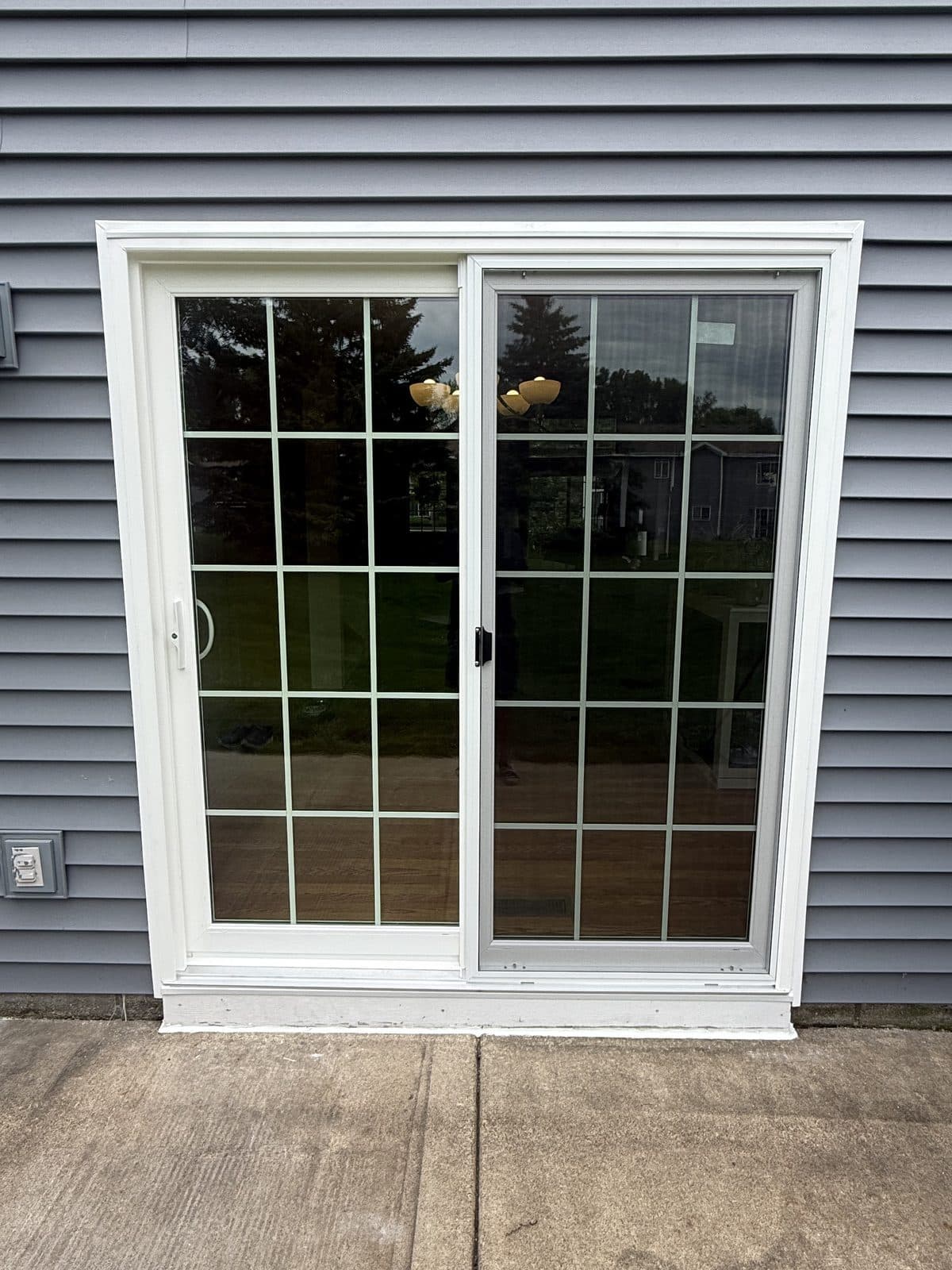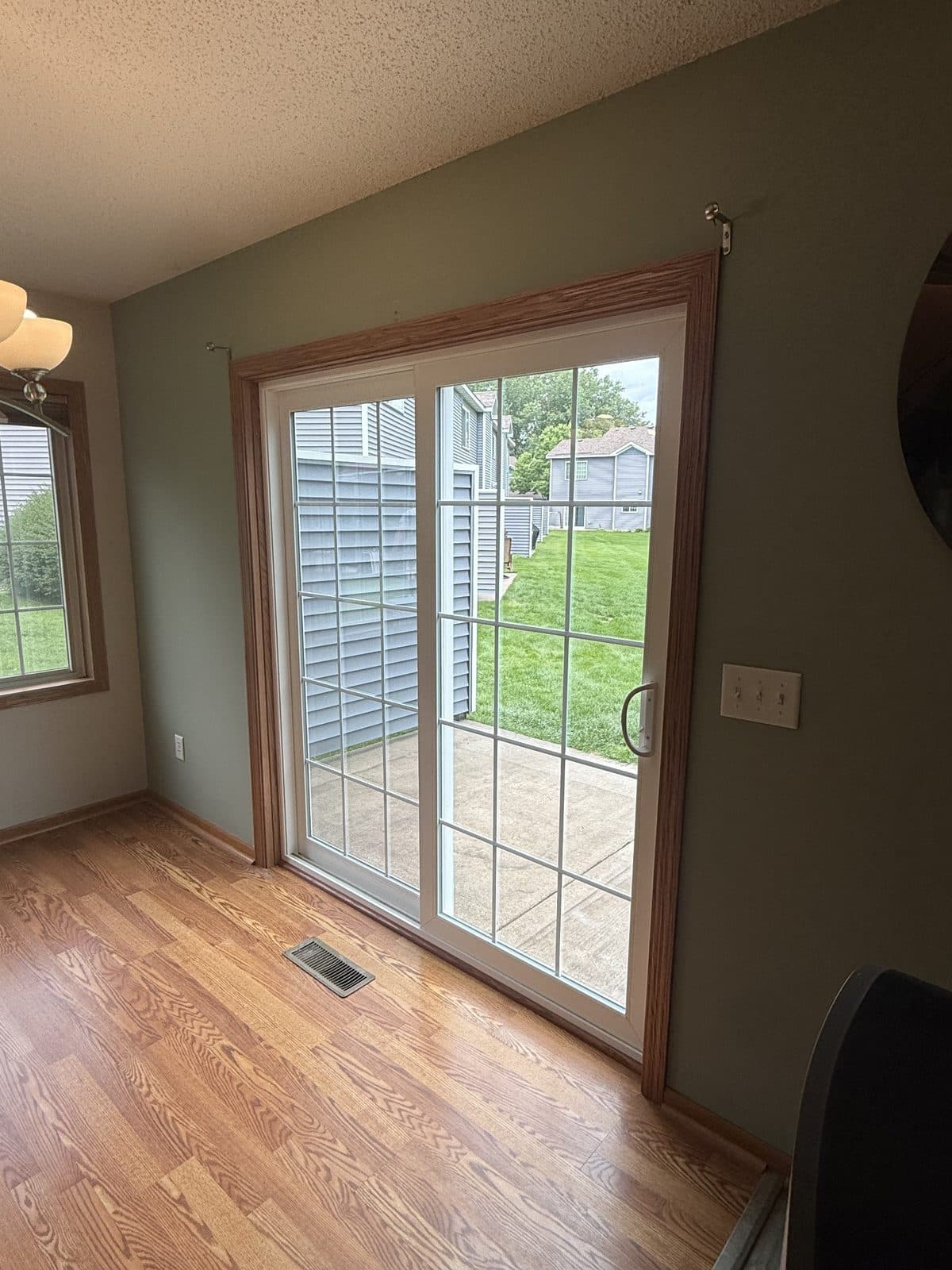
A foggy window is a failed glass seal. The fix is either a new insulated glass unit in a sound frame or a new window; the fog itself cannot be cleaned because it is sealed between the panes. This applies to any Minnesota house with double-pane windows, and our freeze-thaw cycles are why it happens so often here.
You have cleaned the glass inside and out and the haze is still there because it is between the panes, where no cloth can reach. Here is what happened inside the window, what the replacement glass or window should have so it does not happen again, and a straight rundown of the options.
What is inside a double-pane window?
A double-pane window is a sealed sandwich called an insulated glass unit, or IGU: two panes of glass, a spacer bar around the edge that holds them apart, a desiccant inside the spacer that absorbs any moisture, a primary seal of butyl against the spacer, a secondary seal of silicone or polysulfide around the outside, and insulating gas, usually argon, in the space. A low-E coating on the inside face of the outer pane reflects heat.
The spacer is the part that decides how long the unit lives. For decades it was hollow aluminum, which conducts heat so well that the edge of the glass ran cold, frosted first and flexed with every temperature swing. Modern warm-edge spacers of stainless steel, silicone foam or thermoplastic move less, keep the edge warmer and hold a dual seal better. If your fogged windows are from the 1980s or 1990s, they almost certainly have aluminum spacers and often a single seal.
Why do window seals fail?
Every day the temperature swing makes the glass expand and contract and flexes the seal, thousands of cycles a year in this climate. Eventually the seal opens a hair, the argon escapes and humid air gets pumped in. The desiccant saturates and moisture condenses on the inside faces of the glass. Once the desiccant is full, the fog is permanent.
Sun speeds it up, which is why south- and west-facing windows fail first. Cheap glass units with aluminum spacers and single seals fail years sooner than good ones. A window that was set out of square, or foamed with high-expansion foam that bowed the frame, puts extra stress on the seal too, but most failures are the unit's age and build, not the install.
What does a failed seal cost you?
Besides the haze, the unit has lost its argon fill and much of its insulating value. In winter the glass feels colder and frost and condensation form more easily on the room side. If the fog has been there a while, the moisture can etch a permanent haze on the low-E coating. The frame may be fine, but the glass unit is done and it will not heal.
Can foggy windows be defogged?
Defogging services drill small holes to clear the moisture and fit one-way vents. It can improve the look for a while, but it cannot restore the argon or the insulating value, and it does nothing for a coating that has already been etched. The window keeps performing like a failed unit. Treat it as a cosmetic stopgap, nothing more.
Glass replacement or whole-window replacement?
If the frame and hardware are in good shape and the window is otherwise modern, replacing just the insulated glass unit can be the economical fix. A glass shop measures the sash, builds a new unit to the same thickness, and the sash is re-glazed. If the window is 20-plus years old, builder-grade, or has other problems such as sticking sashes, drafts or frame wear, new glass in an old window is money spent on a failing unit. Replace the window and you get a new frame, new seals and modern glass.
If several windows in the house are fogging, take the hint. They were built with the same glass at the same time and more will follow.
| Situation | Best fix |
|---|---|
| Modern window, sound frame, one fogged pane | New glass unit |
| Wood frame, sound, stained interior you want to keep | New glass unit, or an insert if the sashes are also worn |
| Window 20-plus years old with aluminum spacers, several fogged | Whole window; the rest are next |
| Fog plus drafts at the casing or a soft sill | Whole window, full-frame, with flashing and foam |
| Builder-grade vinyl with warped sash or failed balances | Whole window |
What should the new glass or window have?
Whichever route you take, do not order the same unit that just failed. For a replacement glass unit, specify a soft-coat low-E coating on surface 2 (the inside face of the outer pane), argon fill, and a warm-edge spacer with a dual seal. A glass shop can build that to fit any sound sash, and it brings a 1990s window most of the way to modern center-of-glass performance. A matching low-E on the other windows keeps the tint consistent from the street.
For a whole new window, read the NFRC label. A double-pane low-E argon unit rates about 0.27–0.30 whole-window U-factor. ENERGY STAR Version 7.0 sets the Northern zone at 0.22 or lower, which means triple-pane or a second low-E on the room-side surface. Look for a multi-chamber or foam-filled frame and an air leakage rating of 0.3 cfm per square foot or less.
Then hold the installer to the install. Insert or full-frame, the gap between the frame and the opening gets low-expansion foam, not fiberglass and not high-expansion foam that bows the jambs and stresses the new seal. A full-frame job gets a sill pan and flashing tape at jambs and head; the interior gets backer rod and sealant where the gap is wide and a sealed trim line. A fogged window that also had frost at the casing every winter was leaking around the frame too, and only that scope fixes both.
What photos should you send for a quote?
Two photos per window tell most of the story: one of the fogged glass and one of the frame corner and sill, inside and out. From those we say glass or window, and we reply within one business day.
What JMB Builders does
JMB Builders is a licensed Minnesota residential building contractor (BC809005) based in Zimmerman, working across the Twin Cities metro. We say glass or whole window from your photos and price whichever fits, and we install any brand without being a dealer for it. Call 763-204-2099 (text) or send photos through the site.
- Labor-only installation of replacement windows you bought at a store or online — jmbbuildersmn.com/services/labor-only
- Insert and full-frame replacement windows, measured and ordered by us — jmbbuildersmn.com/services/full-service
- Interior window sill rot replacement when the fog came with water damage — jmbbuildersmn.com/services/window-trim/interior-window-sill-rot-replacement
- Trim-out after another company's window installation — jmbbuildersmn.com/services/window-trim/trim-out-replacement-windows-left-bare
- Send three photos and we reply within one business day.
Frequently asked questions
Can you fix a foggy double-pane window?
Not by cleaning it; the moisture is sealed inside the glass unit. The real fixes are a new insulated glass unit in the existing frame, or a new window. Defogging services drill and vent the unit, which clears the haze for a while but does not bring back the argon or the insulating value.
How much does it cost to replace foggy window glass?
It is priced per window, and the glass unit price depends on size, coating and whether the sash has to go to a glass shop. Replacing only the glass costs less than a new window when the frame is sound. Send photos of the fogged pane and the frame and the quote comes back both ways.
Why do my south-facing windows fog first?
Sun. South- and west-facing glass gets the biggest daily temperature swing, so the seal flexes more and fails sooner. It is normal for the sunny side of a house to fog years before the shaded side, even with the same windows.
Is fog between the panes a sign of a bad install?
Usually not. Seal failure happens inside the factory-sealed glass unit and is about the unit's age, spacer type and sun exposure. A frame bowed by high-expansion foam or set badly out of square can stress the seal, but an install problem more often shows up as drafts around the frame, water at the sill, or a sash that binds, not as fog.
Will a foggy window leak water into the house?
No. The moisture is trapped between the panes and stays there. Water on the room side of the glass or at the sill is a different problem: indoor condensation on cold glass, or a leak around the frame. A failed seal does cost you heat every day it stays in.
Should I replace one foggy window or all of them?
Replace the fogged one now if the others are clear and the frames are sound. If two or more have fogged, the rest were made at the same time with the same spacer and more failures are coming, so pricing the whole side or the whole house at once usually saves per window.